Sonallah Ibrahim - Beirut, Beirut
Здесь есть возможность читать онлайн «Sonallah Ibrahim - Beirut, Beirut» весь текст электронной книги совершенно бесплатно (целиком полную версию без сокращений). В некоторых случаях можно слушать аудио, скачать через торрент в формате fb2 и присутствует краткое содержание. Год выпуска: 2014, Издательство: Bloomsbury Publishing Plc, Жанр: Современная проза, на английском языке. Описание произведения, (предисловие) а так же отзывы посетителей доступны на портале библиотеки ЛибКат.
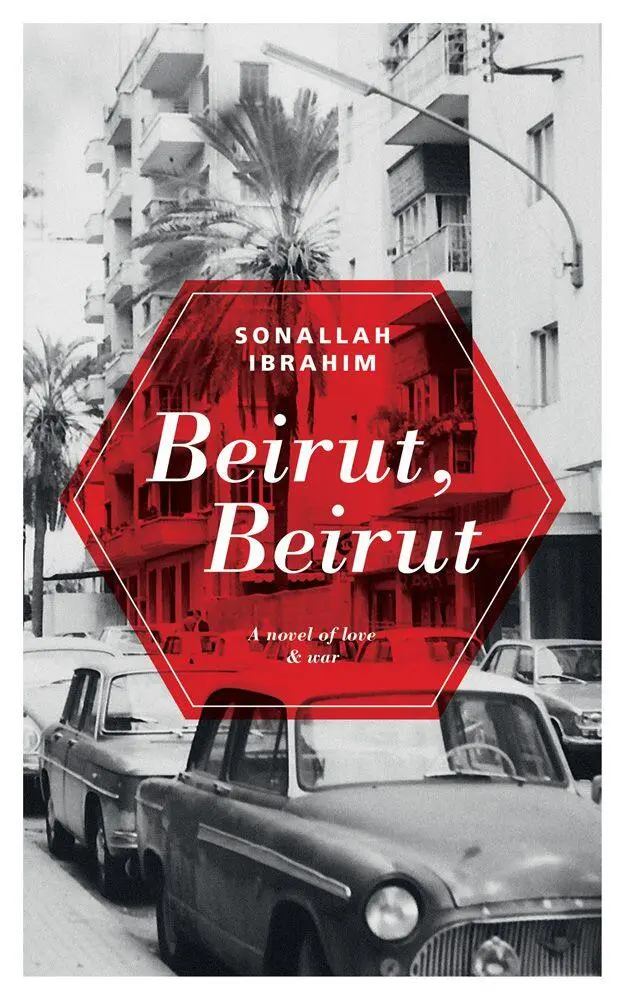
- Название:Beirut, Beirut
- Автор:
- Издательство:Bloomsbury Publishing Plc
- Жанр:
- Год:2014
- ISBN:нет данных
- Рейтинг книги:4 / 5. Голосов: 1
-
Избранное:Добавить в избранное
- Отзывы:
-
Ваша оценка:
Beirut, Beirut: краткое содержание, описание и аннотация
Предлагаем к чтению аннотацию, описание, краткое содержание или предисловие (зависит от того, что написал сам автор книги «Beirut, Beirut»). Если вы не нашли необходимую информацию о книге — напишите в комментариях, мы постараемся отыскать её.
A young man — full of the vim, vigour and desires of youth — refuses to allow his spirit to be dampened…
November, 1980. An Egyptian writer has chosen the wrong time to come to Beirut in search of a publisher for his controversial book. Men with machine guns are on every street corner. When the writer meets an old friend from his revolutionary student days, he is introduced to two fascinating women: idealistic film-maker Antoinette and Lamia, the seductive wife of his would-be publisher. His attentions inevitably turn towards the two women, but the background rumble of strife and struggle becomes increasingly hard to ignore.
Based on the author's real-life experience of the civil war in Lebanon,
is an exploration of how, even in the midst of chaos and violence, universals such as love, desire and yearning are still always our guiding forces.
Beirut, Beirut — читать онлайн бесплатно полную книгу (весь текст) целиком
Ниже представлен текст книги, разбитый по страницам. Система сохранения места последней прочитанной страницы, позволяет с удобством читать онлайн бесплатно книгу «Beirut, Beirut», без необходимости каждый раз заново искать на чём Вы остановились. Поставьте закладку, и сможете в любой момент перейти на страницу, на которой закончили чтение.
Интервал:
Закладка:
A general view of the Tel Zaatar camp. Armored cars carrying the “Tigers” emblem surround the camp on all sides. Missiles and rockets fly up over its houses. A mortar on top of an armored car in the fort rains down fire on the camp.
Chamoun, with his carefully-combed silver hair, and with his glasses in his hand, is sitting down, listening to the reports from the leaders of the Tigers, and smiling.
A headline in a Lebanese newspaper: “Jumblatt says: ‘The attack on Tel Zaatar is a contest for leadership of the Maronites between Chamoun and Gemayel.’”
Headlines from Lebanese newspapers: “Beirut without water, electricity and gasoline.” “Gas at 18 lira.” “Blockade of supplies by Syrian forces.” “Dollar rises to 330 Lebanese piastres; US and Canadian banks make billions in profits.”
A wooden donkey cart, with its back wagon filled with people. One of them carries a wide placard reading: “This is how our ancestors did it. We don’t need gasoline.”
A street in Beirut. A Palestinian gunman carrying the Fatah insignia distributes flour from a military truck. Hundreds of hands stretch out to him.
The power company building in East Beirut.
Title card:
After the warring factions cut off the thirteen power lines that fed electricity to both halves of the city, Fu’ad Bazri, president of the power company, who came to be known as “Mr Light”, succeeded in finalizing an agreement between Yasser Arafat and the Phalangists, on the basis of which the Palestinian leader sent two small seagoing transport vessels carrying heavy fuel to the electric power station in the Christian sector, a few kilometers distant from Beirut, so that it could supply the two parts of the city with current.
A newspaper headline: “Nationalist and Palestinian forces advance in the direction of Ain Remmaneh, with the aim of relieving pressure on Tel Zaatar.”
Title card:
On June 27, the Phalangists announced that they had entered the battle of Tel Zaatar.
A press conference with member of parliament Amin Gemayel: “The Phalangists have joined in the assault on Tel Zaatar because those who planned and started the attack were incapable of seizing it.”
A poster carrying the insignia of the Tigers with a photo of a beautiful young woman. Below the photo in French: “Saada Khayyat: the first Lebanese woman to fall on the field of honor during the attack on Tel Zaatar.”
A press conference with Julud, prime minister of Libya: “The conspiracy is large-scale and international… The Syrian Army was drawn into the conspiracy so that it could control all the basic elements in the Lebanese public arena… Nationalist forces and people who believe in their Arab character, Christians and Muslims, and those who believe in their nationalist sense of belonging, and the Palestinians… My opinion is that they should march in file to Tel Zaatar until the isolationists run out of ammunition. If you start with a half-million Palestinians, and end up with only one hundred thousand, that doesn’t matter. This is our view, even toward Israel. If the Arabs weren’t afraid of dying, then Israel wouldn’t exist.”
A newspaper headline: “The resistance takes Bashir Gemayel prisoner after he killed several Palestinians with his own hands. 8 hours later, he was released, following the intervention of President Sarkis and the Deuxième Bureau.”
A headline in a newspaper: “Tel Zaatar repels 49th attack.”
A headline in the Phalangist newspaper, al-Amal : “Leaders of the Phalangists and Tigers follow the progress of the battles directly on the battlefield.”
Title card:
On the twentieth day of Tel Zaatar holding out…
A headline in a Lebanese newspaper: “PLO leadership to Tel Zaatar combatants: ‘The coming hours are fateful, your defiance is key.’”
A headline in a Lebanese newspaper: “Communications between Arafat, Gaddafi and Mahmoud Riyad, and between Jumblatt, King Khalid, Sadat, Boumedienne and al-Bakr, and between Assad and Hussein.”
A headline in a Lebanese newspaper: “Tel Zaatar repels 51st attack.”
A headline in a Lebanese newspaper: “New 7-hour-long assault against Tel Zaatar repelled.”
A headline in a Lebanese newspaper: “10-page Soviet diplomatic note warns Syria against further strikes against the Palestinian resistance and Lebanese National Movement.”
A headline in the Lebanese newspaper al-Anbaa : “Jumblatt to a conference of Arab foreign ministers: ‘You were duped by businessmen of the isolationist faction, who are very close to your kings and presidents.’ ”
A headline in a French newspaper: “Killing of William Hawi, president of the Phalangist military council, during the battles of Tel Zaatar. Foreign press bureaus in Beirut confirm that his killing was arranged by Bashir Gemayel, who took his place as the head of the Phalangist military council.”
In front of the Phalangist military council building. Bashir Gemayel in his military uniform surrounded by his aides.
Title card:
Bashir Gemayel graduated from Jesuit schools and the Jesuit University, where he studied law. But power was more enticing to him than the legal profession he was expected to enter.
Since his youth, he was notable for his hotheadness and his violent tendencies. He resorted quickly to his fists when confronted with a problem. These problems multiplied when he reached adolescence. His face was filled with pimples. He discovered that he was short, and his body not well-proportioned. Soon after, it became clear that the leadership positions within his family were limited to his powerful father and his older brother, Amin, who was distinguished by his slender physique, good looks and intellectual gifts. But he didn’t despair. He sought refuge in the street. For fifteen hours a day, during which time he never stopped eating pieces of chocolate, he would attend weddings, baptisms, funerals and masses, currying favor with the petit bourgeois, the semi-employed, minor functionaries, and all the other frustrated people, while waiting for the right opportunity.
The Damascus University amphitheater. Hafez al-Assad is speaking: “… Those who are making uninformed opinions must understand that I am not someone who loves power. I am nothing but an individual of this people, and nothing will keep me from feeling the feelings of this people, and taking the decision that I feel expresses the feelings of the citizens of this country and their desires.
“When the events in Lebanon began, some long months ago, we had an explanation for them… We said that the conspiracy couldn’t achieve its goals except through killing. So in order for us to frustrate the conspiracy, we had to stop the killing. And we set out to act for that reason…
“… But there are some who want the problems to stay the way they are, because they want to work. Some gunmen in Lebanon now are against peace. If peace is achieved, then they will be out of work. And that’s a problem.
“… We welcomed Kamal Jumblatt. I said to him, We want you to let us know what you really want… He spoke about secularism. A secular state in Lebanon. I told him that the Phalangists are enthusiastic for secularism. Shaykh Pierre Gemayel told me that he will accept no substitute for secularism. I am insistent on, and hold fast to, a secular state in Lebanon. But the mufti of the Muslims, the Shii imam, and some prime ministers and speakers of parliament have refused secularism.
“Jumblatt said: ‘Let us punish them. We have to settle it militarily. They have ruled us for 140 years, and we want to get rid of them.’ Here I saw that the mask had slipped. The issue was one of reprisal and revenge.
“A military settlement in a country like Lebanon, between two warring sides in one nation, is impossible. A military settlement for any problem means a decisive elimination of that problem. And in Lebanon that notion is impossible because exercising power should not require having absolute power. Or rather, there should be more than one source of power, although that doesn’t exist now. As for the proposed military settlement, if it creates a situation where one side dominates Lebanese public life, then it will result in the emergence of a new problem in Lebanon and in this region. The problem of a certain people, of a certain religion, is the problem of Lebanon or part of Lebanon. The problems of those who are dominated is one that the world will empathize with.
Читать дальшеИнтервал:
Закладка:
Похожие книги на «Beirut, Beirut»
Представляем Вашему вниманию похожие книги на «Beirut, Beirut» списком для выбора. Мы отобрали схожую по названию и смыслу литературу в надежде предоставить читателям больше вариантов отыскать новые, интересные, ещё непрочитанные произведения.










Обсуждение, отзывы о книге «Beirut, Beirut» и просто собственные мнения читателей. Оставьте ваши комментарии, напишите, что Вы думаете о произведении, его смысле или главных героях. Укажите что конкретно понравилось, а что нет, и почему Вы так считаете.