Adam Mars-Jones - Pilcrow
Здесь есть возможность читать онлайн «Adam Mars-Jones - Pilcrow» весь текст электронной книги совершенно бесплатно (целиком полную версию без сокращений). В некоторых случаях можно слушать аудио, скачать через торрент в формате fb2 и присутствует краткое содержание. Год выпуска: 2008, Издательство: Faber and Faber, Жанр: Современная проза, на английском языке. Описание произведения, (предисловие) а так же отзывы посетителей доступны на портале библиотеки ЛибКат.
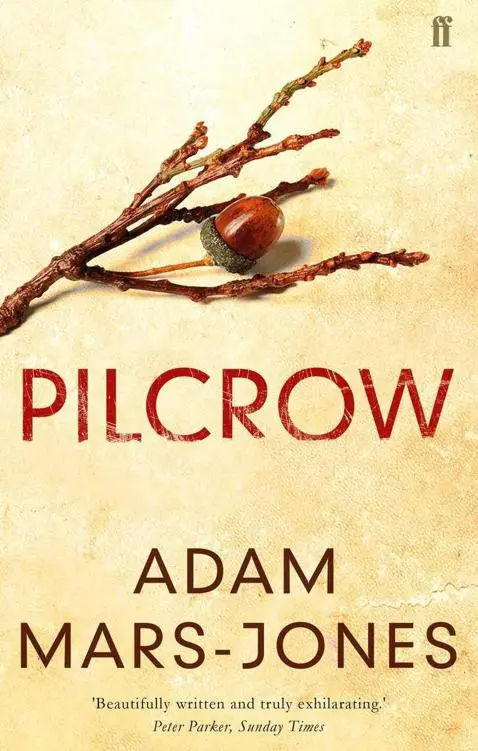
- Название:Pilcrow
- Автор:
- Издательство:Faber and Faber
- Жанр:
- Год:2008
- ISBN:нет данных
- Рейтинг книги:5 / 5. Голосов: 1
-
Избранное:Добавить в избранное
- Отзывы:
-
Ваша оценка:
Pilcrow: краткое содержание, описание и аннотация
Предлагаем к чтению аннотацию, описание, краткое содержание или предисловие (зависит от того, что написал сам автор книги «Pilcrow»). Если вы не нашли необходимую информацию о книге — напишите в комментариях, мы постараемся отыскать её.
Pilcrow — читать онлайн бесплатно полную книгу (весь текст) целиком
Ниже представлен текст книги, разбитый по страницам. Система сохранения места последней прочитанной страницы, позволяет с удобством читать онлайн бесплатно книгу «Pilcrow», без необходимости каждый раз заново искать на чём Вы остановились. Поставьте закладку, и сможете в любой момент перейти на страницу, на которой закончили чтение.
Интервал:
Закладка:
I felt very close to Raeburn after our talk about being the judges of civilisation, but on that same morning I said something I regretted for a long time. It wasn’t what I said, exactly, but the way I said it. Raeburn asked me if I could feel below my waist. Proud that the sense of touch was one area where I wasn’t disabled, I set my chest out proud and said, ‘I should hope so, Sir!’
I hoped to increase my standing in Alan Raeburn’s eyes. He stood there saying nothing for a long moment.
‘Some people can’t, you know,’ he said at last. I looked at those grey-blue eyes, which didn’t seem to be focusing on anything in the room. I had disappointed him by thinking only of myself. He must have had hopes of my showing a stronger streak of enlightenment. I had failed the very first test. Obviously it was right for me to tell the truth, but why couldn’t I have said, ‘Yes, sir,’ without feeling the need to boast?
Secret lovers
It was then, all the same, that Raeburn and I became secret lovers. Our love affair carried me through term after term in that austere school. Of course I don’t mean that any impropriety occurred between man and boy. We were secret lovers, not in the sense that Romeo and Juliet were — because of the consequences if they were found out — but the way Cyrano and Roxanne were secret lovers. Because the infatuated party didn’t dare to say anything and the infatuator (if that’s the word I want) was entirely in the dark. Our love was the purest sort of secret, so secret that he didn’t have a clue.
I turned out to be better at hero-worship than at friendship. My experience of the girl gang at CRX had made me suspicious of groups. I loved the story-telling after lights out, but I didn’t actually become particularly close to my dorm-fellows. I enjoyed the prestige which performing brought. It was possible for people to listen in from the corridor outside, so that I might have a larger audience than the obvious one. This hadn’t escaped me. After a few weeks of term one of the teachers suggested that I study German, on the basis that my accent was good, and really how could he know that except through being told by someone who listened in?
I was vain of my closeness to Raeburn and boasted about it to Roger Stott. He was perhaps more surprised than impressed. It was his idea that Raeburn gave priority to the pupils who had been recently disabled. Certainly they were the ones with the gravest problems of adjustment.
It made sense that they would be Raeburn’s special domain because he belonged, more or less, to their category. His adjustment was more directly inspirational for them than for us. Those of us who had long since passed the point where we had been disabled for half our lives just got on with it. None of us envied the recently disabled for their past privileges, and we tried to be patient with their present resentments.
There was a caste system at work in the school, but one with a great deal of complexity. Seniority in the school was a factor, but much less so than difference of diagnosis.
The obvious distinction was between the ABs and the others. For all I know there were nuances of asthma that determined relative status among the ABs, but from underneath the divide it looked pretty much like Us and Them. Among Us, though, there were any number of distinctions that could affect your place in the hierarchy. Those without wheelchairs looked down on those who had them — even if, like Trevor Burbage the human suitcase, they needed so much support that their upright status was more or less fictional.
If you were in a wheelchair then it buoyed up your status if you had sensation below the waist, like me and unlike paraplegics. Paraplegics among themselves perhaps preened themselves on the strength of their arms. On a boy-racer, what-car-does-your-dad-drive? level, electric wheelchairs were more desirable than ones without motors, but they went along with the more severe difficulties, so their social meaning wasn’t altogether clear-cut.
Spastics — there was no respectful ‘cerebral palsy’ label then — who were free of uncontrollable spasms out-ranked those with the more extreme type of the condition, the one named athetoid. Those with degenerative disorders were ranked lower than those of us without. We almost set up a new Us and Them barrier at this point, to make it clear that their futures were so different from ours that it was idiotic to lump us together. The degenerative boys lived in their own narrowing tunnel.
Raw social status, class as the world saw it, was a minor issue. We may vaguely have known that Paul Dandridge, the one who did the ‘frog breathing’ and needed a respirator at night, was from a very poor background, while Abadi Mukherjee in the same dorm had parents who were terrifically rich (they ran a large Indian business called the Appa Corporation), but we didn’t care. I imagine the co-principals cared to a certain extent, since the Mukherjees paid full fees, but from our point of view, Abadi out-ranked Paul by virtue of the mildness of his polio. The mildness of his life outside school (the first-class air travel to Bombay in the holidays) was neither here nor there, though I suppose we noticed the lavishness of his pocket money. If it meant one thing to us, India meant poverty — yet Abadi was the richest boy in the school.
If an AB who didn’t often have to use his inhaler was at the top of the caste system, and a boy with muscular dystrophy was at the bottom, then Still’s disease gave me a fairly reliable, not unduly fluctuating status somewhere near the middle of my world. An affinity of physical condition could give me more in common with a given person than brute closeness in age. Given that he was a year ahead of me, and also an AB, Roger was remarkably friendly. Age gap plus mobility gap should have created something of a personal chasm, but his good nature bridged it.
He always tied my tie in the mornings. As time went on the exact nature of his good looks became clearer. He bore a striking resemblance to George Harrison, except that the Beatles had hardly even formed at the time so it didn’t mean anything yet. As the decade developed, he found himself benefiting not only from good looks but the extra dividend of looking like the kid brother of a new kind of celebrity.
Dry bed-wetter
There was a hidden aspect to our friendship. Roger and I were both bed-wetters. I had grown out of this bad habit very recently, but on some deeper level I wasn’t free of it. There’s more to being a bed-wetter than the physical symptoms. Part of the condition is the pain of being picked on and being made an object of derision. I was a fellow bed-wetter in spirit if not in fact. I was a dry bed-wetter like a dry drunk, someone who could fall off the wagon any night.
Judy Brisby gave Roger the harshest, most abrasive scoldings. Her words were caustic soda, they made his face go bright red, not a healthy skin tone but one denoting damage. The epidermis was outraged. Roger had to change his sheets while she watched. She seemed to enjoy humiliating him in front of younger boys. All the while she barracked him about the cost of laundering his sheets. You would have thought it was coming out of her own pocket. To hear Judy Brisby talk, Roger was wearing the sheets out and should be thoroughly ashamed of himself. As if that was the problem, Roger not being ashamed enough.
One boy who was always very friendly to me was Julian Robinson, who had polio, but I had no idea of how to behave nicely back. It should have helped that he too had a father in the Raff. In fact Dad knew Julian’s dad and said that Robinson was a good chap. He must have meant Robinson Senior, but it seemed to follow that Robinson Junior was a good chap too. I was rather under the sway of Dad’s view of things at the time, but in a rather perverse way. I decided to feel superior to Julian Robinson simply because my dad out-ranked his.
Читать дальшеИнтервал:
Закладка:
Похожие книги на «Pilcrow»
Представляем Вашему вниманию похожие книги на «Pilcrow» списком для выбора. Мы отобрали схожую по названию и смыслу литературу в надежде предоставить читателям больше вариантов отыскать новые, интересные, ещё непрочитанные произведения.






Обсуждение, отзывы о книге «Pilcrow» и просто собственные мнения читателей. Оставьте ваши комментарии, напишите, что Вы думаете о произведении, его смысле или главных героях. Укажите что конкретно понравилось, а что нет, и почему Вы так считаете.