Ha Jin - The Bridegroom - Stories
Здесь есть возможность читать онлайн «Ha Jin - The Bridegroom - Stories» весь текст электронной книги совершенно бесплатно (целиком полную версию без сокращений). В некоторых случаях можно слушать аудио, скачать через торрент в формате fb2 и присутствует краткое содержание. Год выпуска: 2001, Издательство: Pantheon, Жанр: Современная проза, на английском языке. Описание произведения, (предисловие) а так же отзывы посетителей доступны на портале библиотеки ЛибКат.
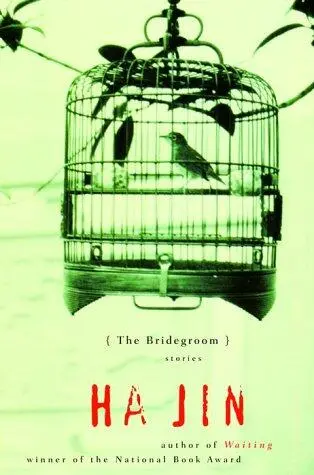
- Название:The Bridegroom: Stories
- Автор:
- Издательство:Pantheon
- Жанр:
- Год:2001
- ISBN:нет данных
- Рейтинг книги:5 / 5. Голосов: 1
-
Избранное:Добавить в избранное
- Отзывы:
-
Ваша оценка:
The Bridegroom: Stories: краткое содержание, описание и аннотация
Предлагаем к чтению аннотацию, описание, краткое содержание или предисловие (зависит от того, что написал сам автор книги «The Bridegroom: Stories»). Если вы не нашли необходимую информацию о книге — напишите в комментариях, мы постараемся отыскать её.
, a collection of comical and deeply moving tales of contemporary China that are as warm and human as they are surprising, disturbing, and delightful.
In the title story, the head of security at a factory is shocked, first when the hansomest worker on the floor proposes marriage to his homely adopted daughter, and again when his new son-in-law is arrested for the "crime" of homosexuality. In "After Cowboy Chicken Came to Town," the workers at an American-style fast food franchise receive a hilarious crash course in marketing, deep frying, and that frustrating capitalist dictum, "the customer is always right."Ha Jin has triumphed again with his unforgettable storytelling in
.
The Bridegroom: Stories — читать онлайн бесплатно полную книгу (весь текст) целиком
Ниже представлен текст книги, разбитый по страницам. Система сохранения места последней прочитанной страницы, позволяет с удобством читать онлайн бесплатно книгу «The Bridegroom: Stories», без необходимости каждый раз заново искать на чём Вы остановились. Поставьте закладку, и сможете в любой момент перейти на страницу, на которой закончили чтение.
Интервал:
Закладка:
More amazing is that Dandan adores her stepbrother. She tells others she always wanted a younger brother and now she finally has one. The boy is attached to her, too; together they read picture-storybooks and recite nursery rhymes every day after school. Asked whether her stepmother is kind to her, Dandan will say, “My dad found me a good mommy.” Sometimes she plays hopscotch with other children in front of the apartment building. A pair of huge butterflies, made of yellow ribbons, dangles at the ends of her braids as she capers around. Smiles widen her gazelle eyes.
After Cowboy Chicken Came to Town
“I want my money back!” the customer said, dropped his plate on the counter, and handed me his receipt. He was a fiftyish man, of stout girth. A large crumb hung on the corner of his oily mouth. He had bought four pieces of chicken just now, but only a drumstick and a wing were left on the plate.
“Where are the breast and the thigh?” I asked.
“You can’t take people in like this.” The man’s bulbous eyes flashed with rage. This time I recognized him; he was a worker in the nearby motor factory.
“How did we take you in?” the tall Baisha asked sharply, brandishing a pair of long tongs. She glared at the man, whose crown barely reached the level of her nose.
He said, “This Cowboy Chicken only sounds good and looks tasty. In fact it’s just a name — it’s more batter than meat. After two pieces I still don’t feel a thing in here.” He slapped his flabby side. “I don’t want to eat this fluffy stuff anymore. Give me my money back.”
“No way,” Baisha said and swung her permed hair, which looked like a magpies’ nest. “If you hadn’t touched the chicken, we’d refund you the money. But—”
“Excuse me,” Peter Jiao said, coming out of the kitchen together with Mr. Shapiro.
We explained to him the customer’s demand, which Peter translated for our American boss. Then we all remained silent to see how Peter, our manager, would handle this.
After a brief exchange with Mr. Shapiro in English, Peter said in Chinese to the man, “You’ve eaten two pieces already, so we can only refund half your money. But don’t take this as a precedent. Once you’ve touched the food, it’s yours.”
The man looked unhappy but accepted the offer. Still he muttered, “American dogs.” He was referring to us, the Chinese employed by Cowboy Chicken.
That angered us. We began arguing with Peter and Mr. Shapiro that we shouldn’t have let him take advantage of us this way. Otherwise all kinds of people would come in to sample our food for free. We didn’t need a cheap customer like this one and should throw him out. Mr. Shapiro said we ought to follow the American way of doing business — you must try to satisfy your customers. “The customer is always right,” he had instructed us when we were hired. But he had no idea who he was dealing with. You let a devil into your house, he’ll get into your bed. If Mr. Shapiro continued to play the merciful Buddha, this place would be a mess soon. We had already heard a lot of complaints about our restaurant. People in town would say, “Cowboy Chicken is just for spendthrifts.” True, our product was more expensive and far greasier than the local braised chicken, which was cooked so well that you could eat even the bones.
Sponge in hand, I went over to clean the table littered by that man. The scarlet Formica tabletop smelled like castor oil when greased with chicken bones. The odor always nauseated me. As I was about to move to another table, I saw a hole on the seat the size of a soybean burned by a cigarette. It must have been the work of that son of a dog; instead of refunding his money, we should’ve detained him until he paid for the damage.
I hated Mr. Shapiro’s hypocrisy. He always appeared good-hearted and considerate to customers, but was cruel to us, his employees. The previous month he had deducted forty yuan from my pay. It hurt like having a rib taken out of my chest. What had happened was that I had given eight chicken breasts to a girl from my brother’s electricity station. She came in to buy some chicken. By the company’s regulations I was supposed to give her two drumsticks, two thighs, two wings, and two breasts. She said to me, “Be a good man, Hongwen. Give me more meat.” Somehow I couldn’t resist her charming smile, so I yielded to her request. My boss caught me stuffing the paper box with the meatiest pieces, but he remained silent until the girl was out of earshot. Then he dumped on me all his piss and crap. “If you do that again,” he said, “I’ll fire you.” I was so frightened! Later, he fined me, as an example to the seven other Chinese employees.
Mr. Shapiro was an old fox, good at sweet-talking. When we asked him why he had chosen to do business in our Muji City, he said he wanted to help the Chinese people, because in the late thirties his parents had fled Red Russia and lived here for three years before moving on to Australia; they had been treated decently, though they were Jews. With an earnest look on his round, whiskery face, Mr. Shapiro explained, “The Jews and the Chinese had a similar fate, so I feel close to you. We all have dark hair.” He chuckled as if he had said something funny. In fact that was capitalist baloney. We don’t need to eat Cowboy Chicken here, or appreciate his stout red nose and his balding crown, or wince at the thick black hair on his arms. His company exploited not just us but also thousands of country people. A few villages in Hebei Province grew potatoes for Cowboy Chicken, because the soil and climate there produced potatoes similar to Idaho’s. In addition, the company had set up a few chicken farms in Anhui Province to provide meat for its chain in China. It used Chinese produce and labor and made money out of Chinese customers, then shipped its profits back to the U.S. How could Mr. Shapiro have the barefaced gall to claim he had come to help us? We have no need for a savior like him. As for his parents’ stay in our city half a century ago, it’s true that the citizens here had treated Jews without discrimination. That was because to us a Jew was just another foreigner, no different from any other white devil. We still cannot tell the difference.
We nicknamed Mr. Shapiro “Party Secretary,” because just like a Party boss anywhere he did little work. The only difference was that he didn’t organize political studies or demand we report to him our inner thoughts. Peter Jiao, his manager, ran the business for him. I had known Peter since middle school, when his name was Peihai — an anemic, studious boy with few friends to play with. Boys often made fun of him because he had four tourbillions on his head. His father had served as a platoon commander in the Korean War and had been captured by the American army. Unlike some of the POWs, who chose to go to Canada or Taiwan after the war, Peihai’s father, out of his love for our motherland, decided to come back. But when he returned, he was discharged from the army and sent down to a farm in a northern suburb of our city. In reality, all those captives who had come back were classified as suspected traitors. A lot of them were jailed again. Peihai’s father worked under surveillance on the farm, but people rarely maltreated him, and he had his own home in a nearby village. He was quiet most of the time; so was his wife, a woman who never knew her dad’s name because she had been fathered by some Japanese officer. Their only son, Peihai, had to walk three miles to town for school every weekday. That was why we called him Country Boy.
Unlike us, he always got good grades. In 1977, when colleges reopened, he passed the entrance exams and enrolled at Tianjin Foreign Language Institute to study English. We had all sat for the exams, but only two out of the three hundred seniors from our high school had passed the admission standard. After college, Peihai went to America, studying history at the University of Iowa. Later he changed his field and earned a degree in business from that school. Then he came back, a completely different man, robust and wealthy, with curly hair and a new name. He looked energetic, cheerful, and younger than his age. At work he was always dressed formally, in a Western suit and a bright-colored necktie. He once joked with us, saying he had over fifty pounds of American flesh. To tell the truth, I liked Peter better than Peihai. I often wondered what in America had made him change so much — in just six years from an awkward boy to a capable, confident man. Was it American water? American milk and beef? The American climate? The American way of life? I don’t know for sure. More impressive, Peter spoke English beautifully, much better than those professors and lecturers in the City College who had never gone abroad and had learned their English mainly from textbooks written by the Russians. He had hired me probably because I had never bugged him in our school days and because I had a slightly lame foot. Out of gratitude I never spoke about his past to my fellow workers.
Читать дальшеИнтервал:
Закладка:
Похожие книги на «The Bridegroom: Stories»
Представляем Вашему вниманию похожие книги на «The Bridegroom: Stories» списком для выбора. Мы отобрали схожую по названию и смыслу литературу в надежде предоставить читателям больше вариантов отыскать новые, интересные, ещё непрочитанные произведения.










Обсуждение, отзывы о книге «The Bridegroom: Stories» и просто собственные мнения читателей. Оставьте ваши комментарии, напишите, что Вы думаете о произведении, его смысле или главных героях. Укажите что конкретно понравилось, а что нет, и почему Вы так считаете.