Ha Jin - The Bridegroom - Stories
Здесь есть возможность читать онлайн «Ha Jin - The Bridegroom - Stories» весь текст электронной книги совершенно бесплатно (целиком полную версию без сокращений). В некоторых случаях можно слушать аудио, скачать через торрент в формате fb2 и присутствует краткое содержание. Год выпуска: 2001, Издательство: Pantheon, Жанр: Современная проза, на английском языке. Описание произведения, (предисловие) а так же отзывы посетителей доступны на портале библиотеки ЛибКат.
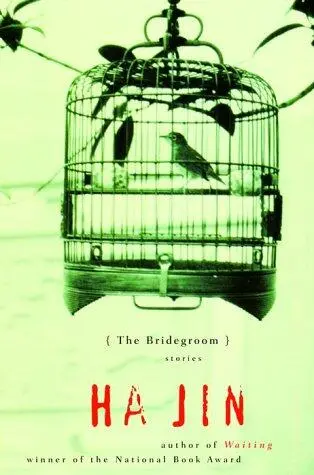
- Название:The Bridegroom: Stories
- Автор:
- Издательство:Pantheon
- Жанр:
- Год:2001
- ISBN:нет данных
- Рейтинг книги:5 / 5. Голосов: 1
-
Избранное:Добавить в избранное
- Отзывы:
-
Ваша оценка:
The Bridegroom: Stories: краткое содержание, описание и аннотация
Предлагаем к чтению аннотацию, описание, краткое содержание или предисловие (зависит от того, что написал сам автор книги «The Bridegroom: Stories»). Если вы не нашли необходимую информацию о книге — напишите в комментариях, мы постараемся отыскать её.
, a collection of comical and deeply moving tales of contemporary China that are as warm and human as they are surprising, disturbing, and delightful.
In the title story, the head of security at a factory is shocked, first when the hansomest worker on the floor proposes marriage to his homely adopted daughter, and again when his new son-in-law is arrested for the "crime" of homosexuality. In "After Cowboy Chicken Came to Town," the workers at an American-style fast food franchise receive a hilarious crash course in marketing, deep frying, and that frustrating capitalist dictum, "the customer is always right."Ha Jin has triumphed again with his unforgettable storytelling in
.
The Bridegroom: Stories — читать онлайн бесплатно полную книгу (весь текст) целиком
Ниже представлен текст книги, разбитый по страницам. Система сохранения места последней прочитанной страницы, позволяет с удобством читать онлайн бесплатно книгу «The Bridegroom: Stories», без необходимости каждый раз заново искать на чём Вы остановились. Поставьте закладку, и сможете в любой момент перейти на страницу, на которой закончили чтение.
Интервал:
Закладка:
I quit the night college too, and soon I left the construction company. The job paid too little, only one and a half yuan a day. By that time, things had changed — it was no longer illegal to run a private business, and you could sell merchandise for a profit. The government was encouraging people to find ways to get rich. A peasant who had made a fortune by raising ermines was praised in newspapers as a model citizen and was inducted into the Communist Party. So I started selling clothes at a marketplace downtown. Every two or three weeks I’d go to the South and return with four large suitcases of fashionable clothes, mostly dresses and bell-bottomed jeans. They sold like ice cream on a hot day, even at a doubled price. Each trip would bring me a profit of at least nine hundred yuan. I’d never thought I could make so much money, and so easily. Sometimes I wondered if the banknotes were real, but whenever I took out a sheaf of them at a shop counter, the salesperson’s eyes would gleam.
Soon I had a large sum in the bank, but I didn’t know what to do with it. My father had been a senior engineer before he died, and I’d inherited from him a decent apartment. There was no way for me to spend so much money. I was worried about my savings, which were known to everybody in the neighborhood and were accumulating rapidly. Every month I’d deposit over a thousand yuan.
Clearly the state can take away my money whenever it likes, just as thirty years ago the government confiscated the wealth of the capitalists and the landowners and redistributed it to the poor. The same thing can happen at any time to us, the newly rich.
Money is a funny thing. It can change your personality. No, not that you actually change inside, but the people around you change their attitudes toward you. This can make you look on yourself differently, as though you were a high official or a celebrity. I haven’t lost my senses; inside, I’m the same small man, the same Liu Feng. In our city there’s an entrepreneur in the furniture business. Every evening he’ll ride a brand-new Yamaha motorcycle to Eight Deities Garden and sit down to a fifty-course dinner alone. He won’t speak to anybody and always eats by himself. Behind his back, people call him a spendthrift, a loner, a neocapitalist, an heirless man. To a degree I feel for him. He must have been maltreated by others. Now he’s rich; if he can’t hurt them physically, he wants to humiliate them by showing his contempt. People love money, while he doesn’t give a damn about what they love. So he squanders cash like trash, eating like an emperor.
That feeling is hard to suppress. Last summer I went to the Central Zoo to see the monkeys. It was a muggy day and I didn’t enjoy watching the animals walk lazily in their cages. Some of them looked half dead. At noon I felt hungry. A small crowd was gathering in front of a bakery kiosk, buying cookies, cakes, fruit, and drinks. I waited patiently in the beginning, but the two saleswomen seemed to avoid helping me. A few people who came later than me had already gotten what they wanted; still the women would pay no attention to the banknote I was waving under their eyes, probably because I looked poor and nondescript. I wore a boiler suit, which was clean and quite new.
Finally one of them asked me, “What do you want?”
“Let’s see — what’s the best stuff you have here?” I said.
“Just tell me what you want.”
“What’s your most expensive cake?”
The other woman muttered, “As if he could afford it.”
That inflamed my temper. I took out a bunch of ten-yuan bills and cried, “Give me all the cakes and cookies you have here!”
They turned pale. Their manager came out and tried to calm me down, saying the shop ought to save some pastry for the afternoon. I wouldn’t give in and claimed that I had twenty workers waiting to be fed, so I bought all the cakes and cookies, and hired two boys on the spot to help me carry the stuff to the pit where four bears lived. A crowd watched me dump into the pit all the cakes and cookies, which somehow none of the animals even touched.
The incident was silly. I was upset for days; to some extent I felt ashamed of what I’d done. There were beggars at the train station and at the harbor, and I myself had known hunger pangs. But the incident made me famous in our city. This was ridiculous. Why should a man’s name be based on his ability to waste money? Anybody — even a kid — can do that, if he has the money in hand.
People in our neighborhood began to show their respect for me. If they saw me carry something heavy, they’d help me readily. Some older women asked whether I was looking for a fiancée. I said I wasn’t interested. Then came a number of matchmakers who tried to convince me of the importance of having an heir before I reached thirty. I told them to forget it; I was in good health, unlikely to die before fifty. A few girls would eye me boldly, as if my face were a blossoming peony. I wasn’t interested in any of them, because my heart was still with the girl I loved.
My business had grown too big for me to travel to the South frequently, so I contracted with a garment factory in Dan Yang County, near Shanghai: they would make stylish clothes for me and have them shipped to my company. I stopped retailing and started wholesaling. This was much easier for me, and my profits soon tripled. Five months ago I rented my own office and warehouse and hung a lacquered sign on the front door that says: NEW CLOTHING INC.
Then one day my former matchmaker came and asked if I was still interested in Manshan. Of course I was. This time Mrs. Pan begged the old woman to help her daughter, saying, “I always knew in my heart that Liu Feng is a very able man.” I felt overjoyed and confused at the same time. The girl used to treat me like a bedbug, why would she deliver herself this way? Just because I was rich now?
We agreed to meet on the Songhua River that Saturday. On Friday afternoon I took a hot bath in Three Springs Bathhouse and had a haircut in there. I didn’t sleep well that night, possessed by a sensation that knotted my chest and stomach, and I couldn’t help murmuring the girl’s name as if she were with me. Even the air I breathed felt like it was burning me inside.
The riverbank was full of people on Saturday morning, a whole school of children singing their school song and waiting for ferryboats there. I rented a dinghy before Manshan showed up.
She came, almost a different girl, in a black silk dress and a perm. She looked prettier. I was amazed that she didn’t seem afraid of me at all, as though we’d been dating for years. She smiled, whispering, “You look like a gentleman.”
Her words surprised me, because no one had ever called me that, and I didn’t know what to say, wondering if I’d really changed so much. I had on denim shorts, a topee, and a pair of sunglasses. How could I remind her of a gentleman?
We paddled across the main channel and moored at a small island in the middle of the river. I felt dizzy as the sun was blazing on us. Sitting on the white sand, I saw the city across the water appear smaller — the concrete buildings looked like toy houses, as smokestacks at the paper mill were spitting greenish fumes. Along the other shore, parasols were bobbing a little like clusters of mushrooms. The breeze was warm and fishy.
Manshan said timidly, “Do you still hate me?”
I didn’t know how to answer, puzzled by the question. My heart was racing. She was so pretty — elegant, I should say. A bang of hair curved on her smooth forehead, and her nose was so straight and so high that it looked like sculpture. Her buckteeth propped up her lip a little, but to me, her teeth were also beautiful. I stretched out my hand, stroking her cheek and small ear, wondering if this slender girl sitting beside me was the same person I’d followed so many times from the night college to the dark alley.
Читать дальшеИнтервал:
Закладка:
Похожие книги на «The Bridegroom: Stories»
Представляем Вашему вниманию похожие книги на «The Bridegroom: Stories» списком для выбора. Мы отобрали схожую по названию и смыслу литературу в надежде предоставить читателям больше вариантов отыскать новые, интересные, ещё непрочитанные произведения.








Обсуждение, отзывы о книге «The Bridegroom: Stories» и просто собственные мнения читателей. Оставьте ваши комментарии, напишите, что Вы думаете о произведении, его смысле или главных героях. Укажите что конкретно понравилось, а что нет, и почему Вы так считаете.