Richard Ford - Independence Day
Здесь есть возможность читать онлайн «Richard Ford - Independence Day» весь текст электронной книги совершенно бесплатно (целиком полную версию без сокращений). В некоторых случаях можно слушать аудио, скачать через торрент в формате fb2 и присутствует краткое содержание. Год выпуска: 1996, Издательство: Vintage, Жанр: Современная проза, на английском языке. Описание произведения, (предисловие) а так же отзывы посетителей доступны на портале библиотеки ЛибКат.
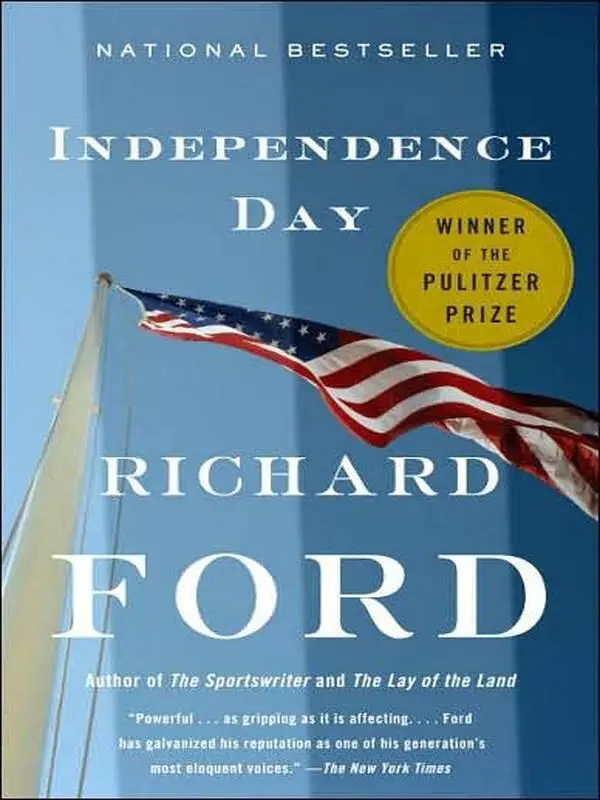
- Название:Independence Day
- Автор:
- Издательство:Vintage
- Жанр:
- Год:1996
- ISBN:нет данных
- Рейтинг книги:3 / 5. Голосов: 1
-
Избранное:Добавить в избранное
- Отзывы:
-
Ваша оценка:
Independence Day: краткое содержание, описание и аннотация
Предлагаем к чтению аннотацию, описание, краткое содержание или предисловие (зависит от того, что написал сам автор книги «Independence Day»). Если вы не нашли необходимую информацию о книге — напишите в комментариях, мы постараемся отыскать её.
, Richard Ford deepens his portrait of one of the most unforgettable characters in American fiction, and in so doing gives us an indelible portrait of America. Frank Bascombe, in the aftermath of his divorce and the ruin of his career, has entered an "Existence Period," selling real estate in Haddam, New Jersey, and mastering the high-wire act of normalcy. But over one Fourth of July weekend, Frank is called into sudden, bewildering engagement with life.
is a moving, peerlessly funny odyssey through America and through the layered consciousness of one of its most compelling literary incarnations, conducted by a novelist of astonishing empathy and perception.
Independence Day — читать онлайн бесплатно полную книгу (весь текст) целиком
Ниже представлен текст книги, разбитый по страницам. Система сохранения места последней прочитанной страницы, позволяет с удобством читать онлайн бесплатно книгу «Independence Day», без необходимости каждый раз заново искать на чём Вы остановились. Поставьте закладку, и сможете в любой момент перейти на страницу, на которой закончили чтение.
Интервал:
Закладка:
Though their situation is pretty much what I imagined this morning: that they’d enter a terrible trial-by-fire period having to do with their sense of themselves, a period which they’d exit disoriented. Afterward they’d wander in a fog until they reached a point of deciding something, which is when I’d wanted to talk to them. As it is, I’ve called while they’re still disoriented and merely seem decisive. If I’d waited until tomorrow, they’d both be in straitjackets and ready to roll; inasmuch as what’s true for them is true for any of us (and a sign of maturer years): you can rave, break furniture, get drunk, crack up your Nova and beat your knuckles bloody on the glass bricks of the exterior wall of whatever dismal room you’re temporarily housed in, but in the end you won’t have changed the basic situation and you’ll still have to make the decision you didn’t want to make before, and probably you’ll make it in the very way you’d resented and that brought on all the raving and psychic fireworks.
Choices are limited, in other words. Though the Markhams have spent too long in addlebrained Vermont — picking berries, spying on deer and making homespun clothes using time-honored methods — to know it. In a sense, I provide a service somewhat wider in scope than at first it might seem — a free reality check.
“Frank?” Phyllis is now on the line. Bumping and scraping of motel furniture starts in the background, as if Joe were loading it all in the car.
“Still here,” I say, though I’m thinking I’ll give Sally a call. Conceivably I can fly her up to Bradley in the morning, where Paul and I could nab her on the way to the Basketball Hall of Fame, then proceed to Cooperstown in a new-dimensional family modality: divorced father, plus son living in another state and undergoing mental sturm und drang, plus father’s widowed girlfriend, for whom he feels considerable affection and ambiguity, and whom he may marry or else never see again. Paul would view it as right for our times.
“I guess Joe and I have sort of pulled together on this whole thing now,” Phyllis says. Phyllis sounds to me like she’s having to exert physical force to talk, as if she’s being stuffed in a closet or having to squeeze between big rocks. I imagine her in a pink granny gown, her arms plump above the elbows, possibly wearing socks due to unaccustomed air-conditioning.
“That’s just great.” Bing, bing, bingety-bing . Kids are racking up big numbers on the Samurai Showdown across in the arcade. The Vince operates more like a small-town mall than a part-time sports shrine.
“I’m sorry it’s turned out this way after all the work you put in,” she says, somehow and with effort freeing herself from whatever’s restraining her. Possibly she and Joe are arm-wrestling.
“We’ll fight on another day,” I say cheerfully. I’m sure she means to tell me her and Joe’s complex reasoning for changing boats midstream. Though I’m only willing to hear her spiel it out because telling it will make her feel desperate the instant she’s finished. For donkeyish clients like the Markhams, the worst option is having to act on your own advice; whereas letting a paid professional like me tell you what to do is much easier, safer and more comforting, since the advice will always be to follow convention. “Just so you feel like you’ve made the right decision,” I say. I’m still thinking vividly about Sally flying up to meet me: a clear mental picture of her getting in a small plane, in high spirits, carrying an overnight bag.
“Frank, Joe said he could see himself standing in the driveway being interviewed by a local TV reporter,” Phyllis says sheepishly, “and he didn’t want to be that person, not in the Houlihan house.” I must’ve already talked to Joe about my theory of seeing yourself and learning to like it, since he’s now claimed it as his own patented wisdom. Joe has apparently left the room.
“What was he being interviewed about?” I say.
“That didn’t matter, Frank. It was the whole situation.”
Outside the glass doors in the orange-lit parking lot, a big gold-and-green cruiser bus pulls past the entrance, Eureka written on its side in lavish, curving scripted letters. I’ve seen these buses while driving to Sally’s via the Garden State. They’re usually crammed with schnockered Canucks headed for Atlantic City to gamble at Trump Castle. They motor straight through, arrive at 1 a.m., gamble forty-eight hours without cease (eats and drinks on the cuff), then hustle back on board and sleep the whole way back to Trois-Rivières, arriving in time for half a day’s work on Monday. Someone’s idea of fun. I’d like to get on my way before a crew of them comes storming in.
Phyllis, though, has won a round, somehow letting Joe convince himself he’s the bad-tempered, tight-fisted old noncompromiser who put the ki-bosh on the Houlihan house. “We also feel, Frank,” Phyllis drones, “and I feel this as strongly as Joe, that we don’t want to be bossed around by a false economy.”
“Which economy is that?” I say.
“The housing one. If we don’t get in now, it could be better later.”
“Well, that’s true. You never get in the river the same place twice,” I say dully. “I’m curious, though, if you know where you’re going to live by the time school starts.”
“Uh-huh,” Phyllis says competently. “We think if worse comes to worst, Joe can rent a bachelor place near his work and I can stay on temporarily in Island Pond. Sonja can go right on with her friends in school. We plan to talk to the other relator about that.” Phyllis actually says “relator,” something I’ve never heard her say, indicating to me she’s reverting to a previous personality matrix — more desperate, but more calculating (also not unusual).
“Well, that’s all pretty sound reasoning,” I say.
“Do you think that, really?” Phyllis says, undisguised fear suddenly working through her voice like a pitchfork. “Joe says he didn’t have a feeling anything significant ever happened in any of the places you showed us. But I wasn’t sure.”
“I wonder what he had in mind there?” I say. Possibly a celebrity murder? Or the discovery of a new solar system from an attic-window telescope?
“Well, he thinks if we’re leaving Vermont we should be moving into a sphere of more important events that would bring us both up in some way. The places you showed us he didn’t think did that. Your houses might be better for someone else, maybe.”
“They aren’t my houses, Phyllis. They belong to other people. I just sell them. Plenty of people do okay in them.”
“I’m sure,” Phyllis says glumly. “But you know what I mean.”
“Not really,” I say. Joe’s theory of significant events suggests to me he’s lost his new finger-hold on sanction. Though I’m not interested. If Joe rents a little dépendance in Manalapan, and Phyllis finds “meaningful” work substituting in the Island Pond alternative crafts school, gets into a new “paper group” with a cadre of acid-tongued but spiritually supportive women friends, while Sonja makes the pep squad at Lyndon Academy, marriage Markham-style will be a dead letter by Turkey Day. Which is the real issue here, of course (a pro-founder text runs beneath all realty decisions): Is being together worth the unbelievable horseshit required to satisfy the other’s needs? Or would it just be more fun to go it alone? “Looking at houses is a pretty good test of what you’re all about, Phyllis,” I say (the very last thing she wants to hear).
“I would’ve looked at your colored house, Frank — I mean your rental. But Joe just didn’t feel right about it.”
“Phyllis, I’m at a pay phone on the turnpike, so I better be going before a truck runs over me. But our rental market’s pretty tight, I think you’ll find.” I spy a phalanx of chortling Canadians, most of them in Bermudas, rumbling across the lot, all primed to hit the can, down a gut-bomb, have a sniff at the Vince trophy case, then grab one last en-route catnap before nonstop gaming commences.
Читать дальшеИнтервал:
Закладка:
Похожие книги на «Independence Day»
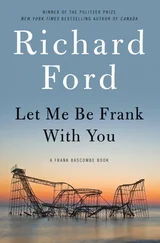
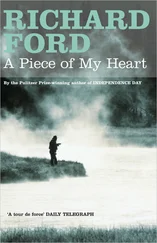
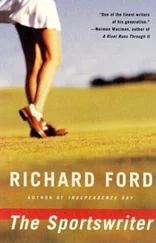
Представляем Вашему вниманию похожие книги на «Independence Day» списком для выбора. Мы отобрали схожую по названию и смыслу литературу в надежде предоставить читателям больше вариантов отыскать новые, интересные, ещё непрочитанные произведения.




Обсуждение, отзывы о книге «Independence Day» и просто собственные мнения читателей. Оставьте ваши комментарии, напишите, что Вы думаете о произведении, его смысле или главных героях. Укажите что конкретно понравилось, а что нет, и почему Вы так считаете.