Jay Fox - THE WALLS
Здесь есть возможность читать онлайн «Jay Fox - THE WALLS» весь текст электронной книги совершенно бесплатно (целиком полную версию без сокращений). В некоторых случаях можно слушать аудио, скачать через торрент в формате fb2 и присутствует краткое содержание. Год выпуска: 2011, Издательство: Stay Thirsty Press, An Imprint of Stay Thirsty Publishing, A Division of Stay Thirsty Media, Inc., Жанр: Современная проза, на английском языке. Описание произведения, (предисловие) а так же отзывы посетителей доступны на портале библиотеки ЛибКат.
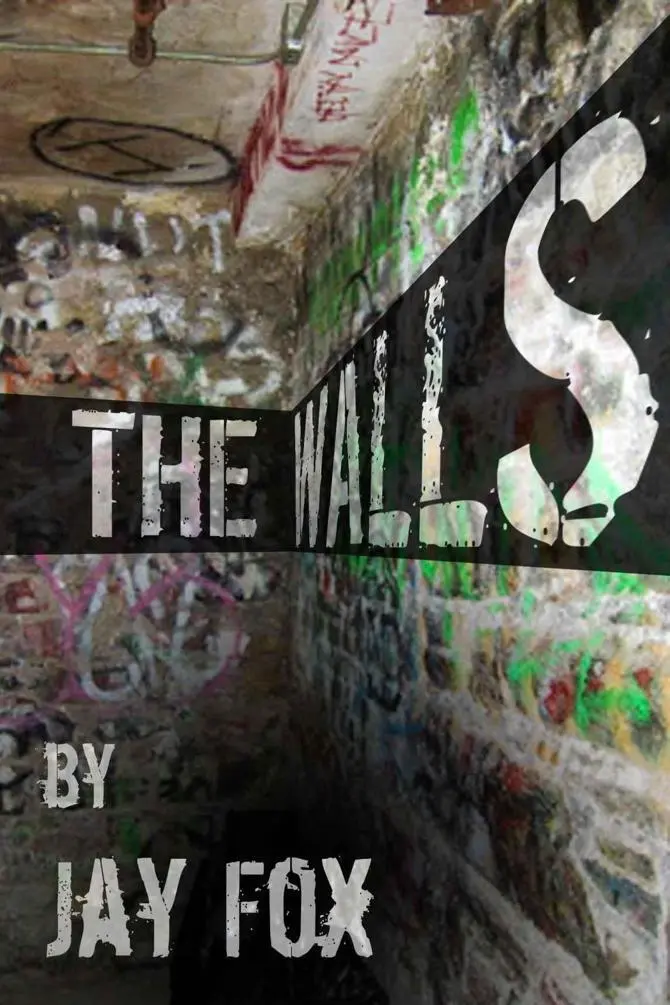
- Название:THE WALLS
- Автор:
- Издательство:Stay Thirsty Press, An Imprint of Stay Thirsty Publishing, A Division of Stay Thirsty Media, Inc.
- Жанр:
- Год:2011
- ISBN:нет данных
- Рейтинг книги:4 / 5. Голосов: 1
-
Избранное:Добавить в избранное
- Отзывы:
-
Ваша оценка:
THE WALLS: краткое содержание, описание и аннотация
Предлагаем к чтению аннотацию, описание, краткое содержание или предисловие (зависит от того, что написал сам автор книги «THE WALLS»). Если вы не нашли необходимую информацию о книге — напишите в комментариях, мы постараемся отыскать её.
Set in Brooklyn during the opening decade of the 21st century, Fox has captured the heartbeat, the zeitgeist, the essence of the echo boomers as they confront an uncertain future built upon a rapidly receding past.
The search, the hunt, the motivation to discover the truth presses Fox’s eclectic cast as they deal with their own lives, one day at a time. Certain to resonate now and in the rearview mirror of history, THE WALLS is a book, a story, a time capsule that snapshots and chronicles the quest to find a famous, elusive New York City graffiti artist whose greatest works can only be found in restrooms of underbelly dive bars in contemporary Brooklyn.
THE WALLS — читать онлайн бесплатно полную книгу (весь текст) целиком
Ниже представлен текст книги, разбитый по страницам. Система сохранения места последней прочитанной страницы, позволяет с удобством читать онлайн бесплатно книгу «THE WALLS», без необходимости каждый раз заново искать на чём Вы остановились. Поставьте закладку, и сможете в любой момент перейти на страницу, на которой закончили чтение.
Интервал:
Закладка:
“Anything you could tell me about him. I mean, did he, did he ever admit to being Coprolalia?”
“Yes and no. I did hear him refer to himself by that name a few years before that idiot professor started using it to describe every piece of latrine art he thought witty enough to be evaluated or criticized.” He shakes his head. “But what is art? Oscar Wilde aphorisms aside, art does have a purpose; it just isn't a purpose like food or shelter or water or even sex. If it were useless, it would not be ubiquitous. Yet art is found in every culture. Even troglodytes took time off from fucking and killing to paint on the wall, know what I mean?”
“Troglodytes!” Scooter yelps. “That song is the shit.”
“Every society has it, but, apparently, no one needs it. It seems as though the majority of art in our society, however, is created solely to bewilder or shock people. High art, I mean. It's either provocative for the sake of being provocative, or it needs to be dissected and interpreted because it lacks that…what's the word I'm looking for…that visceral…ness. Is that a word? Visceralness?”
“For right now, sure.”
“What I'm saying is that it is either the most base form of visceral provocation — like shit on a pedestal — or it's produced with extreme pretense.” The song Troglodytes comes on. I feel as though I am once again worshiping Risus. “Not to say that I want to revert back to the bathos of Romanticism. And, look, it's not I hate everything being produced right now, either. I couldn't begin to give a list of all the great people out there who continue to astound me with their abilities and their insights. But, for the most part, I see way too much esoteric shit.
“When artists returned to the portrayal of Matter as opposed to Form, Subject instead of Substance, during the Renaissance, there was still a sense of propriety, you know, because there was the desire to emulate Nature. But that wasn't enough. It never should have been enough. But obstacles, institutions, started evaporating too quickly after the Impressionists. It wasn't enough to have art be about an individual's style, the artist's observation seen through his own subjective perspective; it had to go further. And soon the communal framework, the pragmatic and inferential elements of society, gave way to utter chaos; it was like jumping from capitalism to anarchy over the course of a few years. I'll admit that, when the revolution was beginning, when art was standing on the edge, that was one of the most fecund eras of modern art; but now the avant-garde has rejected all shared experience . When what Habermas would call the lifeworld is thought to be a part of the hegemony and monolith of capitalism, and one believes it is the all-too Romantic mission of the artist to fight against it, you end up with a lack of coherence, an inability to convey anything because the very symbols within the various superstructures of the society are given meanings that have no context outside of the artist’s mind. Such symbols are, consequently, perceived as meaningless by just about everyone in the community — just like in the case of DuChamps' fucking Fountain , which is only clever in the sense that no one, so far as I know, had made such a purely Structuralist work. Either way, this is the worst aspect of Modernism, if you think about it. Not only will it always be haunted by the specter of Romanticism and, worse, Objectivism, which is — and a lot of people will disagree here — perhaps the closest thing to a Modernist philosophy, it will also never cease to be esoteric by definition. If you think about it this way, it makes it seem to be the marriage of narcissism and Positivism. You feel as though you, the artist, can save the world through your work. But, to add to the narcissism and arcane nature of so much of the work, the audience has no idea whether or not the internal experience that is being represented on the canvas or in the piece of wood or marble or whatever is genuine. It ceases to have an affect on you as a witness or spectator beyond the fact that it is making a Structuralist statement about the object d’art while, at the same time, attempting to singlehandedly alter the community’s traditional understanding of a given symbol. It’s kind of how corporations are generating alien meanings for the symbols of our community, or, in some cases, creating entirely new words in order to manipulate not only the meaning we give to things, but the very form and structure that allows for such meanings to develop.
“When artists first started breaking rules, the goal was to portray an idea, one that was not wholly reliant upon material predications. It was an antithesis that found its genesis in the movement away from the objective or eternal, an antithesis that can be traced back to the moment when man stopped attempting to either showcase the perspective of God or follow the rules of tradition. And it progressed. It progressed as mankind became increasingly alienated from his traditional institutions. Take, for example, the artwork that appeared in the wake of the First World War. They knew they couldn't convey their experiences with recourse to convention; convention was no longer viable. So artists had to abstract in order to share their vision. And it is understandable why they had to do this. But now convention is rejected for the sake of rejecting convention. One thinks it artsy to speak in tongues about the weather. It's not artsy; it's pretentious, the type of shit someone contrives because they don't have anything important to say. I used to argue that this was the necessary progression of art, but, if we have learned anything from this century, it's that Dewey was right to say that critical theory is an inductive method, and that history may have a progression, but that the progression is only discernible once it has become historical.
“Back to the point about art, though. We've come to the end game in terms of the progression of abstraction. There is no progression in existential anomie, especially when it morphs into the irrationality and anti-logic and, let's be honest here, nihilism of Dadaism. It's static, and because it's static…” He stops himself. “I'm sorry I just went on that tirade,” he says quietly, for he had begun to raise his voice. “I haven't been able to sleep very well since I came back from Japan.”
“Why were you there?”
“Some company based in Osaka wants me to make some shit for them,” he says as he reaches for a pouch of tobacco and a book of papers. “I won't deny that I feel like kind of a sellout, but, at the same time, I'm the type of person who believes that a check is a check so long as I have the freedom to do what I want. If the person providing the check is not asking me to compromise any of my values, then I don't see a problem with taking the money, even if the money comes from a corporation. You know, if they were telling me what to build, then I wouldn't do it. But, in this case, the only parameters I received concerned the dimensions of the room in which the table will be installed. I don't see that as a compromise.” He pauses to lick the paper. “Anyway, to go back to what I was saying.” He pauses again. “What was I saying?” He shakes his head. “I was probably just rambling.” He pauses again. “You have any more questions about Mordy?”
“Do you think all of the pieces attributed to Coprolalia have been done by him?”
“No,” he says as he looks for a lighter. “But, then again, I'm not entirely sure. If it is all the work of one man, he certainly has cornered off a wonderful piece of a market that cannot be exploited or profited from. Think about it. What's the only truly public place that is at the same time private enough to allow an artist the chance to exhibit his or her work without fear of it being stolen or removed? Yo', Scoot, can you toss me a light?”
Читать дальшеИнтервал:
Закладка:
Похожие книги на «THE WALLS»
Представляем Вашему вниманию похожие книги на «THE WALLS» списком для выбора. Мы отобрали схожую по названию и смыслу литературу в надежде предоставить читателям больше вариантов отыскать новые, интересные, ещё непрочитанные произведения.







Обсуждение, отзывы о книге «THE WALLS» и просто собственные мнения читателей. Оставьте ваши комментарии, напишите, что Вы думаете о произведении, его смысле или главных героях. Укажите что конкретно понравилось, а что нет, и почему Вы так считаете.