Jay Fox - THE WALLS
Здесь есть возможность читать онлайн «Jay Fox - THE WALLS» весь текст электронной книги совершенно бесплатно (целиком полную версию без сокращений). В некоторых случаях можно слушать аудио, скачать через торрент в формате fb2 и присутствует краткое содержание. Год выпуска: 2011, Издательство: Stay Thirsty Press, An Imprint of Stay Thirsty Publishing, A Division of Stay Thirsty Media, Inc., Жанр: Современная проза, на английском языке. Описание произведения, (предисловие) а так же отзывы посетителей доступны на портале библиотеки ЛибКат.
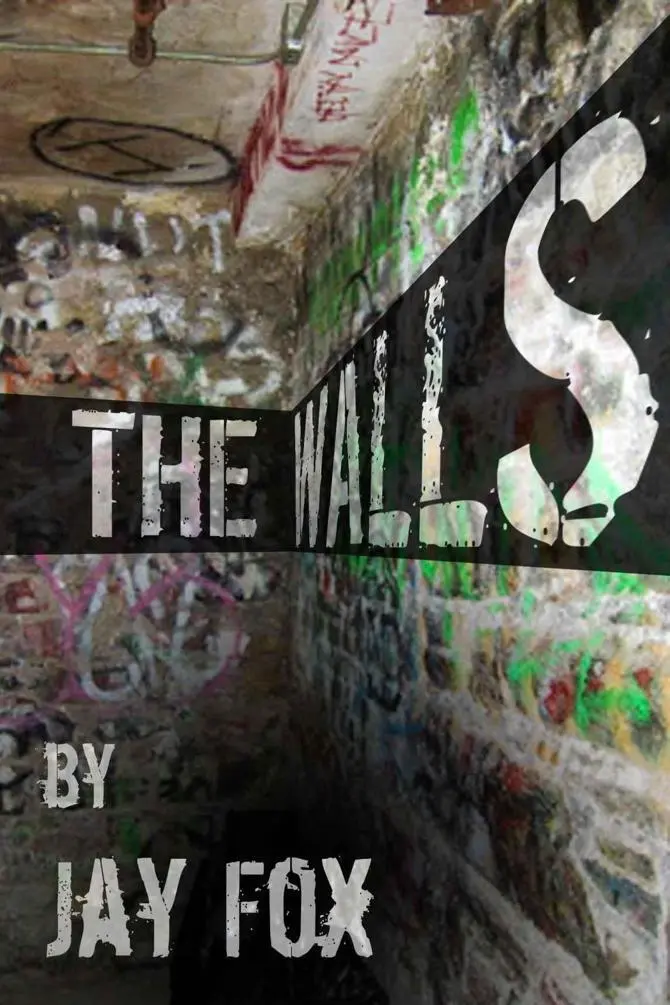
- Название:THE WALLS
- Автор:
- Издательство:Stay Thirsty Press, An Imprint of Stay Thirsty Publishing, A Division of Stay Thirsty Media, Inc.
- Жанр:
- Год:2011
- ISBN:нет данных
- Рейтинг книги:4 / 5. Голосов: 1
-
Избранное:Добавить в избранное
- Отзывы:
-
Ваша оценка:
THE WALLS: краткое содержание, описание и аннотация
Предлагаем к чтению аннотацию, описание, краткое содержание или предисловие (зависит от того, что написал сам автор книги «THE WALLS»). Если вы не нашли необходимую информацию о книге — напишите в комментариях, мы постараемся отыскать её.
Set in Brooklyn during the opening decade of the 21st century, Fox has captured the heartbeat, the zeitgeist, the essence of the echo boomers as they confront an uncertain future built upon a rapidly receding past.
The search, the hunt, the motivation to discover the truth presses Fox’s eclectic cast as they deal with their own lives, one day at a time. Certain to resonate now and in the rearview mirror of history, THE WALLS is a book, a story, a time capsule that snapshots and chronicles the quest to find a famous, elusive New York City graffiti artist whose greatest works can only be found in restrooms of underbelly dive bars in contemporary Brooklyn.
THE WALLS — читать онлайн бесплатно полную книгу (весь текст) целиком
Ниже представлен текст книги, разбитый по страницам. Система сохранения места последней прочитанной страницы, позволяет с удобством читать онлайн бесплатно книгу «THE WALLS», без необходимости каждый раз заново искать на чём Вы остановились. Поставьте закладку, и сможете в любой момент перейти на страницу, на которой закончили чтение.
Интервал:
Закладка:
“It's a form of atonement,” he says bluntly. My cigarette has gone out. He lights another before sliding his Zippo across the table. “He felt guilty about the source of his money, his life. It haunted him.” He drags from his cigarette slowly. “I'm guessing Patrick didn't mention how Keens died.”
“No; never came up.”
“He shot himself.”
There is a long silence at the table. In this time I notice that the couple next to us, who have been getting the majority of the smoke from Sean's cigarette blown in their face, are conversing about how rude smokers are just loud enough so that Sean and I can hear them. The music from inside the café sounds like late George Benson. The centerpiece of the concrete garden, a massive oak rising from a five by five plot of soil, makes shifting shadow-lattices on the walls that surround us. I remove my sunglasses.
“He what?”
“Shot himself.” It comes out plainly, not stoically or gravely; he recites this information as if telling me the time. “He couldn't live with the guilt, so he shot himself.”
“But why? I mean, the money only paid for his education; it's not like—”
“And what of Abram & Keens? Did his mother promote happiness and laughter with that Leviathan? Don't you think he felt that the money from that company was contaminated, that it contaminated him, too. Didn't you question why he never worked again? He could have given it all away, lived by his labor, and rid himself of the insidious wealth that came from the blood and the toil of untold millions, from a scarred landscape where ore was withdrawn, brutalized bodies deposited.” He ashes his cigarette carefully, slowly. “It became his legacy, too. He did not erase it or rectify it; he only denied it.”
“I thought he gave away most of that money. I thought he only kept enough to tool around the world, and that, with the rest of it, he bought a house down in Park Slope.”
“He gave some of it away. But denial is a poor surrogate for innocence,” he adds in an aphoristic tone. “You see, he formed that cult to run away from the reality of the situation. But it was always there, a great cynosure that infected every thread of his clothing, every brick of that house, every thought in his head: there was not one thing in his life that could not be traced back to the privilege he inherited by means of rape or plunder.” He brandishes what I hope is a wince. “And it was this realization, this inability to escape from the imperious guilt, that led him to suicide. Isn't that all suicide really is — the desire to escape from the ego?”
Maybe it is. He was not only his mother's son; he was a constant reminder of the crime, a byproduct of that insatiable lust and that need for power over a woman, a woman for whom the perpetrator felt no love, no tenderness, no sympathy. Yes, he was the unwanted result of a crime, the crime that stole away his mother's youth. And as much as she may have loved him, as much as she may have cared for him and nurtured him and taught him, there was always that element in him that she could not fully trust, and, therefore, could not fully love. And so maybe there are some crimes that are atavistic, even if the father is disowned by the son, the son by the father. But that was not fully the case with Keens. He may have returned each night to the apartment he and his mother shared, he may have never met the eyes of his father, but the boys with whom he socialized and the environment to which he was subjected were befitting of a Balaguez, a Rockefeller, a Vanderbilt. And maybe he realized it early on, too. Because he must have known. He must have been able to see in it in the mirror. Even if he looked nothing like his father, even if he had his mother's eyes or her nose or her mouth or her cheeks or whatever, it didn't matter. Because the guilt was generational, indelible: He could have renounced everything, he could have given away all of his possessions, thrown them away, immolated them upon a pyre and called the whole ordeal a purification ritual; he could have reduced himself to poverty, assumed the likeness of Job and taken to prostrating himself upon the earth, digging at his blistering skin with the shards of his former life; he could have become a doctor, a holy man, a saint — it would not have erased that legacy he inherited (unwillingly, true; but are not all legacies imposed upon their inheritors, benefactor and victim alike?); he still would have been part Balaguez, part aristocrat, part rapist, capitalist, exploiter, parasite, demon.
“He still had options. We always have options.”
“Options?” he scoffs. “By options, do you mean the pissing away of several million dollars in technology that would enable him to apologize to the dead? That's the real reason behind the A-R-E: He wanted to bring the Russian miners and prisoners to Brooklyn, to have a fucking party with these…these ghosts, as if it could somehow ameliorate the tragedy that was their life — a bandage in the form of bacchanalia.”
He takes a long drag from his cigarette. He seems so calm now that one could mistake his demeanor for smug. “Astrally-Resurrected Entities: The Russians who died in the Balaguez mines over one hundred years ago — the same people who had to die to grant his father the ability to circumvent the law, to allow his mother the ability to become the most feared person in Brooklyn real estate, to allow him his schooling at Columbia and Harvard, not to mention his years of aimless traveling and wanton reprobation. And what do you think came of his funding of Dr. Frankenstein's inventions?” I narrow my eyes. “Do you think that Keens discovered a means by which he could communicate with the dead? Or is it far more plausible that the obvious futility of these continued experiments was just further proof of his inability to cope with the history of his family and the crimes he inherited?” He grunts. “And now his grandson continues the pointless charade by inviting a gang of corybants to engage in the basest performances of hedonism and debauchery one can imagine. Is there anything redeeming in that?”
We gaze to one another in a détente that brings not only silence, but also resignation on my part. I am outmatched . I pull my eyes away from Sean, and begin to examine the rest of the garden: the emaciated cat that has appeared on the wall above, the couples gossiping about friends assumed to be mutual, the waitress — Zoe — forcing laughter and salads with goat cheese onto patrons, Sean staring to the ashtray without any ostensible emotion, the harem of shadows dancing enthusiastically in the breeze, the uneven portions of concrete being forced up by the roots of the oak. I have no reason to hold the beliefs that I am unwilling to abandon; I only have a vague sense of hope that seems sympathetic to the existence of a world beyond visible wavelengths and audible frequencies. How can one prove anything when the conclusion we wish to affirm carries the gravity it does precisely because it exists beyond the realm of measurement and empirical instrumentation? It is not faith, but, then again, what else goes by the epithet of unverifiable trust?
The heart of the matter seems to be that there is no barometer with which to gauge our ignorance, there can only be the recognition of areas where knowledge is absent. Successive to that revelation, there comes the discovery that these knowledge vacuums do not diminish with age or study; instead, they augment. Sean cannot admit that some of these holes will never, can never, be filled. As a result, he denies that many exist. Paradoxically, I am more conservative when measuring the dimensions of human ignorance. All that is left is recourse in the F word, the word that provides the only defense against both agnosticism and solipsism. Without it, it would seem that all is lost but the lucent sparks of the mind.
Читать дальшеИнтервал:
Закладка:
Похожие книги на «THE WALLS»
Представляем Вашему вниманию похожие книги на «THE WALLS» списком для выбора. Мы отобрали схожую по названию и смыслу литературу в надежде предоставить читателям больше вариантов отыскать новые, интересные, ещё непрочитанные произведения.






Обсуждение, отзывы о книге «THE WALLS» и просто собственные мнения читателей. Оставьте ваши комментарии, напишите, что Вы думаете о произведении, его смысле или главных героях. Укажите что конкретно понравилось, а что нет, и почему Вы так считаете.