Jay Fox - THE WALLS
Здесь есть возможность читать онлайн «Jay Fox - THE WALLS» весь текст электронной книги совершенно бесплатно (целиком полную версию без сокращений). В некоторых случаях можно слушать аудио, скачать через торрент в формате fb2 и присутствует краткое содержание. Год выпуска: 2011, Издательство: Stay Thirsty Press, An Imprint of Stay Thirsty Publishing, A Division of Stay Thirsty Media, Inc., Жанр: Современная проза, на английском языке. Описание произведения, (предисловие) а так же отзывы посетителей доступны на портале библиотеки ЛибКат.
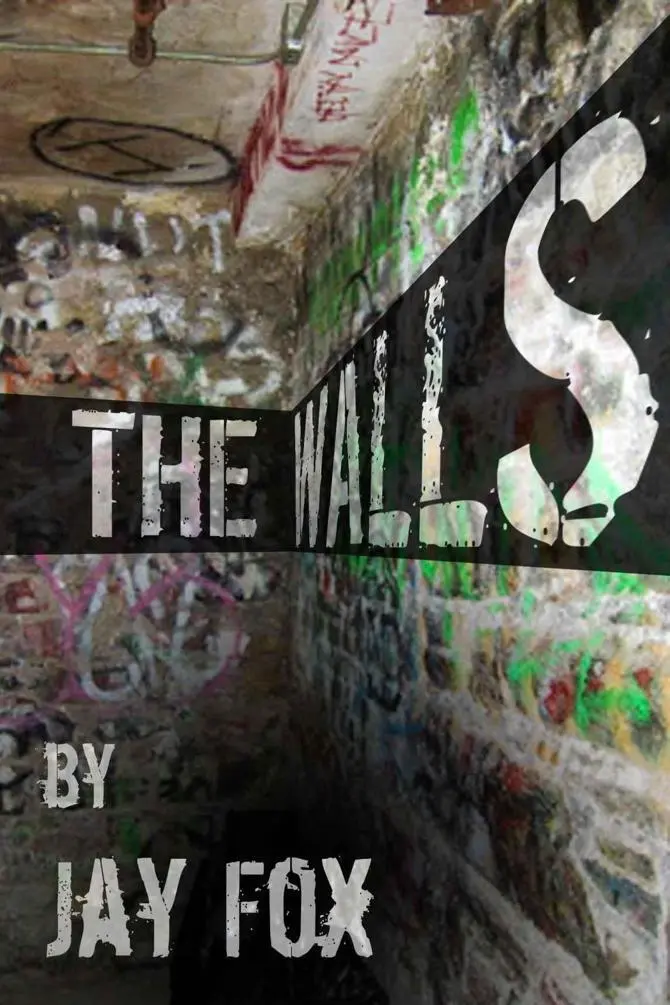
- Название:THE WALLS
- Автор:
- Издательство:Stay Thirsty Press, An Imprint of Stay Thirsty Publishing, A Division of Stay Thirsty Media, Inc.
- Жанр:
- Год:2011
- ISBN:нет данных
- Рейтинг книги:4 / 5. Голосов: 1
-
Избранное:Добавить в избранное
- Отзывы:
-
Ваша оценка:
THE WALLS: краткое содержание, описание и аннотация
Предлагаем к чтению аннотацию, описание, краткое содержание или предисловие (зависит от того, что написал сам автор книги «THE WALLS»). Если вы не нашли необходимую информацию о книге — напишите в комментариях, мы постараемся отыскать её.
Set in Brooklyn during the opening decade of the 21st century, Fox has captured the heartbeat, the zeitgeist, the essence of the echo boomers as they confront an uncertain future built upon a rapidly receding past.
The search, the hunt, the motivation to discover the truth presses Fox’s eclectic cast as they deal with their own lives, one day at a time. Certain to resonate now and in the rearview mirror of history, THE WALLS is a book, a story, a time capsule that snapshots and chronicles the quest to find a famous, elusive New York City graffiti artist whose greatest works can only be found in restrooms of underbelly dive bars in contemporary Brooklyn.
THE WALLS — читать онлайн бесплатно полную книгу (весь текст) целиком
Ниже представлен текст книги, разбитый по страницам. Система сохранения места последней прочитанной страницы, позволяет с удобством читать онлайн бесплатно книгу «THE WALLS», без необходимости каждый раз заново искать на чём Вы остановились. Поставьте закладку, и сможете в любой момент перейти на страницу, на которой закончили чтение.
Интервал:
Закладка:
“There is always light, Tomas.”
He scowls.
“But going back to what was said earlier, it depends on how you define the word 'see'. I mean, if 'to see' is defined as the 'the images the eyes relay back to the brain,' then I guess the eyelids response would always be the correct one. However, if it's defined as 'the illuminated image the eyes transmit to the brain for processing', then I guess 'nothing' could be somewhat correct. Then again, darkness is always right because it simply means the lack of light. It's a relative term, like fast or slow; a is x and b is y only because of the relationship between a and b . It's dark because there's less light than when one's eyes are open.”
“Yeah, well, there may be no absolute lightness, but there is an absolute darkness, an absolute fastness, and, though I'm not a fucking Einstein scholar or anything, an absolute slowness.”
“Still, a car going a hundred kilometers an hour down a residential street is considered to be going fast. Like I said, it's a relative term; the word just needs to accurately apply, given the context, in order to be considered correct. '“A” is “A”' is a universally sound proposition if and only if the pragmatic elements of language are ignored. For example, if Curious George were to steal the hat of the Man in the Yellow Hat, it would be false to refer to the Man in the Yellow Hat — a proper noun — as the man in the yellow hat. This is akin to a puzzle devised by either Russell or Frege—”
“Dude, fuck this,” Tomas says as he finishes his drink. “I have to take a fucking piss.”
I turn to Patrick as Tomas stumbles from his seat. Patrick is ostensibly upset. “Don't mind him,” I say. “He's just drunk.” The conversation stalls for a few moments as we both look around in something akin to an awkward silence, perhaps a distant cousin. I become better acquainted with the aesthetics of the bar, which could be one of the last authentic drinking establishments left on the north Bedford strip: the lack of renovation, the surly-looking bartender, the absence of a woman both single and under forty, the wood veneer, the Christmas lights that are on even in the summer, the pictures of the place from back in the seventies, the availability of seats, the drink specials that do not cater to consumers of pink or green concoctions, the paucity of concern, the stools, tables, and patrons standing on shaky ground, the dirty mirrors, dart holes, and ancient beer advertisements that adorn the walls. People here do not wash behind their ears, nor do they inhabit the world of will; they reside in the realms of should and could and would, an unfortunate domain in which the magnanimous contours of fantasy never seem to comply with the path that reality has decided to take. Sometimes they compare these lines and measure the degree of the angle created when the two diverged. Sometimes it seems more bearable to see the tears of our mothers than the harrowing face of reality.
“You do know that progress is measured by the degree a society understands light, correct?”
“Sure.”
Is that a Plato reference? Is it simply a fact about the progression the study of physics has taken? Does it concern digital technology?
Conversation comes to a halt once again. The jukebox continues to grace us with the sounds of the seventies — now John Sebastian's “Welcome Back”—thereby providing a protracted reprieve from the hair metal medley on which some dude in a Def Leppard had spent a small fortune. Most of the songs were less famous than the typical arsenal of albums these types of bars often carry — records by Poison, Ratt, Warrant, Whitesnake (or is it White Snake ?), Motley Crue, Skid Row, Quiet Riot, Twisted Sister, Scorpions, or any of those bands that regularly gig in Purgatory — but each track was known and enjoyed by the majority of the patrons. The Journey requisite was taken care of fairly early on; Guns n' Roses, however, lay in wait, perhaps on reserve. I am expecting Patrick to put on Dusty Springfield or Wham! at some point in order to cement his places as the most annoying presence the bar has seen in recent years, but the John Sebastian seems to be enough to put him there.
“So what do you know of Coprolalia?” I ask plainly.
“Nothing really. I've seen a few of his pieces and most of my friends think he is just the bee's knees; but, like I told you earlier, he's a friend of a friend, who, I suppose, is something of a friend of a friend. Do you know anything of Willis Faxo? I figured you would have come across his name in your search for the artist.”
“Not really,” I respond. “I've heard a few things about him — and only then from Tomas or our friend James.”
“He's a very odd bird — Willis, that is. Something of a Pygmalion, I suppose, though he makes furniture — tables and chairs mostly. Everything is fashioned out of wood. I was under the impression that he was still in Astoria, but a less than reliable source recently told me that he's moved into a space somewhere in that limbo region between Williamsburg and Bushwick — the one the real estate brokers are now calling either East Williamsburg or the Williamsburg Industrial Park. Industrial Park.” He lets out a caustic laugh. “There's an oxymoron if I've ever heard one.” He picks up one of his beers. “It's a desolate area, really. I've known quite a number of people who've been mugged there.
“But you have no need for this information,” he says before taking down about a quarter of his beer. “You want to know about the artist. Well, according to my friend Daphne, the same Daphne whom Mr. Faxo knew biblically, the two were roommates in college.”
“Wait. Who was roommates with who?”
“It's whom — but that's irrelevant. Mr. Faxo roomed with the artist. They both went to that art school in the East Village. Cooper State? Cooper University?”
“Cooper Union?”
“Yes, Cooper Union. They went there. Your artist's real name is Mordecai, but I don't know his last name.” I smile. I don't know the adjective that would qualify it. “Also, he grew up somewhere in Brooklyn — either Midwood or Bensonhurst, I believe.”
“Bay Ridge?” I suppose.
“No, certainly not Bay Ridge. It's one of the neighborhoods to the east of Bay Ridge, and west of Sheepshead Bay. It’s north of both of these regions, as well.” He pauses to scratch his head. “You probably want to know some more details about him, but I can't offer you much help. I haven't seen so much as a picture of him.”
“Well, do you know how I can get in touch with this Faxo character?”
He does not respond with a word; he merely pulls out a sheet of paper that contains a name and a number. “I don't know if Daphne still speaks with him,” he says as he points to the name on the paper. “The two were together for a short time, so don't be too upset if she can't help you.”
“Why didn't you just bring her along?”
“You need to relax, mate,” he snaps with a sudden look of severity. He pulls his head back and regains his former, gregarious constitution. “I was going to surprise you, but it seems as though the two of you are well on your way to making perfect asses out of yourselves if we don't get out of here after the next drink.” I look to him with a wince. “I'm to meet with her tonight at a party. You can either come with me or you can go home and call her tomorrow. It's your choice.” There's a lapse of sound as songs change. The new tune evokes an elated grin from Patrick. “Do you like Seals and Croft?”
“I have no idea. Is this them?”
“Of course it is,” he replies with wide eyes. “You do know that they are both Baha'is, right?”
“No,” nor do I know what the hell a Baha'i is .
Читать дальшеИнтервал:
Закладка:
Похожие книги на «THE WALLS»
Представляем Вашему вниманию похожие книги на «THE WALLS» списком для выбора. Мы отобрали схожую по названию и смыслу литературу в надежде предоставить читателям больше вариантов отыскать новые, интересные, ещё непрочитанные произведения.






Обсуждение, отзывы о книге «THE WALLS» и просто собственные мнения читателей. Оставьте ваши комментарии, напишите, что Вы думаете о произведении, его смысле или главных героях. Укажите что конкретно понравилось, а что нет, и почему Вы так считаете.