Jay Fox - THE WALLS
Здесь есть возможность читать онлайн «Jay Fox - THE WALLS» весь текст электронной книги совершенно бесплатно (целиком полную версию без сокращений). В некоторых случаях можно слушать аудио, скачать через торрент в формате fb2 и присутствует краткое содержание. Год выпуска: 2011, Издательство: Stay Thirsty Press, An Imprint of Stay Thirsty Publishing, A Division of Stay Thirsty Media, Inc., Жанр: Современная проза, на английском языке. Описание произведения, (предисловие) а так же отзывы посетителей доступны на портале библиотеки ЛибКат.
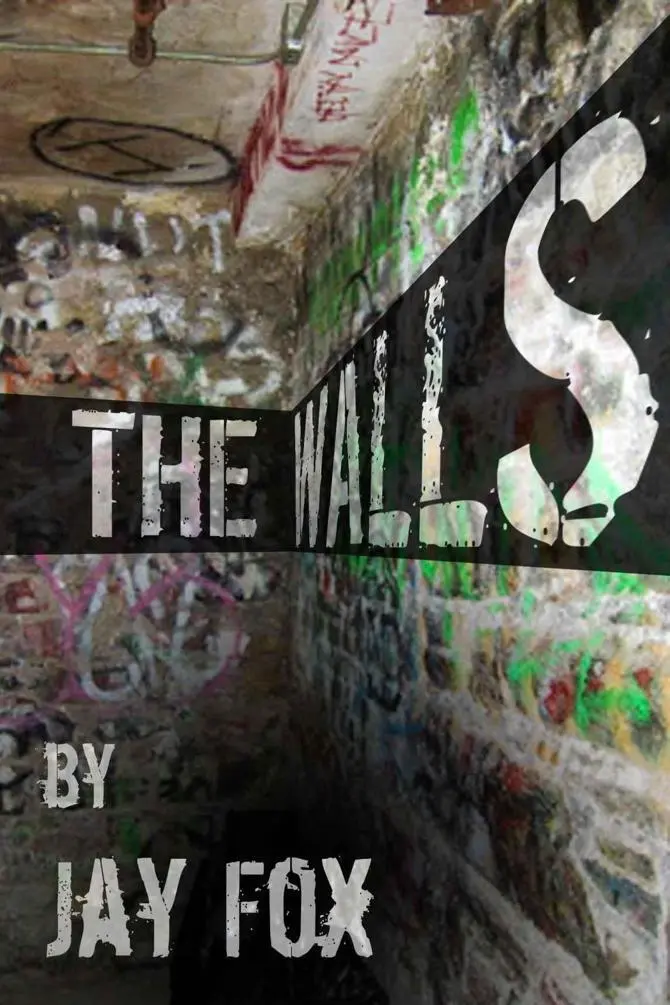
- Название:THE WALLS
- Автор:
- Издательство:Stay Thirsty Press, An Imprint of Stay Thirsty Publishing, A Division of Stay Thirsty Media, Inc.
- Жанр:
- Год:2011
- ISBN:нет данных
- Рейтинг книги:4 / 5. Голосов: 1
-
Избранное:Добавить в избранное
- Отзывы:
-
Ваша оценка:
THE WALLS: краткое содержание, описание и аннотация
Предлагаем к чтению аннотацию, описание, краткое содержание или предисловие (зависит от того, что написал сам автор книги «THE WALLS»). Если вы не нашли необходимую информацию о книге — напишите в комментариях, мы постараемся отыскать её.
Set in Brooklyn during the opening decade of the 21st century, Fox has captured the heartbeat, the zeitgeist, the essence of the echo boomers as they confront an uncertain future built upon a rapidly receding past.
The search, the hunt, the motivation to discover the truth presses Fox’s eclectic cast as they deal with their own lives, one day at a time. Certain to resonate now and in the rearview mirror of history, THE WALLS is a book, a story, a time capsule that snapshots and chronicles the quest to find a famous, elusive New York City graffiti artist whose greatest works can only be found in restrooms of underbelly dive bars in contemporary Brooklyn.
THE WALLS — читать онлайн бесплатно полную книгу (весь текст) целиком
Ниже представлен текст книги, разбитый по страницам. Система сохранения места последней прочитанной страницы, позволяет с удобством читать онлайн бесплатно книгу «THE WALLS», без необходимости каждый раз заново искать на чём Вы остановились. Поставьте закладку, и сможете в любой момент перейти на страницу, на которой закончили чтение.
Интервал:
Закладка:
And now I can't see her for her; I can only compare her to my own manipulation of her — an invention that supplanted the past with a more palpable one. She has to live up an expectation of which she is entirely ignorant, of which she cannot compare because she does not nor should not need to do so.
She will never be who I want her to be .
“Why are you so spacey today?”
“What's that?” I return.
She smiles. “Your head is really in the clouds.”
“It's just Coprolalia,” I begin. “I've already spent half a month trying to find him.”
“Do you know anything about him yet?”
“I know his name is Mordecai Adelstein. That his father's name is Isaac Adelstein.”
“Why don't you just look him up on the Internet?"
“I have. And I've of course gone through the white pages. There's nothing there.”
“That sucks.”
“Yeah. I guess it's a bit troubling. I feel like I wasted a lot of time, but I guess I'm kind of grateful, too. It's weird.”
“Would you have done anything differently?”
It's an innocuous question, but it doesn't strike me that way. For her, the Real has the ability to be superfluous, to be capable of inspiring the Event, of provoking all sorts of capitalized words that a slew of theorists either posit or reject. For me, the stage of reality is more difficult. I think of Tomas and Aberdeen, of Midas and Pepper, of Jane, Trixi, Nixi, and the other one. I think of Willis, of Chrissy, of Keen Buddy, of Patrick, Mongo, and Daphne. I think of Greg(g) and the briefs brigade, the citrus artillery, Leonidas, Brandy walking through the silent five am streets of the Lower East Side, and all of those nameless entities that exist in this city just waiting for someone to take notice of them. I think of all of them, laughing or sullenly gazing into the mouth of a bottle, perhaps under the impression that their entire life has been one string of accidents that has somehow amounted to the present. I think of Vinati. I think of Sean. I think of the City — the Irish pubs of Third Avenue with their Irish staffs and Irish renditions of American songs, the crowded basement bathrooms of the Upper West Side, the smell of grilled meat that lingers in the streets of Hells Kitchen, the lights of Times Square that shine so bright as to blind this world from the reality of New York City, the serenity of Claremont Avenue at dusk, the nameless clubs behind thick unmarked doors in the Village — and of Brooklyn — the scent of pig's blood and garlic that has been infused into the Manhattan Avenue sidewalks, the dilapidated row homes of Williamsburg snuggled between ten- and twelve-story condo buildings, the parades of strollers flowing up and down Seventh Avenue, Sixth Avenue and its denizens who appear to be sauntering amidst a canyon of fudge, the dollar stores along Fifth Avenue that will soon be bought out, remodeled, and reopened as trendy bars and lounges, Fourth Avenue's bounty of bodegas and tiny Mexican women all miraculously named Maria, Third Avenue's abundance of valet parking and, further north, a terre mauvaise of rotting industry and stores that specialize in awkward entrances, the Ginger Bread House on the corner of Narrows and 83 rd, the pre-dawn skyline of Coney Island from the window of the Q train, the mansions that hide behind neighborhood names with which the world is unfamiliar, Atlantic Terminal with its military recruiters who are so color blind that they are actually incapable of perceiving white people, the Church of Saint Agnes, on Hoyt Street, with its peerless haloed crucifix that penetrates the sky like a turquoise anchorite, the frustrated writers and actors smoking cigarettes outside of places on Smith Street and talking to invasive black men who have been trying to gather bus or train money for half a decade now (who are also the worst in regards to the practice of the doublebeg, which starts with a solicitation for a cigarette, and then proceeds into a request for change), the millions of bricks that flood Cobble Hill in the hues of dried blood and earth, the Promenade's elegance and its view of Manhattan that will rob any true poet of words, DUMBO and all of its pretensions. I think of this whole experiment, of every bar that seems so superfluous until its facade vanishes behind your back. Its only there that the world begins to make sense, that the components of this human world cease to be interchangeable; true, these are people are gears in the machine and bricks in the wall, but they are also haloed by a dim limelight. All of them, the faceless canaille and the gruesome ethics of the lumpenproletariat and the classless peasants who go by the epithet of “tourists” and the personages for whom no degree of fame can be enough; they are all necessary. I now see a world that cannot be called whole without the solo alto-sax serenading the neon-bathed streets of the East Village with a “Misterioso” so soulful that it could make Philomela laugh, that it could dry Niobe's tears; a world that requires that working-class vagrant despondency over the end of another Saturday spent drunk and immersed in the dusk of ambition, or the conversations that end with references to Prokofiev because said references are suddenly recognized not only as arcane, but irrelevant, too; a world that needs the sweet smell of mediocre grass floating from the stoops in that ambiguous region just off of the Classon G stop, and the West Indian women on Empire Boulevard or Henry Street (the former on their own or with friends, the latter with very obedient white children) who roll their eyes at all things and blink torpidly — consequently appearing as though they have just suffered a most egregious indignity — and pronounce “thing” as “ting” and “about” as “boot,” and the ecstatic madhouse jesters — on leave from duties of which we have no knowledge — out parading their lunacy as if it were just another form of defiance, of the continuous cacophony of the J-M-Z as it rattles the tenement buildings that contain goddesses and casts and bagwomen and unnamable sources of redemption on its way into Manhattan or off to Queens — the particulates themselves irrelevant, as they are composites of the grand, intoxicating quagmire that subsumes the very energy of life and questions our privilege of ignorance, ignorance of the fact that we are only cogs in the mechanism of madness that is this city. We are here only to perpetuate it, eidolons and the shadows of archetypes filling niches and pockets until it's finally time to lapse into the void, be it suburbia or that less agonizing form of death that is, perhaps, more complete. We are not the Fury that disdains the very environment from which it cannot escape. We are not the formulas who get etched in the American conscious by Hollywood or the right wing media empire, which finds its home just east of Times Square. There are so few of us whose vapid stares and brilliant smiles are thought captivating enough to be photographed and placed on the covers of those magazines that greet the slowly decaying in their lines in their Midwestern grocery stores to the sound of sugar-free jazz; and there are so few of us who continue to traverse the labyrinthine streets strung out on Ginsberg and hiding from the prying eyes of a sexless blue authority that has no patience or even tolerance for a white kid without ambition or a black kid without the good sense to surrender — and not to that auric badge of law, but to fear, the fear that there are still lynch mobs out there ready to unleash the brutality of fifty rounds into the dawn as if the bullets could eliminate not only the scourge of self-respect, but the light (Light) that that auric badge is supposed to represent. No, we are not simply the flawless figurines strolling the poshest streets of Manhattan, nor are we the savages traversing the concrete gauntlets of the projects with glocks, knives, and minatory glances towards those who have the temerity to question the degree of respect to which we feel we are entitled. We are everything in between. We are not Midtown, because Midtown is nothing but a skyline; and we are not the Uppers of East and West, or the Villages that are now home to the senile, the soulless, and the violet. We are not Marcy. We are not Co-Op City. We are not Wycoff or any planned ghetto that happens to be on a street dedicated to a black hero. And we comprise a city unlike any other: a city in which Alger's myth is realized once for every ten thousand times it is savagely laid to rest; a city in which there is no place for that reticent propriety, which lost its legitimacy when Ypres and the Somme turned this world into mud and gore; a city in which the filth that coats the streets is more valuable than gold; a city in which there is no moment for respite because we dictate the speed at which this fucking planet turns; a city in which the students and the teachers and the activists and the Mammonites and the derelicts and the evangelicals and the working poor and the working rich and the unworking rich and the non-working poor and the artists and the musicians and the suits and the people who just kind of exist to work and eat and fuck all subsist upon the majesty of this inanimate god that we worship every time we utter those three simple words: New York City.
Читать дальшеИнтервал:
Закладка:
Похожие книги на «THE WALLS»
Представляем Вашему вниманию похожие книги на «THE WALLS» списком для выбора. Мы отобрали схожую по названию и смыслу литературу в надежде предоставить читателям больше вариантов отыскать новые, интересные, ещё непрочитанные произведения.







Обсуждение, отзывы о книге «THE WALLS» и просто собственные мнения читателей. Оставьте ваши комментарии, напишите, что Вы думаете о произведении, его смысле или главных героях. Укажите что конкретно понравилось, а что нет, и почему Вы так считаете.