Ahmet Tanpinar - The Time Regulation Institute
Здесь есть возможность читать онлайн «Ahmet Tanpinar - The Time Regulation Institute» весь текст электронной книги совершенно бесплатно (целиком полную версию без сокращений). В некоторых случаях можно слушать аудио, скачать через торрент в формате fb2 и присутствует краткое содержание. Год выпуска: 2014, Издательство: Penguin Classics, Жанр: Современная проза, на английском языке. Описание произведения, (предисловие) а так же отзывы посетителей доступны на портале библиотеки ЛибКат.
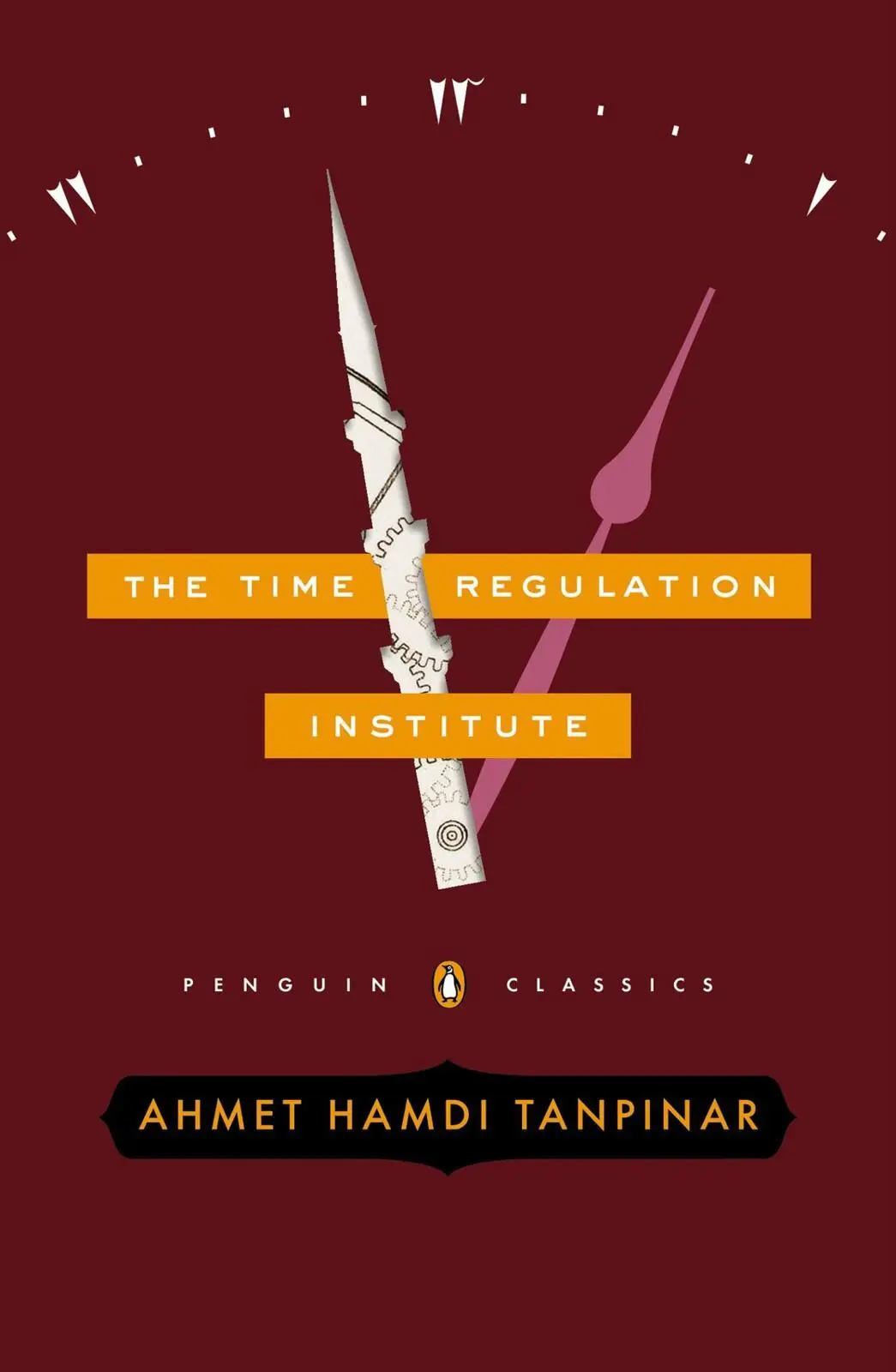
- Название:The Time Regulation Institute
- Автор:
- Издательство:Penguin Classics
- Жанр:
- Год:2014
- ISBN:нет данных
- Рейтинг книги:4 / 5. Голосов: 1
-
Избранное:Добавить в избранное
- Отзывы:
-
Ваша оценка:
The Time Regulation Institute: краткое содержание, описание и аннотация
Предлагаем к чтению аннотацию, описание, краткое содержание или предисловие (зависит от того, что написал сам автор книги «The Time Regulation Institute»). Если вы не нашли необходимую информацию о книге — напишите в комментариях, мы постараемся отыскать её.
is an antic, freewheeling send-up of the modern bureaucratic state.
At its center is Hayri Irdal, an infectiously charming antihero who becomes entangled with an eccentric cast of characters — a television mystic, a pharmacist who dabbles in alchemy, a dignitary from the lost Ottoman Empire, a “clock whisperer”—at the Time Regulation Institute, a vast organization that employs a hilariously intricate system of fines for the purpose of changing all the clocks in Turkey to Western time. Recounted in sessions with his psychoanalyst, the story of Hayri Irdal’s absurdist misadventures plays out as a brilliant allegory of the collision of tradition and modernity, of East and West, infused with a poignant blend of hope for the promise of the future and nostalgia for a simpler time.
The Time Regulation Institute — читать онлайн бесплатно полную книгу (весь текст) целиком
Ниже представлен текст книги, разбитый по страницам. Система сохранения места последней прочитанной страницы, позволяет с удобством читать онлайн бесплатно книгу «The Time Regulation Institute», без необходимости каждый раз заново искать на чём Вы остановились. Поставьте закладку, и сможете в любой момент перейти на страницу, на которой закончили чтение.
Интервал:
Закладка:
From then on Seyit Lutfullah was one of the most esteemed guests at the Tunisian’s villa. His every word was believed. His attire, his lifestyle, and his ruin of a medrese all helped to consolidate his position. He dismissed with a vague gesture any advice about moderate alterations to his dress; alluding to an ominous dark power, he’d say, “They’d never allow it.” He once accepted a robe and turban at Abdüsselam Bey’s insistence, only to return them three days later, saying, “They were not authorized. May the patron forgive me.” Seyit Lutfullah knew how to forge a legend that would last.
He liked to say that it was his auspicious guardian spirits who had directed him to the medrese that was his home.
I’ve seen very few places like this ruin of a medrese : its every fragment spoke of the effort and precision of its creator. You might almost think that this building and its miniature neighboring mosque — attributed to the reign of Mahmud I — began their slow descent into ruin the moment they left the hands of the architects, in strict accordance with a plan that foresaw its current state.
The paving stones in the courtyard had been either broken or dislodged by an enormous plane tree surging out in all directions. Most of the rooms on the three wings — save for Seyit Lutfullah’s — were partly or completely in ruins. As for the little mosque on the left side of the courtyard, all that remained were four front steps leading up to the minaret. In a charming little graveyard off to one side lay four or five esteemed personages from the era, along with the kahvecıbası who built both medrese and mosque; it was separated from the street by a flimsy fence that was barely standing.
Trees and dry vegetation dominated the medrese ’s entire courtyard, as well as the graveyard and the plot where the mosque had once stood; a few trees had thrust their roots out from beneath toppled columns. The oddest sight was the slender and elegant cypress sapling that grew on the roof of the room where Seyit Lutfullah slept, rustling in the wind like the flowers of a silk oya . On cloudier days it seemed no more than a smudge against the ashen void of the sky, an arrow pointing toward an infinite and unassailable nature.
Marked with this strange herald, the medrese teetered like a giant scale at the top of a hill from which it would one day fall. Seyit Lutfullah slept on a mattress tossed on the floor of the ruin’s only intact room, which was mildewed and perpetually dark. Beside his mattress were a handful of large bottles that seemed to hold his provisions and, strange as it may seem, a tortoise — a gift from Aselban, coyly named Çesminigâr, “the fountain of beauty”—which trundled about under the feet of Lutfullah’s visitors, entirely at ease with humans.
Rumor had it that auspicious spirits had directed Lutfullah to the medrese because it was close to the treasure of Andronikos. This tallied with Seyit Lutfullah’s endless tales of his quest in the world beyond for this treasure dating back to the days of that emperor.
But, then again, judging by what my dear friend told me in strict confidence, the medrese was neither devastated nor in the ruined state that we saw before us. It was, on the contrary, a sumptuous and resplendent saray ; We were as incapable of seeing the true splendor of this palace as we were of seeing Seyit Lutfullah’s true beauty. Only when the treasure was uncovered would its pillars of pure gold and its diamond-encrusted turquoise domes shine forth. Then everything would fall into place. Aselban would agree to appear in human form, her lover would be reunited with his true face, and at last they would be joined in eternal bliss.
“Thereafter I will reign over the entire world,” he would say, “and everything I desire will come true.” He’d banish misery and injustice from the world and govern with absolute justice. For this strange man had peculiar ideas about the struggle between justice and injustice, leading one to wonder whether his activities might not be directed by larger forces after all, and, in the end, casting some light on his true nature.
By this logic, Seyit Lutfullah was the type of man to scorn and repudiate the riches offered by chance, so he might attain the otherworldly pleasures and power of eternal life. He was an idealist with a lofty soul. To have “everything” in life, he chose to live in the barren desert of “nothing.”
When I explained these various eccentricities to Dr. Ramiz, he homed in on this one aspect of Lutfullah’s personality, and on countless subsequent occasions he told me this problem of justice and injustice could very well be the key, or at least one of the keys, to unlocking the Seyit Lutfullah affair. My dear friend, so zealously devoted to avant-garde scientific methods, once went so far as to ask me if Seyit Lutfullah had read Marx. Quite often he’d flare up and say, “I am most certain the man has read either Engels or Marx. What a pity you have never inquired.”
“How could such a lowly creature have read the work of such lofty intellects? The miserable soul doesn’t even speak proper Turkish!” I’d reply.
And he’d challenge me.
“Your kind is always the same. You lose sight of mankind’s superior virtues, just as you are lost to the feelings of inferiority that constrict your soul. My dear friend, relinquish these airs. I am now thoroughly convinced the man knows German and has read the full body of socialist literature. Otherwise he never would have bent himself so forcefully to this question of justice and injustice — the question of our age — nor would he have made such sacrifices in its name.” And he’d silence me, vowing that the man must be one of the founders of socialism.
Conversations with Dr. Ramiz were always like this. He would pounce on a single minor point and within seconds be on the verge of an avalanche. Due to my modest understanding of matters intellectual, I never found the nerve to criticize the great scholar to his face. But why lie, considering all I knew about my friend’s life? I had never encountered in his ideas anything that might have inspired people to such a cause.
The passions of Aristidi Efendi, Nasit Bey, and Abdüsselam Bey were more finite. After Aristidi Efendi learned from an elderly brother-in-law, a priest on the island of Heybeliada, that the emperor Andronikos was in all probability the emperor Hadrian, he came to perceive the quest as a purely scientific enterprise. He had no faith in Seyit Lutfullah’s deliberations or in the orders he received from the world beyond, instructing him to wait. Work should begin at once, with shovels and a pickax. But in the world of spirits, the rules were precise and the time preordained.
The great event of 1909 was Aristidi Efendi’s decision to begin, alone, in the dead of night, his search for the treasure of the emperor Andronikos. But after several hours of digging, he found it necessary to reassign the treasure’s true location, and so the secret search continued. What he found at the bottom of a shallow pit were not amphorae brimming with gold and jewels, or precious cloth and palatial treasures, or gilded manuscripts and miniature statues of saints made of ivory and gold; he found only a few bones and a jar that held a single coin dating back to the reign of Sultan Mahmud I, and it was at this point that Aristidi Efendi began to ask questions about the treasure’s actual location. When Seyit Lutfullah told the chemist the following day that it had never been a question of actually finding the treasure, and that it would now take months just to reassign it to its original location, Aristidi Efendi nearly died of sadness and remorse. As with the story of Abdüsselam Bey’s watch, this bungled operation drained Aristidi Efendi of any energy he might have mustered to oppose Seyit Lutfullah.
Читать дальшеИнтервал:
Закладка:
Похожие книги на «The Time Regulation Institute»
Представляем Вашему вниманию похожие книги на «The Time Regulation Institute» списком для выбора. Мы отобрали схожую по названию и смыслу литературу в надежде предоставить читателям больше вариантов отыскать новые, интересные, ещё непрочитанные произведения.











Обсуждение, отзывы о книге «The Time Regulation Institute» и просто собственные мнения читателей. Оставьте ваши комментарии, напишите, что Вы думаете о произведении, его смысле или главных героях. Укажите что конкретно понравилось, а что нет, и почему Вы так считаете.