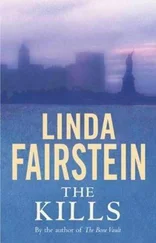
Richard House - The Kills
Здесь есть возможность читать онлайн «Richard House - The Kills» весь текст электронной книги совершенно бесплатно (целиком полную версию без сокращений). В некоторых случаях можно слушать аудио, скачать через торрент в формате fb2 и присутствует краткое содержание. Год выпуска: 2013, Издательство: Picador, Жанр: Современная проза, на английском языке. Описание произведения, (предисловие) а так же отзывы посетителей доступны на портале библиотеки ЛибКат.
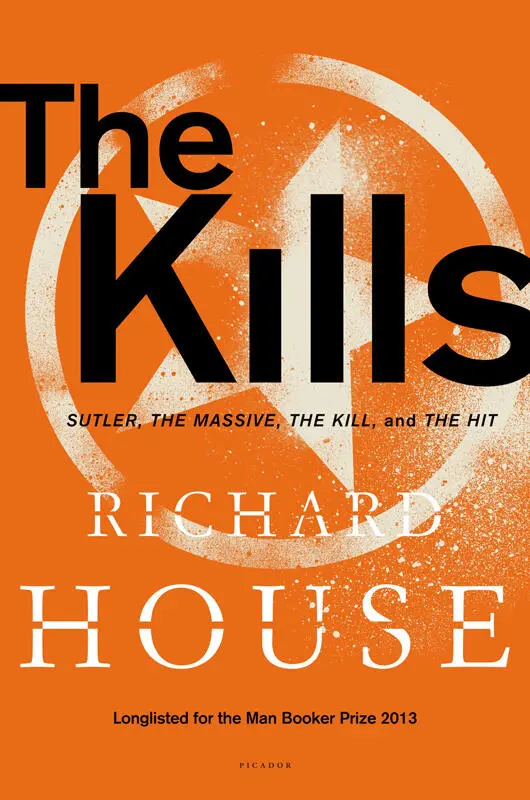
- Название:The Kills
- Автор:
- Издательство:Picador
- Жанр:
- Год:2013
- ISBN:нет данных
- Рейтинг книги:3 / 5. Голосов: 1
-
Избранное:Добавить в избранное
- Отзывы:
-
Ваша оценка:
The Kills: краткое содержание, описание и аннотация
Предлагаем к чтению аннотацию, описание, краткое содержание или предисловие (зависит от того, что написал сам автор книги «The Kills»). Если вы не нашли необходимую информацию о книге — напишите в комментариях, мы постараемся отыскать её.
The Kills — читать онлайн бесплатно полную книгу (весь текст) целиком
Ниже представлен текст книги, разбитый по страницам. Система сохранения места последней прочитанной страницы, позволяет с удобством читать онлайн бесплатно книгу «The Kills», без необходимости каждый раз заново искать на чём Вы остановились. Поставьте закладку, и сможете в любой момент перейти на страницу, на которой закончили чтение.
Интервал:
Закладка:
‘This is it?’
‘This is where they found the Second Man.’
He drove over a small crossroads and parked beside the building. When Finn locked the door, he said, ‘Don’t worry, there isn’t anything to see here.’
Finn walked down the small alley, a slip-road to the shoreline. A wall of striated concrete on one side, the factory close on the other, so that path — barely broad enough for a car, became deep. A black railway bridge, and the grey shoreline beyond.
A haze out to sea hid the horizon, hid the sun, so the sky and sea faded one to the other in a glassy bright plain. If they make a film, Finn thought, they should use these locations. The places where it happened. Finn had ambitions he’d yet to formulate properly. He walked along the shoreline, back and forth, stood on the stern grey blocks, smooth, massive and locked together: arms folded he looked back at the factory to imagine the event playing out — not as it might have happened, but as it might be filmed. A crew gathered in the road huddled ready because this would be taken in one long shot, the camera beside the door, a set of tracks for the camera down the alley to the shoreline: and there, the actors playing Krawiec and his accomplice arriving in the Citroën, parking. Krawiec giving instructions: an urgency to his gestures and movement. The Second Man unloads the large bags — unwieldy, tied at the top — and brings them to the shore, while Krawiec smokes with the car door open. Krawiec is the one to manage the body, cut up by this time and sectioned into manageable pieces which are also packed in plastic, blood slipping into the creases. The Second Man manages the sacks, which are full and lighter, and they rustle. Krawiec’s packages are heavier, much smaller, and tape binds round them. The camera will follow Krawiec, because this detail is important. They will want to give themselves options, and the entire scene will need to be shot right from the start (the car arriving) twice, because there are two questions the film will need to answer: 1. Why did they kill, and 2. What happened to the body — and this scene will resolve that issue. They wouldn’t need to specify the victim, well, not the first, because that would undermine the basic mystery. Everybody knows by now that nobody knows who this was, and there’s no point in spoiling this with invention. Instead it would be more interesting to look further into Mr Rabbit and Mr Wolf, now these deserved inventing, fleshing out. These men should be made physical. OK, there was the whole absurdity of it, obviously, it’s a crazy idea, but an appealing idea also, who doesn’t like the idea of two men, tourists, who kill, and take their instructions from a pulp novel. The very randomness of it. They come and go, and no one is ever caught — it’s morbidly satisfying, knowing you’ll never know.
In the film, in this first version — Version Number One — Krawiec unloads all of the packages: these heavy little sawn-up pieces of Victim Number One. He lines them alongside the water, and here the filmmakers will need a calm day so there are no waves, just this dopey lapping, the water coming up and folding over, not even touching the bags, although the stones are wet and there are clouds of tiny black flies. And Krawiec, seen from behind, will crouch and open up the packets, slit them one by one, and dump out the contents — piece by piece until he is done, roll them into the water so that the water clouds with blood, until he closes the knife against his thigh. Trouble is, with this version, if they found the bags, you’ve got to believe they would have found the body.
In Version Number Two, Krawiec will arrive with a small dinghy of some kind. An inflatable. It could even be in its box, bought for the purpose. And this will need to be done carefully so it doesn’t become stupid. Krawiec brings this craft down to the shoreline first, and maybe this isn’t all one shot, because you’re going to want to see him inflate this, and see those details, the nozzle holding the valve; Krawiec working up a sweat because this shouldn’t be too easy. If this is shown to be an effort it’s going to look more plausible. Once the boat is inflated, he’s going to press on it with his foot. He’s going to test it and make sure he’s satisfied, maybe give it a few extra pumps. Only then is he going to unload the backseat of the small packages, and the Second Man is going to be standing at some distance tying his sacks together and making a job of it. Krawiec will load up the dinghy. Piece by piece. A hypnotic back and forth. Done, he’ll tug the boat into the water, then, with his pocket knife he’s going to give the dinghy a little nick, just a small — the smallest — puncture, then push it the final distance. He’ll come back to the shore holding a rope that’s tethered to the dinghy and it’s going to take several attempts, and there’s going to be some tension here, because if that boat deflates too much it’s just not going to make it, because those gentle waves are pushing the boat back alongside the shore, not taking it out. Finally, Krawiec will have to wade, then shove hard, and out it goes, a little slow, a little dreamy. The small craft, obviously weighted down, is picked up by a current and taken out the whole length of the rope.
And maybe here you’ll see the boat up close, the shoreline distant with Krawiec standing, rope in hand, the line leading from the boat all the way to the shore, and further to Krawiec’s right the Second Man is on his knees still working on those larger bags, still busy with his knotting, and water begins to fill the craft, slowly pooling about the black bound packages, trickling in at first, then faster, so that half the dinghy folds under the waterline, half of it submerged, and the packages tip out, and then the whole thing, flaccid, just sinks, then sits softly under the water making bubbles with this blue line of rope going all the way to the shore. That sea reflecting like it’s thick, like sugar syrup.
Back with Krawiec he tugs the dinghy to the shore, hand-overhand, it doesn’t look like much, a more or less empty black bladder that he hauls to the shore, water runs off the rope. Krawiec winds the rope about his arm, the way that fishermen coil lengths of rope. He folds up the dinghy. When he stands up they’re almost done. There’s no need to show what happens with the bags. Everyone knows this part of the story. He will kill the Second Man with one blow, a rock or a hammer. One strike. And it will mean nothing to him, this little piece of business. Or, alternatively he’ll just shove him into the tank like it’s an afterthought, and the man will hit his head as he tumbles. Either way, Krawiec will put little thought into it, but great energy. As the magistrate said, Krawiec is ordinary, he’s not so special, but when he kills the violence comes with extraordinary force.
* * *
Finn took photographs from the shore, 360°, a whole revolution. He wanted to see inside the factory, to see the tank, but couldn’t find an entrance. The windows and doors bricked up with some care, small ventilation blocks set up in a row, the holes too small to see through to anything. At first he couldn’t find Rino, and didn’t understand that the pebbles landing at his feet were dropped from the roof. When he looked up he saw Rino on the flat roof.
‘Ready?’
He didn’t want to be hurried, and even while he was paying Rino for his time, he didn’t like to cause delay and had to think through if he wanted to get to the rooftop or not before they called in at the Rione Ini estate (although he had the feeling that Rino wasn’t keen), and wondered if he would he regret not climbing up.
In preparation for Finn’s visit, Rino had kept his eye on Niccolò Scafuti for a week but hadn’t learned much: Niccolò Scafuti no longer worked, remained in the same apartment as before, but was seldom seen outdoors. Much of what he needed was brought to him, and the days when he was feted and celebrated by the Christian Democrats, the charities, the good people of Ercolano, had long since passed. Finn had a collection of photographs of dinners and presentations held in honour of the hero Niccolò Scafuti. All of this before the discovery of the clothes on the wasteland, before he was taken in and charged with murder — which had to be, as the magistrate acknowledged, the worst mistake made by the investigation. Finn wanted to speak with him, to straighten up the story.
Читать дальшеИнтервал:
Закладка:
Похожие книги на «The Kills»
Представляем Вашему вниманию похожие книги на «The Kills» списком для выбора. Мы отобрали схожую по названию и смыслу литературу в надежде предоставить читателям больше вариантов отыскать новые, интересные, ещё непрочитанные произведения.


Обсуждение, отзывы о книге «The Kills» и просто собственные мнения читателей. Оставьте ваши комментарии, напишите, что Вы думаете о произведении, его смысле или главных героях. Укажите что конкретно понравилось, а что нет, и почему Вы так считаете.