Clarence Major - My Amputations
Здесь есть возможность читать онлайн «Clarence Major - My Amputations» весь текст электронной книги совершенно бесплатно (целиком полную версию без сокращений). В некоторых случаях можно слушать аудио, скачать через торрент в формате fb2 и присутствует краткое содержание. Год выпуска: 2008, Издательство: Fiction Collective 2, Жанр: Современная проза, на английском языке. Описание произведения, (предисловие) а так же отзывы посетителей доступны на портале библиотеки ЛибКат.
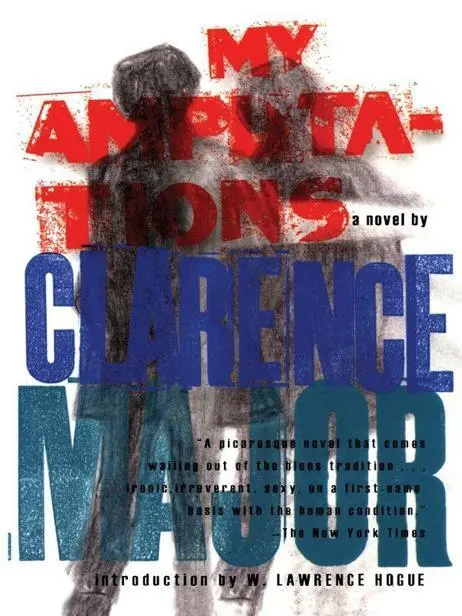
- Название:My Amputations
- Автор:
- Издательство:Fiction Collective 2
- Жанр:
- Год:2008
- ISBN:нет данных
- Рейтинг книги:5 / 5. Голосов: 1
-
Избранное:Добавить в избранное
- Отзывы:
-
Ваша оценка:
My Amputations: краткое содержание, описание и аннотация
Предлагаем к чтению аннотацию, описание, краткое содержание или предисловие (зависит от того, что написал сам автор книги «My Amputations»). Если вы не нашли необходимую информацию о книге — напишите в комментариях, мы постараемся отыскать её.
My Amputations — читать онлайн бесплатно полную книгу (весь текст) целиком
Ниже представлен текст книги, разбитый по страницам. Система сохранения места последней прочитанной страницы, позволяет с удобством читать онлайн бесплатно книгу «My Amputations», без необходимости каждый раз заново искать на чём Вы остановились. Поставьте закладку, и сможете в любой момент перейти на страницу, на которой закончили чтение.
Интервал:
Закладка:
Celt-spirit here, pre-Roman slush, plunder, spoils, a Darkness embraced? Gatwick was snow-cold but under a rainstorm of mice-turds. Professor Frank Poole picked him up; delivered him to the Bickenhall, a modest hotel on Gloucester Place near Baker Street. A little twitchy man, Poole left and Mason was glad. He went for a walk in the neighborhood: had fish and chips in a restaurant just over on York. Even Poole was possibly a spy. In front of the liquor store next door an old toothless hag (also a spy?) surrounded by six police dogs, held forth with her begging cup and a cackle. He picked up the Herald-Tribune from a vendor at Marylebone Road… Betty Boop wasn't going to come. The hotel wasn't there when he got back. The rules here are gonna keep changing? Wrong street. He caught an Al Pacino flick. Slept restlessly: mam'zels teasing him from shadows of lace. He was writing a novel in which he couldn't figure out the difference between what was real and not: Painted Turtle told him it was ‘cause he drank too much. His blood sugar. He needed to see a doctor. He was crazy. He accepted her verdict. There were too many women in his novel, he fucked them all too lightly. He needed a conference on morality with the authorities. He was a sinful beast, a pig — a fink. Then he was on this bus that turns a sharp corner on a mountain road and slides off plunging down into the sun-splashed green valley. How could such a thing happen on such a nice day? Naturally he flies up out of the damned thing — Painted Turtle with him. Locked in an embrace they fall in slow motion to the dry riverbed: “We're going to die.” When the crew arrives in a yellow metal bird, he and PT are still alive. The letter he'd sent just the day before to an imaginary person has been returned. The helicopter pilot hands it to him. A gunshot goes off in the valley. Sirens start up. Pilot says, “In French it says Return to sender. Are you the person?” In the morning Mason arrived at King's College at nine and after a brief introduction by flubbering, fumbling stuttering Emeritus Professor of American Literature, Basil Llewellyn Ceconhann, he faced his tiny bunch of enigmatic graduate students keen on some word about Afro-American Lit. His talk was a yellow dog. Later, in Mick's, a coterie of these grads bought him beer and chips and revealed themselves as desperately clinging to the end of the rope of academia. He had a double shot of faith-building scotch in a bar off Oxford where a couple of old neighborhood drunks were making a mutt do tricks in exchange for chips. Harry Schnitzler's left word for him to call. In the morning he was expected at Brixton College and tonight at the Young Vic for a poetry reading. What was IHICE up to? Schnitzler sounded (on the phone) like a nervous twit: “We're mindful, too, of the Fulbright people: they might want you. And ICA… ” Anna Birly called at the last minute: she couldn't pick him up as planned. Could he take the tube? Yes. He was only five six minutes from the Baker Street Station. Birly, his host and organizer of the Punk Rock Poetry Festival, was waiting in the flurry. They shook. She was visibly hassled. Punk Rock with added Black attraction: like Miles at rock concerts in the sixties? Not quite. Backstage he sat in the dressing room sipping bourbon from a paper cup. Sebastian, the great Punk Rock poet, was combing his long green hair. It stood out in all directions. His eyelashes were orange. From the corner of his mouth hung a weed. Tamara Polese, in Nazi uniform, was helping Etta Schnabel, lesser-known Punk poet, undress. Etta wanted to read in her birthday suit with a rose sticking out of her cunt. Kicks. Her stuff was Protest: biting. Tamara finished Etta and took the bourbon from Mason. “What's this?” She sipped. Birly, uneasily, answered for him: “Hog piss, honey.” The trio called Hot Hips (composed of Sylvie — from France, Cornelia and Punk poet Estelle) went on first. Mason with the others went up and stood behind the curtain to watch. They screamed bloody murder at the audience (young punkies mostly): shook their purple short hair at each turn of each line and beat muscled fists out toward screaming voices: “Wash your mother in blood, rinse your father in the comfort of his own suds… ” It gave Mason the chills. How would such an audience receive him? Tamara went on kicking and screaming for war: “I shoot shots from my M-1… put your fuck-finger in my barrel… ” then Etta — as a naked belly-dancer — coughed up and hissed a Goethe poem about deals with the devil and Kafka's doomed soul and the end of the West. Thomas Mann was a jerk who moved to L.A. And so it went: Sebastian. Then Mason: slightly nervous but well-received. Politely. And the show ended with straight poet Sven Strom from Sweden, trying to be interesting dangerous exciting but not making it: “… I come bullets into your military-complex asshole!… ” In the morning the slicker went out to Brixton in the rain. Spoke sang cried to a group of scorcheyed West Indians Africans Anglos East Indians Palestinians. Shy and untrusting, these kids were not impressed by the author's so-called “lack of anger.” Their highland was a lowland. How could a Black poet write other than anger. ? What emotional osmosis'd created this freak? At the end one Black kid said “You nigger to the white man, like me. What good you think your sweet verse do to liberate us? You waste your time.” The audience cheered. Mason's next stop was at Africa Center, that night. Ironically, there were more English than Africans in the audience. Africans were downstairs in the cozy dimly lighted little bar quietly drinking away their London blues. When the show ended Mason and manager Steven Mackie too went down and started working on a cure for the British funk. Mason went back by way of the tube. A shopping bag had just exploded (people were saying) at one station and mobs were being rerouted out of Marylebone Station to other lines. Two dead, six injured. By ten o'clock news some “terrorist” group would phone in word of responsibility. Revolutionaries? Causes and causes. At a Whitechapel community arts center that night he conducted what is known as a creative writing workshop: eight students. The group normally met at this time — eight — every week to read and discuss their works. Mason was added attraction. Simon, group leader, sat next to Mason and as he analyzed a selection of poems by various members, Simon amened him step by step. One girl wanted to know if Mason believed in love. He said he did. But his poems were so depressing. He read a love poem. They said but that's not a love poem. He swore to them he had hope. They laughed and gave him cupcakes. He refused to eat with them. They passed around more photocopies of their own poems. One girl there — Colette — who looked not a bit French, in Mason's opinion, wrote excellent poems about peeling vegetables and discovering the nature of the universe through simple acts like shelling peas or following the journey of a bug along a branch, was also looked upon by the rest with some hesitation. They asked Colette why she didn't write about relevant things. She said but I do. By the end of the workshop Colette was depressed. Along with Simon and a couple of the others, Colette too, Mason walked back to the tube. They all thanked him and shook his hand. That night the King of Illusion-Deceit-Fraudulence-Cheating-Shenanigan-Confidence pulled his own leg in his sleep: trying to center chubby pretty Colette onto the end of his hardon, he experienced a disaster: she turned into a faithful photograph of the Milky Way just as he got it in. It was chewed off by the speed of cubistic light. The Great Bear barked at him with his pants down. He shot for cover. Hid behind General Leclerc in the Square. A couple of old vegetable peddlers started beating him over the head with blette. (Later Colette sent him a batch of her new poems. He saved them till he felt like going up to Terrasse Frederic Nietzsche. Alone he sat on a stone rail at eight in the morning with Nice beneath him. Blue sea. Full stretch. And Bego to the North snow-capped in crisp contrast with the Cimes du Diable. He read her lines: “… you unbutton my shirt/ which is your shirt/ and eat/ the cabbage tips/ of my tits… ” She'd signed all her poems with the pen name: Terry Gottlieb.)
Читать дальшеИнтервал:
Закладка:
Похожие книги на «My Amputations»
Представляем Вашему вниманию похожие книги на «My Amputations» списком для выбора. Мы отобрали схожую по названию и смыслу литературу в надежде предоставить читателям больше вариантов отыскать новые, интересные, ещё непрочитанные произведения.






Обсуждение, отзывы о книге «My Amputations» и просто собственные мнения читателей. Оставьте ваши комментарии, напишите, что Вы думаете о произведении, его смысле или главных героях. Укажите что конкретно понравилось, а что нет, и почему Вы так считаете.