J. Lennon - Castle
Здесь есть возможность читать онлайн «J. Lennon - Castle» весь текст электронной книги совершенно бесплатно (целиком полную версию без сокращений). В некоторых случаях можно слушать аудио, скачать через торрент в формате fb2 и присутствует краткое содержание. Год выпуска: 2009, Издательство: Graywolf Press, Жанр: Современная проза, на английском языке. Описание произведения, (предисловие) а так же отзывы посетителей доступны на портале библиотеки ЛибКат.
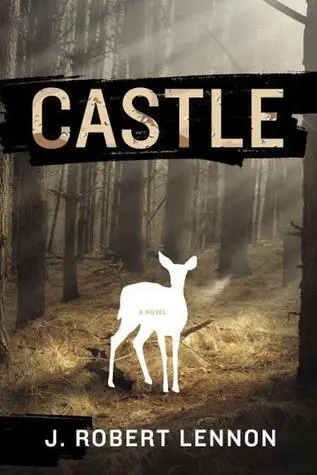
- Название:Castle
- Автор:
- Издательство:Graywolf Press
- Жанр:
- Год:2009
- ISBN:нет данных
- Рейтинг книги:5 / 5. Голосов: 1
-
Избранное:Добавить в избранное
- Отзывы:
-
Ваша оценка:
Castle: краткое содержание, описание и аннотация
Предлагаем к чтению аннотацию, описание, краткое содержание или предисловие (зависит от того, что написал сам автор книги «Castle»). Если вы не нашли необходимую информацию о книге — напишите в комментариях, мы постараемся отыскать её.
In the late winter of 2006, I returned to my home town and bought 612 acres of land on the far western edge of the county.” So begins, innocuously enough, J. Robert Lennon’s gripping, spooky, and brilliant new novel. Unforthcoming, formal, and more than a little defensive in his encounters with curious locals, Eric Loesch starts renovating a run-down house in the small, upstate New York town of his childhood. When he inspects the title to the property, however, he discovers a chunk of land in the middle of his woods that he does not own. What’s more, the name of the owner is blacked out.
Loesch sets out to explore the forbidding and almost impenetrable forest — lifeless, it seems, but for a bewitching white deer — that is the site of an eighteenth-century Indian massacre. But this peculiar adventure story has much to do with America’s current military misadventures — and Loesch’s secrets come to mirror the American psyche in a paranoid age. The answer to what — and who — might lie at the heart of Loesch’s property stands at the center of this daring and riveting novel from the author whose writing, according to Ann Patchett, “contains enough electricity to light up the country.””
Castle — читать онлайн бесплатно полную книгу (весь текст) целиком
Ниже представлен текст книги, разбитый по страницам. Система сохранения места последней прочитанной страницы, позволяет с удобством читать онлайн бесплатно книгу «Castle», без необходимости каждый раз заново искать на чём Вы остановились. Поставьте закладку, и сможете в любой момент перейти на страницу, на которой закончили чтение.
Интервал:
Закладка:
I arrived back at my house as the sun was setting. Heph’s van was gone from the lot, and his bill, complete with a self-addressed envelope for payment, was wedged into the crack between the door and its frame. Inside, the house was warm and inviting, and filled with slanting evening light. It was dinnertime, but I had eaten enough to last until dinnertime the next day. I realized suddenly that I did not want to leave — that I was going to sleep here tonight, for the first time. I called my motel and settled over the phone; I had left nothing in my room. When I hit END, I realized that I had made the break. I was living here now, in my house on the hill, and felt, at long last, that I was ready.
I have to admit that I had great difficulty getting to sleep that first night. A mind accustomed to stimulation, and left without, will create its own — and in my empty house, in the moonless, deathly silence of night, mine was madly racing into the early hours. The house creaked in a wind, and the furnace shuddered and clanked as it regulated the temperature. I thought that I smelled flowers, and then gunpowder, and then burning wood. Ghostly flashes burst at the edges of my vision. I believed, several times, that someone was walking stealthily through the rooms, and I crept downstairs, knife in hand, to investigate. But no one was there, and I never discovered the source of the sound, if there had ever really been one.
Worse yet, when at last I did fall into an uneasy, shallow sleep, my dreams were strange. I stood in a desert as a sandstorm swirled around me. I collapsed in exhaustion, cupping my hands around my mouth to keep the sand from my lungs. Then I was digging, digging like a dog with both my hands, and I uncovered a wooden trapdoor, which led to an iron ladder. I climbed deep into the ground, eventually dropping into a tunnel, lit by bare incandescent bulbs and supported by thick wooden beams, like an old mine. The walls slanted, the ceiling sagged, and I walked through the maze of corridors in search of the source of the voices I heard — familiar voices, those of people I knew, though I couldn’t tell who. And then, suddenly, the voices were behind me. I was leading those people somewhere, but I couldn’t turn to see who they were. They chatted and laughed: only I understood the grave danger we were all in, that death lurked around every blind corner, and I tried in vain to quiet them. There was light ahead, and heat, and terrible peril, and the rifle I carried had turned to rubber, and then to something like licorice, because I was eating it, ravenously, as I had eaten my lunch at the Chinese buffet. I woke before dawn with tears in my eyes and my hand in my mouth, having actually drawn blood in a semicircular pattern of marks, like the rough stitching on a rag doll.
But daylight soon began to trickle through the windows, and the dream faded away into abstraction. The terror and madness that made it so real now seemed like ridiculous clichés, the scar on my hand a small embarrassment. I sat on the floor, rested my arms on the sill of the east-facing bedroom window, and watched the sun come up over the trees. The forest was still gray, but green had begun, ever so faintly, to creep across its surface, like a mold. The sight of it filled me with determination and excitement. I rolled up my sleeping bag, put on my clothes, and packed a bag with fruit, trail mix, dried meat, and a bottle of water. It was time to go for a hike.
Considering the amount of time that had passed since the house had last been occupied, the edge of the forest where it met the yard was strangely well defined. The house gave way to hard-packed gravel and dirt, which sloped down into rough, woody weeds and shrubs; then, about forty feet from the northeastern corner of the house, the treeline began, a wall of tightly packed maples, birches, ashes, and pines. The trunks were high and narrow, the light beyond them dim despite the scant foliage. Peering into the forest, I could make out a tangled canopy of thin branches overhead. Heph was right — it was indeed rough. I walked back and forth along the treeline, searching for, if not a path, then perhaps the ghost of a path that must certainly once have existed. The deer, at the very least, had to have a way in and out. But no entry point looked better than any other, and so I took a deep breath, raised a leg high into the air, and stepped in at random.
Almost immediately I became tangled in a thicket. Thorns and burrs caught at my pants, and saplings snapped against my face. I half-closed my eyes and ventured forth, my boots ripping and cracking the tangle below. I gripped the tree trunks and pulled myself along.
After about ten feet, the going became easier. The heavy shadows of the woods discouraged low brush, and I was left with only deadfall to contend with. To be sure, the deadfall was a problem — variegated, chaotic, and covered over by dead leaves and moss, it formed a second ground surface above the real ground, which was visible only in small patches. It would have been impossible to step from one of these areas to the next, as with rocks in a stream; they were too haphazard, and too far apart. Instead, I was forced to make my way by balancing on broken branches and slick patches of slime. The potential to trip, fall, or twist an ankle was very great, and my frustration quickly grew. I was forced to direct 90 percent of my attention toward the problem of staying upright and not hurting myself, when what I really wanted was to get a sense of the geography of my woods. Imagine my surprise and anger when I turned to find that I could still see the house behind me — the treeline was barely thirty feet away!
Still, I persisted. I believe powerfully in succeeding at something the first time, no matter how challenging: the first try sets the tone for all subsequent effort, and a failure now would dampen my future morale. So I forged on. After a time, the ground began to level out, and I had the sensation that I was moving uphill; but a break to get my bearings told me that this was merely an illusion, brought on by the difficulty of the terrain. I opened my water bottle and took a deep sip, disappointed in myself for succumbing so soon to my thirst. With a sigh, I reshouldered my pack and forged on.
I have an excellent sense of direction, and had learned in much more perilous situations than this one that it could be counted upon in challenging circumstances. But as I trudged through the forest, I began to get the uncomfortable feeling that I had lost my way. There was no evidence that this was so, although my house was far from view now and the sun invisible behind thick clouds. Nevertheless, the woods had taken on an unrelenting, almost unnatural sameness, the trees evenly distributed, the ground uniformly impassible; and it was with some considerable embarrassment and frustration that I realized I had not brought a compass with me. I am afraid I swore under my breath, there in the silence — and silent it was, for I had seen no living thing, not a single squirrel or chipmunk, since I crossed over the treeline.
I was relieved, then, to discover that the ground had begun to slope downward again. From my house on the southwest corner of the land I had set off to the northeast, and this decline was likely to represent the approach toward the center of my property. That would put the rock somewhat to my right. Satisfied that this was so, I sat down on a fallen log and began to eat my lunch.
I had been seated for about ten minutes, my back resting against a tree trunk, when I had a peculiar experience. I had closed my eyes for a moment, in an effort to gather myself for the next few hours of walking, when I heard a noise — the sound of a branch brushing against something, then snapping back, followed by the crack of a twig. I slowly turned my head, so as not to startle whatever it was that had made the noise, and opened my eyes. About fifteen feet away, blinking in the gray light, stood a doe.
Читать дальшеИнтервал:
Закладка:
Похожие книги на «Castle»
Представляем Вашему вниманию похожие книги на «Castle» списком для выбора. Мы отобрали схожую по названию и смыслу литературу в надежде предоставить читателям больше вариантов отыскать новые, интересные, ещё непрочитанные произведения.



Обсуждение, отзывы о книге «Castle» и просто собственные мнения читателей. Оставьте ваши комментарии, напишите, что Вы думаете о произведении, его смысле или главных героях. Укажите что конкретно понравилось, а что нет, и почему Вы так считаете.