Pearl Buck - Patriot
Здесь есть возможность читать онлайн «Pearl Buck - Patriot» весь текст электронной книги совершенно бесплатно (целиком полную версию без сокращений). В некоторых случаях можно слушать аудио, скачать через торрент в формате fb2 и присутствует краткое содержание. Год выпуска: 2013, Издательство: Open Road Media, Жанр: Современная проза, на английском языке. Описание произведения, (предисловие) а так же отзывы посетителей доступны на портале библиотеки ЛибКат.
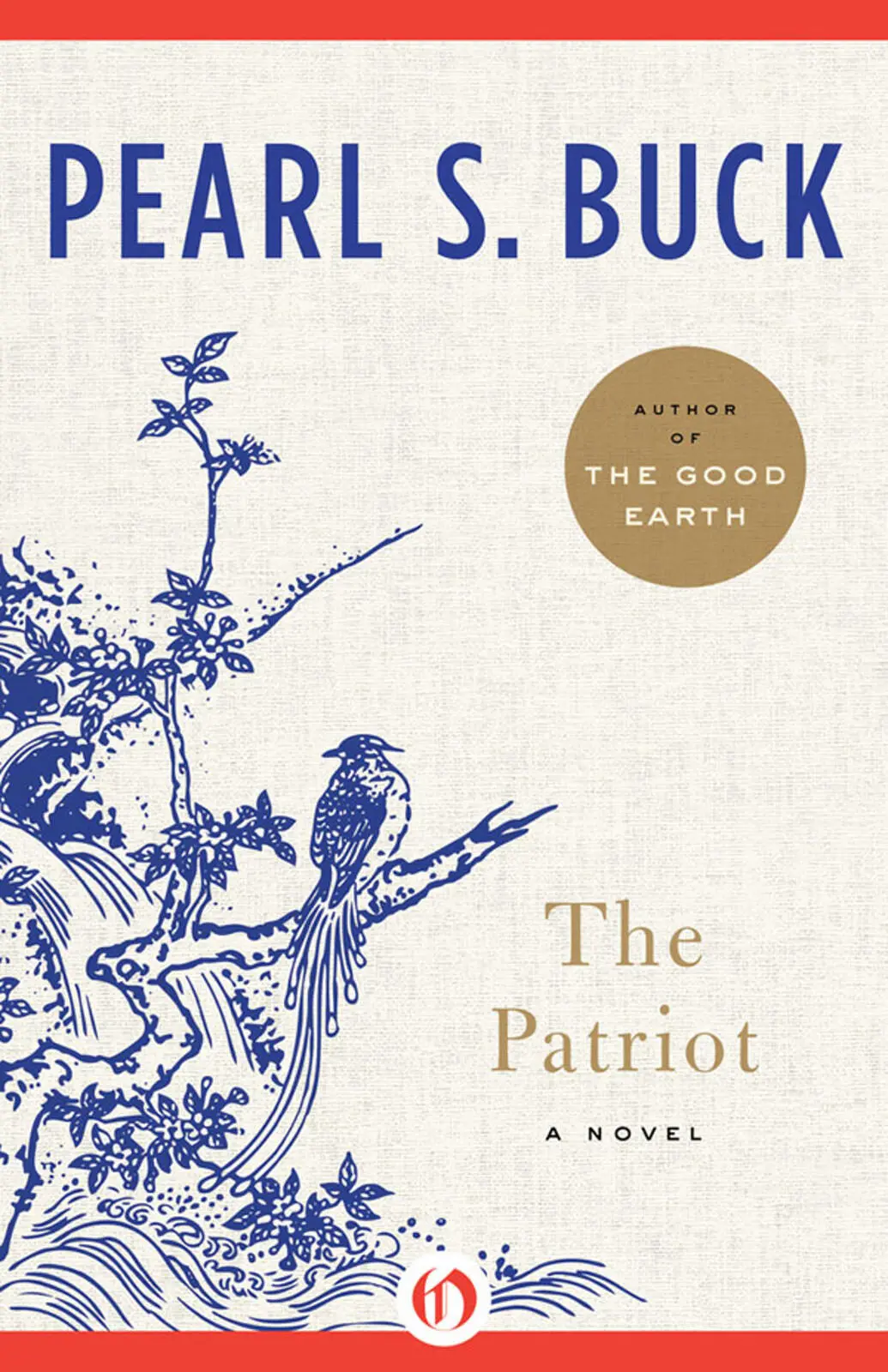
- Название:Patriot
- Автор:
- Издательство:Open Road Media
- Жанр:
- Год:2013
- ISBN:нет данных
- Рейтинг книги:3 / 5. Голосов: 1
-
Избранное:Добавить в избранное
- Отзывы:
-
Ваша оценка:
Patriot: краткое содержание, описание и аннотация
Предлагаем к чтению аннотацию, описание, краткое содержание или предисловие (зависит от того, что написал сам автор книги «Patriot»). Если вы не нашли необходимую информацию о книге — напишите в комментариях, мы постараемся отыскать её.
is an engrossing story of revolution, love, and reluctantly divided loyalties.
Patriot — читать онлайн бесплатно полную книгу (весь текст) целиком
Ниже представлен текст книги, разбитый по страницам. Система сохранения места последней прочитанной страницы, позволяет с удобством читать онлайн бесплатно книгу «Patriot», без необходимости каждый раз заново искать на чём Вы остановились. Поставьте закладку, и сможете в любой момент перейти на страницу, на которой закончили чтение.
Интервал:
Закладка:
But even after he was in the comfort of his own bed, I-wan had kept thinking of Peony — weighing and questioning what she could have done. If Peony had betrayed them, then he would be guilty of En-lan’s death. And yet even now he could not but trust her, though no one knew her, not even he. But he had not forgotten her. Somehow he had kept her in his memory, though he had not thought of her, either, in all his years with Tama…. Yes, he had thought of her once. On his wedding night he had thought of Peony long enough to be glad that he had never loved her or allowed himself to receive her love. But this he could not tell Tama, and so to Tama he had never even mentioned Peony’s name. And yet Peony was something to him, too — he did not know what — perhaps only the memory of a fragrance and nothing more. Nevertheless she was enough so that he wanted to know that she could not have betrayed En-lan.
At their breakfast he put it to his father, therefore, trying to speak calmly as though it were no great matter:
“I have often wondered how it was you found out about our band, years ago. It is so long gone that now I can ask.”
“Chiang Kai-shek told me,” his father replied.
“Chiang Kai-shek!” I-wan repeated, half stupefied. “How did he know?”
“He knows everything,” his father said drily. “We had had much talk together in private during those days and in return for his promised rule of law and order and expulsion of the communists, I promised loans, as he should need them, of sums we agreed upon. Then one day he sent for me in great urgency. I went and he saw me alone. He showed me your name on a list of communists to be executed. I did not believe it — I swore it was a mistake — and he sent for a classmate of yours who, for a sum of money set as a trap, had given in a list of names — and yours was one.”
“Was he named Peng Liu?” I-wan demanded eagerly.
“I don’t know,” his father said. He looked disgusted as he remembered. “He was a cringing yellow-faced boy who said his father kept a small shop.”
“That was Peng Liu!” I-wan broke in. “So it was he! Where is he now?”
Then it was not Peony! It was not his fault now if En-lan were dead—
“Dead,” his father said calmly. “He was given his money and then executed.”
“But why executed if—” I-wan began.
“Chiang despises traitors,” his father replied.
“How could he offer a bribe and then blame the man who takes it?” I-wan asked indignantly.
“He can,” his father replied. “You have to understand that. He is a hard man, but a true one. He uses everyone, and sweeps away those whom he cannot trust enough to use again.”
“An opportunist!” I-wan retorted.
“All wise men are opportunists,” his father replied. “It is only fools who will not change when times change. But within himself the man never changes.”
His father leaned forward and tapped the table between them with his long fingernails.
“I-wan, I tell you he is the only one who will save us now from the Japanese. I tell you he will do it. He has made up his mind since he came back from Sian, and he will never cease until he has succeeded. See how he has driven back the communists! They are hidden in the farthest corner of the northwest. Year after year he drove them back, determined to bring the country under one rule.”
“His own!” I-wan said scornfully.
“One rule,” his father repeated sternly. “It was far better than to allow such a civil war as would have ruined us and left the country empty for the Japanese to come into and take.”
“Do you mean,” I-wan said slowly, “that as long ago as that — ten years ago — he foresaw this day and began to unite the country for it?”
He had forgotten all about Peony now. He was thinking only of this man whom he had hated with such sobbing passionate bitterness on that day, the man whom he had always in his heart called traitor because he betrayed the revolution. But now, what if indeed he had seen more than any of them?
His father was nodding his head.
“I believe he sees everything,” he said, “and that he can do anything. He is a very great man.”
But he could not somehow so easily accept what his father said. He remembered certain things which he had read in Japanese newspapers.
“His opportunism led him in evil ways sometimes,” he said.
“That was before he was what he is now,” his father retorted. “The test of a man’s greatness is in whether he can see the evil in his own ways and change.”
“He would be really nothing but a warlord in other times,” I-wan broke in. “He has the mind and the ways of a warlord. He always settles everything by force.”
“He settles it, though,” his father said equably.
“And then all his wives—” I-wan began.
He looked up from his bowl to feel his father’s eyes on him somewhat coldly.
“I shall not discuss that with you,” he said with dignity. “What woman a man chooses is his own business. When your brother came home with — Frieda — your mother cried until I had to call in doctors. She moaned that we should have married I-ko by force before he went away. I told her the principle we chose was right. That our son is a fool has nothing to do with it.”
He paused, frowning. I-wan saw him tolerating grimly the white woman in his house. His father looked up and caught his eyes.
“How is it with your Japanese wife?” he asked kindly. “I have said nothing of her. Japanese women make excellent wives. They know their place. I did not mind when you married her. And this war really has nothing to do with such things. Only stupid and ignorant persons would confuse a human relationship with a matter of state.”
He was so grateful for his father’s kindness that he wanted to tell him everything about Tama.
“She is so good,” he said. “I never saw such a good woman — careful in everything she does. I can’t think of her as Japanese — to me she is only herself, the mother of my sons.”
“Yes — yes,” his father mused, as though he were thinking about something else. “Well now, how shall you write to each other? It will be difficult if it is known you receive Japanese letters. But at my office, naturally it will not be noticed. Tell her to address them to me. And you send your letters to me and I will send them on to her. In these times when the young are suspicious and easily angered, you might be assassinated if it were thought you sent and received such letters.”
He had not thought of this. “Thank you, Father,” he said. “But is it dangerous for you?”
“Oh, they all know me. I’m safe enough,” his father said. “Besides, no one dares to kill me. Chiang would make trouble. And everybody is afraid of him.”
They were back to this man again.
“Marriage—” his father was saying positively, “well, his old wives were no use to him so he took a new one who could be of use. Not all have the courage for it!” He laughed silently and drank what was left of his tea and drew a letter from his inner pocket. “Let me see,” he said, scanning it, “two days from now you are to meet him. These are his orders.”
His father said these words, “his orders,” with such pleasure that rebellion stirred once more in I-wan.
“You are surely very changed,” he said with a little malice. “Have I not heard that Chiang believes in a god — the Christian God? If he is sincere in it, how can you trust him?”
A slow smile spread upon his father’s square face.
“Oh, he is always sincere,” he said.
And then I-wan, for the first time in his life, heard his father make a joke.
“He is doubtless using the Christians’ God, too,” he said. “He is such a man!”
Читать дальшеИнтервал:
Закладка:
Похожие книги на «Patriot»
Представляем Вашему вниманию похожие книги на «Patriot» списком для выбора. Мы отобрали схожую по названию и смыслу литературу в надежде предоставить читателям больше вариантов отыскать новые, интересные, ещё непрочитанные произведения.





Обсуждение, отзывы о книге «Patriot» и просто собственные мнения читателей. Оставьте ваши комментарии, напишите, что Вы думаете о произведении, его смысле или главных героях. Укажите что конкретно понравилось, а что нет, и почему Вы так считаете.