Pearl Buck - The Living Reed
Здесь есть возможность читать онлайн «Pearl Buck - The Living Reed» весь текст электронной книги совершенно бесплатно (целиком полную версию без сокращений). В некоторых случаях можно слушать аудио, скачать через торрент в формате fb2 и присутствует краткое содержание. Год выпуска: 2012, Издательство: Open Road Media, Жанр: Современная проза, на английском языке. Описание произведения, (предисловие) а так же отзывы посетителей доступны на портале библиотеки ЛибКат.
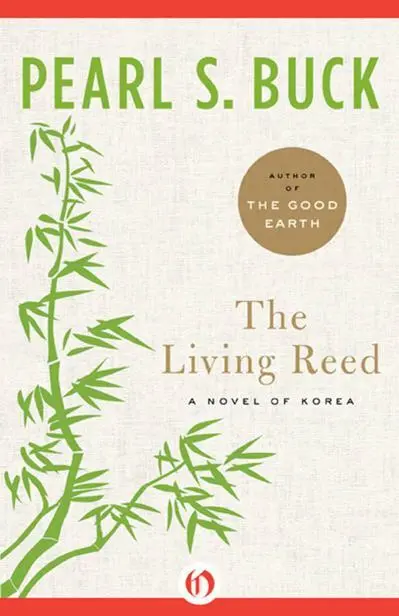
- Название:The Living Reed
- Автор:
- Издательство:Open Road Media
- Жанр:
- Год:2012
- ISBN:нет данных
- Рейтинг книги:4 / 5. Голосов: 1
-
Избранное:Добавить в избранное
- Отзывы:
-
Ваша оценка:
The Living Reed: краткое содержание, описание и аннотация
Предлагаем к чтению аннотацию, описание, краткое содержание или предисловие (зависит от того, что написал сам автор книги «The Living Reed»). Если вы не нашли необходимую информацию о книге — напишите в комментариях, мы постараемся отыскать её.
, Pearl S. Buck’s epic historical novel about four generations of one aristocratic family in Korea. Through the story of the Kims, Buck traces the country’s journey from the late nineteenth century through the end of the Second World War. The chronicle begins as the Kims live comfortably as advisors to the Korean royal family. That world is torn apart with the Japanese invasion, when the queen is killed and the Kims are thrust into hiding. Regarded by Buck as “the best among my Asian books,”
is a gripping account of a nation’s fight for survival, and a detailed portrait of one family’s entanglement in the ebb and flow of history.
The Living Reed — читать онлайн бесплатно полную книгу (весь текст) целиком
Ниже представлен текст книги, разбитый по страницам. Система сохранения места последней прочитанной страницы, позволяет с удобством читать онлайн бесплатно книгу «The Living Reed», без необходимости каждый раз заново искать на чём Вы остановились. Поставьте закладку, и сможете в любой момент перейти на страницу, на которой закончили чтение.
Интервал:
Закладка:
“I know, I know,” Il-han said impatiently.
The servant, because of his age, continued inexorably slowly. He remembered Il-han as a lively mischievous small boy and an impetuous youth, and though his surface was courteous, his mind continued stubborn.
“As to the mourning, young master, consider what must be made. The cloth is to be bought and sewn into garments for the family, even to the eighth cousins removed, and after them for the household servants. I have written all this down—”
“Read it to me,” Il-han demanded.
The head steward beckoned to the next in rank, who took a scroll of paper from his bosom which he unrolled and read aloud in a deep loud voice.
“For the chief mourners, yourself, young master, and your two sons, undergarments of coarse cotton, leggings of coarse linen, shoes of straw. On the upper body, a long coat of the same coarse cotton, a girdle of hemp about the waist, a hat of bamboo, a headband of coarse linen, and a face screen of coarse linen, one foot long and half as wide, upheld by two bamboo sticks. I trust, young master, that your two sons are able to hold the screens before their faces, but if not—”
“Proceed,” Il-han said shortly. These old men were making a festival of his father’s funeral!
The man obeyed. “The ladies of the first generation will wear coarse linen and straw shoes. Their jeweled hairpins must be taken away and they will be given wooden pins. As for the next female relatives, their mourning will be the same. They need not wear hats of bamboo and shoes of straw or headbands and their waist cords may be white. Distant relatives need wear only the leggings and a hempen twisted cord. But all must wear white. No colors, of course — even on children.”
Il-han could endure no more. “In Buddha’s name,” he exclaimed, “how can all this be done?”
The four old men were wounded. They fixed their eyes on the wall behind his head and waited for the chief steward to reply.
“Master,” he said with dignity, “all will be ready on the fourth day after death, which is the day of putting on mourning.”
“Then let the burial be on the seventh day,” Il-han commanded and he clapped his hands together to signify they were dismissed.
Meanwhile, Sunia stood before the Queen. She had upon her arrival been ushered into the anteroom, and there she waited a long time, too long she felt with indignation, and she believed it was because the Queen was making an ado over her apparel and jewels and hairdress. If so, she could not blame the Queen, for when she appeared at the end of an hour or more, she was beautiful indeed. Sunia had more than once begged Il-han to tell her how the Queen looked in her royal robes, and Il-han had always refused.
“How do I know how she looks?” he had replied. “I try never to look higher than her knees, and if possible no higher than the hem of her skirt.”
“But you do look higher,” Sunia had insisted, teasing and serious at the same time.
“Not if I can help it,” he said sturdily.
“But sometimes you cannot help it?”
At this he had been angry or pretended to be.
“Whatever you are trying to make me say I will not say it,” he had declared.
Now Sunia saw the Queen in full splendor, and it was as if it were for the first time, so changed she was by her royal robes and in her palace. The Queen entered, leaning upon the arms of two women, though she needed to lean on no one. She was not taller than most women are but she held her head regally. Her features were perfect and in proportion, the nose straight, the cheekbones high, the mouth delicate and yet full, the chin round, the neck slender, her eyes large and black, their gaze direct and fearless. Her skin was white as cream, her cheeks were pink as a young girl’s, and her lips were red. She was too beautiful even for a Queen and yet Sunia was comforted, for it was a high, proud beauty, willful and passionate, of a sort that demanded a man’s service rather than won his heart. Relieved somewhat of her jealousy, she looked at the Queen with lively interest, and suddenly they were two women together.
The Queen smiled. “I used to imagine you before I saw you in your house, but I was always wrong.”
Sunia laughed. “What did you imagine, Majesty?”
“I thought you would be a small woman,” the Queen said, gazing at her. “Small and soft and childlike. Instead — we could be sisters!”
Oh, what a clever woman, Sunia said to herself, how clever to destroy the distance between us, how subtle a way to win my heart! And yet in spite of this self-caution, how successful the way was, for against her own judgment, which indeed was never to trust a queen, she found herself drawn to this woman. Could a queen be so without pretense as this, and yet who but a queen could be so fearlessly frank?
“Majesty,” she said, remembering. “I have come in obedience to my children’s father. He has sent me here to announce the death of his own father.”
The Queen waved her two women away and came close to Sunia. “Oh no,” she breathed. “I heard the rumor and I did not believe it, thinking he would come at once to tell me, somehow—”
“He has his duties as only son,” Sunia said. “And he asks forgiveness for sending me in his place.”
The Queen came down the two steps into the waiting room and sat down beside the sparrow table, a square table of the time of Koryo. It was covered with embroidered silk, whose corners were hung with streamers of silk.
“Sit here beside me,” she commanded Sunia. “Tell me everything.”
Sunia obeyed, except what was everything?
“Death came yesterday, suddenly,” she said. “Luckily he — my children’s father — had just entered his father’s house, and so he went at once to the bedside. Physicians were called, both our own and the western one.”
“Not American!” the Queen gasped. “I cannot believe that my faithful courtier would—”
“He wished to try everything, Majesty. And the foreigner, though he could not prevent it, foretold the death.”
“He would, he would,” the Queen exclaimed, and she pulled a silk kerchief from her sleeve and wiped her eyes. “And how is he?” she inquired.
“He?” Sunia asked innocently.
“My courtier.”
“My children’s father is in mourning, but he knows his duty to you, Majesty.”
Sunia spoke with some coolness and made as if she would rise to end the audience, but the Queen took both her hands and pulled her down again.
“You shall not leave me yet,” she said. “Let us be friends. Let us be sisters. Do you know I am alone here in the palace? I have no friend except the Queen Mother, and she is old and lives only in ancient times. So do I, too, live alone, by my wish, but I am not allowed peace. I am told by him — your — your lord — that everything is changed and that I must be wary and alert from day to day, and even that I must receive a new ambassador from the West — an American. Does he tell you all these secrets?”
“No, Majesty,” Sunia said.
The Queen put her palms to her cheeks in distraction. “I wish he did,” she murmured. “I wish I had not to bear all these changes alone.”
Sunia took courage. “Does not the King …”
“Oh, say nothing of the King,” the Queen said impatiently, and let her hands fall. “When do we meet, he and I? If I am summoned you may be sure it is not for communication.”
She looked for a long moment at Sunia. “Do you know,” she said, “I lived for many days in the poor grass-roofed house of a poet. He and his wife, the two of them, lived there with me and they hid me. But I saw how they lived. They were friends, he and she. When I was in the small secret room where I was hid, I could hear them talking together and laughing. Such small things they talked about, as where the gray cat had hidden her kittens, or whether a certain wild bird had returned from beyond the southern seas, and whether the next day they could buy a bit of meat for dinner. And then he read her the poem he had written that day and she listened and said it was the most beautiful poem he had yet written. And at night they lay down to sleep together in the same bed—”
Читать дальшеИнтервал:
Закладка:
Похожие книги на «The Living Reed»
Представляем Вашему вниманию похожие книги на «The Living Reed» списком для выбора. Мы отобрали схожую по названию и смыслу литературу в надежде предоставить читателям больше вариантов отыскать новые, интересные, ещё непрочитанные произведения.


Обсуждение, отзывы о книге «The Living Reed» и просто собственные мнения читателей. Оставьте ваши комментарии, напишите, что Вы думаете о произведении, его смысле или главных героях. Укажите что конкретно понравилось, а что нет, и почему Вы так считаете.