Pearl Buck - Time Is Noon
Здесь есть возможность читать онлайн «Pearl Buck - Time Is Noon» весь текст электронной книги совершенно бесплатно (целиком полную версию без сокращений). В некоторых случаях можно слушать аудио, скачать через торрент в формате fb2 и присутствует краткое содержание. Год выпуска: 2013, Издательство: Open Road Media, Жанр: Современная проза, на английском языке. Описание произведения, (предисловие) а так же отзывы посетителей доступны на портале библиотеки ЛибКат.
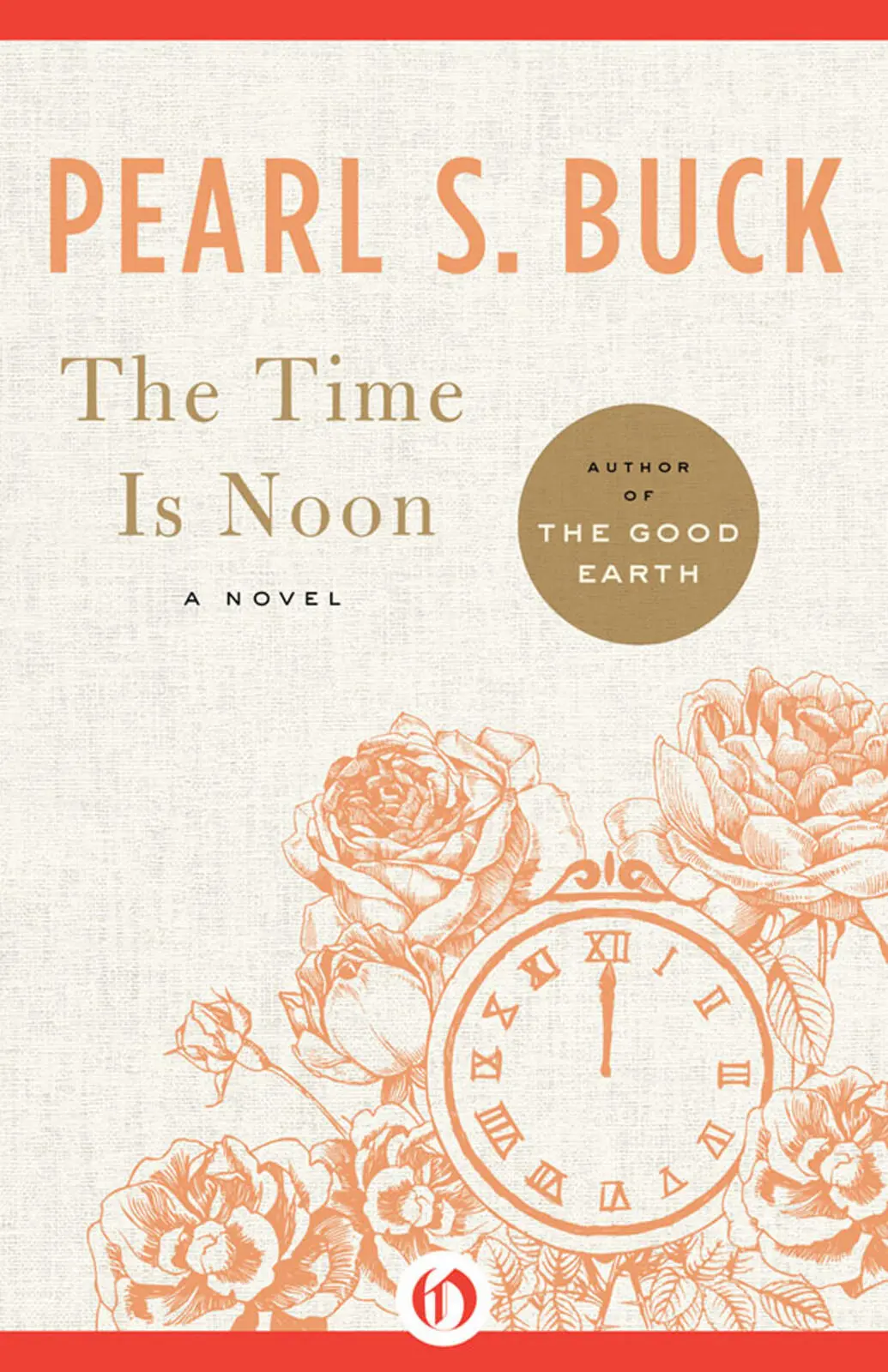
- Название:Time Is Noon
- Автор:
- Издательство:Open Road Media
- Жанр:
- Год:2013
- ISBN:нет данных
- Рейтинг книги:4 / 5. Голосов: 1
-
Избранное:Добавить в избранное
- Отзывы:
-
Ваша оценка:
Time Is Noon: краткое содержание, описание и аннотация
Предлагаем к чтению аннотацию, описание, краткое содержание или предисловие (зависит от того, что написал сам автор книги «Time Is Noon»). Если вы не нашли необходимую информацию о книге — напишите в комментариях, мы постараемся отыскать её.
was kept from publication for decades on account of its personal resonance. The book tells the story of Joan Richards and her journey of self-discovery during the first half of the twentieth century. As a child, family and small-town life obscure Joan’s individuality; as an adult, it’s inhibited by an unhappy marriage. After breaking free of the latter, she begins a stark reassessment of the way she’s been living — and to her surprise, learns to appreciate all that lies ahead.
is a humble, elegant tale of chances lost and reclaimed, and remains beautifully affirming today.
Time Is Noon — читать онлайн бесплатно полную книгу (весь текст) целиком
Ниже представлен текст книги, разбитый по страницам. Система сохранения места последней прочитанной страницы, позволяет с удобством читать онлайн бесплатно книгу «Time Is Noon», без необходимости каждый раз заново искать на чём Вы остановились. Поставьте закладку, и сможете в любой момент перейти на страницу, на которой закончили чтение.
Интервал:
Закладка:
Joan, walking alone the next afternoon along the south road, passed the small stone house where Mrs. Mark lived, and heard her name called shrilly from the window.
She had always liked this little stone house. It stood apart from the village and it had a steady, aged look, its small-paned windows close against wind and storm. There used, Mr. Pegler said, to be several stone houses in Middlehope. All the oldest houses were stone, but in the boom times in the late nineties people got town notions and tore down the good old houses their grandfathers had made and built red brick contraptions. That was when the Bradleys built their big square brick house. The factory was going then and business was good. But Mrs. Mark had paid no attention to red brick and her house stood as it had for over a hundred years. Joan always stopped to look at it, and then to wave at Mrs. Mark’s face at the window and maybe to turn in a minute. Now, hearing her name, she turned into the weedy patch and opened the door. She remembered not to greet Mrs. Mark, since everybody knew Mrs. Mark hated what she called “words withouten meanings to ’em.” “Say what’s to be said and be done with it,” she always replied to a “good morning” or a “good-bye.”
Now she began abruptly.
“I’ve waited to make sure and I’m sure. That great big young fellow that’s your brother went down past this house last night and he met a girl same as I was pretty sure he did, but it was none of my business, or so I didn’t hold it to be, until last night he came home late by the moon and it was hot and I had my curtain up and I could see the girl was colored truck. I’ve seen such before, but I don’t hold with white and black mixing. I don’t hold with your pa going down to preach to them nor with his son goin’ to make up with them. Leave them alone!”
Joan, staring at Mrs. Mark, could not for the moment understand. Mrs. Mark’s dry voice was harsh in her ears, but she was staring at the lashless lids, at the bony sharpness of the jaw and cheekbones. It was not Mrs. Mark’s face at all, but a strange combination of lines, angles, shadows, planes, and the ears stood out transparent flanges.
“No use not seeing what’s going on. Then you can handle it. I’ve seen plenty of them go by to South End — grandfather, father, son. They all go. South End is a vessel for this town of Middlehope. I won’t name you no names. But I liked your mother. Get that boy out of this town. You look like your mother, only big as a house, aren’t you? It’s hard on a woman to be as big as you. Well, you’re what you’re born.”
The angles and planes suddenly resolved themselves into Mrs. Mark’s face again.
“Are you sure it was Francis?” Joan asked.
“Don’t I know him since he was a baby?” Mrs. Mark retorted. “Get along now.” She lay back and closed her eyes. “These legs of mine — I’m dead to the hips — inch and a quarter a year dies — I can tell to the month of the year what it’s to be — Dead reckoning, I call it!” She chuckled, her eyes grim, and cut it off and said sharply, “Get along, child! You’ve got your job set out, haven’t you?”
“Yes,” said Joan.
Down the long road she walked in great steps, her big feet leaving prints like a man’s in the deep dust. The late heat of the August sun beat down upon her, and her face was red. She could feel the heat shimmering about her flesh. But it did not matter. What could her mother have done for Francis? What was she to do for Francis? Her body shrank, and imagination withdrew … She drew near home, and then turned away again. She could not see Francis — not yet — not until she had thought of something to do for him. He must go away, of course. He said he wanted to fly and she had said she could ask nothing of Martin Bradley.
She strode westward and turned at the railroad station, where the street was a dead end. The late afternoon train had come and gone, and ahead of her she saw a slight, tall figure. She recognized Martin. What was she doing here? She had turned westward, the thought of his name had carried her feet in the old way. She slackened her steps, panting softly. Francis had said Martin Bradley could help him — only Martin could help him.
“Martin!” she called loudly. “Martin! Martin Bradley!”
He stopped, turned, and waited for her, elegant and still. When she came up to him she saw he was smiling a little, and instantly she knew herself dusty and hot. She rushed on with determination. What did it matter how she looked?
“I — it’s nothing about me. My brother Francis — was wondering if you could tell us how to get him into aviation?”
He stared at her, surprised. “One never knows what to expect of you, Joan.” His voice was cool, tolerating, a little disdainful. But it did not matter. How did a man work in a city all day and come home without a particle of dust upon his neat dark blue shoulders? Her hands were dirty.
“It’s not me,” she said doggedly.
“Not you,” he repeated, slowly. She felt him remembering her, and a sickness rushed upon her. But she stood sturdily, waiting.
… He had not, he thought, looking at Joan, remembered aviation in a long time. Even when he was in the clouds above the enemy fields, he did not think of flying. He thought only of the machine which he must move with precision, delicately, instantaneously when the moment came, to release those darts of death. Bair in his squadron was always groaning for rain. “God, I can’t see them when there are clouds — I can’t see where they go,” Bair used to cry every day. But he himself had never allowed himself to think beyond that moment of aim, of release. Did the bomb strike the spot he had chosen? Then it was a bull’s-eye. He had no more concern with it. It was like striking a note rightly upon the organ. One struck, heard the proper resonance, and passed on, at once to the next note.
… “Aviation?” he repeated. “I don’t know anything about aviation now.”
“You were in the war,” Joan urged. She passionately put from her the picture of herself kissing this man, kissing his hands, his lips, the white sides of his hair. If she thought of this she would be sick. And she did not matter now. It was Francis that mattered. This man looked old, smaller, shrunken. She was taller than he, though surely she had not been. She had not stooped to him. She must have grown. But perhaps she had stooped.
“But if you knew someone,” she said, “you must know a pilot.”
“I knew Bair, of course,” he said, considering. “Roger Bair — I flew with him — I don’t know — I believe he’s still flying. But we don’t keep up. Of course I could—”
“Where could Frank find him?”
“I don’t know — perhaps—”
“Where does he fly?”
“From a field outside New York.”
“Give me a note to him — for Frank.” She pressed him, ruthless with his diffidence. “He’d remember you — he couldn’t forget. Have you a card? If you’d say, ‘Introducing Francis Richards.’ Couldn’t you say ‘For old times’ sake, anything you do for him would be appreciated?”
Now that she had asked a little, she could ask much. She compelled him by her asking, her eyes compelling him, her urgent voice, the rush and vigor of her big body. She opened her bag swiftly and found a pencil, short and stubby because she chewed her pencils. It offended him at once.
“I have a pen, thanks,” he said coldly, and drew from an inner pocket a black fountain pen, bound properly in gold. The pen in his hand moved him to write. He took out his pocketbook, and from it drew a small neat business card. Upon it he wrote in fine script, Introducing Francis Richards. He hesitated. “I don’t like to presume on former acquaintances,” he said.
Читать дальшеИнтервал:
Закладка:
Похожие книги на «Time Is Noon»
Представляем Вашему вниманию похожие книги на «Time Is Noon» списком для выбора. Мы отобрали схожую по названию и смыслу литературу в надежде предоставить читателям больше вариантов отыскать новые, интересные, ещё непрочитанные произведения.












Обсуждение, отзывы о книге «Time Is Noon» и просто собственные мнения читателей. Оставьте ваши комментарии, напишите, что Вы думаете о произведении, его смысле или главных героях. Укажите что конкретно понравилось, а что нет, и почему Вы так считаете.