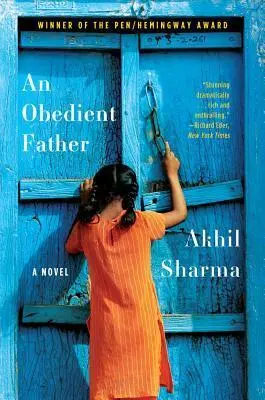
Akhil Sharma - An Obedient Father
Здесь есть возможность читать онлайн «Akhil Sharma - An Obedient Father» весь текст электронной книги совершенно бесплатно (целиком полную версию без сокращений). В некоторых случаях можно слушать аудио, скачать через торрент в формате fb2 и присутствует краткое содержание. Год выпуска: 2000, Издательство: W. W. Norton & Company, Жанр: Современная проза, на английском языке. Описание произведения, (предисловие) а так же отзывы посетителей доступны на портале библиотеки ЛибКат.
- Название:An Obedient Father
- Автор:
- Издательство:W. W. Norton & Company
- Жанр:
- Год:2000
- ISBN:нет данных
- Рейтинг книги:4 / 5. Голосов: 1
-
Избранное:Добавить в избранное
- Отзывы:
-
Ваша оценка:
An Obedient Father: краткое содержание, описание и аннотация
Предлагаем к чтению аннотацию, описание, краткое содержание или предисловие (зависит от того, что написал сам автор книги «An Obedient Father»). Если вы не нашли необходимую информацию о книге — напишите в комментариях, мы постараемся отыскать её.
Ram Karan, a corrupt official in New Delhi, lives with his widowed daughter and his little granddaughter. Bumbling, sad, ironic, Ram is also a man corroded by a terrible secret. Taking the reader down into a world of feuding families and politics,
is a work of rare sensibilities that presents a character as formulated, funny, and morally ambiguous as any of Dostoevsky’s antiheroes.
An Obedient Father — читать онлайн бесплатно полную книгу (весь текст) целиком
Ниже представлен текст книги, разбитый по страницам. Система сохранения места последней прочитанной страницы, позволяет с удобством читать онлайн бесплатно книгу «An Obedient Father», без необходимости каждый раз заново искать на чём Вы остановились. Поставьте закладку, и сможете в любой момент перейти на страницу, на которой закончили чтение.
Интервал:
Закладка:
When I settled back in the seat, memories of my childhood came to me. I remembered that when my mother and I waited by the side of the road for a bus, I would tell my mother to move back, not because I was worried about her safety, but because this was one of the few ways I had to show my love. The sense of loss for the boy I
once was made shame settle in my chest Uke a clot. Asha was so small that if one looked at only her hand or foot, it seemed unreal.
The bus terminal was roaring with the enormous noise of thousands of people arriving and departing and of the buses which brought them and took them away. There were villagers; there were men and women dressed in pants and shirts; there were foreigners. There were carts selling everything from pieces of fresh coconut, to water and lemonade, to hot food, to plastic toys. There was such a sense of energy that everything appeared possible. All this confirmed the rightness of my decision to go in search of the pundit.
Beneath the heaviness in my chest, I felt a pulse of excitement.
I found the Haryana Roadways ticket booth and bought a ticket to Beri. The bus was parked in a corner of the compound that surrounds the ISBT I stepped over suitcases and small bundles to move down the aisle toward a window seat in the back. The seat was torn, and straw showed through the rips in the green plastic. My belly almost touched the seat in front of me. The bus smelled of manure and sweat and rang with the quick dialects of the villagers who filled it. A wedding party of red-turbaned men sat singing in the front.
My mind hurtled from one thought to the other. There was my shame, my eagerness for the trip, and now that I was in the bus, a worry that in Beri I would meet one of my brothers or their children, whom I had not seen for five years, since we quarreled over a piece of land my father left us. But I would not have a problem remaining unrecognized. I began planning what I would do once I got to the village. I would find the ice-cream factory the pundit's wife had told me he was blessing; then I would walk along the river which I had liked so much as a child; and then, while waiting for the next bus to Delhi, I might have lunch at a dhaba. Thinking of food made me drool.
I was disgusted with myself
I looked out the window. Buses and people crowded the ISBT compound. Along a wall I saw three old women, their faces covered with folds of their saris, squatting and urinating. I imagined the darkening dust beneath them and I felt again the inevitability of my
nature. My mind was attracted to what is loathsome and humiliating. Although I was not sexually attracted to men, I sometimes imagined sucking the penises of the rich and powerful, like Mr. Gupta or Mr. Maurya, and I would feel humiliation and delight at currying favor.
I turned away from the women. On top of the wall next to which they crouched was a billboard with Nehru's handsome smiling face and some quotation about the nature of generosity.
The bus started and we rattled onto the road. We went past the Red Fort and Chandni Chowk and into New Delhi. The crowded roads eased into bright boulevards. No one remembers, I thought, that Nehru had wanted to show how modern he had made India and decided to expand New Delhi while thousands were starving in Calcutta and there were no sewers in Old Delhi.
By the time I woke, the buildings bordering the road had shrunk to one and two stories and the spaces between them had begun expanding. So much dust was coming in through the open windows and the loose metal floorboards that there was a haze inside the bus.
Sleep had clarified my emotions, and the horror and shame were stronger than fear. I remembered twelve-year-old Anita beneath me, far beneath me, as if I were looking down from a great height, and me enormous and sweating and snorting above her. In order to diminish the pressure in my chest, I took shallow breaths. Money would make everything negotiable. The crime against Anita was decades old. Since then I had not repeated the crime with any other child. Asha did not count, because I was drunk and had been caught before anything occurred.
We shot through the ring of small towns which surround Delhi. The white markers that look like gravestones appeared, calling the road a highway even though it was still barely able to contain two buses passing each other. Farms lined the road. Most were only an acre or two, unadorned even by a well or a waterwheel, and separated by well-worn paths. Occasionally we passed large fields, divided by irrigation ditches and edged with neem trees for green fertilizer. I wondered whether, if someone else had lived my life, he
would have committed the same sins that I had. The weight in my chest got heavier and I began to worry I might have another heart attack. I clenched and unclenched my hands to see if my fingers tingled. I lifted my arms up to the seat before me to see if they ached. As the pressure increased, I grew restless. My mouth opened on its own, although my mind was not forming any words.
There were times when the highway became the main street of small towns and I could have reached out and pulled drying laundry off people's balconies. We passed women in veils and bright clothes walking down the side of the highway with bundles of wood, which nearly doubled their height, rocking gently on their heads.
In my childhood, when a man and a woman wanted a ride from a passing bus or truck, they simply sat by the side of the road and waited. The men had long, curled mustaches and some held a sword over their knees. They might stand up as the bus or truck approached, but not attempt to hail it, to avoid the shame of rejection. The women wore long, loose shirts and skirts of red, gold, and purple. As the bus or truck neared, they veiled themselves with a scarf and looked away. These women had always made me think of flowers that turn their heads and track the sun across the sky.
Before Independence and before the five-year plans brought irrigation and electricity, Beri was a village of a hundred, mostly Brahmin families living in one-room mud homes that were scattered over several small hills. The only shops were either far away or in the trunk of some entrepreneur who went to town regularly and brought back everything from rose syrup to needles.
My father was the village teacher. I had two older brothers who were, even then, so exactly as they are now — inward, always planning, ready to hate — that I believe some people are born nearly complete and life provides just the details of their personalities.
My mother was the only person I loved, and I think she loved only me. Because she believed peas were very good for you. Ma would take them out of my brothers' food and put them in mine. Ma
was short and fat and, as if she were a child, always walked around barefoot. At some point when I was very young, she began to claim that there were ghosts in the dark corners of our house. Later, she was possessed by them. She might claim to be a Brahmin from a hundred years ago or a princess who had taken poison to protect her honor. Several times she buried all our plates and pots in different parts of the farm, claiming that they were treasure. When she went crazy, we tied her hands and feet to a cot or the millstone. One moonless summer night she escaped from the binds and my father, my brothers, and I chased her till dawn over Beri's hills. We could not see her, but we followed her high, giddy laughter. Her laughter was like smoke, filling the night and taking away my breath.
Though I was lonely enough that in my dreams I sometimes fell in love and woke up with my heart aching, I was aggressive and talkative. No matter what games we children organized, I was the captain of one of the teams. I had a gang of five or six boys who called me "Grandfather" and with whom I terrorized the other children. As an assertion of power, if I ran into a younger boy who didn't act properly obsequious before me, I made him run a useless errand, such as going to a particular tree and getting a specific leaf If the boy refused to do this, or if he did it but I did not like him, I beat him.
Читать дальшеИнтервал:
Закладка:
Похожие книги на «An Obedient Father»
Представляем Вашему вниманию похожие книги на «An Obedient Father» списком для выбора. Мы отобрали схожую по названию и смыслу литературу в надежде предоставить читателям больше вариантов отыскать новые, интересные, ещё непрочитанные произведения.












Обсуждение, отзывы о книге «An Obedient Father» и просто собственные мнения читателей. Оставьте ваши комментарии, напишите, что Вы думаете о произведении, его смысле или главных героях. Укажите что конкретно понравилось, а что нет, и почему Вы так считаете.