Wu Ming-Yi - The Man with the Compound Eyes
Здесь есть возможность читать онлайн «Wu Ming-Yi - The Man with the Compound Eyes» весь текст электронной книги совершенно бесплатно (целиком полную версию без сокращений). В некоторых случаях можно слушать аудио, скачать через торрент в формате fb2 и присутствует краткое содержание. Год выпуска: 2014, Издательство: Pantheon, Жанр: Современная проза, Фантастика и фэнтези, на английском языке. Описание произведения, (предисловие) а так же отзывы посетителей доступны на портале библиотеки ЛибКат.
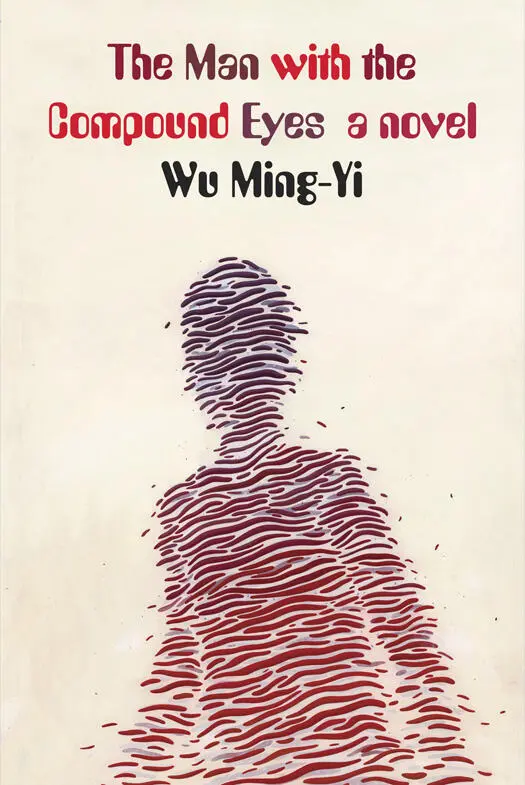
- Название:The Man with the Compound Eyes
- Автор:
- Издательство:Pantheon
- Жанр:
- Год:2014
- ISBN:нет данных
- Рейтинг книги:3 / 5. Голосов: 1
-
Избранное:Добавить в избранное
- Отзывы:
-
Ваша оценка:
The Man with the Compound Eyes: краткое содержание, описание и аннотация
Предлагаем к чтению аннотацию, описание, краткое содержание или предисловие (зависит от того, что написал сам автор книги «The Man with the Compound Eyes»). Если вы не нашли необходимую информацию о книге — напишите в комментариях, мы постараемся отыскать её.
The Man with the Compound Eyes — читать онлайн бесплатно полную книгу (весь текст) целиком
Ниже представлен текст книги, разбитый по страницам. Система сохранения места последней прочитанной страницы, позволяет с удобством читать онлайн бесплатно книгу «The Man with the Compound Eyes», без необходимости каждый раз заново искать на чём Вы остановились. Поставьте закладку, и сможете в любой момент перейти на страницу, на которой закончили чтение.
Интервал:
Закладка:
But language learning is long haul. One time I asked Atile’i where Wayo Wayo was, but he did not seem to understand. He opened the fingers of one hand and added the pinkie and ring finger of the other hand, as if to indicate a certain number. I hit upon the idea of giving him pen and paper and getting him to draw Wayo Wayo. He went into his own little world. I only expected a sketch, but he really put his heart into it.
Sometimes he draws with his fingers, sometimes with his teeth, sometimes even with his tears. When he finishes a picture he asks for another piece of paper. By now I can tell that he is going to piece the pictures together into a story. The first picture is of an old man doing the jellyfish float next to a few little boats. I can’t tell what it means, but think I should go into town to buy him a sketchbook, so he doesn’t have to keep drawing on his body. And this way I’ll eventually have an illustrated anthology of the tales of Wayo Wayo.
Perhaps because I don’t think he can completely understand me, I often feel like talking to him. It’s like talking through an open window.
This is also an island, the island of Taiwan. In the olden days people called it Formosa. Look, this is an aerial view of Taiwan. You’ve probably never seen a photograph before, eh? Oh, that’s right, maybe you saw lots of photographs on Gesi Gesi, all blurry because they’d been immersed in seawater. What’s an aerial view? It’s like a bird looking down at Taiwan from above the clouds. Look, there’s ocean on this side of the island, and ocean on this side, this side and this side. It’s surrounded by ocean on all four sides, so we call it an island. So actually, no matter which way people turn on an island, they’re always facing the sea.
I don’t know too much about science, but I learned some geography in school, and according to geographers the island of Taiwan only took on its present shape two to six million years ago. Do you have any idea how many years that is? It’s a long, long time ago, yes? A long, long time ago. What’s a geographer? I don’t know if this will sound offensive, but I think a geographer is a bit like the Earth Sage on Wayo Wayo you were telling me about.
Strictly speaking, people like me are latecomers to Taiwan. We crossed the sea to get here a couple hundred years ago. A few years ago people were fond of saying that if you metaphorically compress the history of the world into a single day, humans only appear a few seconds before midnight. We now call the first people who lived on the island aborigines, and my two good friends Dahu and Hafay are both aborigines. Though they belong to different tribes, their ancestors came to the island a bit earlier than mine did.
And here’s where you came onshore.
I moved here over ten years ago to teach at the local university. It’s not that far from here. You see that house way down there? The one that has fallen over and been confiscated by the sea? My husband and son and I used to live there. As I said, I’m not from the east coast. I’m originally from a city in the north called Taipei. Before that, my mum and dad were both born on the west coast. In his youth my father went to work in a factory in Japan. His hometown is a place called Kuei-shan in the northwest, and my mum comes from Fang-yuan in central Taiwan. My mum believed in the sea goddess Matsu all her life. My father forfeited his inheritance after a falling-out with his family, so he had to go to Taipei to try to make a living on his own. And when the oyster field could no longer feed my mum’s family, she had to take a part-time job in an industrial park that was kind of far from her home. She worked there for a while but then got laid off. In the end she, too, moved to Taipei. I don’t actually know how my parents met. They never told me. My mum said that when they were young they moved around from place to place, like gypsies practically. They went wherever they could make a living.
My father and mother are both gone. I don’t want to talk about how they passed away, and I don’t want to talk about my brother, either. That’d only upset me. You know what I mean by “gone”? What do the Wayo Wayoans say when somebody dies? Dead, departed, passed away, gone to a better place? What? Iwa kugi ?
(I start blowing up Toto’s inflatable globe. This thing is ingenious. You just need to force enough air into it and it turns into a sphere. It’s nearly to scale, and the words and colors on it glow in the dark. I blow and blow into the withered world until it’s firm as a drum).
You see this ball? It’s the Earth, the planet we live on. No, no, it’s not just mine, it’s yours and mine. Look, the place we live is like a star in the sky, it’s just that we call the star we live on Earth. This ball is a scale model of the Earth. I bought it for my son. It even glows in the dark! That’s because it has a special night-shine coating. Some things in this world glow, some don’t. Some are like the moon, others like the sun. What do you say for the moon? Nalusa ? And the sun? The other one, the one that appears during the day? Yigasa ?
The place we’re living on is actually just a small island. I sometimes feel that in a way the size of the island is not for us to decide. When my ancestors arrived on the island two hundred years ago, walking from here to here (I traced a line through the Central Mountain Range to the east coast with my finger) took months, and they risked their lives to make the trip. Maybe to some extent just like you were risking your life when you floated your way here. In fact, a lot of people came here in boats. I often think that if you stroll from town to town, from village to village, the island would get really big. When we were still dating I told Thom, “Maybe the island got the way it is today because the people living here wanted to be able to get anywhere on the island as quickly as possible.”
The day you drifted here there was an earthquake and an extraordinary wave. Are there earthquakes on your island? When the earth shakes? There should be. There must be. Earthquakes are really common here. We have typhoons, too, and I’m worried that come typhoon season the Trash Vortex that brought you here might end up surrounding the entire island.
I would guess you’re a teenager, fourteen or fifteen at the most? I had a child, too, and if he were still with us he’d be ten. I didn’t want a child at first, because I didn’t know what kind of future he would have to face. I didn’t want him to have to inherit an island we’ve gone and messed up. But Thom and I still ended up having a child.
It’s been raining a lot the past few years. Some places will get several hundred millimeters of precipitation in a single day when there’s no typhoon. Summer’s gotten extremely hot and long, and there’s a shower almost every day. My friend Ming told me that some of his bird-watching friends have discovered that certain migratory birds can’t even recognize the coastline anymore, because it’s changing too fast. They hesitate before they land. It’s in a sorry state, but this is our island home.
I also brought this to show you. Here. It’s a digital photo frame. The things it displays are called photographs, and the photographs inside it are images of the past. Interesting, don’t you think? These are my folks. And this is the place where they finally settled down in Taipei. It was called the Chung Hwa Market. We were really poor when I was little. My parents worked as hard as they could to send my brother and me through school. They thought that we’d do well in life if we got an education. My dad apprenticed in an electrical supply store. While he was out with the boss repairing air conditioners, my mother sold little egg-shaped sponge cakes in the market. My dad’s boss let us a room on the third floor, probably about the size of this hut. My mother had us stay home and study instead of minding the cake stand, except on holidays. Both my brother and I really liked baking those cakes. You bake the one side, turn it over, then you bake the other. They smelled so good! I’ll buy you some next time I go into town.
Читать дальшеИнтервал:
Закладка:
Похожие книги на «The Man with the Compound Eyes»
Представляем Вашему вниманию похожие книги на «The Man with the Compound Eyes» списком для выбора. Мы отобрали схожую по названию и смыслу литературу в надежде предоставить читателям больше вариантов отыскать новые, интересные, ещё непрочитанные произведения.






Обсуждение, отзывы о книге «The Man with the Compound Eyes» и просто собственные мнения читателей. Оставьте ваши комментарии, напишите, что Вы думаете о произведении, его смысле или главных героях. Укажите что конкретно понравилось, а что нет, и почему Вы так считаете.