Sophia Nikolaidou - The Scapegoat
Здесь есть возможность читать онлайн «Sophia Nikolaidou - The Scapegoat» весь текст электронной книги совершенно бесплатно (целиком полную версию без сокращений). В некоторых случаях можно слушать аудио, скачать через торрент в формате fb2 и присутствует краткое содержание. Год выпуска: 2015, Издательство: Melville House, Жанр: Современная проза, на английском языке. Описание произведения, (предисловие) а так же отзывы посетителей доступны на портале библиотеки ЛибКат.
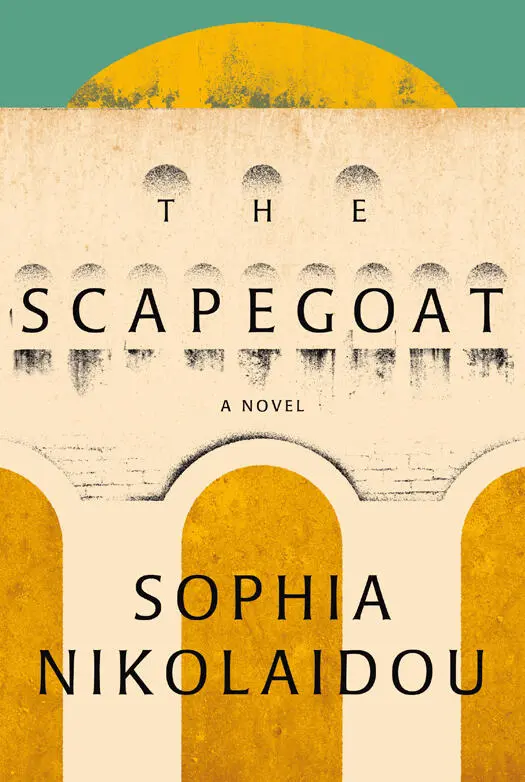
- Название:The Scapegoat
- Автор:
- Издательство:Melville House
- Жанр:
- Год:2015
- ISBN:нет данных
- Рейтинг книги:5 / 5. Голосов: 1
-
Избранное:Добавить в избранное
- Отзывы:
-
Ваша оценка:
The Scapegoat: краткое содержание, описание и аннотация
Предлагаем к чтению аннотацию, описание, краткое содержание или предисловие (зависит от того, что написал сам автор книги «The Scapegoat»). Если вы не нашли необходимую информацию о книге — напишите в комментариях, мы постараемся отыскать её.
Flash forward to modern day Greece, where a young, disaffected high school student is given an assignment for a school project: find the truth.
Based on the real story of famed CBS reporter George Polk — journalism’s prestigious Polk Awards were named after him — who was investigating embezzlement of U.S. aid by the right-wing Greek government, Nikolaidou’s novel is a sweeping saga that brings together the Greece of the post-war period with the current era, where the country finds itself facing turbulent political times once again.
Told by key players in the story — the dashing journalist’s Greek widow; the mother and sisters of the convicted man; the brutal Thessaloniki Chief of Police; a U.S. Foreign Office investigator — it is the modern-day student who is most affecting of them all, as he questions truth, justice and sacrifice. . and how the past is always with us.
The Scapegoat — читать онлайн бесплатно полную книгу (весь текст) целиком
Ниже представлен текст книги, разбитый по страницам. Система сохранения места последней прочитанной страницы, позволяет с удобством читать онлайн бесплатно книгу «The Scapegoat», без необходимости каждый раз заново искать на чём Вы остановились. Поставьте закладку, и сможете в любой момент перейти на страницу, на которой закончили чтение.
Интервал:
Закладка:
She took pleasure, then, in the small things, an hour on Antigone, or the Epitaphios, or Julius Caesar’s De bello civili . Always on guard in the classroom, she managed to find all their cheat sheets during exams. No matter how inventive the seniors got, nothing escaped her. Once she pulled a strip of paper two and a half meters long from the cast on a student’s arm. He had copied out the entire passage they were being tested on, complete with a translation and grammatical notes. She found the boy waiting for her at the main door that day after school. He knew she would keep him from graduating that year, but instead of giving her some sob story, he said, I’m sorry, Ma’am, I’m sorry for letting you down .
At home, however, all her comfort in her role flew out the window. She was a strict mother, as Teta often complained. Evthalia paid no attention, her daughter could say what she liked, what mattered was that she listened and obeyed. Evthalia was a young widow who was managing all on her own, and without crying over her fate, either. She ruled, she didn’t coddle. As far as she was concerned, taking care of a household meant governing it.
With her grandson, though, things changed, her severity evaporated, she showed understanding about everything, particularly the things that made no sense. It drove Teta crazy: Evthalia always kept her mouth shut in front of the child, but he knew his grandmother was on his side. And that was enough.
One Sunday at dawn Minas went down with a can of spray paint in his back pocket and wrote on the wall outside of Agia Sophia:
EVERY GIRL HAS HER TRUMP CARD DIAMONDS TO SPEND, STYLE IN SPADES BUT IT’S EVELINA’S SMARTS THAT CAPTURE MY HEART
Evthalia knew Minas had written it, but it just made her smile. It was a desecration, to be sure, illegal, improper, a peacock move, as Tasos would call it. But she found it sweet, her grandson’s version of a moonlit serenade: Evelina’s house looked down onto that wall, so she would see it even before she left the apartment in the morning. The exams were fast approaching, and spray-painting a slogan was better than the hysterics all the others were experiencing. And perhaps, she thought, it was time for the child to burn a few feathers. She just hoped he wouldn’t get too hurt. Because her grandson could be a lumbering oaf sometimes. He’s a boy , Teta said dismissively, he has no sense of tactics, he just jumps into the fire with no armor on .
Evthalia may have guarded her own feelings and kept herself far from the dust storms of love, but she still felt compassion for the suffering of others. Perhaps because she herself had once felt that pain. She knew very well that the body is an armory packed with gunpowder, ready to explode at the strike of a match. And so she watched as Minas fell flat on his face, hoping he’d pick himself back up again with no more than a few bruises.
Once, when he was rushing out to meet his young lady, with his shoelaces untied and his pants magically hanging below his hips, Evthalia thought she heard a thump — the thump of his heart suddenly kicking against his ribs. She knew that sound, she recognized it. It was how her own heart had pounded, coming home from class, knowing without a shadow of a doubt that she would see him with his lawyer’s briefcase and his wide smile, and he would ask her something about Cicero.
De oratore . Even today, if you woke her from a deep sleep in the middle of the night, she’d still be able to recite that text from start to finish.
WHEN ELEPHANTS DANCE
The situation in Greece had reached full boil. Meanwhile, all of Europe was on fire, Spain, Italy, Brussels. New words peppered the speech of the grocer and the guy at the kiosk; the prime minister made statement after statement.
Evthalia couldn’t stand to watch. Get lost, you shit-eating dog , she’d shout at the television screen, then go out onto the balcony for a cigarette. Her hands trembled and the lighter wouldn’t stay still. It wasn’t so much the cutbacks to pensions that upset her as the blatant dishonesty unfolding in full view: sacrifices of all kinds being thrown out the window, workers’ rights suddenly vanishing with no hope of return. And meanwhile the scandals in the administration broke one after the next. The country was immune to shock, nothing surprised anyone anymore, not the kickbacks or the obvious lies. What left them speechless was the lack of foresight in how the situation was being dealt with: laws were written on the spot, amendments put to a vote in the midnight hours.
— This city smells of gunpowder, Tasos kept saying.
He watched as shop after shop lowered its shutters; the main artery of Vassilisis Olgas Avenue was deserted, Agia Theodora Street a wasteland. Empty shelves, signs in shop windows, advertising fliers in unused piles. Filth and abandonment. Tasos walked through the streets with his head down, since there were no window displays to look at anymore, only a long line of FOR RENT signs.
And then there was that entourage of talking heads on TV: men in suits with their Ph.Ds. and their academic papers, unionists who’d made a career out of demonstrations, guys who were all talk and no action, rabble-rousers with other people’s money and votes in their pockets, demagogues and dynasty politicians.
— You’re the one who voted for them, Evthalia accused, though she knew it was no time to bickering, to weigh all the mistakes that had been made over the years, from the ancient to the current-day, and try to determine which had tipped the scales. All together they had brought the country down.
Tasos tried not to take sides on the issue of foreigners coming in to help them clean up their act — a blessing or a scourge, depending on what side of the political spectrum you were on. There were endless statements and articles, commentary from all sides, pretty words to disguise dirty deeds. Meanwhile, off stage, behind the cameras, hard bargains were being driven: I’ll give you this if you give me that.
That’s how it had always been, from the creation of the world. Someone was always making the decisions, while others were left holding the bag. In the Garden of Eden, God was boss. In the European Union it was the Central Bank.
Minas heard it all, since these days the television was always on in the house. His father even managed to put his favorite on the front page of the paper: the caption WHEN ELEPHANTS DANCE beneath a cartoon showing all-powerful presidents, unfazed prime ministers, bankers and industrialists, all with elephant trunks— give them elephant trunks and thick legs , Tasos had told the cartoonist, like the trunks of palm trees, but make sure you can still tell who’s who —and in the cartoon these huge pachyderms were prancing around with the country under their feet, raising a cloud of dust, with citizens like tiny ants, so small you couldn’t make out any faces, they were all just smushed ants. The economists all had theories of their own, and most sounded logical enough — the only thing was, they all contradicted one another, so people quickly gave up trying to understand. The biggest problem wasn’t their specialized vocabulary, which every hairdresser and kiosk guy now parroted all day at work — it was that their theories were only theories, empty words that shed light on things for an instant, with a flash, but fizzled just as quickly. So the wise simply kept their mouths shut, particularly the intellectuals, who watched the developments from their homes, discussed the situation with friends, but refrained from making predictions. The few who did mostly just stated the obvious. And so the TV stations and the blogs shouted, Where are the intellectuals to come and save us?
Читать дальшеИнтервал:
Закладка:
Похожие книги на «The Scapegoat»
Представляем Вашему вниманию похожие книги на «The Scapegoat» списком для выбора. Мы отобрали схожую по названию и смыслу литературу в надежде предоставить читателям больше вариантов отыскать новые, интересные, ещё непрочитанные произведения.






Обсуждение, отзывы о книге «The Scapegoat» и просто собственные мнения читателей. Оставьте ваши комментарии, напишите, что Вы думаете о произведении, его смысле или главных героях. Укажите что конкретно понравилось, а что нет, и почему Вы так считаете.