Sophia Nikolaidou - The Scapegoat
Здесь есть возможность читать онлайн «Sophia Nikolaidou - The Scapegoat» весь текст электронной книги совершенно бесплатно (целиком полную версию без сокращений). В некоторых случаях можно слушать аудио, скачать через торрент в формате fb2 и присутствует краткое содержание. Год выпуска: 2015, Издательство: Melville House, Жанр: Современная проза, на английском языке. Описание произведения, (предисловие) а так же отзывы посетителей доступны на портале библиотеки ЛибКат.
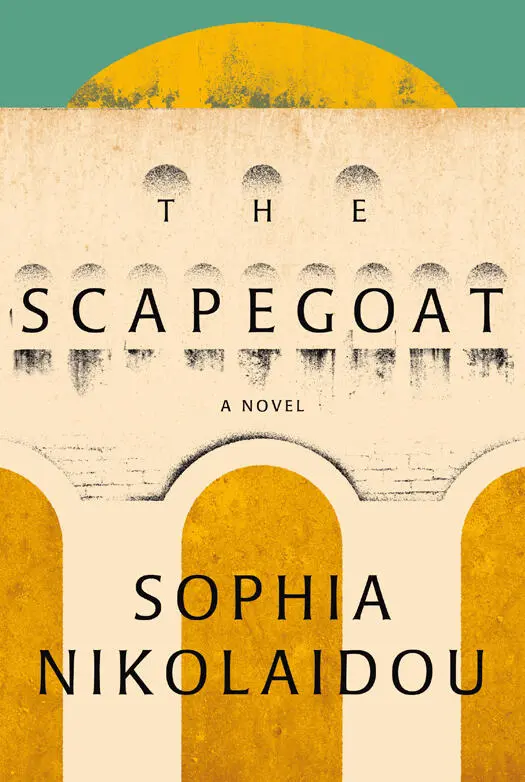
- Название:The Scapegoat
- Автор:
- Издательство:Melville House
- Жанр:
- Год:2015
- ISBN:нет данных
- Рейтинг книги:5 / 5. Голосов: 1
-
Избранное:Добавить в избранное
- Отзывы:
-
Ваша оценка:
The Scapegoat: краткое содержание, описание и аннотация
Предлагаем к чтению аннотацию, описание, краткое содержание или предисловие (зависит от того, что написал сам автор книги «The Scapegoat»). Если вы не нашли необходимую информацию о книге — напишите в комментариях, мы постараемся отыскать её.
Flash forward to modern day Greece, where a young, disaffected high school student is given an assignment for a school project: find the truth.
Based on the real story of famed CBS reporter George Polk — journalism’s prestigious Polk Awards were named after him — who was investigating embezzlement of U.S. aid by the right-wing Greek government, Nikolaidou’s novel is a sweeping saga that brings together the Greece of the post-war period with the current era, where the country finds itself facing turbulent political times once again.
Told by key players in the story — the dashing journalist’s Greek widow; the mother and sisters of the convicted man; the brutal Thessaloniki Chief of Police; a U.S. Foreign Office investigator — it is the modern-day student who is most affecting of them all, as he questions truth, justice and sacrifice. . and how the past is always with us.
The Scapegoat — читать онлайн бесплатно полную книгу (весь текст) целиком
Ниже представлен текст книги, разбитый по страницам. Система сохранения места последней прочитанной страницы, позволяет с удобством читать онлайн бесплатно книгу «The Scapegoat», без необходимости каждый раз заново искать на чём Вы остановились. Поставьте закладку, и сможете в любой момент перейти на страницу, на которой закончили чтение.
Интервал:
Закладка:
To Soukiouroglou it was clear as day that the old goat was in league with the government back then, and with Minas now. The boy had chosen the easy path of simple description. He refused to risk any commentary, evaluation, or interpretation. He just sang his song and waited for the applause.
The teacher weighed the circumstances. He glanced at Teta in the upper section of seats, then at Evthalia. In the seat next to hers Dinopoulos was trying to control the Parkinson’s in his hands and head.
— I’d like to ask a question, too, he finally said. Mr. Georgiou, have you in the course of your research, he continued, addressing himself to Minas with the utmost formality, settled on a version of the story you might consider the most plausible, in light of your findings? If your ten-year-old brother were to ask you exactly what happened, could you answer him in just a sentence or two?
— I don’t have a brother, Minas answered, and the audience laughed.
Spiros had requested special permission from the religion teacher to come and watch Minas’s presentation. Evelina didn’t even deign to acknowledge him when she saw him entering the auditorium. Spiros had heard a lot about Soukiouroglou, particularly from Minas, and wanted to see him in action. He didn’t understand how that scrawny man could bring an entire class to its knees with a single glance. How such incredible awkwardness could elicit such love and respect. From his seat at the top of the auditorium he felt as if he could hear Minas’s heart pounding. Why was everyone just sitting there, why didn’t anyone intervene?
He raised his hand bravely.
— Yes, in the back, Soukiouroglou said.
— I don’t get it, Spiros said, getting off to a sloppy start. I mean, why do we necessarily have to decide? It’s not like this is a courtroom or anything.
Evelina rolled her eyes. Sure, the moron had a point, but the words he chose were all wrong, weak tools in the hands of an incapable rhetorician.
— What he means, she spoke up, trying to correct the situation, is that perhaps the precise description of events that Minas attempted is enough. The search for the perpetrator and the attribution of guilt are the responsibility of the justice system. Pointing out contradictions in the evidence is enough to indicate the problem. An interpretation of the events and indication of the guilty party is far more than you can expect from a student paper.
— Ms. Dinopoulou believes you capable of description but not of interpretation, Soukiouroglou commented, still sticking with his ironic formality. It remains to be seen whether or not her evaluation is correct.
Tasos clenched his fist under the desk. The process, mutatis mutandis , was familiar to him. Soukiouroglou was a carbon copy of Asteriou, his dissertation supervisor. That’s who he’d reminded Tasos of from the very start, and the impression had only gotten stronger. Soukiouroglou’s famous professor, the one who had sent him packing from Aristotle University to go and teach at a high school, had a corrosive effect on his students. Tasos had sniffed it out from his very first semester as a student, which is why he’d made sure never to enroll in Asteriou’s classes.
The biting irony, the pressure, the pursuit of that one perfect word that would bring a smile to the professor’s lips. The metaphorical flogging of first-year students for supposedly pedagogical purposes. The perversion of the obvious. The incredible joy of discovery, and the high price it carried.
Tasos had endured the teaching of the most famous professor in the Faculty of Philosophy for precisely one week. During the second lecture, Asteriou addressed him directly. He called Tasos wily Odysseus and Teta Elpinor , after Tasos had dared to answer some convoluted question that made simple things appear more complicated than they really were. He, unaware of the danger and with a false sense of security, had answered correctly. And that set Asteriou off.
Whatever Asteriou said was God-given truth. His witticisms burst like bombs in the lecture hall, his insightful observations left students dumbstruck. His arguments weren’t watertight, of course. Nor were his ideas original, as you found if you actually went and dusted off the bibliography. But certain turns of phrase stuck in the minds of his listeners. He used their emotions to his advantage, knew how to handle his audience, had inimitable technique as a lecturer. He was a consummate performer, a silent wave roiling under a smooth surface, and he pulled students into his undertow. He was precisely what he spoke so vehemently against: an iron-fisted ruler, an oppressor. He was quick to anger, rarely listened, mostly just spoke and led the entranced crowd to whatever point he had decided on ahead of time.
Tasos figured all that out during the first week of lectures, and never set foot in the class again. The power games the professor played with his students were obvious, try as he might to hide behind rhetoric and provocations. Tasos talked Teta into dropping the class and taking it with him the following semester, with a different professor. He managed to graduate without ever crossing paths with Asteriou again.
Asteriou consumed whatever got close to him. No grass sprouted where he stepped: his students ended up carbon copies of him, none with a strong personality, even the ones who were supposedly at the top of their field. Soukiouroglou was a perfect example. Tasos had to admit, Soukiouroglou had dared to go head to head with his professor. He raised his voice, stood tall, and paid dearly for his decision. But here in this high school auditorium — a step down on the educational ladder from the ambitious Faculty of Philosophy, with its inscription, in ancient Greek, Sacrifice to the muses and graces —Soukiouroglou wielded the power of his position just as Asteriou had: a Scottish shower, hot and cold, biting irony, and an abruptness that left no room for discussion.
— Well? Soukiouroglou repeated the question. Will you attempt to offer an interpretation of the events? Or will you limit yourself to safe, painless description?
Tasos counted the seconds on the inside. He was on the verge of getting up and tearing the guy to shreds. Teta pinched him.
— I don’t understand.
Minas had spoken almost in a whisper. Soukiouroglou gestured for him to speak up.
— I don’t understand why I have to present my paper the way you want me to, and not how I’ve decided. Description is a form of interpretation, too, he added, his voice gaining strength.
— An interpretation that doesn’t take many risks, Soukiouroglou shot back.
Evelina couldn’t contain herself anymore. Enough was enough.
— Sir, you’re the one holding the grade book, she said. You make the rules, and you demand obedience. If that’s a critical appraisal, I must be missing something.
Tasos smiled for the first time since he walked in the door. The girl had balls. He leaned back more comfortably in his chair. Well then. It was time for him to practice what he often preached: he would put his trust in the younger generation.
Before Soukiouroglou could respond to Evelina, Minas spoke up in a clear, steady, confident voice, running once more over the possible scenarios. An English secret agent, irregularities committed by the right-wing parastate, the collusion of dark forces who had something to gain from the tumult the country was experiencing. The murderers may have been right-wing extremists trying to prevent the reporter from meeting the General. Or British agents seeking to undermine American hegemony over the country. Or, as Tzitzilis had argued, communists trying to make the administration look ridiculous and convince the Americans to pack up and get out of Greece.
Читать дальшеИнтервал:
Закладка:
Похожие книги на «The Scapegoat»
Представляем Вашему вниманию похожие книги на «The Scapegoat» списком для выбора. Мы отобрали схожую по названию и смыслу литературу в надежде предоставить читателям больше вариантов отыскать новые, интересные, ещё непрочитанные произведения.








Обсуждение, отзывы о книге «The Scapegoat» и просто собственные мнения читателей. Оставьте ваши комментарии, напишите, что Вы думаете о произведении, его смысле или главных героях. Укажите что конкретно понравилось, а что нет, и почему Вы так считаете.