Vikram Chandra - Sacred Games
Здесь есть возможность читать онлайн «Vikram Chandra - Sacred Games» весь текст электронной книги совершенно бесплатно (целиком полную версию без сокращений). В некоторых случаях можно слушать аудио, скачать через торрент в формате fb2 и присутствует краткое содержание. Год выпуска: 2009, Издательство: HarperCollins, Жанр: Современная проза, на английском языке. Описание произведения, (предисловие) а так же отзывы посетителей доступны на портале библиотеки ЛибКат.
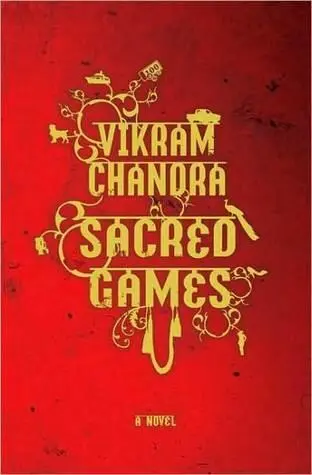
- Название:Sacred Games
- Автор:
- Издательство:HarperCollins
- Жанр:
- Год:2009
- ISBN:нет данных
- Рейтинг книги:3 / 5. Голосов: 1
-
Избранное:Добавить в избранное
- Отзывы:
-
Ваша оценка:
Sacred Games: краткое содержание, описание и аннотация
Предлагаем к чтению аннотацию, описание, краткое содержание или предисловие (зависит от того, что написал сам автор книги «Sacred Games»). Если вы не нашли необходимую информацию о книге — напишите в комментариях, мы постараемся отыскать её.
is an epic of exceptional richness and power. Vikram Chandra's novel draws the reader deep into the life of Inspector Sartaj Singh — and into the criminal underworld of Ganesh Gaitonde, the most wanted gangster in India.
Sartaj, one of the very few Sikhs on the Mumbai police force, is used to being identified by his turban, beard and the sharp cut of his trousers. But "the silky Sikh" is now past forty, his marriage is over and his career prospects are on the slide. When Sartaj gets an anonymous tip-off as to the secret hide-out of the legendary boss of G-Company, he's determined that he'll be the one to collect the prize.
Vikram Chandra's keenly anticipated new novel is a magnificent story of friendship and betrayal, of terrible violence, of an astonishing modern city and its dark side. Drawing inspiration from the classics of nineteenth-century fiction, mystery novels, Bollywood movies and Chandra's own life and research on the streets of Mumbai,
evokes with devastating realism the way we live now but resonates with the intelligence and emotional depth of the best of literature.
Sacred Games — читать онлайн бесплатно полную книгу (весь текст) целиком
Ниже представлен текст книги, разбитый по страницам. Система сохранения места последней прочитанной страницы, позволяет с удобством читать онлайн бесплатно книгу «Sacred Games», без необходимости каждый раз заново искать на чём Вы остановились. Поставьте закладку, и сможете в любой момент перейти на страницу, на которой закончили чтение.
Интервал:
Закладка:
I could see the web of action and purpose and effect that he was talking about, or at least a pale ghost of it. He was Guru-ji, he could see this vast story that was so much larger than my story, he had gone beyond the limitations that I had, that Manu Tewari wrote within. We believed that a hero saw his goal in the first act, and his enemies, and so his quest went in a lovely arcing line towards the climax, and towards his victory. We believed that because this hero was fearless and strong, he would gain his prize in the eighteenth reel. But I saw now that we were not to know our causes, or our effects. Only the enlightened ones knew what that story was. Only Guru-ji could shatter the prison of time, and look directly into the blazing confusion of creation. 'Guru-ji, it is good of you to tell me that,' I said. 'I thought I had been defeated.'
'You are not defeated,' he said. 'Have faith, and do your work.'
I tried. I kept up with my meditation, and my exercises, and I buried myself in work, of which there was plenty. I ran three operations for Kulkarni, and of course found ways to sweep up a few of my own personal enemies in the minor bloodletting these entailed. That was pleasing. But I was distracted. I had discipline enough to keep to my routine, but I found no joy in it. Zoya, on the other hand, called me every other day with exuberant tales of her acting triumphs on various sets. She had signed six films with top banners, three of them after International Dhamaka had been released and declared a flop. Of all of us, she was the only one who emerged from this disaster unscathed. In fact, she was stronger, she was more beautiful than ever, and she was on television every half-hour. The industry and the public had somehow decided that she wasn't responsible for the soggy Dhamaka of our film, and so she thrived. Meanwhile, my half-inch gain had withered down to a quarter, and even that slight advantage depended on how I held the ruler against my lauda. Sometimes, very late at night, I caught myself thinking that I had somehow deceived myself earlier into believing that I had grown, that Dr Reinnes had helped me with his science. And then the white chasm of despair beckoned temptingly. But no, I persevered. I remembered Guru-ji and I went on. And yet, I was despondent. Sometimes I woke up early in the morning and opened a certain black file and went through our reviews. The Hindi and Gujarati papers had been the most enthusiastic about International Dhamaka , and the Punjabi magazines only slightly less so. The Dainik Samachar had loved the music, and said that 'Zoya's debut is the most promising in years'. But without a single exception, the English newspapers and magazines had been unkind to us. Times of India, Indian Express, Outlook , bastards all. I had kept the bad reviews as well, and was sometimes compelled to read them, even the snobbish English ones. ' International Dhamaka is too loud, too long and too witless to make much of a dhamaka,' said the critic for India Today . Kutiya, randi. 'All the international stunts and empty patriotism add up to boredom.' That was Outlook . Bastards.
There was one who worried me like a burrowing insect under my skin, like a speck of coal in my blood-ridden eye. His name was Ranjan Chatterjee, and he wrote for The National Observer , had written weekly film reviews for thirty-two years. He was always described in the magazines as 'veteran movie critic Ranjan Chatterjee', and he poured out his accumulated frustration and rage on us. 'One falters in the face of such arrogant carelessness,' he wrote. 'One quails.' I had to get Manu Tewari to explain who this 'one' was, and why Ranjan Chatterjee was writing about this disembodied number. 'Forget that maderchod, bhai,' Manu Tewari told me. 'He's a bitter old budhau, nobody reads him any more.'
I did, though. I read him through to the end, and then read him again, months later. And then again. ' International Dhamaka strains one's credulity even more than the usual Bollywood film,' he wrote. 'It is a string of tired film clichés strung together. These bhais live in unreal gilded luxury and fly around the world as if they are catching the morning train to Nashik. They are more slick than James Bond, and more suave than Casanova. One has long since given up hope that the commercial cinema would be concerned with realism. But the superficially glossy International Dhamaka makes one wonder if the filmmakers have ever met a real gangster.'
I caught myself thinking about this Ranjan Chatterjee during meetings, and in the mornings, I shook out of a fragile sleep with his 'one' rattling in my head. I had to do something about him. So I gave my instructions. The wrinkled old chutiya lived in Bandra East, in a block of flats that the government had built for journalists and writers. The very evening I gave my orders it was a Friday Ranjan Chatterjee was coming home from a first-day first show, with dinner afterwards paid for by the producers, who hoped to mollify him. He was walking fast, up from the garage towards the lift. The bastard was no doubt eager to get to his flat and put together a poisonous little garland of insults for the film he had just seen, to slap the entire crew of a hundred and fifty people with his abuse on Sunday morning. He had that spring in his step, the codger. But he never made it to his typewriter: Bunty and four of his boys were waiting at the corner of the building. They put a hand under each of Ranjan Chatterjee's arms and carried him to the back of the compound. He was making little squealing noises. They stood him up against the wall, and then they broke both of his legs. They wielded those bars that road workers use to pry up chunks of cement. When the first crisp tap landed on his right thigh, Ranjan Chatterjee shook to the ground and began to scream. The windows up the side of the building lit up, and the chowkidars came running around the corner, and stopped short as soon as they saw a drawn pistol. After his other leg took a blow, Ranjan Chatterjee screamed some more, screamed enough to wake up the entire housing society. Bunty waited for him to stop.
He settled finally into a slobbery wet sobbing, and Bunty slapped him lightly on the cheek. 'Hello,' Bunty said. 'Arre, listen to me. Listen.'
Ranjan Chatterjee raised his head and began vomiting. Bunty flinched away in disgust, and then reached down and grabbed a handful of hair and raised up the bastard's head. 'Does it hurt?' Bunty said. 'Tell me, does it hurt?'
Ranjan Chatterjee blinked his watery, wide-open eyes, and finally he was able to find Bunty. He began to wail, to make a small sound like a lonely kitten. 'Yes,' he said. 'Ah, ah, ah. Yes, it hurts.'
'Good,' Bunty said. 'Then you know this is real. And that you have met a real bhai.'
He slammed Ranjan Chatterjee's head down, and walked away. He and the boys got into their waiting car, and away they went, no trouble, no fuss. In the car they all sang the theme song from International Dhamaka : ' Rehne do, yaaron, main door ja raha hoon .' I know all this because one of the boys had been shooting it all, taping it on a little Canon digital camera with an attached spotlight. Even in that one harsh light, the detail that Canon caught was amazing, and the resolution was like nothing I had seen before on video. I could see the snot sliding out of Ranjan Chatterjee's nostrils, and his tiny little pupils. They brought the tape to me the next afternoon, it was hand-delivered to Bangkok and on to Phuket. I watched it fourteen times that first evening, and then I took a Chinese girl, and that night I slept deep, long and hard. I was relaxed, I had expelled Ranjan Chatterjee from my system. Yes, maybe life had a higher order that only the enlightened ones could see. Maybe the stories that we ordinary mortals told were only small lies, convenient explanations for what we couldn't understand. But still, breaking Ranjan Chatterjee's legs gave me what Manu Tewari would have called 'closure'. I had done it, and I felt better, the story was complete. I was finally free of International Dhamaka , and I could get on with my life.
Читать дальшеИнтервал:
Закладка:
Похожие книги на «Sacred Games»
Представляем Вашему вниманию похожие книги на «Sacred Games» списком для выбора. Мы отобрали схожую по названию и смыслу литературу в надежде предоставить читателям больше вариантов отыскать новые, интересные, ещё непрочитанные произведения.









Обсуждение, отзывы о книге «Sacred Games» и просто собственные мнения читателей. Оставьте ваши комментарии, напишите, что Вы думаете о произведении, его смысле или главных героях. Укажите что конкретно понравилось, а что нет, и почему Вы так считаете.