Vikram Chandra - Sacred Games
Здесь есть возможность читать онлайн «Vikram Chandra - Sacred Games» весь текст электронной книги совершенно бесплатно (целиком полную версию без сокращений). В некоторых случаях можно слушать аудио, скачать через торрент в формате fb2 и присутствует краткое содержание. Год выпуска: 2009, Издательство: HarperCollins, Жанр: Современная проза, на английском языке. Описание произведения, (предисловие) а так же отзывы посетителей доступны на портале библиотеки ЛибКат.
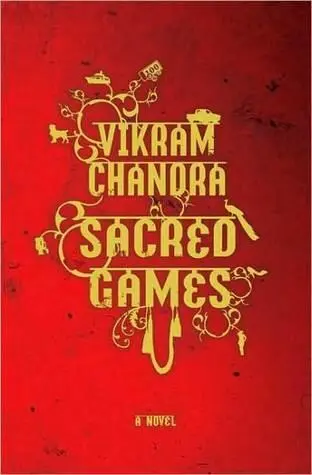
- Название:Sacred Games
- Автор:
- Издательство:HarperCollins
- Жанр:
- Год:2009
- ISBN:нет данных
- Рейтинг книги:3 / 5. Голосов: 1
-
Избранное:Добавить в избранное
- Отзывы:
-
Ваша оценка:
Sacred Games: краткое содержание, описание и аннотация
Предлагаем к чтению аннотацию, описание, краткое содержание или предисловие (зависит от того, что написал сам автор книги «Sacred Games»). Если вы не нашли необходимую информацию о книге — напишите в комментариях, мы постараемся отыскать её.
is an epic of exceptional richness and power. Vikram Chandra's novel draws the reader deep into the life of Inspector Sartaj Singh — and into the criminal underworld of Ganesh Gaitonde, the most wanted gangster in India.
Sartaj, one of the very few Sikhs on the Mumbai police force, is used to being identified by his turban, beard and the sharp cut of his trousers. But "the silky Sikh" is now past forty, his marriage is over and his career prospects are on the slide. When Sartaj gets an anonymous tip-off as to the secret hide-out of the legendary boss of G-Company, he's determined that he'll be the one to collect the prize.
Vikram Chandra's keenly anticipated new novel is a magnificent story of friendship and betrayal, of terrible violence, of an astonishing modern city and its dark side. Drawing inspiration from the classics of nineteenth-century fiction, mystery novels, Bollywood movies and Chandra's own life and research on the streets of Mumbai,
evokes with devastating realism the way we live now but resonates with the intelligence and emotional depth of the best of literature.
Sacred Games — читать онлайн бесплатно полную книгу (весь текст) целиком
Ниже представлен текст книги, разбитый по страницам. Система сохранения места последней прочитанной страницы, позволяет с удобством читать онлайн бесплатно книгу «Sacred Games», без необходимости каждый раз заново искать на чём Вы остановились. Поставьте закладку, и сможете в любой момент перейти на страницу, на которой закончили чтение.
Интервал:
Закладка:
'Come on now, Bibi,' Sartaj said. 'Not everyone wants to earn a turnover like your Bhai's. How much is it?'
'Some newspaper said yesterday, eight thousand crores.'
'That's the newspaper. What do you think?'
She snorted. 'Bachcha, I'm an old woman, I don't do accounts. But it's enough.'
'Enough for what? What does anybody do with eight thousand crores?'
'Everyone needs a little extra. Not just for the things you need. For the things you want. Even your Sardar Saab.'
'What do you mean?'
'Arre, nothing, I was just talking like that.'
A shiver of unease moved over Sartaj's shoulders. He sat up. 'No, you were not. Tell me what you mean.'
'Nothing at all.'
'No, tell me. Iffat-bibi, don't try and fool me. What is it?'
'Beta, you are making a big noise about very little. I promised him I wouldn't tell anyone.'
'What is it? Was it a woman? Women?'
'Arre, you dirty-minded bastard, no!'
'Then what? Tell me.'
'You are making a big fuss over a very small thing.'
'What?'
'He liked to gamble.'
'Gamble?'
'Yes, yes. He loved horses. He liked to place bets on horses at the races.'
'He went to the racecourse?'
'No, never, someone might have seen and told your mother. I had one of my boys make the bets for him.'
Yes, Ma-ji, with her refugee's frugality, would never have stood for gambling in her household. She refused to buy lottery tickets because, she said, they were a complete waste of money, and anyone who thought they could get a crore by putting in one rupee was a complete jhalla. And here was Papa-ji, a regular money-scattering, gambling fool. But then, he did love horses. One of his great regrets was that he had never learned to ride. At the breakfast table, he would smooth out the newspaper with great care and point to a sports-page picture of a horse and say, 'Look, how beautiful,' and Sartaj and Ma never commented or replied or even noticed, because he had been saying it for ever. So instead, outside home, he had had a secret life, or at least a secret side. Sartaj coughed, to clear the congestion in his throat, and asked, 'Did he lose much?'
'Lose? No, he never bet that much to start with. He had a limit of fifty rupees, and then later he raised that to a hundred. But he was good at reading the racing forms. He won more than he lost. Actually a lot more.'
Papa-ji won. He had this other universe, with its own rules and systems, its particular histories and tragedies and triumphs, and here he was a winner. He had beaten the chances, he had vanquished the game. A bittersweet flood of affection and nostalgia and regret came into Sartaj's mouth and nose and eyes, and he had to hold the phone away a bit, to keep the sounds of his sentimentality from Iffat-bibi.
'Sartaj?'
'Yes, Bibi. I was just thinking, the old man was quite a character.'
'Complete namoona. But, listen, don't tell your mother, all right?'
'I won't.'
Later that night, Sartaj wondered if Ma knew already. She and Papa-ji had had their difficulties, their silences which Sartaj could never decipher. He had heard raised voices behind closed doors, and one of their quarrels had lasted three days, but Sartaj never knew why it started and how it ended. All this was normal enough for any wife and husband, and these two had been devoted to each other for more than forty years. Maybe Papa-ji had his horses, and kept quiet about them, and Ma knew but refused to know. Maybe that's how they had been happy together. But did she wonder that day, Sartaj's birthday, when Papa-ji had brought in the biggest and most expensive Meccano set that anyone had ever seen? Papa-ji had put Sartaj on his shoulders, and Sartaj had echoed Papa-ji as he went around saying his Hello-jis, and everybody had laughed and been happy. Maybe one of Papa-ji's horses had won that day. He and Sartaj sat up late that night, building a red and green house with a big wall around it, and Ma had crouched next to them, showing them where a courtyard should go in, and the proper location for the main gateway. Papa-ji wanted to put a flagpole on the roof, but Ma said that would make it look like a government building, not a home. Papa-ji and Sartaj worked hard, putting in the final touches, an actual swinging gate, a small shed for the chowkidar, and Ma let Sartaj finish the whole thing before she took him off to sleep.
* * *
The next morning, there was a message waiting at the station house for Sartaj. It was from Mary: 'Come to the Yari Road apartment tomorrow evening.' And that was all. Sartaj turned the note over, puzzled, then folded it carefully in half and put it into his pocket. He was glad that Kamble hadn't seen it, or he would have had to endure at least half a day of smirking jokes about ghochi and merry Mary and private trysts.
Sartaj spent the afternoon driving from one PCO to another, reaping the expected harvest of blank looks and bafflement. An orange-haired, sixtyish owner of a shop near Film City put a paan in her mouth and gave it to him straight: 'Baba, I know the call was just the day before yesterday. But you see how many people I get making calls in one day. I don't sit here looking at their faces. They come in, they make their calls, they give me their money. Bas. I don't even remember the ones who came today.' She bent to the electronic meter on her desk, squinted at it. 'Already today there have been a hundred and thirty calls. And the busiest time is the evening.' Her hair was appallingly hennaed, but she was telling the truth.
'You have a good turnover,' Sartaj said.
'Everyone needs to ring home,' she said.
There was a small queue of carpenters waiting for her two phones, pretending that they weren't listening to the policeman's questioning. They were Punjabis, stubbled and brawny. They had walked over from the shop three doors down, where they were building shelves. They were interested in the fact of a Sikh policeman in Bombay, but they were too scared of police inspectors to talk to him. Their families were probably in Gurdaspur, or Amritsar, and they had learnt caution.
Sartaj went on to the next PCO. He went to nineteen in all, and at all of them there were the same men and women, making calls across the city and across the country. None of the owners or cashiers could remember two men among these thousands. At seven Sartaj called a halt and veered off to Yari Road. The traffic was dense, and by the time Sartaj got across the subway, the twilight was losing its fantastic range of orange hues. The bulb in the lift was fused, and Sartaj had to grope for the buttons. But Mary had light. She opened the door into a well-lit drawing room and grinned up at Sartaj. She had a duster in her hand, and a chunni tied around her hair, giving her something of a Rani-of-Jhansi air. 'Hello, hello,' she said. 'And sat-sri-akal. Come in.'
'Hello,' Sartaj said. The drawing room was crowded with cardboard boxes, but had been scrubbed clean. Mary had put in a day of work all right, but she seemed relaxed, buoyant. 'You have electricity.'
'Jana has a friend at BSES. I paid the past bills, and her friend got it all switched on.'
Jana was the kind of practical woman who would of course have a friend who could get electricity from BSES in a few days, instead of in a month or two. There was loud filmi music sweeping down the hall, from the bedroom. 'Jana's taking care of the shoes?'
Mary nodded, twinkling. 'And the clothes. She gets upset every two minutes because Jojo was too small for anything to fit her. Come on.' She stepped past Sartaj, calling, 'Jana! Jana!'
Jana also had a chunni tucked behind her ears, and the rapt look of a woman absorbed in her work. She greeted Sartaj with a quick nod and 'Hello,' and led the way into the study. 'We started cleaning in here first,' she said. 'Because mostly we were going to throw all these papers and files away.'
Читать дальшеИнтервал:
Закладка:
Похожие книги на «Sacred Games»
Представляем Вашему вниманию похожие книги на «Sacred Games» списком для выбора. Мы отобрали схожую по названию и смыслу литературу в надежде предоставить читателям больше вариантов отыскать новые, интересные, ещё непрочитанные произведения.









Обсуждение, отзывы о книге «Sacred Games» и просто собственные мнения читателей. Оставьте ваши комментарии, напишите, что Вы думаете о произведении, его смысле или главных героях. Укажите что конкретно понравилось, а что нет, и почему Вы так считаете.