Vikram Chandra - Sacred Games
Здесь есть возможность читать онлайн «Vikram Chandra - Sacred Games» весь текст электронной книги совершенно бесплатно (целиком полную версию без сокращений). В некоторых случаях можно слушать аудио, скачать через торрент в формате fb2 и присутствует краткое содержание. Год выпуска: 2009, Издательство: HarperCollins, Жанр: Современная проза, на английском языке. Описание произведения, (предисловие) а так же отзывы посетителей доступны на портале библиотеки ЛибКат.
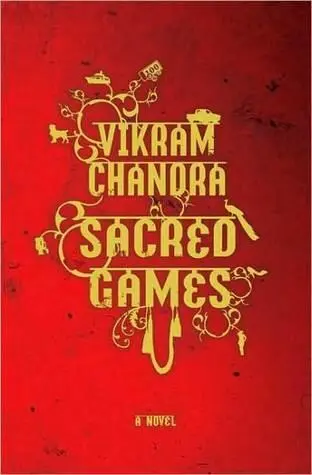
- Название:Sacred Games
- Автор:
- Издательство:HarperCollins
- Жанр:
- Год:2009
- ISBN:нет данных
- Рейтинг книги:3 / 5. Голосов: 1
-
Избранное:Добавить в избранное
- Отзывы:
-
Ваша оценка:
Sacred Games: краткое содержание, описание и аннотация
Предлагаем к чтению аннотацию, описание, краткое содержание или предисловие (зависит от того, что написал сам автор книги «Sacred Games»). Если вы не нашли необходимую информацию о книге — напишите в комментариях, мы постараемся отыскать её.
is an epic of exceptional richness and power. Vikram Chandra's novel draws the reader deep into the life of Inspector Sartaj Singh — and into the criminal underworld of Ganesh Gaitonde, the most wanted gangster in India.
Sartaj, one of the very few Sikhs on the Mumbai police force, is used to being identified by his turban, beard and the sharp cut of his trousers. But "the silky Sikh" is now past forty, his marriage is over and his career prospects are on the slide. When Sartaj gets an anonymous tip-off as to the secret hide-out of the legendary boss of G-Company, he's determined that he'll be the one to collect the prize.
Vikram Chandra's keenly anticipated new novel is a magnificent story of friendship and betrayal, of terrible violence, of an astonishing modern city and its dark side. Drawing inspiration from the classics of nineteenth-century fiction, mystery novels, Bollywood movies and Chandra's own life and research on the streets of Mumbai,
evokes with devastating realism the way we live now but resonates with the intelligence and emotional depth of the best of literature.
Sacred Games — читать онлайн бесплатно полную книгу (весь текст) целиком
Ниже представлен текст книги, разбитый по страницам. Система сохранения места последней прочитанной страницы, позволяет с удобством читать онлайн бесплатно книгу «Sacred Games», без необходимости каждый раз заново искать на чём Вы остановились. Поставьте закладку, и сможете в любой момент перейти на страницу, на которой закончили чтение.
Интервал:
Закладка:
Sartaj extended his index finger, nudged open the flap. Hundred-rupee notes. Two stacks. Twenty thousand rupees.
He was now very angry. He pressed the envelope shut. He pressed until the fingernail turned white and red. 'Listen,' he rasped. 'This is not enough.'
'Yes, yes, I know. This is just a token. I would rather pay you than them. Just help me. Just stop it from happening.'
'You have so much money of your own?'
'I work. My parents help me now and then.'
She kept separate bank accounts, and she had doting parents. 'Your parents live in Bombay?'
'In Juhu.'
'Brothers and sisters?'
'No.'
She was the single, spoilt child of well-off parents, suddenly in a lot of trouble. She believed, quite completely, that she was owed her privileges. It would be a pleasure to take her money from her. But Sartaj was very angry. 'Madam, I can't help you without a complaint.'
'How much do you want?'
He shoved the envelope across the table. 'I can arrest you right now, for trying to bribe a police officer.'
That shut her up. She put a hand on her mouth and began to weep. Sartaj could see that it was real this time. He stood up and walked away.
* * *
Why had he been angry at her? It wasn't just the money. He was quite used to taking money, to being bought. Things and people were bought and sold every day in this city. Sartaj bumped down the pitted lane to Katekar's place, keeping the motorcycle as close to the centre of the road as he could. The gutters were clogged, and occasionally the tides of rubbish hid serious holes in the asphalt. In this patchy dark, the khuds in the road came swiftly, and could take a man down. There was still a lingering aftertaste of indignation in Sartaj's mouth, a sour rancour that had nothing to do with what a spoilt, irritating little child she was. Was it only that she had been unfaithful, that she had done something a woman was not supposed to do? Men did it all the time, Sartaj knew this. Industrialists did it, and labourers did it. And sometimes women did it also. He knew this. He often saw, as he had done today, the aftermath. He had seen broken marriages and broken bodies, heard anguished sobs and screams. This was nothing new, in his job he had seen it all. So why had he been angry?
Sartaj coasted down the last few feet to Katekar's corner. The house was down an alley that narrowed and angled off to the left. Sartaj parked at the corner, and raised the rear seat to get at his packages. There was also a plastic bag crammed into the rear carrier. He shook away the anger, the question, and marched down the alley, turning his shoulders to slide by clumps of pedestrians. Some of them nodded at him. He had been a regular visitor for a few months, and they knew him now. He knew that some of them must still believe that he had got Katekar killed, but most of them were friendly now.
Katekar's sons were sitting near their kholi's door, studying. The tube-light inside threw their shadows out on to the road, and Sartaj knew their familiar shapes well before he saw them. Rohit sat always to the left of the doorway, his back flat against the wall and a book held well out in front of him. Mohit was always moving, his head jigging up and down even as he wrote. As Sartaj came up Mohit went from a cross-legged squat into a kneeling arc above his notebook. He was making a blue mess of the page.
'Hello, Rohit-Mohit,' Sartaj said.
'Hello,' Rohit said, grinning. Mohit kept his head down. He was writing furiously across drawings that slashed across the double spread of the notebook.
Sartaj lowered himself into the doorway and sat with his back hard against the jamb. 'Where's your Ma?'
'Aai is at her meeting.'
'What meeting?'
'There is a Family Welfare Group. She is a volunteer, so she has to go once a week.'
This was certainly new. It had been a little over two weeks since Sartaj had last visited, and Shalini had a new routine. Life moved along. 'Volunteer for what?'
'They give information. Aai goes and talks to women around here.'
'About health?'
'Yes. And I think about saving money. And cleanliness. They are planning to clean up the lanes. There are some pamphlets somewhere here if you want to see.'
'No, no.' Sartaj knew the groups, and the NGOs that worked with them, usually with government or World Bank funding. The groups were rackets for somebody or other, for the NGOs or the government or the Bank, but they did good work sometimes. And Katekar had been a great one for cleanliness, so Shalini's work was a fitting tribute. 'Here,' he said, and handed over the packets he had brought.
'Thank you,' Rohit said, in English. He had been working very hard on English recently, and planned to enrol in a beginners computer course in a month or so, immediately after his exams. Sartaj had made sure that a seat had been reserved in the Prabhat Computer Classes, which were reputed to be the best in the area. 'Learn Computer and Internet For Only Rs. 999', they advertised in multicoloured advertisements pasted on every other wall. Rohit was going through the bags, laying down the plastic pouches of dal, and atta, and rice. 'Eh, tapori,' he said to Mohit, and tossed him two comics. 'Latest Spiderman,' Rohit said. 'Say thank you.'
Mohit couldn't take his hands off the comics, but he wouldn't say thank you. Sartaj wondered what his neighbours had told him about his father's death, who he had learned to blame. He was a strange boy, he had become a glowering little tyke, very opaque and very jerky, tightly sprung from within. 'Our Mohit likes Spiderman,' Sartaj said, 'but he is a patriotic Indian. He doesn't like saying thank-you-thank-you all the time, like those Americans.'
Rohit laughed. 'Yes, rudeness is our birthright.' He tweaked Mohit's nose, and Mohit made a spitting noise and ran past the partition into the other room. 'He really does want to be Spiderman though. For two days now he'll sleep with the books. Kartiya sala.' Rohit tapped his forehead.
Sartaj unbuttoned his breast pocket, brought out an envelope. 'Ten thousand,' he said. He handed it over, and scratched at his beard. It was getting hot, settling into the absolute grim stillness and dejection of the pre-monsoon months. His collar was soaked with sweat.
This time Rohit didn't say thank you. He got up, holding the envelope to his chest, and then Sartaj heard the metallic creak of a cupboard opening and closing. Rohit came back with a glass of water. Sartaj drank. He was a good boy, Rohit, and he was too young to be putting money in cupboards and thinking of how to raise his little brother. But then there were six-year-olds making a living on every street corner down to Colaba.
They sat for a while, talking about computers, the Middle East, and whether Kajol would do any more films. Rohit thought Kajol was the best actress since Madhubala. Sartaj hadn't seen a film for a long time, but he was glad to agree. When Rohit talked about Kajol, he grew intense and happy, and gestured emphatically with his hands at Sartaj's chest while he described Kajol's virtues. Kajol was not only a great actress, she was a good wife and mother. Sartaj found himself smiling, and was happy to listen, and agree, and let the night come on.
* * *
The next morning, Sartaj met Mary at her sister's apartment. As he had expected, it had taken several weeks to get Jojo's apartment handed over to Mary, her sole surviving relative. But now, he had been glad to report to her on the phone, he had the key, everything was ready. Tuesday was Mary's day off, and he had agreed to meet her first thing in the morning, before he went to the station. He had got himself up early, dragged himself into the shower, and was at the building punctually at six-thirty. She was waiting for him near the lift, as they had agreed. With her was a very tall, very thin woman, who was looking at Sartaj with mild amusement.
Читать дальшеИнтервал:
Закладка:
Похожие книги на «Sacred Games»
Представляем Вашему вниманию похожие книги на «Sacred Games» списком для выбора. Мы отобрали схожую по названию и смыслу литературу в надежде предоставить читателям больше вариантов отыскать новые, интересные, ещё непрочитанные произведения.









Обсуждение, отзывы о книге «Sacred Games» и просто собственные мнения читателей. Оставьте ваши комментарии, напишите, что Вы думаете о произведении, его смысле или главных героях. Укажите что конкретно понравилось, а что нет, и почему Вы так считаете.