Vikram Chandra - Sacred Games
Здесь есть возможность читать онлайн «Vikram Chandra - Sacred Games» весь текст электронной книги совершенно бесплатно (целиком полную версию без сокращений). В некоторых случаях можно слушать аудио, скачать через торрент в формате fb2 и присутствует краткое содержание. Год выпуска: 2009, Издательство: HarperCollins, Жанр: Современная проза, на английском языке. Описание произведения, (предисловие) а так же отзывы посетителей доступны на портале библиотеки ЛибКат.
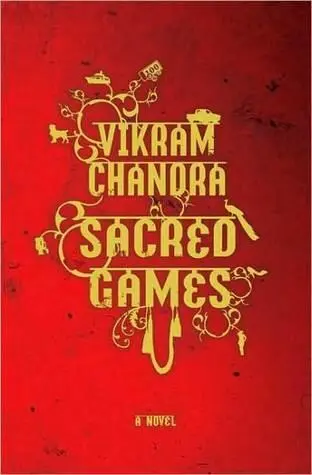
- Название:Sacred Games
- Автор:
- Издательство:HarperCollins
- Жанр:
- Год:2009
- ISBN:нет данных
- Рейтинг книги:3 / 5. Голосов: 1
-
Избранное:Добавить в избранное
- Отзывы:
-
Ваша оценка:
Sacred Games: краткое содержание, описание и аннотация
Предлагаем к чтению аннотацию, описание, краткое содержание или предисловие (зависит от того, что написал сам автор книги «Sacred Games»). Если вы не нашли необходимую информацию о книге — напишите в комментариях, мы постараемся отыскать её.
is an epic of exceptional richness and power. Vikram Chandra's novel draws the reader deep into the life of Inspector Sartaj Singh — and into the criminal underworld of Ganesh Gaitonde, the most wanted gangster in India.
Sartaj, one of the very few Sikhs on the Mumbai police force, is used to being identified by his turban, beard and the sharp cut of his trousers. But "the silky Sikh" is now past forty, his marriage is over and his career prospects are on the slide. When Sartaj gets an anonymous tip-off as to the secret hide-out of the legendary boss of G-Company, he's determined that he'll be the one to collect the prize.
Vikram Chandra's keenly anticipated new novel is a magnificent story of friendship and betrayal, of terrible violence, of an astonishing modern city and its dark side. Drawing inspiration from the classics of nineteenth-century fiction, mystery novels, Bollywood movies and Chandra's own life and research on the streets of Mumbai,
evokes with devastating realism the way we live now but resonates with the intelligence and emotional depth of the best of literature.
Sacred Games — читать онлайн бесплатно полную книгу (весь текст) целиком
Ниже представлен текст книги, разбитый по страницам. Система сохранения места последней прочитанной страницы, позволяет с удобством читать онлайн бесплатно книгу «Sacred Games», без необходимости каждый раз заново искать на чём Вы остановились. Поставьте закладку, и сможете в любой момент перейти на страницу, на которой закончили чтение.
Интервал:
Закладка:
'Do what ?' I snapped. 'Go out there and kill old women? For what? For an empty old building?'
He ducked his head. 'They are killing us.'
'And?'
'Bhai?'
'You look like you have something more to say.'
'The boys are saying some of them are asking whether Bhai is with us, or with the Muslims.'
So, inevitably, here it was: us or them. Was I us or them? 'I'm with the money,' I said. 'And there's no profit in this. Tell them that.'
And yet the question stayed with me, through those nights of killing. Us or them? Who was I, who had always regarded the would-be attackers of the mosque and its defenders as equal fools? Now the mosque had come down, and everyone had become an attacker of that and a defender of this, you had to choose whether you were us or them. But what was I? I thought about it, waited for Paritosh Shah to tell me something, and held back from the bloodletting. Meanwhile some of my boys abandoned me. They were frustrated by my standing still, my doing nothing. Caught up in the frothy haze of rage that rose from the burning shops, from the bodies in the gutters, they went out armed with swords, and pistols. They took men from cars and slashed them to death, they raped women they found huddled inside hovels and then cut their throats, they used kerosene and kitchen matches and burnt stragglers alive, they shot children. So in those days of winter I lost my loyal soldiers to this massacre of us and them, this butchery that was not a battle. They left me and felt contempt for me, because I stood apart. I didn't need Bunty to tell me this. I was losing izzat, I was losing power, I was losing the company I had built and defended against so many predators.
Bipin Bhonsle offered me a way out. He drove up on a Sunday morning in a jeep festooned with saffron flags. He was followed by two Ambassadors, also packed with his Rakshaks, each variously armed. Bipin Bhonsle himself openly carried a sword, which he propped up on the side of his chair in my baithak.
'An armed MLA on the open road,' I said. 'How the world has changed.'
'Today we are going to change it back, bhai,' he said, rubbing at his face. He was puffy, exhausted, and he stank. His purple shirt was stained and crumpled, hanging out at the front, and I could see the sweaty folds of his belly. 'Enough is enough. We're going to show these landya bastards.'
I waited. But he seemed to have dropped off into an open-eyed sleep, with his chin on his chest. Lank strips of hair were plastered to his forehead, his usual puffy hairdo had been completely destroyed. What he wanted to show Muslims remained untold. Finally I said, 'Bipin Saab?'
He spoke without blinking, without moving from his statue-like sprawl. 'The word came from the top: show the maderchods. So we showed them.'
'The order came from the top?'
'From the very top top.' He yawned. 'I cut a head off. I mean clean off, sattack! like that. I had to use both hands on the sword. It bounced twice, the head. The funny thing is the blood. It goes far. Like from a pichkari, all over the place. The boys were all running, ducking away from the blood. The head didn't look surprised or anything. The head had no expression.'
'You showed him.'
'Yes. But you're sitting here, safe in your house, Ganesh Bhai.'
'The word didn't come from my top, Bipin Saab.'
'The landyas killed Paritosh Shah. And still you don't want to do anything.'
I could've pointed out that although Suleiman Isa was Muslim enough, he had plenty of Hindus working for him. And also that Suleiman Isa had nothing to do with the Muslim families who lived down the highway, and that cutting their heads off wouldn't make him bleed. But I said simply, 'There's no gain for me in doing this.'
He looked at me, flicked his reddened eyes at me. 'I'll bring you profit. I have much to do, so I'll make you a quick deal. There's a Muslim basti in Abarva. Know it?'
'Behind the white life-insurance building. Yes.'
'The land it's on belongs to an associate of mine. He bought it three years ago, good price, good area for development, but he can't get those slum maderchods off the land. Water connections, electrical, they have it all. They say they've been there for years, all that usual bhenchod nonsense. So, get them off. Burn it down. We'll pay twenty lakhs.'
'Bipin Saab, Bipin Saab. That land is worth four crores, easy.'
'Twenty-five, then.'
'I'll need a lot of boys.'
'Your boys can keep what they find.'
'Find in some miserable hut, while a fire is roaring over their heads?'
'Thirty.'
'One crore.'
He laughed. 'I'll give you sixty lakhs.'
'Done.'
'When?'
'Tomorrow.'
'All right. Do it fast. We'll keep this open season going as long as we can, but at some point they'll tell the army to start firing, not just do flag marches, and then things will become difficult.' He put his hands on his knees and pushed himself up, remained bent over for a moment, wriggling his back. 'Aren't you going to offer me a drink?'
'Bipin Saab, I should've asked.' I called out to the corridor, 'Arre, bring water, tea, something cold.'
Bipin Bhonsle grinned. 'I was thinking of whisky. Or rum. But you are the same, bhai. Water-water all the time.'
'Keeps me alert.'
'Whisky keeps me strong,' Bipin Bhonsle said, and picked up his sword. 'Water is bad for my heart.' He hefted the sword, pointed it at me. 'Good you are with us,' he said. And with that he went flouncing down the stairs, his heels clacking sharply on each step. The jeep spun in tight growling turns, and then they were gone. And I was now with us, I was against them.
* * *
This is the elegant way to burn a basti: you do it at night, you move a dozen cars full of boys to the east, to the life-insurance end of the basti, and there you launch a loud frontal assault. Your boys fire pistols and swing swords at the men of the basti, who emerge from their hovels to put up a despairing fight, their faces are maddened caricatures under the ranked headlights. Meanwhile at the far south-western end of the basti another group of your boys is near the clustered shacks and houses. They are crafty and stealthy, your boys, they get in close and they can hear the screams and curses from the life-insurance end, and now they heave bottles filled with petrol, bottles primed with petrol-soaked rags. There is the crisp tinkle of glass and the small sparking flares now bloom into flowing rivers that run smoothly across rooftops, down walls, into windows. The fire speaks now, it makes a joyous, throaty grumbling as it eats, there is no stopping it. There are no phones, there is no fire brigade to come, no police. The defenders are no longer defending, they run, they dodge back into the corners, now illuminated by the bright glow above the roofs. Your boys chase them, kill some of them, the others flee to their women, their screaming children, and bolt away from the fire, they stagger and drop and get up and go, they disappear. They are gone. The flames swing easily from house to house, and our work is complete.
In the morning, the western façade of the life-insurance building was stained sooty grey, and where there had been a basti there was an empty field of cinders, spiked here and there by a blackened doorpost, a twisted pipe.
Two days later my payment was delivered in full. It came in stacks of crisp new plastic-wrapped notes, which I broke apart to distribute to the boys. By now almost all of them were back with me. Over the next four days we cleared two more plots of land. And we were all satisfied, me, the boys, Bipin Bhonsle. Riots are useful in all kinds of ways, to all kinds of people.
* * *
Finally, in the third week of January, the burning and killing stopped, under the bullets of the police and the army, and under orders from Bipin Bhonsle's bosses, and their boss. Finally there were too many dead bodies even for the very supreme top, and the reeling roar of the approaching chaos too deafening, and so it stopped. The city cringed and shook itself and began to clean up the debris, bulldozers swept up the emptied grounds and dug foundations, bodies were lifted from the gutters, from the rubbish heaps, and traffic churned through the lanes again. Here we were, slowly back to normal. And I was restored. Yes, I was able. I came home late one night from a meeting with Bipin Bhonsle, to collect more monies he owed us from the riot-time work, to discuss new projects, and I took off my shoes and sat back on the bed, my head resting on Subhadra's new embroidered pillows, they were a deep red. She had rearranged the furniture in the room, so that we could look out of a double window as we lay in bed. I could see my darkened basti and the stars overhead. Subhadra brought me my milk, then sat cross-legged on the bed to watch me drink it. I sipped, and she rested her chin on her hand and hummed softly.
Читать дальшеИнтервал:
Закладка:
Похожие книги на «Sacred Games»
Представляем Вашему вниманию похожие книги на «Sacred Games» списком для выбора. Мы отобрали схожую по названию и смыслу литературу в надежде предоставить читателям больше вариантов отыскать новые, интересные, ещё непрочитанные произведения.








Обсуждение, отзывы о книге «Sacred Games» и просто собственные мнения читателей. Оставьте ваши комментарии, напишите, что Вы думаете о произведении, его смысле или главных героях. Укажите что конкретно понравилось, а что нет, и почему Вы так считаете.