Sherman Alexie - Blasphemy - New and Selected Stories
Здесь есть возможность читать онлайн «Sherman Alexie - Blasphemy - New and Selected Stories» весь текст электронной книги совершенно бесплатно (целиком полную версию без сокращений). В некоторых случаях можно слушать аудио, скачать через торрент в формате fb2 и присутствует краткое содержание. Год выпуска: 2012, Издательство: Grove Press, Жанр: Современная проза, на английском языке. Описание произведения, (предисловие) а так же отзывы посетителей доступны на портале библиотеки ЛибКат.
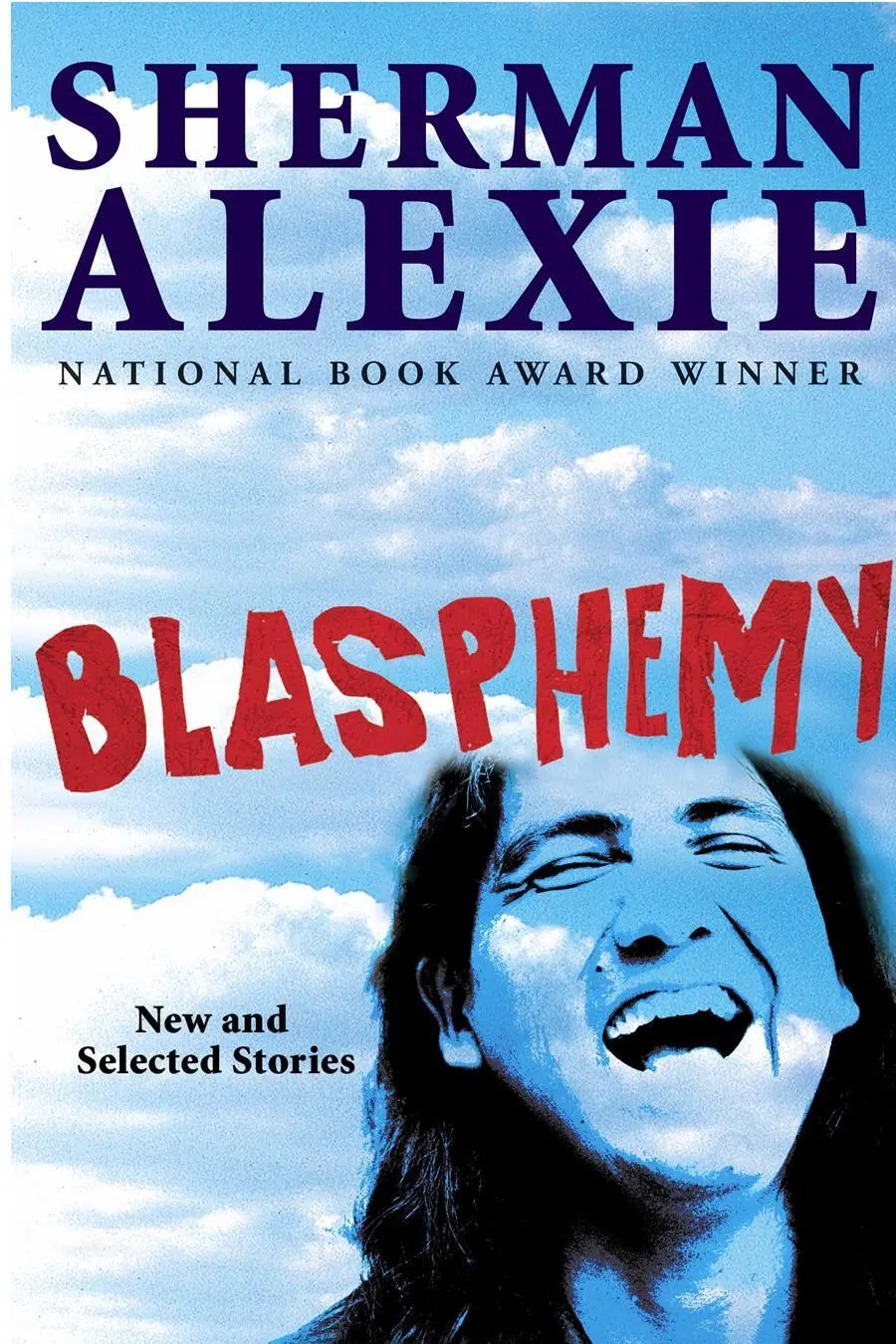
- Название:Blasphemy: New and Selected Stories
- Автор:
- Издательство:Grove Press
- Жанр:
- Год:2012
- ISBN:нет данных
- Рейтинг книги:3 / 5. Голосов: 1
-
Избранное:Добавить в избранное
- Отзывы:
-
Ваша оценка:
Blasphemy: New and Selected Stories: краткое содержание, описание и аннотация
Предлагаем к чтению аннотацию, описание, краткое содержание или предисловие (зависит от того, что написал сам автор книги «Blasphemy: New and Selected Stories»). Если вы не нашли необходимую информацию о книге — напишите в комментариях, мы постараемся отыскать её.
to his most recent PEN/Faulkner award-winning
, have established him as a star in modern literature.
A bold and irreverent observer of life among Native Americans in the Pacific Northwest, the daring, versatile, funny, and outrageous Alexie showcases all his talents in his newest collection,
, where he unites fifteen beloved classics with fifteen new stories in one sweeping anthology for devoted fans and first-time readers.
Included here are some of his most esteemed tales, including "What You Pawn I Will Redeem," "This is What it Means to Say Phoenix, Arizona,” "The Toughest Indian in the World,” and "War Dances.” Alexie’s new stories are fresh and quintessential — about donkey basketball leagues, lethal wind turbines, the reservation, marriage, and all species of contemporary American warriors.
An indispensable collection of new and classic stories,
reminds us, on every thrilling page, why Sherman Alexie is one of our greatest contemporary writers and a true master of the short story.
Blasphemy: New and Selected Stories — читать онлайн бесплатно полную книгу (весь текст) целиком
Ниже представлен текст книги, разбитый по страницам. Система сохранения места последней прочитанной страницы, позволяет с удобством читать онлайн бесплатно книгу «Blasphemy: New and Selected Stories», без необходимости каждый раз заново искать на чём Вы остановились. Поставьте закладку, и сможете в любой момент перейти на страницу, на которой закончили чтение.
Интервал:
Закладка:
The Naming Ceremony
No Indian ever gave me an Indian name
So I named myself.
I am Crying Shame.
I am Takes the Blame.
I am the Four Directions:
South, A Little More South,
Way More South, and All the Way South.
If you are ever driving toward Mexico
And see me hitchhiking, you’ll know me
By the size of my feet.
My left foot is named Self-Pity
And my right foot is named Born to Lose.
But if you give me a ride, you can call me
And all of my parts any name you choose.
Corliss recognized the poem as a free-verse sonnet whose end rhymes gave it a little more music. It was a funny and clumsy poem desperate to please the reader. It was like a slobbery puppy in an animal shelter: Choose me! Choose me! But the poem was definitely charming and strange. Harlan Atwater was making fun of being Indian, of the essential sadness of being Indian, and so maybe he was saying Indians aren’t sad at all. Maybe Indians are just big-footed hitchhikers eager to tell a joke! That wasn’t a profound thought, but maybe it was an accurate one. But can you be accurate without profundity? Corliss didn’t know the answer to the question.
She carried the Atwater and Auden books to the front desk to check them out. The librarian was a small woman wearing khaki pants and large glasses. Corliss wanted to shout at her: Honey, get yourself some contacts and a pair of leather chaps! Fight your stereotypes!
“Wow,” the librarian said as she scanned the books’ bar codes and entered them into her computer.
“Wow what?” Corliss asked.
“You’re the first person who’s ever checked out this book.” The librarian held up the Atwater.
“Is it new?”
“We’ve had it since 1972.”
Corliss wondered what happens to a book that sits unread on a library shelf for thirty years. Can a book rightfully be called a book if it never gets read? If a tree falls in a forest and gets pulped to make paper for a book that never gets read, but there’s nobody there to read it, does it make a sound?
“How many books never get checked out?” Corliss asked the librarian.
“Most of them,” she said.
Corliss had never once considered the fate of library books. She’d never wondered how many books go unread. She loved books. How could she not worry about the unread? She felt like a disorganized scholar, an inconsiderate lover, an abusive mother, and a cowardly solider.
“Are you serious?” Corliss asked. “What are we talking about here? If you were guessing, what is the percentage of books in this library that never get checked out?”
“We’re talking sixty percent of them. Seriously. Maybe seventy percent. And I’m being optimistic. It’s probably more like eighty or ninety percent. This isn’t a library, it’s an orphanage.”
The librarian spoke in a reverential whisper. Corliss knew she’d misjudged this passionate woman. Maybe she dressed poorly, but she was probably great in bed, certainly believed in God and goodness, and kept an illicit collection of overdue library books on her shelves.
“How many books do you have here?” Corliss asked.
“Two million, one hundred thousand, and eleven,” the librarian said proudly, but Corliss was frightened. What happens to the world when that many books go unread? And what happens to the unread authors of those unread books?
“And don’t think it’s just this library, either,” the librarian said. “There’s about eighteen million books in the Library of Congress, and nobody reads about seventeen and a half million of them.”
“You’re scaring me.”
“Sorry about that,” the librarian said. “These are due back in two weeks.”
Corliss carried the Auden and Atwater books out of the library and into the afternoon air. She sat on a bench and flipped through the pages. The Auden was worn and battered, with pen and pencil notes scribbled all over the margins. Three generations of WSU students had defaced Auden with their scholarly graffiti, but Atwater was stiff and unmarked. This book had not been exposed to direct sunlight in three decades. W. H. Auden didn’t need Corliss to read him — his work was already immortal — but she felt like she’d rescued Harlan Atwater. And who else should rescue the poems of a Spokane Indian but another Spokane? Corliss felt the weight and heat of destiny. She had been chosen. God had nearly dropped Atwater’s book on her head. Who knew the Supreme One could be so obvious? But then again, when has the infallible been anything other than predictable? Maybe God was dropping other books on other people’s heads, Corliss thought. Maybe every book in every library is patiently waiting for its savior. Ha! She felt romantic and young and foolish. What kind of Indian loses her mind over a book of poems? She was that kind of Indian, she was exactly that kind of Indian, and it was the only kind of Indian she knew how to be.
Corliss lived alone. She supposed that was a rare thing for a nineteen-year-old college sophomore, especially a Native American college student living on scholarships and luck and family charity, but she couldn’t stand the thought of sharing her apartment with another person. She didn’t want to live with another Indian because she understood Indians all too well. If she took an Indian roommate, Corliss knew she’d soon be taking in the roommate’s cousin, little brother, half uncle, and long-lost dog, and none of them would contribute anything toward the rent other than wispy apologies. Indians were used to sharing and called it tribalism, but Corliss suspected it was yet another failed form of communism. Over the last two centuries, Indians had learned how to stand in lines for food, love, hope, sex, and dreams, but they didn’t know how to step away. They were good at line-standing and didn’t know if they’d be good at anything else. Of course, all sorts of folks made it their business to confirm Indian fears and insecurities. Indians hadn’t invented the line. And George Armstrong Custer is alive and well in the twenty-first century, Corliss thought, though he kills Indians by dumping huge piles of paperwork on their skulls. But Indians made themselves easy targets for bureaucratic skull-crushing, didn’t they? Indians took numbers and lined up for skull-crushing. They’d rather die standing together in long lines than wandering alone in the wilderness. Indians were terrified of being lonely, of being exiled, but Corliss had always dreamed of solitude. Since she’d shared her childhood home with an Indian mother, an Indian father, seven Indian siblings, and a random assortment of Indian cousins, strangers, and party crashers, she cherished her domestic solitude and kept it sacred. Maybe she lived in an academic gulag, but she’d chosen to live that way. She furnished her apartment with a mattress on the floor, one bookshelf, two lamps, a dining table, two chairs, two sets of plates, cups, and utensils, three pots, and one frying pan. Her wardrobe consisted of three pairs of blue jeans, three white blouses, one pair of tennis shoes, three pairs of cowboy boots, six white T-shirts, thirteen pairs of socks, and a week’s worth of underwear. Her only luxuries (necessities!) were books. There were hundreds of them stacked around her apartment. She’d never met one human being more interesting to her than a good book. So why would she live with an uninteresting Indian when she could live with John Donne, Elizabeth Bishop, and Langston Hughes?
Corliss didn’t want to live with a white roommate, either, no matter how interesting he or she might become. Hell, even if Emily Dickinson were resurrected and had her reclusive-hermit-unrequited-love-addict gene removed from her DNA, Corliss wouldn’t have wanted to room with her. White people, no matter how smart, were too romantic about Indians. White people looked at the Grand Canyon, Niagara Falls, the full moon, newborn babies, and Indians with the same goofy sentimentalism. Being a smart Indian, Corliss had always taken advantage of this romanticism, but that didn’t mean she wanted to share the refrigerator with it. If white folks assumed she was serene and spiritual and wise simply because she was an Indian, and thought she was special based on those mistaken assumptions, then Corliss saw no reason to contradict them. The world is a competitive place, and a poor Indian girl needs all the advantages she can get. So if George W. Bush, a man who possessed no remarkable distinctions other than being the son of a former U.S. president, could also become president, then Corliss figured she could certainly benefit from positive ethnic stereotypes and not feel any guilt about it. For five centuries, Indians were slaughtered because they were Indians, so if Corliss received a free coffee now and again from the local free-range lesbian Indiophile, who could possibly find the wrong in that? In the twenty-first century, any Indian with a decent vocabulary wielded enormous social power, but only if she was a stoic who rarely spoke. If she lived with a white person, Corliss knew she’d quickly be seen as ordinary, because she was ordinary. It’s tough to share a bathroom with an Indian and continue to romanticize her. If word got around that Corliss was ordinary, even boring, she feared she’d lose her power and magic. She knew there would come a day when white folks finally understood that Indians are every bit as relentlessly boring, selfish, and smelly as they are, and that would be a wonderful day for human rights but a terrible day for Corliss.
Читать дальшеИнтервал:
Закладка:
Похожие книги на «Blasphemy: New and Selected Stories»
Представляем Вашему вниманию похожие книги на «Blasphemy: New and Selected Stories» списком для выбора. Мы отобрали схожую по названию и смыслу литературу в надежде предоставить читателям больше вариантов отыскать новые, интересные, ещё непрочитанные произведения.

Обсуждение, отзывы о книге «Blasphemy: New and Selected Stories» и просто собственные мнения читателей. Оставьте ваши комментарии, напишите, что Вы думаете о произведении, его смысле или главных героях. Укажите что конкретно понравилось, а что нет, и почему Вы так считаете.