Robert Stone - A Flag for Sunrise
Здесь есть возможность читать онлайн «Robert Stone - A Flag for Sunrise» весь текст электронной книги совершенно бесплатно (целиком полную версию без сокращений). В некоторых случаях можно слушать аудио, скачать через торрент в формате fb2 и присутствует краткое содержание. Год выпуска: 2012, Издательство: Vintage, Жанр: Современная проза, на английском языке. Описание произведения, (предисловие) а так же отзывы посетителей доступны на портале библиотеки ЛибКат.
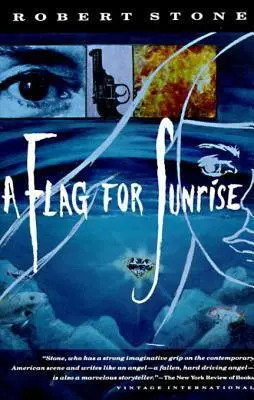
- Название:A Flag for Sunrise
- Автор:
- Издательство:Vintage
- Жанр:
- Год:2012
- ISBN:нет данных
- Рейтинг книги:4 / 5. Голосов: 1
-
Избранное:Добавить в избранное
- Отзывы:
-
Ваша оценка:
A Flag for Sunrise: краткое содержание, описание и аннотация
Предлагаем к чтению аннотацию, описание, краткое содержание или предисловие (зависит от того, что написал сам автор книги «A Flag for Sunrise»). Если вы не нашли необходимую информацию о книге — напишите в комментариях, мы постараемся отыскать её.
A Flag for Sunrise — читать онлайн бесплатно полную книгу (весь текст) целиком
Ниже представлен текст книги, разбитый по страницам. Система сохранения места последней прочитанной страницы, позволяет с удобством читать онлайн бесплатно книгу «A Flag for Sunrise», без необходимости каждый раз заново искать на чём Вы остановились. Поставьте закладку, и сможете в любой момент перейти на страницу, на которой закончили чтение.
Интервал:
Закладка:
When he heard Negus begin to snore, he put the books down quietly and stood up and walked barefoot into the galley. Negus was asleep down in the main cabin, not ten feet away from him, his head resting on a lintel in the paneling, his mouth open. Pablo waited a moment with his eyes on Negus’ drawn face and listened to Tino and his mate work in the engine space. The quiet rhythm of their labor went on unbroken. Still watching Negus, he reached into the lower drawer of the open locker and drew out his holstered pistol. Pistol and holster in hand, he backed off silently to the cockpit and furiously set about getting himself in harness. Negus was still snoring when he finished, Tino still tapping away on the Lister with his assistant. With shirttails over his trouser tops, Pablo walked out on deck, picked up his boots and sat down on the edge of the after hatch. He put his passport and wallet in his pocket and casually put on his socks and cowboy boots. He made himself wait for a moment, then climbed over the rail and walked slowly along the cement dock toward town. There was still no one in sight aboard the Cloud. On his way to the market square, he could not resist touching the pistol under his arm.
When the slant of the sun lit the cockpit windows to a green-tinted blaze and the sunlight crept across the galley and the cabin below it, Negus woke up and held his head in his hands. After a while he stood up, shuddered and went out on deck shielding his eyes. He found the water hose beside the after hatch, turned the pressure on and held it over his head and drank from it. Tino, in a grease-spattered purple tank-top shirt, came up and took the hose from him.
“Where’s the kid?” Negus asked him as he drank.
Tino rolled the water in his mouth and spat it out on the deck.
“He not with you?”
They looked at each other and stalked around the boat in search of Pablo. Negus called his name. They checked the lazaret and looked through his gear.
“The fucker flew,” Negus said.
“Lef’ his gear.”
“I didn’t see his passport there.”
They went into the galley and leaned against the stove. Negus rubbed his eyes.
“Maybe he won’ come back,” Tino said.
“Took his piece out of here,” Negus said, slamming the gear locker shut. He did not bother to lock it.
“I fin’ him,” Tino said. “No place he can go I won’ fin’ him. Not on dis eye-land.”
“O.K.,” Freddy Negus said.
“Wan’ me to bring him back?”
“Find out what the hell he’s up to and let me know. We’ll figure it from there.”
“Ya,” Tino said.
Negus watched him walk briskly down the cement pier. As he went, two young islanders who had been sitting on a piling stood up and fell into step with him.
Holliwell finished his rum, thought about having another and decided on it. He poured it quickly and guiltily; he was drinking as he had not done for years and still smoking. Propped in a wicker chair on the porch of his Paradise bungalow, his feet on the pastel rail, he looked out over the layered ocean.
Raw rum drained the disease of his mind. His thoughts were focused by an act of will on the pale-eyed woman at the mission beach. He remembered quite clearly the cool sure-handed motion with which she had guided him from the surf. The lightest of touches, a gesture almost, but she had put all her strength behind it. For a few seconds she had supported him. Curious. Indicative of what? Trust. Confidence. An insolent assurance, an unthinking self-superiority that was wonderful to see. A nun.
Thinking of her made him laugh. In his solitary laughter there was admiration, contempt and jealousy.
It was very beguiling, that female arrogance. There were women who could not refrain in their dealings with men from intimating that it was they who were more at home in the world. Who could not forbear, all unprovoked, to run up their mythic pennants. Instrument of Birth. Shroud Weaver. Bent never Broken. It became very primitive very quickly. Talking some commonplace like genocide or the weather they performed a hula, a series of mudras. Your eyes are hot and deluded, they signaled, ours are clear. We have suffered your rantings, your violence, your febrile illusions and endured. We can look on all things the same, we can imagine serenity. Grow up, they said.
The responses were various and complex but all involved equally primitive rage. Snatch! Stuff, cooze, undoing, unclean. Go bathe yourselves and be suitable for our fantasies. And you can’t hear the sound of our Bull Roarer!
He took more rum and filled his glass with warm Popi-Limón. The ice in the bar bucket had melted.
He liked her, it was that simple. He could say anything he liked or nothing at all and the spooks and hirelings could report anything that he said and it would make no difference. He felt sure enough of that.
Was she then at home in the world — the modern world, like the Jew in Nolan’s strange arrested hypothesis? She seemed to think she was. The question would not have occurred to her. He would put it to her; that was in his line, after all. Who do you think you are and what do you think you’re doing?
One way or another it must seem possible to her that the world could be ordered to suit her scruples and inhabited with satisfaction. In the name of God or Humanity or some Larger Notion — a new order of ages with a top and a bottom and sides. Right consequences following right actions. A marvelous view of the world, he thought. If it prevailed it would produce its own art forms, its own architecture, its own diet.
In Saigon, he had once smoked opium with a young officer of airborne troops who had described himself as a winner. “If you oppose me,” the young officer had explained, “I will win. You will lose.”
“Always?” Holliwell had asked.
Every time, the officer had explained. Because the compulsion to lose was universal and only a handful of people could overcome it.
Holliwell had ventured the opinion that it must be very strange to approach every contest with the certainty of success.
The officer was an unimposing man. He wore eyeglasses so thick that one wondered how he had come to be in the Army at all.
“What I think is strange,” he had said, “is approaching them knowing you’re going to lose.”
Saying it, he had fixed Holliwell with a look of unsound satisfaction. The eyes behind the lenses were knowing and tolerant and demented, but the point was well taken and he had scored a success ad hominem in that very moment.
Positive thinkers.
How could they? he wondered. How could they convince themselves that in this whirling tidal pool of existence, providence was sending them a message? Seeing visions, hearing voices, their eyes awash in their own juice — living on their own and borrowed hallucinations, banners, songs, kiddie art posters, phantom worship. The lines of bayonets, the marching rhythms, incense or torches, chanting, flights of doves — it was hypnosis. And they were the vampires. The world paid in blood for their articulate delusions, but it was all right because for a while they felt better. And presently they could put their consciences on automatic. They were beyond good and evil in five easy steps — it had to be O.K. because it was them after all. It was good old us, Those Who Are, Those Who See, the gang. Inevitably they grew bored with being contradicted. Inevitably they discovered the fundamental act of communication, they discovered murder. Murder was salutary, it provided reinforcement when they felt impotent or unworthy. It was something real, it made them folks and the reference to death reminded everyone that time was short and there could be no crapping around. For the less forceful, the acceptance of murder was enough. Unhappy professors, hyperthyroid clerics, and flower children could learn the Gauleiter’s smirk. The acceptance showed that they were realists which showed that they were real.
Читать дальшеИнтервал:
Закладка:
Похожие книги на «A Flag for Sunrise»
Представляем Вашему вниманию похожие книги на «A Flag for Sunrise» списком для выбора. Мы отобрали схожую по названию и смыслу литературу в надежде предоставить читателям больше вариантов отыскать новые, интересные, ещё непрочитанные произведения.







Обсуждение, отзывы о книге «A Flag for Sunrise» и просто собственные мнения читателей. Оставьте ваши комментарии, напишите, что Вы думаете о произведении, его смысле или главных героях. Укажите что конкретно понравилось, а что нет, и почему Вы так считаете.