Yan Lianke - The Four Books
Здесь есть возможность читать онлайн «Yan Lianke - The Four Books» весь текст электронной книги совершенно бесплатно (целиком полную версию без сокращений). В некоторых случаях можно слушать аудио, скачать через торрент в формате fb2 и присутствует краткое содержание. Год выпуска: 2015, Издательство: Grove Press, Жанр: Современная проза, на английском языке. Описание произведения, (предисловие) а так же отзывы посетителей доступны на портале библиотеки ЛибКат.
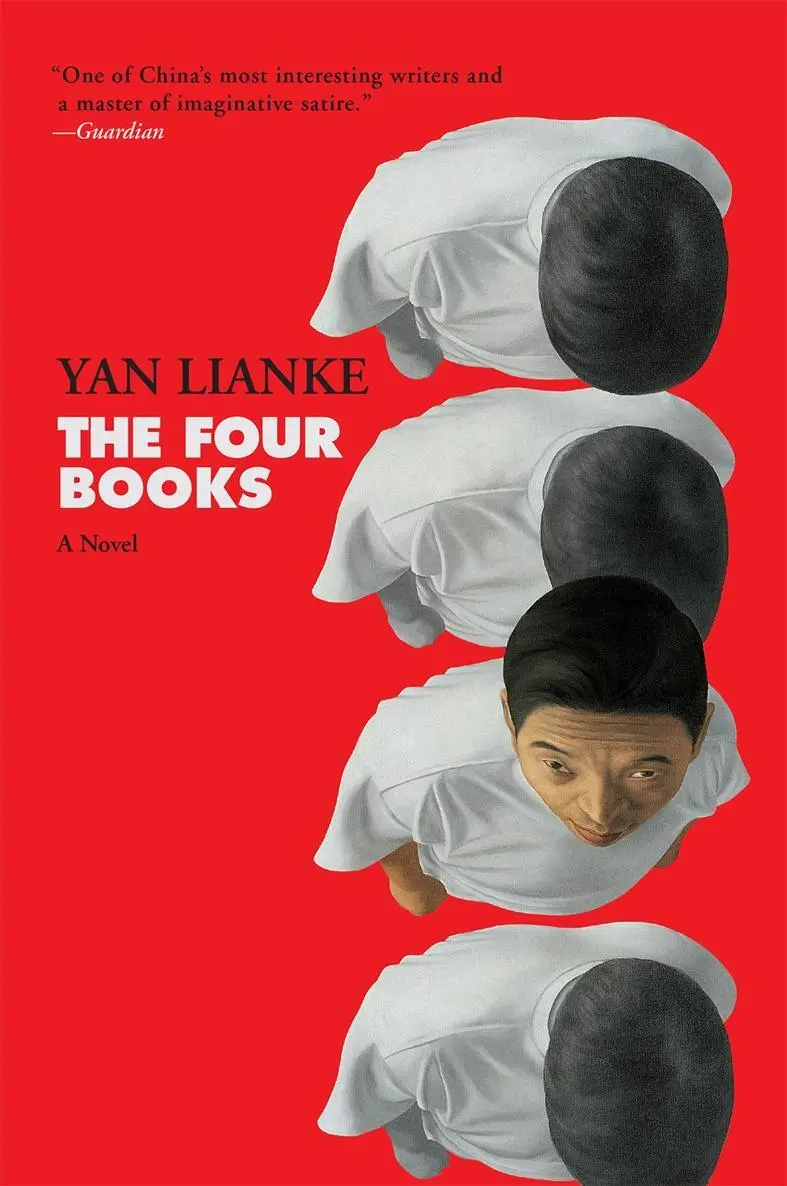
- Название:The Four Books
- Автор:
- Издательство:Grove Press
- Жанр:
- Год:2015
- ISBN:нет данных
- Рейтинг книги:3 / 5. Голосов: 1
-
Избранное:Добавить в избранное
- Отзывы:
-
Ваша оценка:
The Four Books: краткое содержание, описание и аннотация
Предлагаем к чтению аннотацию, описание, краткое содержание или предисловие (зависит от того, что написал сам автор книги «The Four Books»). Если вы не нашли необходимую информацию о книге — напишите в комментариях, мы постараемся отыскать её.
is a powerful, daring novel of the dog-eat-dog psychology inside a labor camp for intellectuals during Mao’s Great Leap Forward. A renowned author in China, and among its most censored, Yan’s mythical, sometimes surreal tale cuts to the bone in its portrayal of the struggle between authoritarian power and man’s will to prevail against the darkest odds through camaraderie, love, and faith.
In the ninety-ninth district of a sprawling reeducation compound, freethinking artists and academics are detained to strengthen their loyalty to Communist ideologies. Here, the Musician and her lover, the Scholar — along with the Author and the Theologian — are forced to carry out grueling physical work and are encouraged to inform on each other for dissident behavior. The prize: winning the chance at freedom. They're overseen by preadolescent supervisor, the Child, who delights in reward systems and excessive punishments. When agricultural and industrial production quotas are raised to an unattainable level, the ninety-ninth district dissolves into lawlessness. And then, as inclement weather and famine set in, they are abandoned by the regime and left alone to survive.
The Four Books — читать онлайн бесплатно полную книгу (весь текст) целиком
Ниже представлен текст книги, разбитый по страницам. Система сохранения места последней прочитанной страницы, позволяет с удобством читать онлайн бесплатно книгу «The Four Books», без необходимости каждый раз заново искать на чём Вы остановились. Поставьте закладку, и сможете в любой момент перейти на страницу, на которой закончили чтение.
Интервал:
Закладка:
By that point I had already written several dozen pages, or almost twenty thousand words. All of these manuscript pages were in a neat pile at the head of my bed, with the smell of ink mixing with the oily and bloody odor emanating from the muddy depths of the sand beneath my cot. I didn’t know how long this book would end up being, but after writing these sixty pages, the story’s basic framework was already becoming clear to me. The night I finally achieved this clarity, I heard a sound from the earth and the moon that seemed different from before. I wasn’t certain whether this was the beginning or the end of the month, and I hadn’t noticed whether the moon was waxing or waning. Just as I was about to fall asleep, I heard the faint sound of something crawling around under my pillow. The sound disappeared whenever I lifted my head, but returned as soon as I lowered it again. When I moved my pillow to one side, cut open the straw mattress underneath, and placed my ear directly on the ground, I heard the faint scratching sound of wheat and grass roots scurrying around in the wheat field, as though they were battling one other underground. I put on my clothes and went outside, where I quickly proceeded to the wheat field and knelt down, but I couldn’t see or hear anything. So, I placed my ear on the ground next to the wheat sprouts, and once again I heard the wheat and grass sprouts struggling with one another, as though they were competing to see who would be able to get out of the ground first. That clear bright sound was like bamboo shoots struggling to make their way through fissures in a stone slab.
I couldn’t understand why the wheat sprouts would make this kind of noise. I sat at the front of the field pondering this, until the eastern sky began to lighten. In the morning light, the wasteland initially appeared gray and misty, but then, after a moment of darkness, as though a cloud were passing overhead, the field suddenly brightened. I saw that all of those wheat plants I had irrigated with my own blood were no longer individual sprouts, and instead had branched into dense clumps. The plants to which I had not given much of my own blood were still standing there as single stalks, and although they were not particularly withered, they nevertheless appeared much weaker and less vibrant than the others.
I felt as though I had let down those single-stalk sprouts, having failed to give them adequate attention. Accordingly, on that day I used a small knife to cut the tips of four of my fingers, let the blood pour into the bucket, then proceeded to give between half a bowl and a full bowl to those plants that had already received a lot of my blood, while giving two or three bowls to those that had received relatively little. That evening, I selected several plants, based on the numbers I had assigned them — including some that received half a bowl or a full bowl of bloody water, and others that had received two or even three bowls. I covered these dozen or so plants with a newspaper, weighing down the corners of the papers with rocks and sand. I stood next to the wheat field until midnight, at which point I heard a rustling sound beneath the newspapers. While the newspapers had initially been draped over the wheat sprouts, now each sheet was lifted up like an umbrella. The plants that had drunk two or three bowls of blood-water had not only lifted up the newspapers that were covering them, but some of their twigs and leafs had even punched right through. When I picked up the newspapers, I found that those wheat plants were no longer individual sprouts, but rather had divided into dense bushlike clusters.
4. Old Course , pp. 401–419
While my wheat plants were already growing like crazy, the plants in that large field back in the district had only just begun to come out of the ground. As those other plants were just beginning to divide, mine were already as tall as a chopstick. I had a hundred and twenty plants in all, spread across the entire field, blanketing everything in a sea of green. Once, I returned to the district and, after waiting until everyone left to work in the fields, I went to the canteen to collect my grain ration and my oil and salt allotment. I ran into the Child in the doorway, sunning himself and reading his comics. When he saw me approach, he reluctantly pulled his eyes away from his comics and said, “Remember what we agreed — what we said we would do if you don’t succeed in growing ears of wheat that are even larger than ears of corn.” As he was saying this, he looked back down at his comics. I stood in front of him, and I saw that the book of comics he was reading contained a biblical image of a female saint and a group of children playing under a tree. “Don’t worry,” I said confidently. “I’ll definitely be able to grow ears of wheat that are even larger than ears of corn. In fact, I won’t stop with only three or five. Instead, I’ll grow more than a hundred.”
The Child slowly put away his comics, then stood up and looked at me skeptically, and asked, “How is the wheat doing now?”
“It is growing like leeks or celery.”
“You seem a little pale,” the Child said sympathetically.
“This is just how I look,” I replied with a laugh.
“I could tell the canteen to issue you an extra half jin of oil every month.”
Shortly afterward, the Child did in fact pick up a bottle of pork oil from the canteen and come to visit me. When he arrived at the front of the field and saw that my plants were already knee-high and blanketed the ground, he opened his mouth but no words came out. After I emerged from the shack, he hopped toward me like a startled sparrow, and exclaimed, “How did you manage to do this? How can this sandy soil grow such healthy wheat?” Then he went back to the field and stroked the wheat leaf with his finger. Without waiting for me to say anything, he concluded that the reason this wheat was able to grow so crazily was not only that this plot of land was facing the rising sun, but also that for centuries there had been several dozen ginkgos and cypresses growing here. Although the trees had recently been cut down, the gold ginkgo leaves had accumulated over the years to produce a rich mulch that endowed the soil with considerable energy, while the resin from the cypresses was also very fertile and had similarly granted the soil essential vitality. Upon seeing the wheat, the Child broke into a rare smile. He sat down next to the field and spoke to me for a long time. He told me that the ninety-ninth’s experimental field, which was expected to produce ten thousand jin of grain per mu , was also growing very well, and the wheat sprouts were crowded together. He said that one of the professors had helped him calculate, and that while originally they had just planned to plant several dozen jin of seeds for every mu , now they decided to add at least eight hundred jin more seeds, bringing the total for the plot to more than a thousand jin .
The Child said, “We covered that plot with a solid layer of seeds, as though we had laid them out in the sun to dry.” Sowed in this way, however, there was no way a wheat sprout could split into several branches, and instead each seed would only produce a single sprout, and each sprout would produce only a single ear of wheat. When ripe, each ear would, at most, have only thirty grains of wheat, meaning that the thousand jin of wheat seeds would produce about thirty thousand jin of wheat. Even if they produced half that, and each ear yielded only fifteen grains of wheat, the field would still produce at least fifteen thousand jin of wheat. But, under normal circumstances, when does an ear of wheat not yield at least twenty or thirty grains? Having said this, the Child looked at me with a smile, while at the same time continuing to gaze at my plot of succulent wheat, his face so red that it looked as though it were painted.
Читать дальшеИнтервал:
Закладка:
Похожие книги на «The Four Books»
Представляем Вашему вниманию похожие книги на «The Four Books» списком для выбора. Мы отобрали схожую по названию и смыслу литературу в надежде предоставить читателям больше вариантов отыскать новые, интересные, ещё непрочитанные произведения.






Обсуждение, отзывы о книге «The Four Books» и просто собственные мнения читателей. Оставьте ваши комментарии, напишите, что Вы думаете о произведении, его смысле или главных героях. Укажите что конкретно понравилось, а что нет, и почему Вы так считаете.