T. Boyle - T. C. Boyle Stories
Здесь есть возможность читать онлайн «T. Boyle - T. C. Boyle Stories» весь текст электронной книги совершенно бесплатно (целиком полную версию без сокращений). В некоторых случаях можно слушать аудио, скачать через торрент в формате fb2 и присутствует краткое содержание. Год выпуска: 1999, Издательство: Penguin (Non-Classics), Жанр: Современная проза, на английском языке. Описание произведения, (предисловие) а так же отзывы посетителей доступны на портале библиотеки ЛибКат.
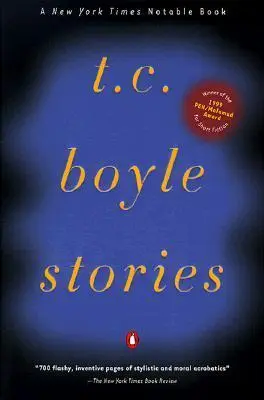
- Название:T. C. Boyle Stories
- Автор:
- Издательство:Penguin (Non-Classics)
- Жанр:
- Год:1999
- ISBN:нет данных
- Рейтинг книги:5 / 5. Голосов: 1
-
Избранное:Добавить в избранное
- Отзывы:
-
Ваша оценка:
T. C. Boyle Stories: краткое содержание, описание и аннотация
Предлагаем к чтению аннотацию, описание, краткое содержание или предисловие (зависит от того, что написал сам автор книги «T. C. Boyle Stories»). Если вы не нашли необходимую информацию о книге — напишите в комментариях, мы постараемся отыскать её.
T. C. Boyle Stories — читать онлайн бесплатно полную книгу (весь текст) целиком
Ниже представлен текст книги, разбитый по страницам. Система сохранения места последней прочитанной страницы, позволяет с удобством читать онлайн бесплатно книгу «T. C. Boyle Stories», без необходимости каждый раз заново искать на чём Вы остановились. Поставьте закладку, и сможете в любой момент перейти на страницу, на которой закончили чтение.
Интервал:
Закладка:
The news rocked the village. It was unthinkable. They were poor people who didn’t have theaters or supermarkets or shiny big cars for diversion — they had only a plate of dagaa , a glass of beer, and sex, and every special friend had a special friend and there was no stopping it, even on pain of death. Besides which, the promised condoms never arrived, as if any true man or sensitive woman would allow a cold loop of latex rubber to come between them and pleasure in any event. People went on, almost defiantly, tempting fate, challenging it, unshakable in their conviction that though the whole world might wilt and die at their feet, they themselves would remain inviolate. The disco was as crowded as ever, the sales of beer and palm wine skyrocketed, and the corpses were shunted in a steady procession from sickbed to grave. Whatever else it might have been, it was a time of denial.
Miriam’s mother was outraged. To her mind, the town’s reaction was nothing short of suicidal. Through her position at the government office she had been put in charge of the local campaign for safe sex, and it was her job to disseminate the unwelcome news. Though the condoms remained forever only forthcoming because of logistical problems in the capital, Miriam’s mother typed a sheet of warning and reproduced it a thousand times, and a facsimile of this original soon sagged damply from every tree and post and hoarding in town. “Love Carefully,” it advised, and “Zero Grazing,” a somewhat confusing command borrowed from one of the innumerable local agricultural campaigns. In fine print, it described the ravages of this very small and very dangerous thing, this virus (an entity for which there was no name in the local dialect), and what it was doing to the people of the village, the countryside, and even the capital. No one could have missed these ubiquitous sheets of warning and exhortation, and they would have had to be blind in any case to remain unaware of the plague in their midst. And deaf, too. Because the chorus of lament never ceased, day or night, and you could hear it from any corner of the village and even out in the mists of the lake — a thin, steady insectile wail broken only by the desperate beat of the disco.
“Suicide,” Miriam’s mother snarled over breakfast one morning, while Miriam, back now from her aunt and uncle’s because there was no longer any reason to be there, tried to bury her eyes in her porridge. “Irresponsible, filthy behavior. You’d think everybody in town had gone mad.” The day was still fresh, standing fully revealed in the lacy limbs of the yellow-bark acacia in the front yard. Miriam’s dog looked up guiltily from the mat in the corner. Somewhere a cock crowed.
A long minute ticked by, punctuated by the scrape of spoon and bowl, and then her mother rose angrily from the table and slammed her cup into the wash-up tub. All her fury was directed at Miriam, as if fury alone could erect a wall between an adolescent girl and James Kariango of the nicotine-stained fingers. “No better than animals in the bush,” she hissed, stamping across the floorboards with hunched shoulders and ricocheting eyes, talking to the walls, to the dense, mosquito-hung air, “and no shred of self-restraint or respect even.”
Miriam wasn’t listening. Her mother’s rhetoric was as empty as a bucket in a dry well. What did she know? Sex to her mother was a memory. “That itch,” she called it, as if it were something you caught from a poisonous leaf or a clump of nettles, but she never itched and as far as Miriam could see she’d as soon have a hyena in the house as a special friend. Miriam understood what her mother was telling her, she heard the fear seeping through the fierceness of that repetitive and concussive voice, and she knew how immortally lucky she was that William Wamala hadn’t found her pretty enough to bother with. She understood all that and she was scared, the pleading eyes of Beryl Obote, Aunt Abusaga, Uncle Milton Metembe, and all the rest unsettling her dreams and quickening her pace through the market, but when James Kariango crept around back of the house fifteen minutes later and raised two yellowed fingers to his lips and whistled like an innocuous little bird, she was out the door before the sweat had time to sprout under her arms.
The first time he’d come around, indestructible with his new shoulders, jaunty and confident and fingering a thin silver chain at his throat, Miriam’s mother had chased him down the front steps at the point of a paring knife, cursing into the trees till every head in the neighborhood was turned and every ear attuned. Tending Aunt Abusaga and Uncle Milton Metembe had in its way been Miriam’s penance for attracting such a boy — any boy — and she’d been safe there among the walking dead and the weight of their sorrows. But now she was home and the months had gone by and James Kariango, that perfect specimen, was irresistible.
Her mother had gone off to work. Her dog was asleep. The eyes of the world were turned to the market and the laundry and a hundred other things. It was very, very early, and the taste of James Kariango’s lips was like the taste of the sweetest fruit, mango and papaya and the sweet dripping syrup of fresh-cut pineapple. She kissed him there, behind the house, where the flowers grew thick and the lizards scuttered through the dirt and held their tails high in sign of some fleeting triumph. And then, after a long while, every pore of her body opening up like a desert plant at the first hint of rain, she led him inside.
He was very solemn. Very gentle. Every touch was electric, his fingers plugged into some internal socket, his face glowing like the ball at the disco. She let him strip off her clothes and she watched in fear and anticipation as he stepped out of his shorts and revealed himself to her. The fear was real. It was palpable. It meant the whole world and all of life. But then he laid her down in the familiar cradle of her bed and hovered over her in all of his glory, and, oh, it felt so good.
(1997)
II.Death
BIG GAME
The way to hunt is for as long as you live against as long as there is such and such an animal.
— Ernest Hemingway, Green Hills of AfricaYou could shoot anything you wanted, for a price, even the elephant, but Bernard tended to discourage the practice. It made an awful mess, for one thing, and when all was said and done it was the big animals — the elephant, the rhino, the water buff and giraffe — that gave the place its credibility, not to mention ambiance. They weren’t exactly easy to come by, either. He still regretted the time he’d let the kid from the heavy-metal band pot one of the giraffes — even though he’d taken a cool twelve thousand dollars to the bank on that one. And then there was the idiot from MGM who opened up on a herd of zebra and managed to decapitate two ostriches and lame the Abyssinian ass in the process. Well, it came with the territory, he supposed, and it wasn’t as if he didn’t carry enough insurance on the big stuff to buy out half the L.A. Zoo if he had to. He was just lucky nobody had shot himself in the foot yet. Or the head. Of course, he was insured for that, too.
Bernard Puff pushed himself up from the big mahogany table and flung the dregs of his coffee down the drain. He wasn’t exactly overwrought, but he was edgy, his stomach sour and clenched round the impermeable lump of his breakfast cruller, his hands afflicted with the little starts and tremors of the coffee shakes. He lit a cigarette to calm himself and gazed out the kitchen window on the dromedary pen, where one of the moth-eaten Arabians was methodically peeling the bark from an elm tree. He looked at the thing in amazement, as if he’d never seen it before — the flexible lip and stupid eyes, the dully working jaw — and made a mental note to offer a special on camels. The cigarette tasted like tin, like death. Somewhere a catbird began to call out in its harsh mewling tones.
Читать дальшеИнтервал:
Закладка:
Похожие книги на «T. C. Boyle Stories»
Представляем Вашему вниманию похожие книги на «T. C. Boyle Stories» списком для выбора. Мы отобрали схожую по названию и смыслу литературу в надежде предоставить читателям больше вариантов отыскать новые, интересные, ещё непрочитанные произведения.





Обсуждение, отзывы о книге «T. C. Boyle Stories» и просто собственные мнения читателей. Оставьте ваши комментарии, напишите, что Вы думаете о произведении, его смысле или главных героях. Укажите что конкретно понравилось, а что нет, и почему Вы так считаете.