T. Boyle - T. C. Boyle Stories
Здесь есть возможность читать онлайн «T. Boyle - T. C. Boyle Stories» весь текст электронной книги совершенно бесплатно (целиком полную версию без сокращений). В некоторых случаях можно слушать аудио, скачать через торрент в формате fb2 и присутствует краткое содержание. Год выпуска: 1999, Издательство: Penguin (Non-Classics), Жанр: Современная проза, на английском языке. Описание произведения, (предисловие) а так же отзывы посетителей доступны на портале библиотеки ЛибКат.
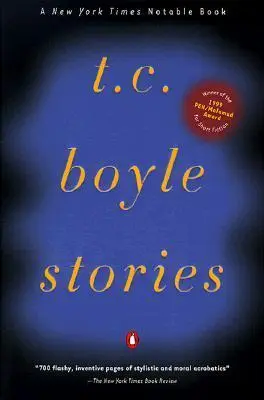
- Название:T. C. Boyle Stories
- Автор:
- Издательство:Penguin (Non-Classics)
- Жанр:
- Год:1999
- ISBN:нет данных
- Рейтинг книги:5 / 5. Голосов: 1
-
Избранное:Добавить в избранное
- Отзывы:
-
Ваша оценка:
T. C. Boyle Stories: краткое содержание, описание и аннотация
Предлагаем к чтению аннотацию, описание, краткое содержание или предисловие (зависит от того, что написал сам автор книги «T. C. Boyle Stories»). Если вы не нашли необходимую информацию о книге — напишите в комментариях, мы постараемся отыскать её.
T. C. Boyle Stories — читать онлайн бесплатно полную книгу (весь текст) целиком
Ниже представлен текст книги, разбитый по страницам. Система сохранения места последней прочитанной страницы, позволяет с удобством читать онлайн бесплатно книгу «T. C. Boyle Stories», без необходимости каждый раз заново искать на чём Вы остановились. Поставьте закладку, и сможете в любой момент перейти на страницу, на которой закончили чтение.
Интервал:
Закладка:
“Willis, oh, Willis,” she sighed — or no, moaned, bleated, wailed as if all the trials of Job had been visited on her in the five hours since he’d seen her last. He knew the tone and knew it was trouble — anything could have set her off, from a stopped-up drain to the war in Bosnia or teary memories of her first husband, the saint. “Honey,” she cried, crossing the room to catch him up in an embrace so fierce it nearly ruptured his kidneys, “you’ve got to help me out — just a little favor, a tiny little one.” Her voice hardened almost imperceptibly as she clung to him and swayed back and forth in a kind of dance of grief: “Everything is just so, so rotten. “
He was seventy-five years old and he’d been working since the day he climbed out of the cradle. Most men his age were dead. He was tired. His hips felt as if an army of mad acupuncturists had been driving hot needles into them. All he wanted was to sit down.
“Honey, here,” she said, cooing now, nothing but concern,’and she led him awkwardly to the table, still half-clinging to him. “Sit down and eat; poor man, you’re probably starved. And exhausted, too. Is it raining out there?”
It was a question that didn’t require an answer, a variant on her luncheon monologue, a diversion to distract him from the true subject at hand, the crisis, whatever it was — the shattered TV screen, was that it? — the crisis which required his immediate attention and expertise. And no, it wasn’t raining, not yet, but it was blowing like holy hell out there and his morning had been an unmitigated disaster, a total waste of time. The framers hadn’t showed — or the damn plumber, either — and he’d spent the whole moming in the skeleton of the house, which was already behind schedule, watching the wind whip the waves to a froth and batter the seawall as if it were made of cardboard instead of concrete. He’d called the sons of bitches five or six times from the pay phone out front of the bank, but they weren’t answering. Pups, that’s what they were, afraid of a little weather. He glanced up and the soup appeared on the table before him, along with a platter of sardines, six neat squares of cheddar, saltines, and a glass of apple juice. Muriel hovered over him.
He took a sip of the juice, fingered his spoon and set it down again. Why forestall the inevitable? “What’s the trouble, sweetie?” he asked.
“I know you’re not going to like this, but you’re going to have to go to the post office for me.”
“The post office?” He didn’t want to go to the post office — he wanted to get back to the torn earth and wooden vertebrae of the rising house, to the mounds of rubble and refuse and the hot sudden smell of roofing tar. He thought of the doctor and his wife who’d hired him, a young couple in their forties, building their dream house by the sea. He’d promised them fifty-five hundred square feet with balconies, sundeck and wraparound view in six months’ time — and here two months had gone by already and the damn frame wasn’t even up yet. And Muriel wanted him to go to the post office.
“It’s the Home Weather Center,” she said. “It’s got to go back. And I mean today, immediately, right now.” Her voice threatened to ignite. “I won’t have it here in the house another minute … if those bastards think they can—”
She was working herself up, her ire directed for the moment at the Home Weather Center, whatever that was, and the unnamed bastards, whoever they were, but he knew that if he didn’t watch himself, if he didn’t look sharp, the full weight of her outrage would shift to him with the sudden killing swiftness of an avalanche. He heard himself saying, “I’ll take care of it, sweetie, don’t you worry.”
But when he glanced up to gauge her reaction, he found he was talking to himself: she’d left the room. Now what? There were sounds from the dining room — a fierce rending of tape and an impatient rustle of tissue paper, followed by the sharp tattoo of her approaching footsteps — and before he could lift the spoon to his lips she was back with a cardboard box the size of an ottoman. She swept across the room and dropped it on the table with a percussive thump that jarred the soup bowl and sent the juice swirling round the rim of the glass. Outside, the wind howled at the windows.
“Just look at this, will you?” she was saying, her elbows leaping as she tore the package open and extracted a long slim wooden plaque with three gleaming gauges affixed to it. He had a moment of enlightenment: the weather center. “Did you ever see such junk in your life?”
It looked all right to him. He wanted soup, he wanted sleep, he wanted the doctor’s house to rise up out of the dunes and bravely confront the sea, perfect in every detail. “What’s wrong with it, sweetie?”
“What’s wrong with it?” Her voice jumped an octave. “Are you blind? Look at this”—a blunt chewed fingernail stabbed at the middle gauge—“that’s what’s wrong. Junk. Nothing but junk.”
He frowned over the thing while his soup got cold and then he fished his glasses out of his shirt pocket and studied it. The barometer needle was pinned all the way down at twenty-eight inches — he’d never seen anything like it. He lifted the plaque from the table and shook it. He inverted it. He tapped the glass. Nothing.
Muriel was seething. She went off into a tirade about con men, cheats, the Japanese and what they’d done to her brother, not to mention the American economy, and all he could do to calm her was agree with everything she said and croon “sweetie” over and over again till his soup turned gelid and he pushed himself up from the table, tucked the package under his arm, and headed out the door for the post office.
The wind was up, whipping the treetops like rags, and the smell of the ocean was stronger now, rank and enveloping, as if the bottom of the sea had turned over and littered the shore with its dead. A trash can skittered down the street and a shopping bag shot across the lawn to cling briefly to his ankles. As he settled into the car, the package beside him, the wind jerked the door out of his hand and he began to realize that there would be no more work today. At this rate he’d be lucky if what they’d put up so far was still there in the morning. No wonder the framers hadn’t showed: this was a real blow.
He dodged trash-can lids and branches that glided magically across the road, the car pulling him along to the post office as faithfully as an old horse. The streets were deserted. He encountered exactly three other cars, all with their lights on and all going like hell. By the time he got to the traffic light outside the post office and sat there for an eternity watching the stoplight heave on its wires, it was so dark it might have been dusk. Maybe it was a hurricane after all, he thought, maybe that was it. He would have turned on the radio, but the damn thing had never worked to begin with, and then, two months ago, some jerk had smashed out the window on the driver’s side and made off with it.
Sitting there watching the stoplight leap and sway over the deserted pavement, he felt a sudden sense of foreboding, a quick hot jolt of fear that made him gun the engine impatiently and inch forward into the intersection. He was thinking he’d better get home and see to the windows, see to Muriel — he’d been caught in a hurricane in Corpus Christi once and they’d been without lights or water for six days. He remembered an old woman sitting in the middle of a flooded street with a bloody strip of somebody’s parlor curtains knotted round her head. That was an image. And he and his buddies with two cases of tequila they’d fished out of the wreckage of a liquor store. He’d better get home. He’d better.
Читать дальшеИнтервал:
Закладка:
Похожие книги на «T. C. Boyle Stories»
Представляем Вашему вниманию похожие книги на «T. C. Boyle Stories» списком для выбора. Мы отобрали схожую по названию и смыслу литературу в надежде предоставить читателям больше вариантов отыскать новые, интересные, ещё непрочитанные произведения.










Обсуждение, отзывы о книге «T. C. Boyle Stories» и просто собственные мнения читателей. Оставьте ваши комментарии, напишите, что Вы думаете о произведении, его смысле или главных героях. Укажите что конкретно понравилось, а что нет, и почему Вы так считаете.