T. Boyle - The Women
Здесь есть возможность читать онлайн «T. Boyle - The Women» весь текст электронной книги совершенно бесплатно (целиком полную версию без сокращений). В некоторых случаях можно слушать аудио, скачать через торрент в формате fb2 и присутствует краткое содержание. Год выпуска: 2009, Издательство: Viking Adult, Жанр: Современная проза, на английском языке. Описание произведения, (предисловие) а так же отзывы посетителей доступны на портале библиотеки ЛибКат.
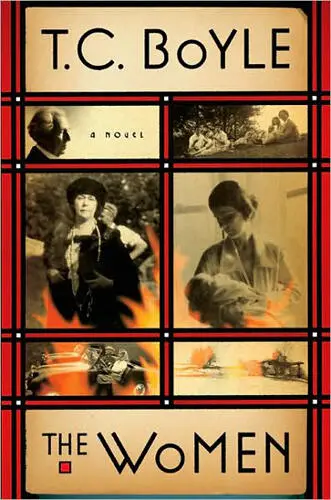
- Название:The Women
- Автор:
- Издательство:Viking Adult
- Жанр:
- Год:2009
- ISBN:нет данных
- Рейтинг книги:5 / 5. Голосов: 1
-
Избранное:Добавить в избранное
- Отзывы:
-
Ваша оценка:
The Women: краткое содержание, описание и аннотация
Предлагаем к чтению аннотацию, описание, краткое содержание или предисловие (зависит от того, что написал сам автор книги «The Women»). Если вы не нашли необходимую информацию о книге — напишите в комментариях, мы постараемся отыскать её.
and sex researcher Alfred Kinsey in
, T.C. Boyle now turns his fictional sights on an even more colorful and outlandish character: Frank Lloyd Wright. Boyle's account of Wright's life, as told through the experiences of the four women who loved him, blazes with his trademark wit and invention. Wright's life was one long howling struggle against the bonds of convention, whether aesthetic, social, moral, or romantic. He never did what was expected and despite the overblown scandals surrounding his amours and very public divorces and the financial disarray that dogged him throughout his career, he never let anything get in the way of his larger-than-life appetites and visions. Wright's triumphs and defeats were always tied to the women he loved: the Montenegrin beauty Olgivanna Milanoff; the passionate Southern belle Maud Miriam Noel; the spirited Mamah Cheney, tragically killed; and his young first wife, Kitty Tobin. In
, T.C. Boyle's protean voice captures these very different women and, in doing so, creates a masterful ode to the creative life in all its complexity and grandeur.
The Women — читать онлайн бесплатно полную книгу (весь текст) целиком
Ниже представлен текст книги, разбитый по страницам. Система сохранения места последней прочитанной страницы, позволяет с удобством читать онлайн бесплатно книгу «The Women», без необходимости каждый раз заново искать на чём Вы остановились. Поставьте закладку, и сможете в любой момент перейти на страницу, на которой закончили чтение.
Интервал:
Закладка:
Lloyd left in mid-January, on a day so bleak and gray the sky might have been the lid of a coffin for all the light that shone through. How the newspapers found out about it she would never know, but there was a reporter waiting for them at the Oak Park station, insinuating himself between her and her son, Just a few questions if you don’t mind. Well, she did mind, of course she did, and so did the children, standing there on the platform looking stricken while she dabbed at her eyes and Lloyd sagged under the weight of his suitcases. She told him to wire her when he got to New York and then again when he reached Florence, because that was where Frank was apparently, basking under the Italian sun with his mistress while his family shivered through a thankless Chicago winter.
The article in the following day’s paper — FRANK LLOYD WRIGHT’S SON MAY REPAIR FAMILY BREACH; Boy Sails for Italy Today at Request of Father, Who Eloped with Mrs. Edwin Cheney —was one more intrusion, yet another humiliation in an ongoing series. She felt dirty. Felt as if she were the guilty one. And what would that be like, to take another man, feel him between her legs, his lips at her throat, her breasts? She couldn’t imagine. As hard as she tried to picture it, she could imagine only Frank, her husband, the only man she’d ever known. But then she thought of him with Mamah, and the whole scene dissolved in shame. She couldn’t face her neighbors, couldn’t bear the thought of encountering them on the street or at church or the grocery, of seeing the way they fabricated their pitying faces or shifted their eyes away from her as if she were contaminated, and so she stopped going out.
Very gradually, as the weeks and months began to accumulate, she found herself adjusting to his absence. Spring crept softly into the trees, the days warming and the sun painting stripes across the lawn, and she went out and turned over her flower garden like any other widow or spinster or deserted woman — and there must have been thousands of them out there somewhere, legions, a whole army, only not in Oak Park, not in Saints’ Rest where every woman had a man on her arm and every pew was filled with the upright and the true — and then it was June and the children matriculated and the long high-crowned days of summer settled in. She had regular letters from Lloyd, but even he seemed distant to her now, someone she’d known in a previous life. Like Frank. Who was living in Fiesole with his son and a hired draftsman, working steadily on converting his designs to the format required by the publisher, while Mamah had stayed on in Berlin, teaching English at a school there. Could it be that he’d tired of her already? She wouldn’t let herself hope because before she knew it, it was fall again, the children returned to school and her husband gone out of her life for nearly a year now. A year. A year entire. And how many years did anyone have, any couple, that they could be squandered like that?
She wouldn’t hope, wouldn’t believe, but here came the letter from her son to say that Frank was coming home, alone, first to New York and then to Chicago and the house he’d built in Oak Park for her and the children, his children, his and hers. He was coming home. He was already on his way. He’d be back before the leaves changed and the frost rimed the lawn. She had to catch her breath — the frost had already built up inside of her, ice, a rigid wall of it, and the letter, two thin sheets of paper, melted it in a rush that swept everything away before it, the sweetest abstersion. Home. He was coming home. And when he did arrive, finally, in the automobile of one of his clients who tried to hide his face for shame and wouldn’t get out of the car, 152he strode up the walk as if he’d never been away and the children rushed to him, Llewellyn clinging to his waist and Frances dancing in his arms as the reporters scribbled on their ragged sheets and she held her smile till it burned.
If she had any illusions they were soon crushed, because once he was out of sight of the reporters he barely glanced at her, and after dinner — their first family dinner in a year — he set himself up to sleep in the studio. Not in her bed — not their bed — but the studio. She’d thought about that for a long while, about the sleeping arrangements, because she wasn’t just going to roll over and let him have his way with her after taking that slut to his bed — she was going to give him a good piece of her mind, a real verbal thrashing, and it would take time to heal the wounds, of course it would — but this was her husband, the man she loved, and in time there would be reconciliation, tenderness, forgiveness. She foresaw taking him to her, the old Frank, and he’d be contrite, needy — he’d beg her, beg for it. But she was delusional, wasn’t she? He wasn’t the old Frank and never would be. He was like an enemy combatant, cold as death in the winter, and if he stayed under her roof it was for show only. And while the newspapers crowed out their headlines — WRIGHT RETURNS TO OAK PARK WIFE, Family Welcomes Architect Who Went to Europe with Neighbor’s Spouse —it was all an imposture. He used the children as a buffer, wouldn’t look her in the eye. And every time she tried to dig deeper, assay the ground, look into his face to see where she stood, he’d jump up and leave the room.
There came a night a week into it when the first cold spell blew down out of Canada and they all sat round the hearth after dinner to listen to his fine voice as he spun out one story after another, now rhapsodizing the play of the morning light on the olive trees at Fiesole or describing the way the fishermen flung their nets into the waves for sardines at Piombino, now breaking into song and making up a nursery rhyme on the spot for Llewellyn. She never took her eyes from him. She smiled a false smile, laughed for the sake of the children, but the look of him — the mobile face, the easy grin, the posturing of a confidence man, utterly at his ease, unrepentant, murderous in his intent — infuriated her. She would have it out with him. She was determined. And she wasn’t going to leave the room, not even to put Llewellyn to bed, until she caught him alone.
Eventually, the party began to break up, the children drifting off to their rooms, to their books and lessons, till only Llewellyn remained. Her youngest seemed both puzzled and fascinated by his father, this apparition he’d heard so much about over the course of the past year, six years old and trying his best to reconcile the shadowy figment of his memory with the real presence of this self-consciously zany figure in the inglenook, and why wouldn’t he be confused? He insisted on sitting in Frank’s lap the whole time, demanding his attention, touching his face and hands and pressing his head to his chest again and again as if to make sure of him — she could see that Frank was finding it a strain, and under other circumstances she might have spoken out. “Stop fussing,” she would have said. Or: “Isn’t it time for bed?” But she said nothing. Just watched. Until Frank, exasperated, gave her a look. “Shouldn’t he be in bed by now?”
“Yes, he should be,” she said, but she didn’t get up to lift the child in her arms like the dutiful wife and mother, didn’t coo or cajole or even crack a smile.
“I don’t want to go to bed,” Llewellyn put in. “I want to stay here with Papa.”
Frank let out a sigh. “Well, why don’t you take him, then?”
“Why don’t you? You’re his father, aren’t you?”
“Don’t start in,” he said, and she wanted to laugh in his face. Who was he to tell her what to do? She was the one stuck with the bills, stuck with the house, the children, his mother.
“Llewellyn,” she snapped, “get to bed. Now!”
Читать дальшеИнтервал:
Закладка:
Похожие книги на «The Women»
Представляем Вашему вниманию похожие книги на «The Women» списком для выбора. Мы отобрали схожую по названию и смыслу литературу в надежде предоставить читателям больше вариантов отыскать новые, интересные, ещё непрочитанные произведения.




Обсуждение, отзывы о книге «The Women» и просто собственные мнения читателей. Оставьте ваши комментарии, напишите, что Вы думаете о произведении, его смысле или главных героях. Укажите что конкретно понравилось, а что нет, и почему Вы так считаете.