T. Boyle - The Women
Здесь есть возможность читать онлайн «T. Boyle - The Women» весь текст электронной книги совершенно бесплатно (целиком полную версию без сокращений). В некоторых случаях можно слушать аудио, скачать через торрент в формате fb2 и присутствует краткое содержание. Год выпуска: 2009, Издательство: Viking Adult, Жанр: Современная проза, на английском языке. Описание произведения, (предисловие) а так же отзывы посетителей доступны на портале библиотеки ЛибКат.
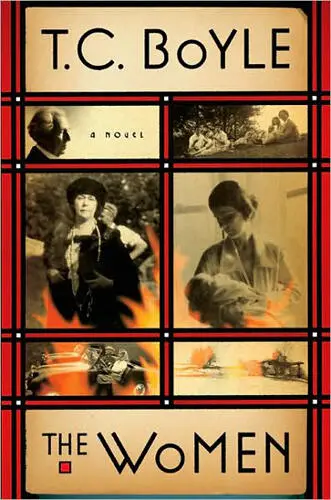
- Название:The Women
- Автор:
- Издательство:Viking Adult
- Жанр:
- Год:2009
- ISBN:нет данных
- Рейтинг книги:5 / 5. Голосов: 1
-
Избранное:Добавить в избранное
- Отзывы:
-
Ваша оценка:
The Women: краткое содержание, описание и аннотация
Предлагаем к чтению аннотацию, описание, краткое содержание или предисловие (зависит от того, что написал сам автор книги «The Women»). Если вы не нашли необходимую информацию о книге — напишите в комментариях, мы постараемся отыскать её.
and sex researcher Alfred Kinsey in
, T.C. Boyle now turns his fictional sights on an even more colorful and outlandish character: Frank Lloyd Wright. Boyle's account of Wright's life, as told through the experiences of the four women who loved him, blazes with his trademark wit and invention. Wright's life was one long howling struggle against the bonds of convention, whether aesthetic, social, moral, or romantic. He never did what was expected and despite the overblown scandals surrounding his amours and very public divorces and the financial disarray that dogged him throughout his career, he never let anything get in the way of his larger-than-life appetites and visions. Wright's triumphs and defeats were always tied to the women he loved: the Montenegrin beauty Olgivanna Milanoff; the passionate Southern belle Maud Miriam Noel; the spirited Mamah Cheney, tragically killed; and his young first wife, Kitty Tobin. In
, T.C. Boyle's protean voice captures these very different women and, in doing so, creates a masterful ode to the creative life in all its complexity and grandeur.
The Women — читать онлайн бесплатно полную книгу (весь текст) целиком
Ниже представлен текст книги, разбитый по страницам. Система сохранения места последней прочитанной страницы, позволяет с удобством читать онлайн бесплатно книгу «The Women», без необходимости каждый раз заново искать на чём Вы остановились. Поставьте закладку, и сможете в любой момент перейти на страницу, на которой закончили чтение.
Интервал:
Закладка:
She blasted him, of course she did, but she expressed the fullness of her love too — and it was no infatuation, she reminded him, but a mature and spiritual love that stood against the petty conventions of a society bound up in its petty rules. 100She wouldn’t go to Taliesin if he begged her. She couldn’t. “Because a spirit walked abroad there whose presence must not be offended by one who truly loved him.” She went on in this vein, dredging up every Gothic reference to churchyards, yew trees and demon lovers she could recall, then began to remonstrate with him. Couldn’t he, above all people, with his finer sensibilities and conceptual brilliance, appreciate that this pining after a ghost was so false, so cheap, nothing more than two-penny sentimentality, a poor flimsy excuse for real love and loyalty? And she asked him, humbly and sincerely, if he wouldn’t accept gratefully a poor loving heart that he had mutilated beyond all thinking. He was the one in the wrong, couldn’t he see that? Couldn’t he see all she was offering him, in spite of the condemnation of that pitiless and cheaply moralizing society that made her an outcast for the “sin” of loving him? Even as she wrote, absorbed, distracted, resentful and brimming with love all at once, she felt the strength come back to her.
“I SHALL WIN!” she exclaimed. “You’ll see! When the smoke of battle clears away I shall be a rainbow again — and, undying name — an altar of fire that you have tried to dash to hell. I shall weave a rose wreath and hang it round your neck. You will call it a yoke of bondage and curse it — no matter. You are afraid of the light I give you. You crouch in darkness. Come, take my hand, I will lead you.” And her valediction, intimating in its restraint whole worlds of love and grief and passionate regret, was, simply, Miriam.
And then she arrived, shriven, on the high altar of the west, Albuquerque, Santa Fe, Taos. She went barefoot in the mornings. She worshipped the sky. Took eau naturelle and unleavened bread. Wrapped herself in diaphanous things and let Jesus and Mary Baker Eddy apply their healing touch to her soul. Time was a mountain. Waters flowed, the wind blew. She watched the eagles rise on the thermals over the Sangre de Cristo Mountains as if they held all the power of the universe in their wings — or perhaps they were vultures, but no matter. She was there. She lived in the moment.
Gradually, his letters softened. Guilt ate at him — he’d seduced and abandoned her when she’d given up everything for him, even to the opprobrium of society, and he understood that now and begged her forgiveness. He sent money. He needed her. Wanted her. Pleaded with her to come back to him — and not just to Chicago, but to Taliesin, to be its mistress. And she? She let him dangle, reveling in her power to reach out to him across all that expanse of raw country and tighten the clamps of her hold on him. So what if it was venereal? He needed her. And he would see what she could give him beyond that, beyond the curse of sex — and yes, she threw the phrase right back in his face. They would walk the world together, she wrote him, hand in hand, stride for stride, and challenge the very gods for their sublimity.
By July, she was back in Chicago. By the end of August, she was at Taliesin. 101
CHAPTER 4: FLESH AND BLOOD
He was lonely, that was the long and short of it. Despite the fullness of the days at Taliesin and his utter absorption in the work going forward, despite the company of his children and the ministrations of Mother Breen, despite riding and farming and picnicking and charades and board games and singing round the fire at night till he thought his lungs would burst, he was parched for the touch of a woman. Miriam was right. Mamah was a ghost, dead and gone, and you couldn’t lie with a ghost. The thought might have been callous — Mamah hadn’t been in the ground a year yet and already she was as faded in his memory as if she’d been gone a century, and perhaps that was a trick of the brain, a defense mechanism, a way of loosening the coils of grief so they didn’t choke all the air out of your lungs and drain the blood from your heart — but all he could see in his mind’s eye was Miriam. Miriam undressing by candlelight, teasing him, flaunting herself, perching naked on the corner of the bed and pulling him down atop her, Miriam with her breasts exposed over the sweet silken curve of her abdomen, her dress in tatters, crying Look at me, I’m flesh and blood, flesh and blood!
Well, so was he. And he found himself burying his face in her letters to catch the faintest scent of her, all the while wondering what she was doing out there in New Mexico — had she taken another lover, was that it? She was a matchless beauty, elegant, brilliant, worldly, and if he’d seen nothing like her in Chicago, what must the hidalgos have thought of her out there under the open sky? He pictured her in the arms of a tall mustachioed figure in a sombrero, some sunburned hybrid of Tom Mix and Teddy Roosevelt, and felt the loss of her like a physical ache. But then it was a physical ache when you came right down to it. And he soothed it in a way that was juvenile, unclean and lonely, lonely to the core.
He was there at the station in Chicago when she stepped off the train in a fumarole of porters, bags and scuffling shoes, the engine spewing cinders and ash, steam rising and pigeons settling like an avian snow, people crying out, families reunited, lovers embracing — even a pair of Alsatians wagging their tails and capering for joy — but she didn’t seem to recognize him, not at first. Down the platform she came in a magnificent stride that was at once commanding and unabashedly sensual, the Negro porters scurrying to keep up with her and a whole series of men glancing up from newspapers and cigars like dominoes toppling one against the other all the way down the line. He felt the blood drain from his extremities and settle in that one essential place — he knew those eyes, those limbs, those breasts — but didn’t she know him? Didn’t she recognize him? He started forward, his confidence wilting, wondering if she was still harboring a grudge — or was it her eyesight? She was of an age — and she did employ that lorgnette as something more than a prop. . “Miriam!” he cried, his voice cracking under the strain even as he lurched out from behind a wall of anonymous men hunched over their cheap suitcases and made himself glaringly visible, his stick raised high and his cape flowing in the liquefaction of its folds. She stopped. Turned toward him. He tore the beret from his head and waved it wildly. And then? Then she was in his arms.
“How was your journey?” he asked, leading her out to the street and the car as the porters brought up the rear and the searing summer air streamed in through the open doors.
“Oh, darling, darling, you don’t want to know.”
“Was it that bad?” He tried out a smile, ready to make light of it, but his blood was seething, the very touch of her, the scent. .
“Heat,” she said, never missing a stride, and then she was directing the Negroes as they loaded her things into the car. “Like this. Heat like this. Only worse. There was the dust, eternal dust, and people so inconsiderate — and I hate to say it, stupid, stupid and thoughtless — as to leave the windows open wide day and night. Insects. I could write a treatise on the insects of the West and Middle-West. But let’s not talk about me, let’s talk about you. You look thinner. Or thicker. Definitely thicker about the waist. Have you put on weight? Is the life in the country”—and here she gave him her first smile—“so restful, then? Unclouded days, sap running in the trees, the easeful sway of the hammock? All that?”
Читать дальшеИнтервал:
Закладка:
Похожие книги на «The Women»
Представляем Вашему вниманию похожие книги на «The Women» списком для выбора. Мы отобрали схожую по названию и смыслу литературу в надежде предоставить читателям больше вариантов отыскать новые, интересные, ещё непрочитанные произведения.


Обсуждение, отзывы о книге «The Women» и просто собственные мнения читателей. Оставьте ваши комментарии, напишите, что Вы думаете о произведении, его смысле или главных героях. Укажите что конкретно понравилось, а что нет, и почему Вы так считаете.