T. Boyle - The Women
Здесь есть возможность читать онлайн «T. Boyle - The Women» весь текст электронной книги совершенно бесплатно (целиком полную версию без сокращений). В некоторых случаях можно слушать аудио, скачать через торрент в формате fb2 и присутствует краткое содержание. Год выпуска: 2009, Издательство: Viking Adult, Жанр: Современная проза, на английском языке. Описание произведения, (предисловие) а так же отзывы посетителей доступны на портале библиотеки ЛибКат.
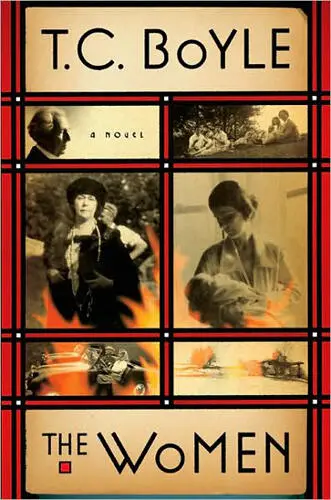
- Название:The Women
- Автор:
- Издательство:Viking Adult
- Жанр:
- Год:2009
- ISBN:нет данных
- Рейтинг книги:5 / 5. Голосов: 1
-
Избранное:Добавить в избранное
- Отзывы:
-
Ваша оценка:
The Women: краткое содержание, описание и аннотация
Предлагаем к чтению аннотацию, описание, краткое содержание или предисловие (зависит от того, что написал сам автор книги «The Women»). Если вы не нашли необходимую информацию о книге — напишите в комментариях, мы постараемся отыскать её.
and sex researcher Alfred Kinsey in
, T.C. Boyle now turns his fictional sights on an even more colorful and outlandish character: Frank Lloyd Wright. Boyle's account of Wright's life, as told through the experiences of the four women who loved him, blazes with his trademark wit and invention. Wright's life was one long howling struggle against the bonds of convention, whether aesthetic, social, moral, or romantic. He never did what was expected and despite the overblown scandals surrounding his amours and very public divorces and the financial disarray that dogged him throughout his career, he never let anything get in the way of his larger-than-life appetites and visions. Wright's triumphs and defeats were always tied to the women he loved: the Montenegrin beauty Olgivanna Milanoff; the passionate Southern belle Maud Miriam Noel; the spirited Mamah Cheney, tragically killed; and his young first wife, Kitty Tobin. In
, T.C. Boyle's protean voice captures these very different women and, in doing so, creates a masterful ode to the creative life in all its complexity and grandeur.
The Women — читать онлайн бесплатно полную книгу (весь текст) целиком
Ниже представлен текст книги, разбитый по страницам. Система сохранения места последней прочитанной страницы, позволяет с удобством читать онлайн бесплатно книгу «The Women», без необходимости каждый раз заново искать на чём Вы остановились. Поставьте закладку, и сможете в любой момент перейти на страницу, на которой закончили чтение.
Интервал:
Закладка:
Then there came a morning in April when the sun edged up over the southern flank of the house to warm the stones of the courtyard and she moved a chair outside to sit beneath the awakening oaks and read to Svetlana. If her daughter couldn’t go to school — if she had to be kept out of sight too — then at least Olgivanna was determined to educate her in her own way. Each day there would be dance, art, music, readings from the great books in Frank’s library — the American poets, Wilhelm Meister, The Man Without a Country , Victor Hugo’s Notre-Dame de Paris —both of them improving their command of the spoken and written language. And Svetlana was very good about it, an angel — she really did seem to want to learn. Or maybe she was just bored, and who could blame her? She felt the tension too — they were all waiting for something indefinable, a point of release that seemed as if it would never come.
The housekeeper had just brought them each a cup of hot chocolate. The grass was greening on the hill behind them and there were birds everywhere, their chirrups and catcalls dampening the eternal thump of construction from the far end of the house. Frank was down there somewhere, his shirtsleeves rolled up, banging away with Billy Weston and the others. She handed the book to Svetlana. “Now you read — here — the last stanza.”
“ ‘This is the poem of the air,’ ” Svetlana began in a soft aspirated voice, “ ‘Slowly in silent syllables recorded; / This is the secret of despair. / Long in its—’ ”
“Yes,” she said. “Go on.”
But Svetlana was no longer looking at the page. She was staring over her mother’s shoulder, her tongue caught in the corner of her mouth. Olgivanna turned to see a stranger with an oversized satchel striding up the drive as if he’d been invited, as if he belonged here, and her first thought was that he must be one of Frank’s lawyers, but what lawyer would wear a pair of trousers as tight as a high school sophomore’s? Or a polka-dot vest? Or go without a hat?
“Olga,” he called out in a voice meant to be hearty and winning, a booster’s voice, his lips giving shape to an automatic smile, his right hand flapping over one shoulder in a simulacrum of greeting. Before she could rise from the chair, he was on them. “No need to get up”—he winked, shrugged, tugged at his sleeves—“I won’t be a minute.”
She set down the teacup. Her hands went to her hair. And what was he — a salesman? A curiosity seeker? And how did he know her name?
It all became clear in the next moment. He was digging into his satchel like some sort of deranged postman and she could see that he was trembling, his hands shaking, a twitch settling into his shoulders, until finally he produced a bundle of newspapers and laid them in her lap.
“Name’s Wallace, from the Trib . You’ve seen these?”
She looked to her daughter, but Svetlana gave her nothing. She could feel the color rise to her face, hot blood burning there with her shame, because that was what it was — shame. The newspapers bore dates from November through December — DEPORT OLGA? IT CANNOT BE DONE, WRIGHT ASSERTS — and then there was a more recent one, from February, the leaf turned down to a quarter-page photograph of herself, in a silk gown and her platinum filigree earrings and looking away from the lens as if she had something to hide, and under it the legend: ACCUSED. And, in smaller type: Olga Milanoff, to Whom Mrs. Frank Wright Charges Husband Fled.
Frank had kept the papers from her. They would only upset her, he said. It was nothing, he said. It would blow over. It was nothing. When there she was, for all the world to see. And gloat over. Like some freak in a sideshow.
“What we want,” the man was saying, “is your side of the story.”
WRIGHT FLEES TO DODGE U.S. LAW, SAYS WIFE. Claims Architect Is with Russian Danseuse.
He was chewing gum, his teeth working round the remnants of his smile. “Do you have anything to say? For the record?”
CHAPTER 6: MIRIAM AT THE GATES
The windows were flung open wide to the sun, the curtains bowing with the sweet breeze coming in off the lake, and Miriam felt very settled, very content, as she sat at the escritoire the hotel had provided for her, writing. In the past week she’d gone through nearly a hundred sheets of fine mouldmade kid-finish paper, with deckled edges and matching envelopes, and had just that morning called down to the stationer’s to place her order for another hundred, these to be embossed with her initials: MMNW, Maude Miriam Noel Wright. Twice now she’d had to get up to rub hand crème over the second joint of her middle finger, where a callus had begun to develop as if she were some sort of grind, a nail-bitten secretary or bloodless law clerk who never saw the light of day, but she felt strong and her hand barely trembled over the paper. She’d had breakfast sent up to the room — coffee and a bun, nothing more — and then allowed the pravaz to take the tension out of her shoulders and free her hands for the day’s work.
She was writing letters — angry, slanderous, denunciatory letters — and addressing them to anyone she could think of who might take an interest in her situation. She wrote to her husband’s creditors, to the Bank of Wisconsin and all his clients — past, present and prospective — to the newspapers, her lawyers, and to him, most of all to him. He was a scoundrel, a fraud, that was what she wanted the world to know, and she would be damned if she would live out of a suitcase like a — a carpetbagger —while he paraded around in luxury with his danseuse. Her bill had been owing now for more than two months and the people at the desk had begun to give her insolent looks — and that she should have to endure such looks, she, his lawful wife, was unconscionable. Especially in light of the fact that the Dane County Superior Court had ordered him to pay her attorneys’ fees and per diem expenses while the divorce was being contested and he most emphatically was not living up to his end of the bargain. What’s more, she wrote, she was being threatened with eviction if the account wasn’t settled, and where would she go then?
She was in the middle of an urgent plea to the governor of Wisconsin, weighing a question of diction (should she use the term “blackguard” to describe her husband or did it sound too antiquated?; she wanted to call him a “heel,” because that was what he was, a heel and a son of a bitch, but then women of her class didn’t stoop to such language, not in letters to the governor, at any rate) when the telephone rang.
Her attorney, Mr. Fake, was on the other end of the line. “Mrs. Wright, is that you?” He had a low, considered voice, deeply intimate, as if he’d been born to collusion.
“Yes,” she returned, “I’m here,” and she couldn’t help adding a note of asperity. “And I’m doing as well as can be expected under the circumstances. The looks I’m getting—”
“Well, that’s why I’m calling. There’s been no movement on their side, none at all, we’re just simply deadlocked, and I think I may have a solution for you—”
She held her breath. This was what she wanted to hear — tactics, movement, action, her forces gathering for the assault. “Yes?” she said.
“There is simply no reason I can think of for you to have to continue living hand to mouth in some hotel when Taliesin remains community property. Taliesin is your rightful and legal home and I really do believe that if you were to move back in—”
“Move back ?” She was incensed at the thought of it, all those pastures reeking of dung, the dreary vistas opening up to yet more pastures mounded with dung, the yokels, the insects.
Читать дальшеИнтервал:
Закладка:
Похожие книги на «The Women»
Представляем Вашему вниманию похожие книги на «The Women» списком для выбора. Мы отобрали схожую по названию и смыслу литературу в надежде предоставить читателям больше вариантов отыскать новые, интересные, ещё непрочитанные произведения.
Обсуждение, отзывы о книге «The Women» и просто собственные мнения читателей. Оставьте ваши комментарии, напишите, что Вы думаете о произведении, его смысле или главных героях. Укажите что конкретно понравилось, а что нет, и почему Вы так считаете.