T. Boyle - The Women
Здесь есть возможность читать онлайн «T. Boyle - The Women» весь текст электронной книги совершенно бесплатно (целиком полную версию без сокращений). В некоторых случаях можно слушать аудио, скачать через торрент в формате fb2 и присутствует краткое содержание. Год выпуска: 2009, Издательство: Viking Adult, Жанр: Современная проза, на английском языке. Описание произведения, (предисловие) а так же отзывы посетителей доступны на портале библиотеки ЛибКат.
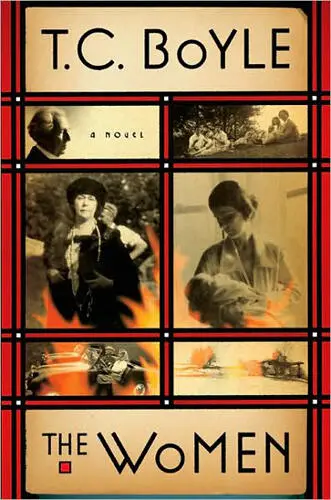
- Название:The Women
- Автор:
- Издательство:Viking Adult
- Жанр:
- Год:2009
- ISBN:нет данных
- Рейтинг книги:5 / 5. Голосов: 1
-
Избранное:Добавить в избранное
- Отзывы:
-
Ваша оценка:
The Women: краткое содержание, описание и аннотация
Предлагаем к чтению аннотацию, описание, краткое содержание или предисловие (зависит от того, что написал сам автор книги «The Women»). Если вы не нашли необходимую информацию о книге — напишите в комментариях, мы постараемся отыскать её.
and sex researcher Alfred Kinsey in
, T.C. Boyle now turns his fictional sights on an even more colorful and outlandish character: Frank Lloyd Wright. Boyle's account of Wright's life, as told through the experiences of the four women who loved him, blazes with his trademark wit and invention. Wright's life was one long howling struggle against the bonds of convention, whether aesthetic, social, moral, or romantic. He never did what was expected and despite the overblown scandals surrounding his amours and very public divorces and the financial disarray that dogged him throughout his career, he never let anything get in the way of his larger-than-life appetites and visions. Wright's triumphs and defeats were always tied to the women he loved: the Montenegrin beauty Olgivanna Milanoff; the passionate Southern belle Maud Miriam Noel; the spirited Mamah Cheney, tragically killed; and his young first wife, Kitty Tobin. In
, T.C. Boyle's protean voice captures these very different women and, in doing so, creates a masterful ode to the creative life in all its complexity and grandeur.
The Women — читать онлайн бесплатно полную книгу (весь текст) целиком
Ниже представлен текст книги, разбитый по страницам. Система сохранения места последней прочитанной страницы, позволяет с удобством читать онлайн бесплатно книгу «The Women», без необходимости каждый раз заново искать на чём Вы остановились. Поставьте закладку, и сможете в любой момент перейти на страницу, на которой закончили чтение.
Интервал:
Закладка:
She had Billy drop her on the outskirts of town — every man, woman and child within a hundred miles knew Frank’s automobile as well as they knew their own buggies and farm wagons, and she wanted, above all, to be anonymous. A woman in ordinary clothes, wrapped up against the cold, taking tea at the hotel and browsing the shops for Christmas gifts. It wasn’t to be. The minute she stepped out of the car the curtains parted in the house across the way and by the time she’d walked the three blocks to the general store every head was turned up and down the street. She selected a bow and a quiver of arrows for John, thinking he could practice target shooting in Oak Park and, looking ahead to the summer to come, perhaps hunt things in the fields at Taliesin — rabbits, she supposed, gophers, that sort of thing. She found a paint set and an easel for Martha, to encourage her in her artwork — she did seem to have a gift for composition, even Frank said so. That was fine. That was all right and pleasant enough in its way. But the woman who waited on her kept clenching her jaws as if it were a tic and wouldn’t look her in the eye. There was no pretense of small talk or even civility. And while she did take tea and a sandwich at the hotel, keeping strictly to herself, there were whispers and guarded glances and every time she looked up someone seemed to be staring at her.
She didn’t mention it to Frank — no need to upset him over nothing. But the experience made her more determined than ever to push forward with her work. The world was in desperate need of Ellen Key — not simply these pigheaded farmers and their prudish wives, but the world at large. People — women, especially — absolutely must learn to think for themselves instead of blindly following the dictates of a patriarchal society that would deny them not only the right to vote but the right to love in their own instinctual way. She had a fleeting fantasy of herself as a sort of Joan of Arc of erotoplastics, wielding a radiant sword and cutting them all down to size, and then, though she was exhausted and the house was as cold as an igloo, she turned back to the book in her lap and there it was, right before her, in Ellen Key’s native tongue: till älska, to love. To love. There was no higher purpose in life, no greater duty — why couldn’t they understand that? She was just reaching for her pen to note it down, the house gone still, the snow at the windows and Ellen Key on her lips, when she heard Frank’s voice, raised in exasperation, drifting to her from the door that gave onto the courtyard. “No,” he was saying, “no, she isn’t.”
There was the sound of stamping feet, someone knocking the snow from his boots in the anteroom, then a man’s voice, a stranger’s, rang clear: “But isn’t it true that she’s living here? Rumor has it — or more than rumor, reports, eyewitness reports — that she is. Just yesterday—”
“That’s none of your business. Or anyone else’s.”
“But will you at least confirm or deny it?”
“I won’t say a word.”
“The fact is that Mrs. Cheney is living here under this roof even as we speak, is it not?”
There was a sudden sharp whine as the door pulled back on its hinges and Frank’s voice riding over it, firm but consolatory: “I’m very sorry you had to come all the way out here in this weather for nothing, but I’ll remind you that it wasn’t at my invitation and I’m sorry too that I can’t ask you in — I do hope you’ll find your way back to town in the midst of this glorious winter weather. Spirit of the season and all that, eh? Old Charles Dickens’ sort of weather.”
“There isn’t anything I can do to induce you to—?”
“I won’t say a word.”
Then the door slammed shut and she heard a single set of footsteps coming down the hall — Frank’s, the rhythmic clack of his elevated heels giving him away. She set aside her work and got up from the chair as he strode into the room and bent automatically for the poker to stir up the fire, though she’d been tending it all afternoon and it was more than sufficient. “Did you hear any of that tripe?” he asked over his shoulder.
She didn’t know why she should be upset, but she was. All at once she felt lost and abandoned, filled with a sorrow that ate right through her, Julia dead, her children estranged from her, her marriage wrecked, and for what? For this cowardice? This hiding behind a locked door? “Why can’t they just leave us alone?” she said, her voice catching in her throat. She was waiting for him to wrap her in his arms, but he didn’t, so she went to him and held him awkwardly, one arm draped round his shoulder, the other at his waist. “I feel like a criminal, like I’m being hunted. Persecuted. Like Jean Valjean.”
“I know,” he said. “I’m sorry.”
He was sorry. Well, so was she, but what did they have to be sorry about? They were together, living true to their principles. It was the reporters — they were the ones fomenting this atmosphere of hate, and on Christmas nonetheless; they wouldn’t even let them celebrate Christmas in peace. She wasn’t thinking, didn’t even know what she was saying till the words were out of her mouth: “Why don’t we just tell them the truth?”
She felt him stiffen and then he slid out from under her arm and bent again to poke needlessly at the fire. “I don’t know,” he said. “We should. God knows we should. But the neighbors. . they’re such. . they’re so locked into their self-righteousness, so rigid and just plain ornery — there’s no telling what they’d do.”
She snatched at his wrist, made him look at her. “But don’t you see — that’s exactly the attitude that’s kept women down all these centuries. We have nothing to be ashamed of — are you ashamed? Because I’m not.” 160
His face lost its expression. He shifted his eyes away from her. “No, of course not. It’s just that — we need to be cautious, go slow. Give the neighbors time to adjust.”
But she wasn’t listening. She was in the grip of an idea. “Why not, I don’t know, why not call them here — the reporters, all of them — make a statement, a formal statement? That way we could at least get our version in the papers, let Ellen Key speak for us, lay out the principles we stand for. Educate them. Isn’t that what this is about, at root?” She was elated. Her eyes were burning. “You do love me, don’t you?”
He nodded.
“Well, let’s do it, then. Let’s trumpet it to the world.”
He nodded again, but she could see he wasn’t convinced. For a long moment he stood there with the poker in his hand, as if he’d forgotten what to do with it, then he set it down carefully and excused himself to wash up for dinner.
She wasn’t daunted. The feeling of euphoria carried her through the meal, Frank chattering away, the incident with the reporter already forgotten as he spun out his plans for half a dozen projects and Christmas dinner too — and they would go coasting, that very night, they would — but she was only half-listening. She knew what she was going to do now, what she had to do — she was going to take the initiative, step from the shadows, reveal herself to the world. She was already making speeches in her mind, addressing an audience that wasn’t there, shadowy men, their legs crossed, notepads balanced on their knees. .
The cook served dessert. Frank was still talking. Outside, the snow spun down out of the sky. It was a moment to treasure, domestic and true and loving and peaceful — until it was broken by the sudden sharp bleat of the phone. “You sit, Frank,” she said. “I’ll get it.”
She made her way across the room, lifted the receiver from the hook and answered, “Hello?”
“Mrs. Cheney?” The voice on the other end of the line purred at her, an oddly familiar voice, a man’s voice, and before she responded she identified it — this was the man who’d been to the house earlier, the newspaperman playing a little trick on them. She could have said “no” or “there is no such person here,” could have played right along. But there was no point in that, not anymore. “Yes,” she said, “this is she.” 161
Читать дальшеИнтервал:
Закладка:
Похожие книги на «The Women»
Представляем Вашему вниманию похожие книги на «The Women» списком для выбора. Мы отобрали схожую по названию и смыслу литературу в надежде предоставить читателям больше вариантов отыскать новые, интересные, ещё непрочитанные произведения.






Обсуждение, отзывы о книге «The Women» и просто собственные мнения читателей. Оставьте ваши комментарии, напишите, что Вы думаете о произведении, его смысле или главных героях. Укажите что конкретно понравилось, а что нет, и почему Вы так считаете.