Evan Hunter - Streets of Gold
Здесь есть возможность читать онлайн «Evan Hunter - Streets of Gold» весь текст электронной книги совершенно бесплатно (целиком полную версию без сокращений). В некоторых случаях можно слушать аудио, скачать через торрент в формате fb2 и присутствует краткое содержание. Город: New York, Год выпуска: 1975, ISBN: 1975, Издательство: Ballantine Books, Жанр: Современная проза, на английском языке. Описание произведения, (предисловие) а так же отзывы посетителей доступны на портале библиотеки ЛибКат.
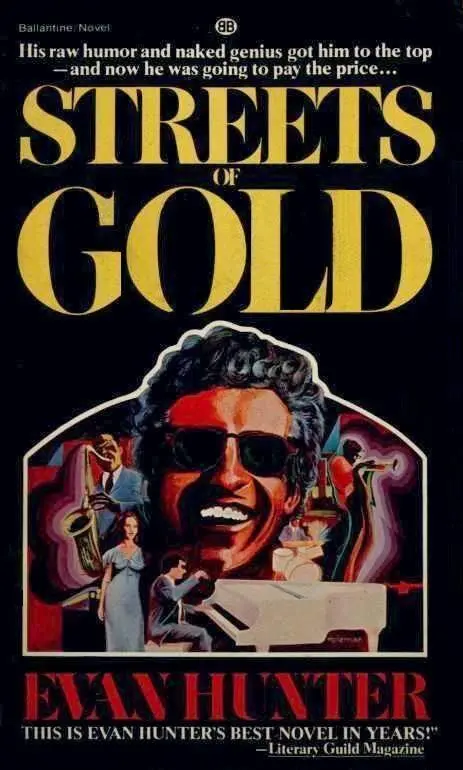
- Название:Streets of Gold
- Автор:
- Издательство:Ballantine Books
- Жанр:
- Год:1975
- Город:New York
- ISBN:978-0-345-24631-8
- Рейтинг книги:4 / 5. Голосов: 1
-
Избранное:Добавить в избранное
- Отзывы:
-
Ваша оценка:
Streets of Gold: краткое содержание, описание и аннотация
Предлагаем к чтению аннотацию, описание, краткое содержание или предисловие (зависит от того, что написал сам автор книги «Streets of Gold»). Если вы не нашли необходимую информацию о книге — напишите в комментариях, мы постараемся отыскать её.
Streets of Gold — читать онлайн бесплатно полную книгу (весь текст) целиком
Ниже представлен текст книги, разбитый по страницам. Система сохранения места последней прочитанной страницы, позволяет с удобством читать онлайн бесплатно книгу «Streets of Gold», без необходимости каждый раз заново искать на чём Вы остановились. Поставьте закладку, и сможете в любой момент перейти на страницу, на которой закончили чтение.
Интервал:
Закладка:
But I could not help secretly wondering what the blonde had meant when she’d whispered, “Hope is the thing with feathers.”
What you should be thinkin’ about are the good things. And they got no thin’ to do with makin’ a lot of gold, or becomin’ famous, or whatever. They got to do with the way playin’ jazz makes you feel... It’s jumpin’ in the middle of the ocean. It ain’t swimmin’ out gradually, it’s jumpin’ right out to where you can’t see no land no more, it’s usin’ everything you know to stay afloat and to swim however far out you think you can, and then like magic you get whisked right back there to shore again, and you wrap it all up with a big yellow ribbon, and there you are, and you feel good and clean and happy all over, and there ain’t many things I know that can make you feel that way in life... there just ain’t many I know of.
And at the piano, I feel that way. Always. I jump in with a four-bar intro, jump into water that’s icy cold and deep, and instantly hear around me the vastness of the ocean closing over my head, darkness meeting darkness, the steady secret pulse of the bass and the high chinging tinkle of the cymbals, deeper and deeper until I know if I don’t surface soon, my lungs will burst; there is terror in this knowledge, and exhilaration, and a sense of omnipotent control — I simply will not drown. Working against the water, and with the water, the water moving gelidly through my fingers, the steady reassuring life-line pulse of the bass thrumming in my ears, I glide in silvery ease to the surface high above, and explode from it in a dazzle of conflicting tactile sensations, sunshine shattering on my upturned face, frigid water sliding in rivulets from my naked body. Arching, hanging between sky and water for a weightless instant, I hold, I hold, and fall again. A bass drum explosion erupts in the deeps, and a flute is suddenly upon me, it glides wantonly by my side, we touch, we move apart, we touch again, the ocean yields to our deeper dive.
The sound of the cymbals trembles over the blackness, the pulse of the bass echoes somewhere very far above. There is limitless freedom in this void, nothing here to stumble upon, nothing to grope for, nothing to obstruct the abandon of our swift, clean descent. The flute has become my guide, and I follow fearlessly and trustingly, uttering small cries of encouragement and approval, marveling at the pure cold logic of our plunge through uncharted waters, delighting in the sheer beauty of the graceful acrobatics we perform together in this fathomless abyss. There are no restraints upon us, we breathe here more deeply than we did on the surface, and the mix we take into our lungs is pristine, a cleaning jolt that suffuses our slippery bodies and propels them recklessly toward the black sands below. At breakneck speed, we glide an inch above the ocean floor on wings of resonating sound. From above, we can hear the nervous consternation of the snare, the imploring whisper of the high-hat cymbals, the relentless bass fiddle pulse, as insistent as the tremor of the ocean itself.
There is no slow, steady, careful ascent, we have no fear of the bends. An instant before, we were enveloped by deepest black, but now we are on the surface, in sunshine, and the muted trumpet lazily lobs fat globules of sound toward us as we skim the surface waves. Like playful and skittish children, we splash through the intricate bubble patterns the trumpet floats before us and behind, the ocean splintering as we dip below its cresting waves to surface again not three feet away, and dip again, and surface again. Dizzily we dive deep below the horizon and burst from the water in surprise. There is the scent of jasmine wafting from a distant shore, the sound of surf tumbling undiscovered sands. Twilight is falling, the trumpet exhales a brassy threnody, a bass string solo ripples the calm surface of the sea. Cool, the night winds are cool. The drum erupts in raucous exuberance, the flute soars upward into the sky like a startled shrieking gull. I follow, I follow and am suddenly alone, swimming in the blackness of a wheeling sky, falling again in headlong descent to the still water below, piercing the surface clean and straight and true, crashing jubilantly into the sea, and appearing magically on the shore not an instant later.
I am breathing hard, and sweating — but I am grinning. Beside me, the flute player says, “ Yeah , man!” and I answer simply, “Yeah!”
My grandfather was seventy-seven years old when he came to see my new house in Talmadge, Connecticut. I sent a Carey Cadillac to pick up him and my grandmother in Harlem. They were living on the corner of 120th and First Avenue, just across the street from the pasticceria . My grandmother wasn’t feeling well; she was having trouble with her legs. She sat in the kitchen with Rebecca, sipping tea, while I showed my grandfather through the house. I knew every inch of that house by heart. I still know it. It is embossed upon my memory like the dots on a Braille sheet of music. I showed my grandfather the huge playroom, where special tables had been constructed for Andrew’s electric train layout, and Michael’s model raceway, and David’s battlefield — he collects soldiers, I told my grandfather, he has these full-scale wars with them all the time.
“ Come tu, Ignazio,” my grandfather said, and chuckled. “Remember when you were small? Your soldiers?”
I took him into the living room, with the massive stone fireplace rising in the center of it, Thermopane sliding glass windows opening onto a terrace and gardens designed by a Japanese landscape architect. He was standing beside me, considering the fireplace.
“It’s crooked,” he said. “Il camino è storto.”
“It’s supposed to be that way, Grandpa,” I said. “The architect wanted one side of it straight and the other slanting.”
“Ah?” he said. “Sì? È vero?”
As we climbed the stairs to the master bedroom, I said, “How’s Aunt Cristie? Does she like the house in Massapequa?”
“Ah, sì, it’s a very nice house, Ignazio. Not like this, but very nice. He’s a hard worker, your Uncle Matt.”
“And Uncle Dominick?”
“He’s all right,” my grandfather said. “You should call him. He was in the hospital a long time, you know. You never called him.”
“I’ve been busy, Grandpa.”
“Ah, sì, we are all busy,” he said. “But your uncle had a heart attack, and you should have called.”
“I meant to,” I said. “This is our bedroom. The Franklin stove was a gift. The builder gave it to us.”
“It’s very nice,” my grandfather said.
“Grandpa,” I said, “is Aunt Bianca all right?”
“Yes, yes, she’s fine. She gives me a headache, but she’s fine. She said to send you her regards.”
“When I saw her at Pino’s funeral...”
“Ah, sì. ”
“... she seemed so frail,” I said.
“Well, she’s not a young woman anymore.”
“Did you want to look at the boys’ room, Grandpa? Or shall we go outside to my studio?”
“Where you work? Yes, I want to see that.”
We put on our topcoats; this was October, and there was an early briskness in the air. As we walked down the slope behind the house toward where the studio was set in a copse of birch trees, I began telling him about the town of Talmadge, Connecticut, which he was not to confuse with Talmadge Hill, a nice small suburb of Stamford. “This is woodsy, exclusive Talmadge,” I said, and smiled.
“Cosa?” he asked.
“That’s what Time magazine called it when they were doing a cover story on one of our famous writers. ‘Woodsy, exclusive Talmadge.’ ”
Читать дальшеИнтервал:
Закладка:
Похожие книги на «Streets of Gold»
Представляем Вашему вниманию похожие книги на «Streets of Gold» списком для выбора. Мы отобрали схожую по названию и смыслу литературу в надежде предоставить читателям больше вариантов отыскать новые, интересные, ещё непрочитанные произведения.


Обсуждение, отзывы о книге «Streets of Gold» и просто собственные мнения читателей. Оставьте ваши комментарии, напишите, что Вы думаете о произведении, его смысле или главных героях. Укажите что конкретно понравилось, а что нет, и почему Вы так считаете.