A. Miller - The Faithful Couple
Здесь есть возможность читать онлайн «A. Miller - The Faithful Couple» весь текст электронной книги совершенно бесплатно (целиком полную версию без сокращений). В некоторых случаях можно слушать аудио, скачать через торрент в формате fb2 и присутствует краткое содержание. Год выпуска: 2015, ISBN: 2015, Издательство: Little, Brown UK, Жанр: Современная проза, на английском языке. Описание произведения, (предисловие) а так же отзывы посетителей доступны на портале библиотеки ЛибКат.
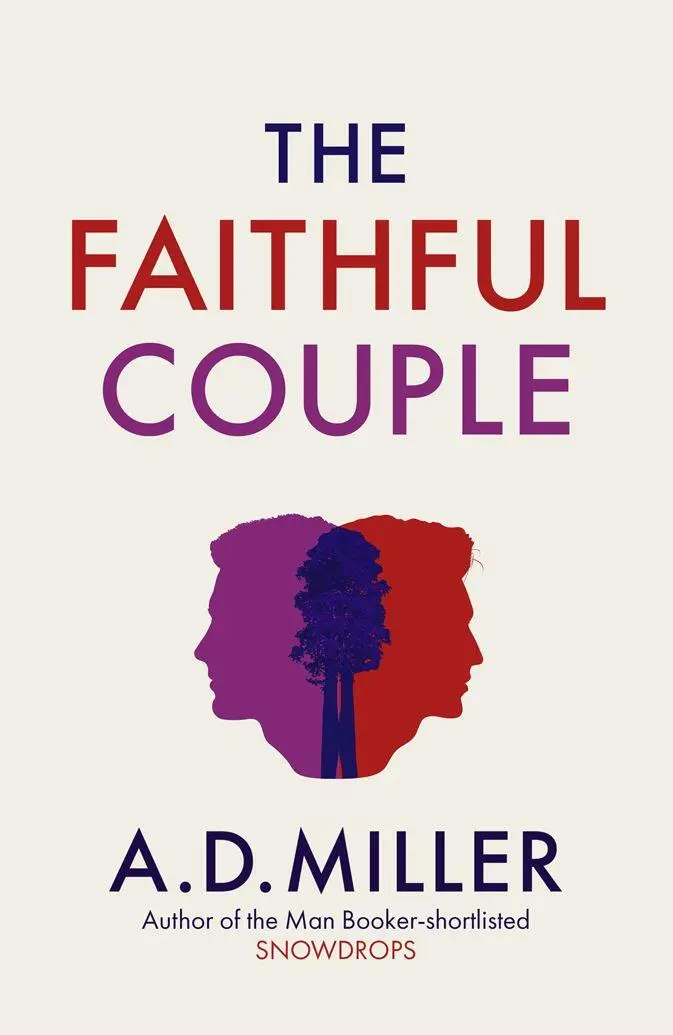
- Название:The Faithful Couple
- Автор:
- Издательство:Little, Brown UK
- Жанр:
- Год:2015
- ISBN:9781408705926
- Рейтинг книги:5 / 5. Голосов: 1
-
Избранное:Добавить в избранное
- Отзывы:
-
Ваша оценка:
The Faithful Couple: краткое содержание, описание и аннотация
Предлагаем к чтению аннотацию, описание, краткое содержание или предисловие (зависит от того, что написал сам автор книги «The Faithful Couple»). Если вы не нашли необходимую информацию о книге — напишите в комментариях, мы постараемся отыскать её.
The story of a friendship built on a shared guilt and a secret betrayal,
follows Neil and Adam across two decades, through girlfriends and wives, success and failure, children and bereavements, as power and remorse ebb between them. Their bifurcating fates offer an oblique portrait of London in the boom-to-bust era of the nineties and noughties, with its instant fortunes and thwarted idealism. California binds them together, until — when the full truth of what happened emerges, bringing recriminations and revenge — it threatens to drive them apart.
THE FAITHFUL COUPLE
The Faithful Couple — читать онлайн бесплатно полную книгу (весь текст) целиком
Ниже представлен текст книги, разбитый по страницам. Система сохранения места последней прочитанной страницы, позволяет с удобством читать онлайн бесплатно книгу «The Faithful Couple», без необходимости каждый раз заново искать на чём Вы остановились. Поставьте закладку, и сможете в любой момент перейти на страницу, на которой закончили чтение.
Интервал:
Закладка:
‘Ten!’ Sam shouted down.
‘Jessica,’ Brian said. ‘Yes.’
‘You go,’ Jess said.
‘Com… ing,’ Neil sing-songed, creaking up the stairs.
He saw Sam’s feet at the bottom of the armchair in Dan’s old room, the point of an elbow jutting out horizontally at five-year-old height, the thin arm rotating as Sam picked his nose. Neil mimed an investigation of Dan’s wardrobe, empty besides some discarded cowboy-check shirts, and, at the bottom, a pile of hoarded school exercise books defaced with obscene sketches. The giraffe lay on the bed.
‘Saa… aam, where are you?’
‘I’m here,’ Sam said, unable to wait any longer. ‘Here.’
Neil lifted Sam in the air and turned him upside down, squeezing him against his chest with one hand and tickling him with the other. You didn’t have to act with a five-year-old: that was one of Sam’s attractions. The mask could come off.
‘Stop,’ Sam laughed, not meaning it, sighing when the laughter ran out.
‘Sam,’ Brian called from the foot of the stairs. ‘Sam, come down. I’m making you a sandwich.’
Jess was sitting in the kitchen. She had a cup and saucer in front of her, an unbitten digestive biscuit (no chocolate) wedged between them. Brian was at the counter, his back turned, spreading. A tableau came back to Neil: his father frying chips, the only thing he had ever cooked for his sons, and only ever when his wife was away, or hospitalised, or otherwise prevented from dispensing the regulation beans on toast, fish finger sandwiches or pasta with supermarket sauce. The potatoes were always cut string-thin, Neil remembered, and he and Dan would sit at the table, watching, as if their preparation were an alchemic rite.
‘There you go,’ Brian said, laying the sandwich on the table.
‘Yuck,’ Sam said.
Later Neil and Jess went up together to check on him. He was splayed on Dan’s bed, one arm dangling over the side, another above his head, that hand clutching the giraffe, legs akimbo, as if he had struggled to the end, like those flailing corpses exhumed from the lava of Pompeii.
‘They’re all cute at that age, aren’t they, though?’ Jess whispered. ‘They peak at three or four, then they turn into fuck-ups and mediocrities like the rest of us.’
‘Shhh,’ Neil said. ‘Don’t.’
She invited or instructed him to move in with her while they were downstairs watching television. Brian was washing up; the urn supervised from the mantel. Neil could activate the break clause in his lease later that autumn, she said. Pointless to waste more money on a separate pad.
‘Jess,’ he said. ‘You know I’ve never… I’m not sure I can.’
‘Don’t worry,’ she told him, ‘I won’t marry you.’
His life was happening.
Adam was only twenty-five when Jim let him go. His tank was still full. He spanked the Civil Service exams, struck the requisite balance between showmanship and modesty at the final-round assessment centre. When he first arrived in Whitehall the atmosphere had been eerie, millenarian. The old ministers were waiting sullenly to be evicted, the bureaucrats openly anticipating new masters; grimy mesh bomb curtains, relics of the Cold War, still shrouded many of the windows. After the general election the organism of state exhaled, and Adam quickly found he liked the private lingo, the security passes and vetting, the sense of being among an elect. He and some of the other fast-streamers spent long, contented evenings in Whitehall pubs, plotting their routes to Grade 7, a rank that would confer higher pay immediately and, they knew, adumbrate future glory, Adam never seriously doubting that he would soon achieve it.
‘If I may?’ he interjected at five minutes past three, shortly after the meeting convened. ‘Might we consider reviving the amnesty?’
Nick said, ‘I’m sure we’ll get —’
‘The amnesty scheme the previous government operated? The evidence now suggests it was quite effective in reducing knife crime where we rolled it out.’
‘Thank you — it’s Adam, isn’t it? Thanks.’
Five past three: a slight violation of protocol, Adam knew. You were supposed to wait until the senior grades had their say, but he had already learned that particular lesson. Ditch the well-bred reticence in meetings. Sequester your credit from predators. Simulate teamwork but make sure you get noticed. These were the principles that his apprenticeship in television had inculcated, tenets of employment that had been as unannounced as most of adulthood’s rules and burdens (taxes, commuting, the many varieties of insurance that, in their household, Adam had somehow become responsible for procuring).
There was a pause before someone from policing, already a 7, said, ‘Stop and search…’
‘Absolutely,’ Nick said, beginning to scribble on his notepad. Two of the other men were smoking, tapping their cigarettes into shallow metallic ashtrays that appeared to have been lifted from McDonald’s.
‘Under the new guidelines…’ the 7 continued.
Actually Adam could use the extra money, the 7 money. The parental subsidies had dried up. ‘Short-term cashflow issues,’ his father had explained. He and Claire were still okay, financially, they were fine for the time being. He must remember that mortgage form.
They were three-quarters of an hour into stop-and-search, it was almost four o’clock, when the 7 said, ‘… the girlfriends too. The girls. I mean, the young women. They often carry weapons for the men. It’s easier for them at clubs and what have you — no pat downs, sometimes they let them bypass the metal detectors. Sixteen, seventeen. Fifteen, some of them.’
Fifteen again. Bad luck. You’re such bullies.
Adam remembered his father teasingly saying to him (he must have been eight or nine), ‘Lollipop, whatever you do, try not to think about pink rabbits digging for treasure at midnight.’ Of course the stricture only made the thinking inevitable. His right hand put down his pen and moved of its own accord to scratch his left forearm.
After stop-and-search Nick delineated the ‘systemic issues’ that had arisen in their external response to the summertime spike in knifings. Nick’s office personality consisted in his blue postman shirts and his martyrly hours, a regime he observed despite the moral claims made by the children in the photos pinned to the partition behind his work station. Or presumably they made such claims. Once, when Adam visited his desk late in the evening, he found Nick playing Space Invaders on his computer.
‘… roll out best practice,’ Nick was saying.
A quarter past four. People were fidgeting and twitching, turning over pages on their notepads and listlessly flicking them back again. They discussed half a dozen policies that no one thought for a microsecond would be implemented. Towards the end someone else, a woman who outranked Adam, revived his knife amnesty idea.
‘One to consider,’ Nick said, and wrote something down. ‘Thanks, Pamela.’
But … Adam opened his mouth but restrained himself. Two weeks before he had been sent up to Manchester for an event at a community centre. He had checked the backdrop for images or slogans that might be embarrassing if cropped by some unscrupulous photo editor; he was helping to marshal the local worthies, party ringers and bored journalists in the audience. The minister was standing nearby, and Adam, proud of his tradecraft and of his vocation, wished him a collegial ‘Good afternoon’. The minister said, ‘Good to see you’, a formula in which Adam had strained to hear a personal recognition, rather than a bet-hedging, not-sure-if-I’m-supposed-to-know-you fob-off.
It was past five when they left the meeting room, as smoked-through as after a night in a pub. Adam returned to his desk and opened the document he was writing on youth justice. He could sense his less ambitious colleagues eyeing each other across the open-plan expanse, the clockwatchers’ stand-off, bags and umbrellas poised for the exit.
Читать дальшеИнтервал:
Закладка:
Похожие книги на «The Faithful Couple»
Представляем Вашему вниманию похожие книги на «The Faithful Couple» списком для выбора. Мы отобрали схожую по названию и смыслу литературу в надежде предоставить читателям больше вариантов отыскать новые, интересные, ещё непрочитанные произведения.





Обсуждение, отзывы о книге «The Faithful Couple» и просто собственные мнения читателей. Оставьте ваши комментарии, напишите, что Вы думаете о произведении, его смысле или главных героях. Укажите что конкретно понравилось, а что нет, и почему Вы так считаете.