Maggie Gee - My Animal Life
Здесь есть возможность читать онлайн «Maggie Gee - My Animal Life» весь текст электронной книги совершенно бесплатно (целиком полную версию без сокращений). В некоторых случаях можно слушать аудио, скачать через торрент в формате fb2 и присутствует краткое содержание. Год выпуска: 2011, Издательство: Telegram Books, Жанр: Современная проза, Биографии и Мемуары, на английском языке. Описание произведения, (предисловие) а так же отзывы посетителей доступны на портале библиотеки ЛибКат.
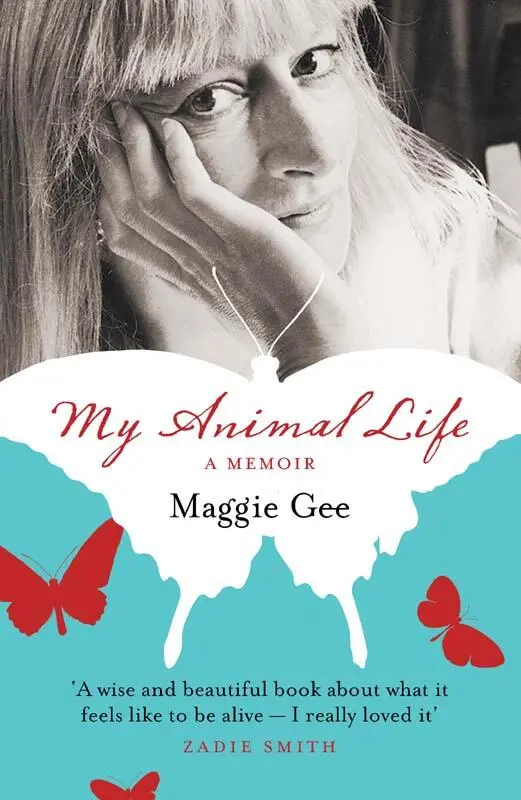
- Название:My Animal Life
- Автор:
- Издательство:Telegram Books
- Жанр:
- Год:2011
- ISBN:нет данных
- Рейтинг книги:4 / 5. Голосов: 1
-
Избранное:Добавить в избранное
- Отзывы:
-
Ваша оценка:
My Animal Life: краткое содержание, описание и аннотация
Предлагаем к чтению аннотацию, описание, краткое содержание или предисловие (зависит от того, что написал сам автор книги «My Animal Life»). Если вы не нашли необходимую информацию о книге — напишите в комментариях, мы постараемся отыскать её.
"Maggie Gee's account of her life as a writer cuts to the bone as she relives triumphs, rejections, despair and renewal. It's a wonderful book, for its boldness and vigour, and for its piercing honesty."-Claire Tomalin
How do you become a writer, and why?
Maggie Gee's journey starts in a small family in post-war Britain, a long way from the literary world. At seventeen, Maggie goes, a lamb to the slaughter, to university. From the 1960s onwards she lives the defining events of her generation: the coming of the Pill and sexual freedom, tremors in the British layer-cake of class and race. In the 1980s, Maggie finally gets published, falls in love, marries, and has a daughter-but for the next three decades and beyond, she survives, and sometimes thrives, by writing. This frank, bold memoir dares to explore the big questions: success and failure, sex, death, and parenthood-our animal life.
Maggie Gee
My Animal Life — читать онлайн бесплатно полную книгу (весь текст) целиком
Ниже представлен текст книги, разбитый по страницам. Система сохранения места последней прочитанной страницы, позволяет с удобством читать онлайн бесплатно книгу «My Animal Life», без необходимости каждый раз заново искать на чём Вы остановились. Поставьте закладку, и сможете в любой момент перейти на страницу, на которой закончили чтение.
Интервал:
Закладка:
I was ready with good advice, as usual. ‘You need a niche somewhere,’ I said. ‘Something that isn’t me, or writing. I think that men need somewhere to go.’ I must have based that idea on my father, who set off every morning at half-past eight. I wasn’t entirely wrong, as it happened, but in another sense I was completely blind, for there was something else that we both needed, which stared us in the face, and only I couldn’t see it, something that was happening all around us in the dazzling display of plants and animals.
Ever since we had been a couple, we had used contraception, but Nick had long ago suggested I come off the pill, and he was right, for I had been on it for a decade. We had never taken risks; I’m a cautious person, who likes to make logical decisions. I had told him when we married that I didn’t want children, because I thought they would stop me writing, and he seemed surprised, but he didn’t argue. (Of course I didn’t know what I was saying. He was probably right to take no notice. I was just reluctant to grow up.)
One day we were making love in the daylight, with the curtains open and sun streaming through. It was the very end of my period, which was safe, but not entirely safe. It was time for him to put a condom on, and I thought he would, but suddenly he didn’t, he came inside me naked as the day, and I didn’t entirely want to stop him, and I didn’t stop him. Heat, blue sky, the avid spring of Portugal. We lay there, spent, in the gaze of the window, with the blank panorama, the tall chimney, the nest where small dark outlines tussled and wrestled, gaping their tiny beaks at the sky, trying to feed from the awkward white bird which hovered above them, wings sighing with longing as it beat, beat at the April air. Slowly, our breathing and heartbeats steadied; we thought we were the same as before; we dozed and dreamed and idly bickered; we might not get to the sea today. But in fact, something fundamental had happened, and we weren’t drunk, and we had both assented, though the impetus, the boldness, came from him. It was the first time in seventeen years of love-making that I’d given my body the least chance of getting pregnant.
But I soon forgot. It didn’t happen again.
Back home, back in the world, a lot was going on. In Iran, Jimmy Carter lost patience over US hostages and sent in a plane to get them out; the mission failed; the situation worsened. Faber accepted Nick’s book, with some edits, and he started teaching in a language school. He paid for me to go to a hotel in Eastbourne to get on with a thriller I had planned, called Grace , whose dénouement took place in that Victorian resort. I had a narrow single room which looked over the sea, a tamer, greyer sea than Portugal’s. Spring was coming, even here, but everything seemed sour and grim; I missed Nick; what I wrote was dull.
Then two critical events made us all long for dullness. In the USSR, the Chernobyl reactor released its deadly plume of radiation. For days the news was obsessed with the disaster as wind spread the blight all over the world. It would be in berries and reindeer flesh, but also in birds’ eggs, cows, milk. There seemed no way that you could escape it. Some people advocated iodine as prophylaxis; I bought it, but then read somewhere else that it was more dangerous than the radiation. I felt desperate, actually; the planet had been poisoned, the natural world that I loved so much, the glory we had just seen in Portugal. And then there was more news in hushed, urgent voices. One night America bombed Libya, and the planes had flown from bases in Britain. At night I heard engines of planes flying over, bearing down on my narrow hotel room, my single bed. It reminded me of the terrors of my girlhood. Would retaliation come our way?
And two things happened closer to home. The food at the hotel became sickening. There was too much fat in everything. I couldn’t eat it. It made me sweat, though I loved my food, and I’d loved hotels since my childhood when I wished we were richer, so we needn’t go camping. But I didn’t feel well. The stairs made me breathless. There was definitely something wrong with me … I must be ultra-sensitive to radiation.
Then I found a small lump on my right breast. It was there, then it wasn’t, I’d imagined it; and then it was definitely there, in the morning, hard and flat, like a sequin or lentil. OK, I had cancer. Dread fear of death. How quickly Chernobyl had done for me. (In fact, it was nothing, just a fibroadenoma, a meaningless lump that goes away on its own, though of course I did not know that then.) My period came, pale and sickly, and then another just as thin and wan while I pushed myself drearily on through the novel, guiltily aware how much this stay was costing. I didn’t want to worry Nick by telling him all this.
But spring, impervious to radiation, was brightening the Sussex coast. Suddenly, it seemed, the sea was blue. The corporation flower-beds bloomed overnight, a festive banner of scarlet primulas, golden daffodils, sea-blue hyacinths stretched along the front outside my window. I walked up the road towards the cliffs. I was feeling better, but still slightly breathless. The tiny, disquieting lentil was still there, but now my breasts were doing something different: they ached and were tender. It wasn’t unpleasant, it was sensuous. A swelling feeling like the sea and the blossom. I felt mysteriously happy.
Something struck me. I stopped in mid-step. It couldn’t be. Could it? Was it possible? I did a pregnancy test in the bleak hotel bathroom. Two clear blue lines stood like staves in two windows. They said I was pregnant. I stared at myself, an uncertain new face in the bathroom mirror. I had to take it in, now, here, alone, before I talked to Nick or my mother. Everything looked different. The words had gone missing. Two halves of a sentence came glassily together, something impossible I could not say.
I Maggie Gee. The pale face in the mirror, married but essentially still on my own. I had always been this . I was thirty-seven.
I Maggie Gee was going to have a baby.
Why do I write?
dancing
About two months before Rosa was born, the reality of caring for her came home to me. My days would change. She would always be there. How would I ever write again?
I asked another woman writer, who said, ‘Don’t worry. My baby slept in a basket on the floor.’ Fortunately I didn’t believe her, as Rosa hardly slept, in the day, from the beginning.
This baby had already revolutionised our lives. Because of her, because we had to be grown up, we were trying to buy our first property, a two-bed flat in Kensal Green, though there were problems with the freehold, and asbestos in the cupboards. Buying a flat meant we had to earn more money. Nick had acquired a desirable temporary contract as a scriptwriter at the BBC, which with luck would continue, but he wouldn’t be around to look after Rosa, and I would still need to earn money of my own (it is a point of pride that since 1982, when I became a full-time writer, I have always paid my share of the bills). That meant I would have to re-energise the thriller, Grace , that I had slowly and dreamily completed while pregnant, longhand in a lined notebook. There was a lot to be done, but the hormones made me sleepy. With a month to go, we moved in to the flat, the first place we had had entirely to ourselves, with no live-in landlady, no shared bathroom.
(Here I need another brief aside on friendship, which will take me from 1979, when I arrived in London, to 1986, when Rosa was born. Because our former ‘landlady’, Grania, cannot just be called a landlady. She was a rare spirit who became a friend, her blue Georgian house full of books and paintings, an Irish intellectual who had been to Oxford and worked in a hospice because she believed in it. It was she who had said, hearing we were to get married, ‘Well there is another room free, you know. Nick could have it, if you like.’ It hadn’t occurred to us to live together. We really were babes in the wood, I think now. I had sent this information to my aunts and uncles: ‘We’re going to get married, but not live together’—but of course, the root cause was, we had nowhere to live. He was renting a cupboard-sized room in Paddington, I was Grania’s tenant in Camden Town. Then Grania stepped in, mild, amused, with her offer of a room on the floor above mine. Of course he would like it. Yes, yes! Would we have stayed together, had we not lived together?
Читать дальшеИнтервал:
Закладка:
Похожие книги на «My Animal Life»
Представляем Вашему вниманию похожие книги на «My Animal Life» списком для выбора. Мы отобрали схожую по названию и смыслу литературу в надежде предоставить читателям больше вариантов отыскать новые, интересные, ещё непрочитанные произведения.



Обсуждение, отзывы о книге «My Animal Life» и просто собственные мнения читателей. Оставьте ваши комментарии, напишите, что Вы думаете о произведении, его смысле или главных героях. Укажите что конкретно понравилось, а что нет, и почему Вы так считаете.