Rabih Alameddine - The Hakawati
Здесь есть возможность читать онлайн «Rabih Alameddine - The Hakawati» весь текст электронной книги совершенно бесплатно (целиком полную версию без сокращений). В некоторых случаях можно слушать аудио, скачать через торрент в формате fb2 и присутствует краткое содержание. Год выпуска: 2009, Издательство: Anchor, Жанр: Современная проза, на английском языке. Описание произведения, (предисловие) а так же отзывы посетителей доступны на портале библиотеки ЛибКат.
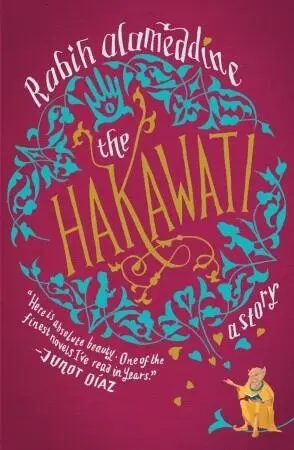
- Название:The Hakawati
- Автор:
- Издательство:Anchor
- Жанр:
- Год:2009
- ISBN:нет данных
- Рейтинг книги:4 / 5. Голосов: 1
-
Избранное:Добавить в избранное
- Отзывы:
-
Ваша оценка:
The Hakawati: краткое содержание, описание и аннотация
Предлагаем к чтению аннотацию, описание, краткое содержание или предисловие (зависит от того, что написал сам автор книги «The Hakawati»). Если вы не нашли необходимую информацию о книге — напишите в комментариях, мы постараемся отыскать её.
, or storyteller, and his bewitching tales are interwoven with classic stories of the Middle East. Here are Abraham and Isaac; Ishmael, father of the Arab tribes; the beautiful Fatima; Baybars, the slave prince who vanquished the Crusaders; and a host of mischievous imps. Through Osama, we also enter the world of the contemporary Lebanese men and women whose stories tell a larger, heartbreaking tale of seemingly endless war, conflicted identity, and survival. With
, Rabih Alameddine has given us an
for this century.
The Hakawati — читать онлайн бесплатно полную книгу (весь текст) целиком
Ниже представлен текст книги, разбитый по страницам. Система сохранения места последней прочитанной страницы, позволяет с удобством читать онлайн бесплатно книгу «The Hakawati», без необходимости каждый раз заново искать на чём Вы остановились. Поставьте закладку, и сможете в любой момент перейти на страницу, на которой закончили чтение.
Интервал:
Закладка:
“Elie.” I repeated his name in hopes of calming him. “Have you been sleeping all right?”
“What a stupid question. I haven’t had a good night’s sleep in years. Do you think it’s easy? You escaped. You ran away. The rest of us can’t. We’re not all like your family. When things get rough, they go to the mountains — or, better, they go to Paris. Your house gets destroyed, you buy another, or two. All I can do is kill, kill, kill.”
I drank the rest of my Heineken in one long gulp. “Have you run over someone with a Range Rover lately?”
“Two of them, ran over them twice, but I wish I had a Range Rover, because then they’d be dead instead of in the hospital. If I had a four-wheeler, everything would run smoother.”
I slid off my barstool and started to leave, but Elie grabbed my arm. “Wait,” he said, “I have a good story for you,” and he plunged off into uninterruptible jabber territory. “We weren’t ready. In principle, we should have been. We used to use it as a threat: The Israelis are going to invade. The Israelis are going to invade. We didn’t really believe it. We also thought that if they did the Syrians would stand in their way. After all, that was why they were here. But the second the invasion began, the Syrians started running and hiding like the dogs they are. It was left to the Palestinians and us to fight. The glory of the left. For Trotsky, Che, and all that. My men ended up on the beach trying to stop the Israelis from landing troops there. There were so few of us compared with them. We had to do it in six-hour shifts. It was exhausting. Having to be one hundred percent on your guard for six hours was deadly.” I pulled my arm away, and he panicked. “Wait, wait, I’m getting to the strange part of the story. So, one day — we’ve been doing this for about a month, everyone was exhausted and psychotic — I finished my shift at noon and was going to take a shower and force myself to sleep, but then a jeep full of Palestinian commandos stopped next to me, and a friend of mine tells me to get in. I tried to tell him that I wanted to shower and sleep, but he wasn’t buying it. They were going to see a movie, and I was coming with them. A movie.
“Well, the only working movie theater, running on generators, is the Pavilion, which was showing nothing but porno. My friend even bought my ticket. We walked in, and the theater was completely full of guys with rifles and machine guns. The ones in the seats had theirs leaning against the seats in front of them, and there were probably a hundred guys standing with their weapons propped against the walls. There must have been more than six hundred fighters in that theater, all completely engrossed in four couples fucking around a pool in Beverly Hills. All of them, and I mean all, had their pants open, their dicks out, whacking off to the unfolding American dream on the screen.”
I closed my eyes and shook my head.
“I need money,” Elie said.
“I figured,” I replied, but he wasn’t listening.
“I want to get out of here. I want to have a family, kids. You know, the normal life. I can’t do it in Beirut now, so I have to go away, maybe the Gulf or Brazil or Sweden, somewhere nice. I need money. Can you get me some? Ask your father. Tell him for old times’ sake.”
“For old times’ sake?”
“Yes,” he said. “I always respected him.”
“It wouldn’t do any good. I’d have to ask Lina. She’s the one who’s in charge now.”
“Oh.”
“She’s the one who runs the company.”
“Oh.”
“Do you want me to ask her?”
“No. I don’t think that’s a good idea, definitely not. I’m not crazy.”
By the time my sister began work, the dealership had moved to the safer suburbs — safer, but not safe. The danger was not a physical one. The company was apolitical, and even militias needed cars every so often. What was unsafe was that the company was profitable, maybe not as much as it was in the years before the war, but enough to tempt a few unscrupulous mafiosi, otherwise known as Lebanese political leaders. For a while, cuts had to be paid to various powerbrokers for every car that was sold. During one of the numerous peaks of the war, the bey walked into the company’s offices and offered protection. In exchange, he would buy into the firm for 20 percent of the net profits. Of course, he couldn’t pay anywhere near full price for his share, what with the country’s precarious financial situation and all. The bey became a partner in the Lebanese dealership. Had my father still cared about his company, that fact alone would have killed him. Unfortunately for the bey, it wasn’t a successful investment. By the time the current bey succeeded his father, he was the main shareholder in a company that wasn’t the cash cow it used to be. Their family had spent a fortune investing in the corporation, and our family had long ago sold out of it. A bad deal.
My sister was a good businesswoman, but her true talent lay in understanding human hunger. Everyone in the family had become rich, which meant there was no one left who had the drive to keep the company successful. Slowly, she began to disinvest, breaking up the various dealerships and selling them. She sold the last dealership, the one in Kuwait, four months before the Iraqis invaded. There were many good reasons for selling off the company bit by bit. My sister correctly understood that other companies would mimic the Nissan and Toyota plan, and the market would soon be glutted with competition. The gold mine of my father’s day had turned silver in hers. And she quickly got tired of constantly having to pay people off so she could do her job. In essence, she had to bribe partners to let her make money for them. It wasn’t just the bey. She considered him small change. In every country, the company had to have a local partner who did nothing but sit back and rake in money.
“Look,” she once said, “I’m not averse to bribing, but after a while, you have to say enough is enough. I decided that when I turned forty I wanted to look in the mirror and not feel any guilt or remorse about the way I’d lived my life. I know it sounds silly, but I felt that running the company was nibbling at my soul. I waited for the right time for each division and found the buyers. On my fortieth, I’d been free for years, and I ran to the mirror to check. And you know, I wish I’d seen guilt or remorse. They would have distracted me. On my fortieth birthday, looking in the mirror, I couldn’t see anything but goddamn wrinkles.”
Eighteen
Two days after her arrival and my mother still looked tired; jet lag did not become her. To the uninitiated eye, she looked well enough, maybe needing a bit of rest, but one had only to look at the weary eyes, the dollop of extra foundation under them, to see that she wasn’t as robust. My father’s gaze fixed upon her as she poured herself a glass of water. And we had a dinner to go to.
“You don’t have to come if you’re tired,” I told her. We sat in my kitchen, midafternoon. “It’s a casual dinner. Clark only wants to meet you. I can ask that we do it later.”
In the fifteen years since I’d lived in Los Angeles, my parents had visited me three times, but this, in 1992, was the first since I had bought my new house. My father had met Clark, my supervisor. He had wanted to. Since he didn’t understand much about computers, he equated programming them with magic, and he wanted to meet the arch-magician, the high priest of binaries. And now Clark had suggested he give a dinner for my parents in order to meet my mother, whom he had heard so much about.
“Don’t be silly,” she said. “I’ll be fine after a nap. He’s your boss. It can’t be that casual.”
Читать дальшеИнтервал:
Закладка:
Похожие книги на «The Hakawati»
Представляем Вашему вниманию похожие книги на «The Hakawati» списком для выбора. Мы отобрали схожую по названию и смыслу литературу в надежде предоставить читателям больше вариантов отыскать новые, интересные, ещё непрочитанные произведения.









Обсуждение, отзывы о книге «The Hakawati» и просто собственные мнения читателей. Оставьте ваши комментарии, напишите, что Вы думаете о произведении, его смысле или главных героях. Укажите что конкретно понравилось, а что нет, и почему Вы так считаете.