Madeleine Thien - Dogs at the Perimeter
Здесь есть возможность читать онлайн «Madeleine Thien - Dogs at the Perimeter» весь текст электронной книги совершенно бесплатно (целиком полную версию без сокращений). В некоторых случаях можно слушать аудио, скачать через торрент в формате fb2 и присутствует краткое содержание. Год выпуска: 2012, Издательство: Granta Books, Жанр: Современная проза, на английском языке. Описание произведения, (предисловие) а так же отзывы посетителей доступны на портале библиотеки ЛибКат.
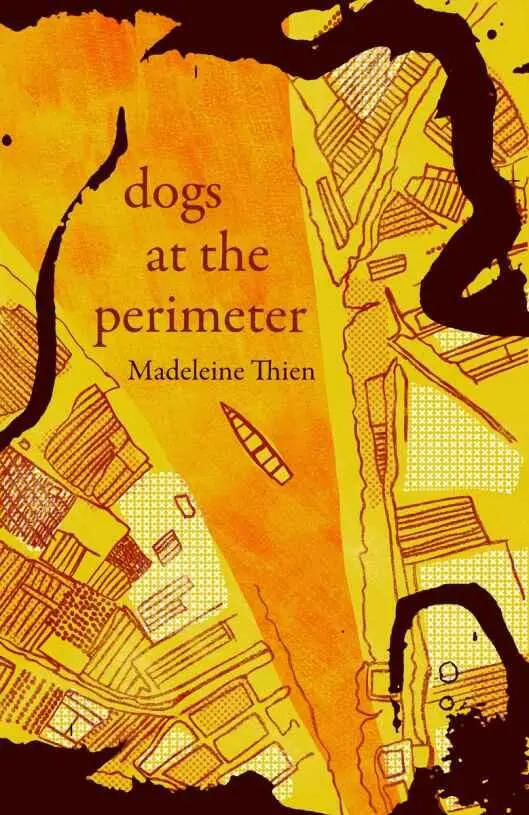
- Название:Dogs at the Perimeter
- Автор:
- Издательство:Granta Books
- Жанр:
- Год:2012
- ISBN:нет данных
- Рейтинг книги:4 / 5. Голосов: 1
-
Избранное:Добавить в избранное
- Отзывы:
-
Ваша оценка:
Dogs at the Perimeter: краткое содержание, описание и аннотация
Предлагаем к чтению аннотацию, описание, краткое содержание или предисловие (зависит от того, что написал сам автор книги «Dogs at the Perimeter»). Если вы не нашли необходимую информацию о книге — напишите в комментариях, мы постараемся отыскать её.
We journey back thirty years from the moment of his vanishing to Janie as a young girl in Phnom Penh, where Cambodia is ruled by the brutal Khmer Rouge. People are seized in the night, families are torn apart, and hunger is everywhere. Helped by a defector, Janie escapes by sea, and arrives in Canada as a refugee. In Montreal, she meets Hiroji — whose brother James, a Red Cross doctor, disappeared in Cambodia in 1975 — and who, like Janie, is haunted by the many lives we carry within ourselves, and the unwieldy shards of history that we make efforts to displace, but fail to extinguish.
Weaving together these fragments in clean, luminous prose, Dogs at the Perimeter is a remarkable, unparalleled map of the mind's battle with memory, loss, and the unspeakable horrors of war.
Dogs at the Perimeter — читать онлайн бесплатно полную книгу (весь текст) целиком
Ниже представлен текст книги, разбитый по страницам. Система сохранения места последней прочитанной страницы, позволяет с удобством читать онлайн бесплатно книгу «Dogs at the Perimeter», без необходимости каждый раз заново искать на чём Вы остановились. Поставьте закладку, и сможете в любой момент перейти на страницу, на которой закончили чтение.
Интервал:
Закладка:
Everyone is searching. Everyone is looking into every passing face and wondering if the next person along the road will be the beloved, the dreamed of. Maybe this life is the dream. If gods existed, he would still be waking up to the sound of her moving through the apartment. Here she is now, coming into the room to wake him. Here she is.
“I’m a selfish Buddhist,” she had told him once. “Something of me will return, something will come around and around forever, but it won’t be Sorya. I have only this one chance.”
He travelled on, chasing a rumour of Dararith, to the Laos — Cambodian border where caves slip into one country and out the other. He, too, had hidden here for several months after running away from his work unit, they had been cutting trees in the forest when he attacked the lone cadre and left him for dead. Now he hardly remembers that he killed a boy. It is difficult to move during the rainy season. He can guess the date of his son’s birthday. Small children, he knows, were sent to America, to France, they took flight to places he can’t imagine, or they persevered, here, like Joe. They sold things or sometimes they sold themselves. The jungle has invaded the cities but now the hungry people are cutting it back. They are skinning the trees again and eating the bark. From place to place he defaces the walls with a black marker, Khmer words, Khmer letters: Sorya Dararith James. You can follow the trail but you can’t know in which direction you are headed, down to the end, or reversing, forever, to the beginning.
Hiroji

Monday, March 6
[fragment]
It is April 1976. A burning hot day and the sky so delicate a blue, the white sun will surely burn the colour off. Hiroji should have sunglasses but he lost them in a Bangkok government office where an official with concerned eyes hid them under an airmail envelope, distracting Hiroji with instructions to another border town, where the sixth and hopefully final permit could be obtained. He should have said something, he should have snuck his hand under the envelope and retrieved his sunglasses, but he didn’t. He could only sit, dazed by the heat and the man’s shy audacity, and watch.
Now, a half-dozen permits later and several months gone by, he stands on the Thai side of the border and stares across a narrow river into Cambodia. When Phnom Penh fell to the Khmer Rouge, the airport was in ruins. A year later, and it hasn’t reopened. There’s been no word from his brother in all that time, not a letter, not a clue. James has been wheeled into another room but the room itself has disappeared. On the opposite bank, the Cambodian side, blistered grass unrolls, folding up into stark mountains. The heat is dizzying. He shifts his feet on the dry ground, blinks the sweat from his eyes, and tries to comprehend what he’s seeing. A black-clothed boy, the Khmer Rouge guard, stands alert at the end of a one-lane bridge, his Kalashnikov leaning against his fingertips, barrel up. The border is eerily quiet and then, abruptly, gunfire sounds. Khmer Rouge soldiers arrive. They gaze disdainfully across the border, at Hiroji. When they depart, one remains, like a black feather fallen from the crow.
Soon the rainy season will arrive and it will be nearly impossible to travel in the flooding. Even James won’t be able to manage it. Hiroji paces the border. In his head, he adds up his expenses: how much cash he needs to stay another month, another two months. How much for a lift to the next refugee camp, from Sa Kaeo to Aran, and farther north. Fees and living expenses for September, when he must return to university. The return flight, all his bills. He paces until the sun has burned a headache deep behind his eyes. It’s a twenty-minute walk back to Aranyaprathet, a long walk through wrinkled scrub and gnarled trees, behind tin shacks, beside military trucks that shake the road and heave the dust up. He walks slowly because he is still not used to the heat. In all his life, he has never felt so powerless.
—
Aranyaprathet smells of overripe pineapples and mangy dogs. Beside his guesthouse, a shrill, dead-eyed woman tries to sell him Buddha heads. She scratches at him with her fingernails, tugs at his clothes, alternately whispers and barks at him until, finally, he chooses one, a sleepy bodhisattva with its eyes half-open, cold against his fingertips, too light for this world. The old woman clucks reassuringly, scratching the bills together, she drums them on the surrounding objects, holds the money up against her forehead, smiles generously.
Upstairs, inside his room, he sets the bodhisattva on the desk, inside the square of sunshine floating through the window. He removes, from his shirt pocket, two colour photographs of James, damp from his sweat, and lays them on the desk to dry. Hiroji sits on the edge of the bed, thinks of making tea, thinks of calling his mother, thinks of an empty stairwell in the School of Medicine at the University of British Columbia, the carpet of grass out front, where he used to read and watch the girls go by. Objects in the hotel room begin to disconnect from one another, first the mirror turns away, then the table stutters toward the door, then the walls come apart. The bodhisattva falls face down as if to kiss the earth, he’s so tired and he hasn’t slept in days. Hiroji blinks his eyes. It’s his birthday, today or tomorrow depending on the time zone, and he wonders if the party (the non-existent party) will bring him gifts or money, plans for the future, or just fond memories.
A rattling at the door bothers him. He watches the knob turn of its own accord, the door jumps open and a face appears at the level of the table: furtive eyes, a heavy frown. The Cambodian boy, Nuong, comes into the room, exhales a jumble of Khmer words. His flickering hands clutch his stomach.
“I’m sorry,” Hiroji says, ashamed. “I lost track of time.”
Nuong looks at him, wide-eyed and anxious.
“Okay. Let’s go.” Hiroji returns the photographs to his shirt pocket and they descend. Nuong, hunched like a shrivelled leaf, hurries quickly along the road.
At their regular place, they step through a windowless wall, drop down onto red plastic chairs. A long-faced man brings them two bowls of noodles, they arrive in a bouquet of steam. Hiroji removes his glasses and lays them, arms open, on the table. It’s crowded in the restaurant this morning. Men in undershirts snap their newspapers back, hold them high like flags. The regulars nod at him: Thai Red Cross and usaid workers, gamblers, black market profiteers, foreign service officers, stringers for ap, afp, Reuters, stringers as the conscience of the world, here for a few days before pulling out. The owner has a bird in a bamboo cage, the cage covered by a thin sarong. The bird chortles in its private darkness.
Hiroji closes his eyes, rubs the dust and wetness from them. He isn’t upset, just tired, but Nuong, his mouth bursting with noodles, stares at Hiroji in shocked sadness.
“Allergies. I have allergies,” Hiroji says, even though the boy doesn’t understand much English.
To trick the sadness from Nuong’s eyes, he pushes his food toward the boy. Nuong accepts. In minutes, the noodles are gone.
“They won’t confiscate your food,” Hiroji says, but the boy just looks up at Hiroji expectantly.
After lunch, Hiroji stops in at the makeshift Red Cross office, where a terse woman his mother’s age operates the Xerox machine, telling him, as it spits out posters, that his bill is running high and he should clear his account, then she disappears behind a stubble of folders. He takes the posters out of the machine. By the time he carries them outside, the sheets are already moist from the sweat on his hands.
Читать дальшеИнтервал:
Закладка:
Похожие книги на «Dogs at the Perimeter»
Представляем Вашему вниманию похожие книги на «Dogs at the Perimeter» списком для выбора. Мы отобрали схожую по названию и смыслу литературу в надежде предоставить читателям больше вариантов отыскать новые, интересные, ещё непрочитанные произведения.









Обсуждение, отзывы о книге «Dogs at the Perimeter» и просто собственные мнения читателей. Оставьте ваши комментарии, напишите, что Вы думаете о произведении, его смысле или главных героях. Укажите что конкретно понравилось, а что нет, и почему Вы так считаете.