Madeleine Thien - Dogs at the Perimeter
Здесь есть возможность читать онлайн «Madeleine Thien - Dogs at the Perimeter» весь текст электронной книги совершенно бесплатно (целиком полную версию без сокращений). В некоторых случаях можно слушать аудио, скачать через торрент в формате fb2 и присутствует краткое содержание. Год выпуска: 2012, Издательство: Granta Books, Жанр: Современная проза, на английском языке. Описание произведения, (предисловие) а так же отзывы посетителей доступны на портале библиотеки ЛибКат.
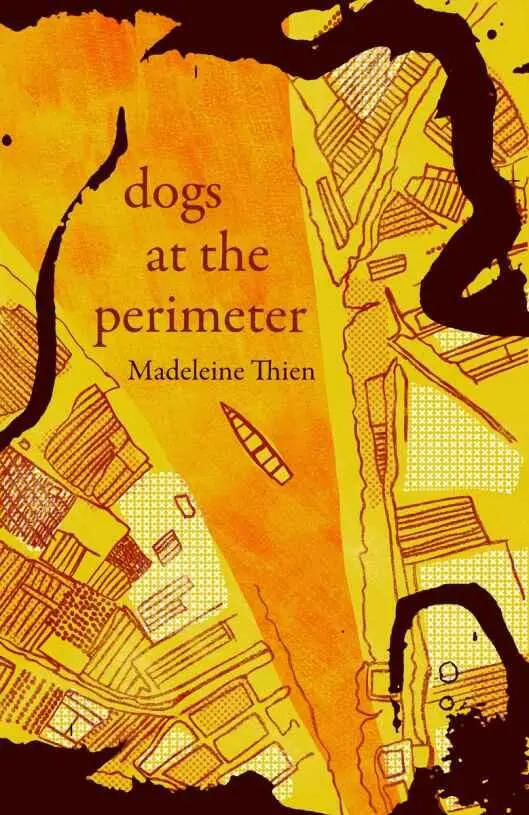
- Название:Dogs at the Perimeter
- Автор:
- Издательство:Granta Books
- Жанр:
- Год:2012
- ISBN:нет данных
- Рейтинг книги:4 / 5. Голосов: 1
-
Избранное:Добавить в избранное
- Отзывы:
-
Ваша оценка:
Dogs at the Perimeter: краткое содержание, описание и аннотация
Предлагаем к чтению аннотацию, описание, краткое содержание или предисловие (зависит от того, что написал сам автор книги «Dogs at the Perimeter»). Если вы не нашли необходимую информацию о книге — напишите в комментариях, мы постараемся отыскать её.
We journey back thirty years from the moment of his vanishing to Janie as a young girl in Phnom Penh, where Cambodia is ruled by the brutal Khmer Rouge. People are seized in the night, families are torn apart, and hunger is everywhere. Helped by a defector, Janie escapes by sea, and arrives in Canada as a refugee. In Montreal, she meets Hiroji — whose brother James, a Red Cross doctor, disappeared in Cambodia in 1975 — and who, like Janie, is haunted by the many lives we carry within ourselves, and the unwieldy shards of history that we make efforts to displace, but fail to extinguish.
Weaving together these fragments in clean, luminous prose, Dogs at the Perimeter is a remarkable, unparalleled map of the mind's battle with memory, loss, and the unspeakable horrors of war.
Dogs at the Perimeter — читать онлайн бесплатно полную книгу (весь текст) целиком
Ниже представлен текст книги, разбитый по страницам. Система сохранения места последней прочитанной страницы, позволяет с удобством читать онлайн бесплатно книгу «Dogs at the Perimeter», без необходимости каждый раз заново искать на чём Вы остановились. Поставьте закладку, и сможете в любой момент перейти на страницу, на которой закончили чтение.
Интервал:
Закладка:
Prasith turned.
My brother stood beside me.
The boy’s tone was mocking. “Are you?”
Sopham clasped his hands together. I willed him not to speak, not to show himself. “Yes,” he said evenly. “I’m not afraid of my brothers.”
Prasith stared, and then laughed. He held the shovel out. “Do your brother a favour,” he said, “and finish our work.”
Calmly, Sopham took the shovel and walked to the centre of our garden. I watched all the roots, all the seeds, come loose.
Prasith began trailing us across the fields. He would ramble excitedly. One moment sincere, the next, sly.
“If you want to be strong,” he said one day, “you have to become someone else. You have to take a new name.
“For instance,” he said, nodding at me, “you should take the name Mei.”
I stared, bewildered. We had been up since dark, digging canals to irrigate the fields. In a little while, we would be called back to work. Six more hours of digging and shifting soil.
“ Mei, Mei ,” he sang. The name, a common one, meant “lovely, beautiful.” His eyes were half-closed, heavy-lidded. “See this?” He lifted his shirt to reveal an unhealed scar. “This is shrapnel.”
My brother made a noise of disgust.
I averted my eyes.
“Shrapnel,” Prasith repeated, watching me, letting his shirt fall.
My brother had glimpsed a frog and now he dropped to his hands and knees. The tall grass shifted around him.
“B-52s,” Prasith said. “ Whomp-whomp-whomp , like that, everywhere.” He tilted his head back and stared at the sky as if it might fall down on us. “The light, it breaks. It breaks people open as if they’re dogs or dirt. I looked up and there were no houses, no people. Just this hole.”
Shyly, he bowed his head. “I’m important here. But, really, not even Kosal has any power. Me or him, it’s like using an egg to break a stone.”
I couldn’t understand. “But who decides?”
Prasith smiled.
I persisted. “Who’s the stone?”
“Too slow, too fast, here’s the stone now.” He swung a bit of rope in the air, laughing at me. “Here it comes. What can you do to stop it?”
My brother stood up. He held the frog by its dark, crooked legs and then swung it, hard, against a rock. “Too late,” my brother said. “Too slow.”
The animal in Sopham’s hand convulsed.
I looked at it, sickened, starving. We could almost see through the frog’s skin, to its lungs and guts. Slowly, pitifully, its feet beat against nothing. I turned away. To hide the trembling in my hands, I kept walking, kept moving. When I turned back to look for my brother, I saw Prasith’s cooking fire, their two heads bowed together and white smoke that coursed into the sky.
I stood watching until they stood up, until they kicked the fire out.
That night, my brother showed me the treasure Prasith had given him. Two eggs, impossible things. We shared the first and gave the second to our mother. She ate it slowly, gratefully, her eyes closed, chewing the egg and then the shell itself. She told us that she had dreamed about our father. Pa had come with a knife, she said. He had cut us free.
Before we slept, my brother tied our wrists together, the way Prasith had taught him, so that if one of us were taken, the other would wake.
When Prasith restrained the boy, he didn’t resist. This is the way my brother described it to me. The boy, Tao, the eldest son of the machinist, had stood there, motionless. My brother stared at the ground. Prasith had given him new sandals to wear, and they felt heavy and unfamiliar to him, the rubber hot from the sun.
Calmly, Prasith took his own krama and tied it tightly around the boy’s face. It choked Tao’s breath and he stumbled and fell forward. Against his skin, the fabric of the krama grew dark with sweat or tears.
“Do you feel pity, Sopham?”
The air had become cold, Sopham told me. The sky, the colours, the feel of the air, the breath in his lungs, even the passing seconds were cold. My brother could feel the older boy watching him.
When Tao’s mutilated body lay between them, Prasith cleaned his knife carefully in the grass.
“I used to think it was strange,” Prasith said, “even terrible, but now I understand how it is.” There was a shivering in his voice. “We have to let the sand wash away so that everything that remains will be clearer, stronger.
“No one will ever invade our country again. No more fighting, no more wars. Do you see? We’re nothing but waterways. Nothing but drops of water.” He was staring at Sopham so intensely, my brother had the sensation that the edges of his body were being sheared away.
“Your father was a translator, wasn’t he?” Prasith said. “I think you went to Chatamukh School. Maybe there’s some part of you that remembers me.”
My brother studied the body, the soft creases of Tao’s clothing. He said, “It’s as if that time never was.”
Prasith began undoing the rope that bound Tao’s arms. They walked away, leaving the body where it was, folded over in the grass. “Look, this is what happens when people disappear,” Prasith said. “ Bat kluon . What will we do? All the bodies are fading away.”
The seasons were changing, and all around me the harvest shone, brushed gold. I saw my brother and Prasith approaching from a distance. They walked confidently, arms relaxed, the rifle on Prasith’s back angled to the sky. I was watching them when Kosal came and told me, proudly, that my name was on a list. I looked up at him, uncomprehending. “Come,” he said, and I followed him behind the huts to where a line of girls was waiting.
He told me to stand with them.
I went to the end of the line.
Through the gap between the huts, I saw the pristine fields, strangely bright. My brother running toward me.
Kosal was speaking, addressing us. He said we had been chosen to join a children’s brigade, we would travel south, we would serve Angkar. Around us, the cooperative seemed unnaturally loud.
“For how long?” I asked.
He looked at me, a pleasant expression on his face. “Oh, not long.”
There were people now, shapes approaching. I looked up and saw Sopham. My entire body began to shake. I began walking away, in the direction of the huts, looking for my mother. Prasith was there, I had not seem him arrive, he took my hand and led me back. “Mei,” he said. “Where are you going?”
He returned me to the end of the line. “Everyone has a place,” he told me. “Everyone has a function.”
Sopham and my mother were together now. She was there, she was holding me. “They want to take me away,” I said. My mother’s eyes were swollen, gleaming.
“Hush, my sweet,” she said, caressing my face.
“Please, Ma.”
“Hush, my girl,” she said, her voice fading. “We have no choice.” In her hands were the tin plate and spoon that she used. She folded them into my hands. “You’ll come home soon. You must be brave.”
“Ma,” I begged. “Help me.”
Gently, so gently I do not know if I imagined it, she pushed me away.
A lone cadre escorted us, single file, along the narrow ridges of the rice fields. We were a dozen hungry children, slipping in the mud, running to keep up. I saw tanks and rusted farm machines lying abandoned in the open. Grass slid through them, sticking up like hair, and I told myself that I would see these same objects when I came back again, in a few days, in a week or two. We walked until the sun was high, and we kept walking past crops that were a verdant green, their stalks blurring in the heat. I couldn’t breathe, I felt my mother’s fingers pushing against me. Red clay coated my feet and clothes. You have no possessions, no history, no parents, the cadre said. Your families have abandoned you. The sleeve of her shirt fell back, exposing her slender arms, the colour of wet wood. I thought of my mother gazing at Sopham, going from soldier to soldier, pleading for my father. Open your hands, the cadre said. Let go. If you are pure of heart, you have nothing to be afraid of. This is the revolution that is coming, that is here.
Читать дальшеИнтервал:
Закладка:
Похожие книги на «Dogs at the Perimeter»
Представляем Вашему вниманию похожие книги на «Dogs at the Perimeter» списком для выбора. Мы отобрали схожую по названию и смыслу литературу в надежде предоставить читателям больше вариантов отыскать новые, интересные, ещё непрочитанные произведения.








Обсуждение, отзывы о книге «Dogs at the Perimeter» и просто собственные мнения читателей. Оставьте ваши комментарии, напишите, что Вы думаете о произведении, его смысле или главных героях. Укажите что конкретно понравилось, а что нет, и почему Вы так считаете.