John Barth - Letters
Здесь есть возможность читать онлайн «John Barth - Letters» весь текст электронной книги совершенно бесплатно (целиком полную версию без сокращений). В некоторых случаях можно слушать аудио, скачать через торрент в формате fb2 и присутствует краткое содержание. Год выпуска: 1994, Издательство: Dalkey Archive Press, Жанр: Современная проза, на английском языке. Описание произведения, (предисловие) а так же отзывы посетителей доступны на портале библиотеки ЛибКат.
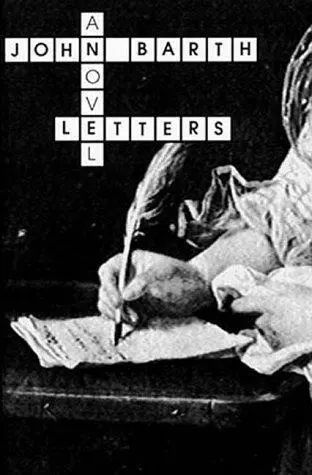
- Название:Letters
- Автор:
- Издательство:Dalkey Archive Press
- Жанр:
- Год:1994
- ISBN:нет данных
- Рейтинг книги:3 / 5. Голосов: 1
-
Избранное:Добавить в избранное
- Отзывы:
-
Ваша оценка:
Letters: краткое содержание, описание и аннотация
Предлагаем к чтению аннотацию, описание, краткое содержание или предисловие (зависит от того, что написал сам автор книги «Letters»). Если вы не нашли необходимую информацию о книге — напишите в комментариях, мы постараемся отыскать её.
Letters — читать онлайн бесплатно полную книгу (весь текст) целиком
Ниже представлен текст книги, разбитый по страницам. Система сохранения места последней прочитанной страницы, позволяет с удобством читать онлайн бесплатно книгу «Letters», без необходимости каждый раз заново искать на чём Вы остановились. Поставьте закладку, и сможете в любой момент перейти на страницу, на которой закончили чтение.
Интервал:
Закладка:
“One more epitaph we got to pick out,” Grandfather said. “For Hector’s company. But we can’t afford to bury it.”
Time and again it seemed certain we must fail, even after Uncle Karl cut down the corner-cutting: the phrase “pass into the hands of the receivers,” dimly ominous, haunts my memory of the Menschhaus. At first I fancied the Receivers to be of a family with that troll who was so nearly the death of the Billy Goats Gruff, and to live therefore in the neighborhood of the Dorsel Creek Bridge, which I could not be induced to cross thenceforward without Peter at my side, and which still twinges me on wee-hour walks with Angie. Grandfather’s dealh in 1935 modified this fancy. Peter sneaked me in to survey him, laid out in the Good Parlor. As always the room smelled of coal oil from the space heater — to light which, for the comfort of the forenoon’s mourners, was Peter’s errand. Grandfather lay drawn and waxen upon the daybed. I cannot recall his face, but I know that although his white mustache still bore, like seasoned meerschaum, the familiar stain of much tobacco, his great nose was red no more: it was pinched, and as glazy ivory yellow as the keys of our player piano or Wilhelm’s plaster castings, the permanent tenants of the room. I contemplaled this detail.
Peter meanwhile was absorbed in the Easter egg. After a time I whispered: “Dare me to touch him?”
“Sure I dare you. Better not.”
The muscled ivory panther, couchant atop the mantel, prepared to spring upon me if I moved a hair; the Groaner raised sightless eyes to Heaven in plaster anguish at the thought.
“Dee double dare you,” Peler offered, and solemnly pinched Grandfather’s cheek. Surely he must snort and toss his head as he had done on many a napful Sunday; look ’round him vainly for his cane, and, knowing we were hid somewhere about, call upon Gott in Himmel to witness how His latest creatures prepared their place in Hell. But he did not stir even when, dee-double-diddly-die-dared, I drew my finger across his folded hands and found them — not soaked in perspiration like my own, but scarcely any colder. He slept on undisturbed, as I was not to do for many a night after; and the naked Biscuit Thrower in the foyer (my corruption of Wilhelm’s discus’d Greek Athlete) turned from me as we left; and when Miss Stocker expressed her sympathy next day in school, I declared to her and to the first-grade class in general my conviction that Grandfather was more to be envied than mourned, he having been by that hour joyfully received by the Receivers. I’ll not describe what fears beset me as to the nature of my own reception on the day when, without Peter to shield me, I too should pass into their waiting hands.
But presently Father would dream up a new way to sculpt his dead twin’s headstone with one arm. A fresh block of alabaster would appear in his office, or in the toolshed, or in the art room of Dorset High; new tools of his design would be forged by Joe Voegler the oyster-dredge builder down by the creek; Uncle Konrad (before Karl returned from Baltimore) would drop by on his book-laden bike, find Father engrossed in sketching and chipping, and ask permission to straighten out the files a bit. Sooner or later a contract would appear for a random-rubble chimney or a patio of Pennsylvania flag; for a time we’d hear no more of the Receivers.
Our enthusiasm for the seawall project, then, and for Karl and Hector’s resourceful management of it, was commingled with relief, for it seemed to herald a general improvement of our fortunes. War production was at its peak: Colonel Morton’s canneries made army rations around the clock; “rescue boats” of white oak and cypress, beautiful before they were painted battleship gray, were being built by the Dorset Shipyard, erstwhile boatwrights to the oyster fleet. The citizenry had more means for patios, terraces, tombstones — and of our materials, unlike some, there was no great shortage. No longer did we polish headstones with wet sand and railroad iron, or letter them by hand with maul and chisel: they were bought wholesale — already shaped, polished, and decorated in stock patterns — from a national concern by whom we were enfranchised; the inscriptions, stenciled out of sheet rubber, were quickly and perfectly sandblasted onto the face. With the nozzle in one hand and his mind on Erdmann’s Cornlot, Peter could execute in a minute the H’s with which Grandfather had used to take such loving pains, and do them just as well. Father installed a secondhand water heater in our summer kitchen and no longer rubbed his nose when Mother spoke of radiators and indoor toilets — though, to be sure, such frivolities were not available in wartime.
All summer we worked on the wall, under Karl’s supervision, Hector gimping down from school or stoneyard from time to time to inspect our progress. To their joint resourcefulness there was no end. When it became clear that cleaning the Baltimore rocks by hand was ruinously expensive (it took me half an hour, with the best will in the world, to scrape the moss from one), Father rented and experimented with, in vain, equipment to spray them with boiling water or live steam, or soak them in a weak solution of hydrochloric acid, or air-dry and sand-clean them: all either ineffective or inefficient. In the end, not to throw good money after bad, we carted them to the yard as they were, hoping they might clean up more readily when long dry. They did not. When our crusher broke beyond immediate repair on what looked to have once been the quoin of a major Baltimore bank, and we were forced to buy commercial smallstone for our concrete, Karl softened our loss by loading the forms with whole boulders, moss and all, before we poured. And when the city council belatedly challenged our removing the Baltimore rocks at all, and the mayor shamefully refused to acknowledge any previous verbal agreement about a municipal bathing area, Father demanded and received permission, in order to forestall an action against us, to take out at least the ones from our own frontage on the Cornlot.
I voiced my opinion of these expedients to Peter, who upon his graduation had assumed the foremanship of our yard in order to free Karl for the wall. But my brother, then as now, though he deplored poor workmanship like ill character, could attend to but one thing at a time, and was entirely preoccupied with our house. In July he finished purchasing the lot; in August he hired his excavator; and between us, working evenings and weekends with advice from Karl and head-shakings from Father, we put up the forms and poured the basement floor and walls. Magda came down every evening to watch, often with Mother and Aunt Rosa and bottles of home brew in a galvanized bucket. For the first time my body grew as brown and tough as Peter’s; I prized my muscles and my right to drink the yeasty beer. All day I toted boulders for the seawall, all evening barrowed concrete for the house; but so agreeable was it to be fifteen and strong that when dusk ended our labors I would wrestle with my brother in the clover. Our hard flesh smacked; our grunting hushed the crickets. When the last of our strength was spent we would tumble, washed in dew, at Magda’s feet, there to bathe further in her grave smile before our final rinse in the nettled river.
The last twenty dollars of his inheritance Peter spent on a tree and two rosebushes.
“A weeping willow tree,” Father reported to Aunt Rosa. “Twenty feet tall. It will shed many a tear before Peter gets his towers up.”
Aunt Rosa grabbed her gut.
“Mensch’s Folly isn’t built yet,” Father went on. “But when the receivers take this house away from us, we’ll all go down to the Cornlot and sleep under Peter’s willow tree.”
“Ach! No more, Hector!”
Читать дальшеИнтервал:
Закладка:
Похожие книги на «Letters»
Представляем Вашему вниманию похожие книги на «Letters» списком для выбора. Мы отобрали схожую по названию и смыслу литературу в надежде предоставить читателям больше вариантов отыскать новые, интересные, ещё непрочитанные произведения.









Обсуждение, отзывы о книге «Letters» и просто собственные мнения читателей. Оставьте ваши комментарии, напишите, что Вы думаете о произведении, его смысле или главных героях. Укажите что конкретно понравилось, а что нет, и почему Вы так считаете.