Ali Bader - The Tobacco Keeper
Здесь есть возможность читать онлайн «Ali Bader - The Tobacco Keeper» весь текст электронной книги совершенно бесплатно (целиком полную версию без сокращений). В некоторых случаях можно слушать аудио, скачать через торрент в формате fb2 и присутствует краткое содержание. Год выпуска: 2012, Издательство: Bloomsbury Qatar Foundation, Жанр: Современная проза, на английском языке. Описание произведения, (предисловие) а так же отзывы посетителей доступны на портале библиотеки ЛибКат.
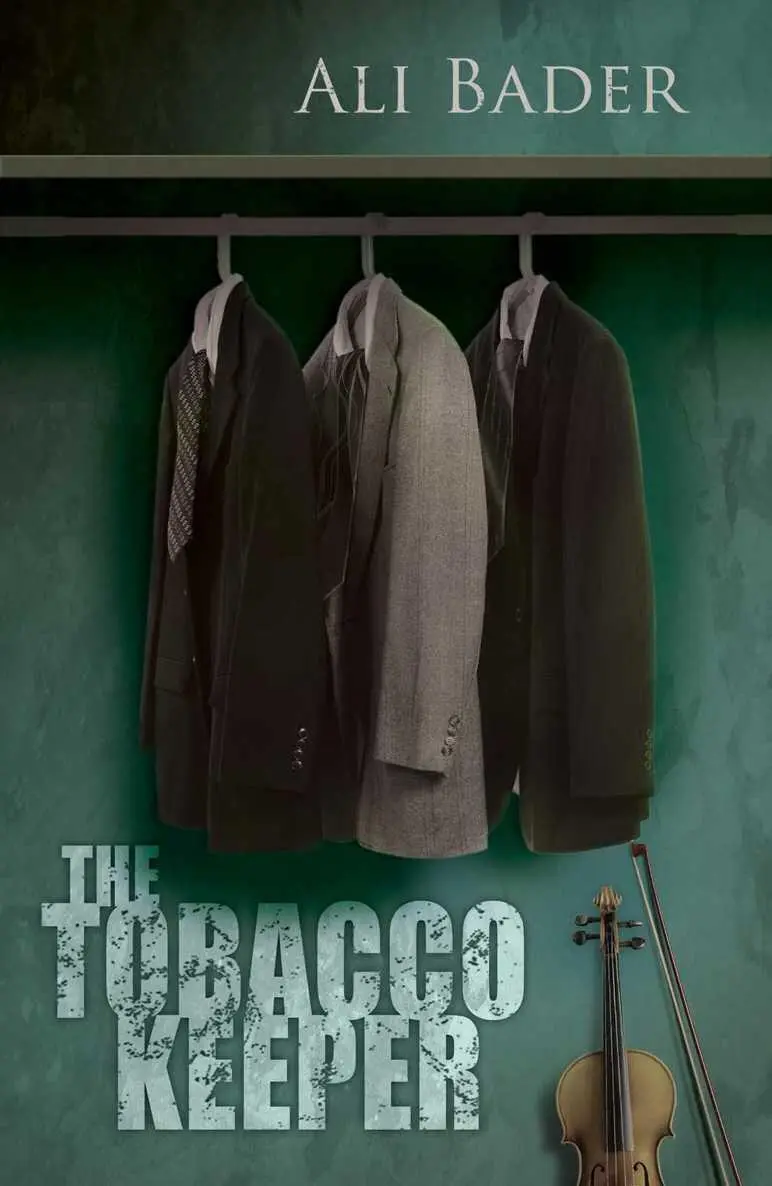
- Название:The Tobacco Keeper
- Автор:
- Издательство:Bloomsbury Qatar Foundation
- Жанр:
- Год:2012
- ISBN:нет данных
- Рейтинг книги:3 / 5. Голосов: 1
-
Избранное:Добавить в избранное
- Отзывы:
-
Ваша оценка:
The Tobacco Keeper: краткое содержание, описание и аннотация
Предлагаем к чтению аннотацию, описание, краткое содержание или предисловие (зависит от того, что написал сам автор книги «The Tobacco Keeper»). Если вы не нашли необходимую информацию о книге — напишите в комментариях, мы постараемся отыскать её.
The Tobacco Keeper — читать онлайн бесплатно полную книгу (весь текст) целиком
Ниже представлен текст книги, разбитый по страницам. Система сохранения места последней прочитанной страницы, позволяет с удобством читать онлайн бесплатно книгу «The Tobacco Keeper», без необходимости каждый раз заново искать на чём Вы остановились. Поставьте закладку, и сможете в любой момент перейти на страницу, на которой закончили чтение.
Интервал:
Закладка:
On 25 August 1964, he began laying out the plan for his first composition. He’d already found a job at the Tchaikovsky Conservatory in Moscow, and was working from morning till noon. Instead of going home directly after work, he would go to the top of the hill, where lush, shady trees grew beside the walls of an ancient fort surrounded by large gardens. He lay down on the thick grass beneath the branches of poplar trees, enjoying the peaceful atmosphere and the cool breeze. He meditated and gazed at the beautiful houses that were ranged in neat rows. It was from this spot that he began to compose his own musical pieces. He was inspired to write a concerto that would start with an improvised melody (a cadenza) and would use the full orchestra, especially the string section. He jumped to his feet and went down the hill, as the first tunes took shape in his head. He walked quickly as he listened to the distant melodies. Immediately, while still on the street, he began to write down the notes. But when he arrived back home, he felt too exhausted to continue. After taking a short nap, he woke up and began to work on the technical aspect of the concerto. He sat at the table thinking. He thought first of violin techniques but then realized that the strings could support the percussion instruments. So he began with the latter.
He told himself that the cadenza could replace the exposition of traditional works. It could be used to introduce new elements that would be delicate and tender. It could be created out of the harmony that distinguished Arab music. He felt elated as he discovered this world. He felt able to uncover the capabilities of the violin, this powerful instrument that was so close to the human voice, while preserving at the same time the character of Arab music.
He couldn’t banish the idea of linking contemporary art with traditional forms, perhaps because the idea of preserving and using the heritage was so strong in Iraqi art. He had become firmly convinced of this view years earlier, after a conversation with the sculptor Jawad Selim.
As they sat at a wooden table in the Waqwaq café that was established by Boland al-Haidari and Hussein Murdan in Al-Adhamiya, he heard Franz Liszt’s Concerto No. 1, which he loved so much. They each had a cup of coffee as they sat opposite each other. Jawad Selim, with his handsome face, sharp eyes and thick, black beard, told him in a low voice, ‘You can’t possibly introduce anything new without getting inspiration from the past.’
Jawad Selim seemed like a traveller of old, sailing across the oceans of the Sumerian and Assyrian heritage in order to produce novel ideas. Al-Sayyab was experimenting with the two-thousand-year-old metres of Arabic poetry in order to make them compatible with the rhythms of modern life. So Haidar Salman diligently searched Arab and Islamic traditions. He wanted Arabic music to seep into Western classical music as stealthily and quietly as sand.
‘Stealthily and imperceptibly,’ he said to himself.
Was he looking for a moment of absence in his music?
There was no doubt about it. He wanted Arab culture to be present in Western or classical music. As he composed his pieces, he felt his fingers grow hot with the spiritual warmth of the desert. When he was in Europe, he felt that musical notes soared high like butterflies fluttering in the depths of the desert. He wanted melodies that would awaken the phantom of fertility in the blazing heat of noon. He wanted to produce music that was like the birth of creation and the trembling of life’s genesis.
Haidar tried to make music achieve the extraordinary feat of submitting the soul to artistic experience. He did not believe in heroism, only in art, for art was the search for goodness. Was moral virtue really capable of solving society’s problems? Was there a radical difference between morality and art?
He believed that art was virtue itself. He had no idea that this view would later collapse in Baghdad, under the destructive pressure of the people. He had innumerable questions, because he wanted his artistry to lead to the good of humanity. He looked for epicurean pleasure in music, like the second character in Tobacco Shop . He felt that he was creating something important, that creativity was for him a mystical act, a deep conviction that the work he was creating had a spiritual dimension.
Could he possibly deny the presence of a spiritual force in the work of art? Not at all. Haidar felt that he was embarking on the creation of something palpable, something that drew its power from the music of the universe. At the beginning, he felt drawn to abstractions that were, nonetheless, strongly present and palpable. This was faith, no doubt. It was a belief that reconciled the different religions inside him: Judaism, which he had absorbed as a child, Christianity, which had seeped into his soul through classical music, and Islam, which became part and parcel of his inner self after his marriage to Tahira. God was One, although He appeared in various texts.
Haidar rejected Ada’s materialist interpretations of music. As they sat on the balcony of her house in spring, watching the trees change colour, he told her that he was trying to reconcile the various strands and tonalities of the three religions. He saw the presence of sand everywhere, the changes of colour and of natural phenomena. This was immortality itself. A piece of music represented partial immortality while music in total represented complete eternity.
He spent his evenings at the house of the Russian pianist, Ada Brunstein, located on a narrow street behind the Bolshoi Theatre. She had a large room on the upper floor, where a sofa overlooked the street, flanked by small windows that were permanently open. On the opposite side was a large window that overlooked the dense garden. Ada sat cross-legged on a second sofa to the left. On the mantelpiece above the fire stood a nightlight and a vodka bottle. Ada was a petite, blonde woman with full lips and a short nose. She spoke softly and was very happy with him. A world-famous virtuoso pianist, Ada was also cultured and fluent in several European languages. She would receive Moscow’s most important writers in her house, and it was through her that Haidar became acquainted with many of them.
As for how Haidar came to know Ada Brunstein, we only have the account given by the Czech violinist Karl Baruch in his memoirs. He said that Haidar Salman had taken a cruise on the Baltic Sea. On the same boat was Sergei Oistrakh’s son with his pregnant girlfriend. After the son had disembarked, it became known that the girlfriend had run away with the Iraqi composer, Haidar Salman. The girlfriend was the pianist Ada Brunstein.
So Ada Brunstein was Haidar Salman’s new girlfriend. But did she have anything to do with his trip to Paris? That was something we could never ascertain. It was a detail missing from all his letters. Nor did Farida ever comment on it. But all events indicate that Haidar and Ada were closely attached at that time.
Why wasn’t Haidar Salman a faithful husband? He never once wrote about this, as though it were natural to be married and also have mistresses. Throughout his life he experimented with these relationships and sought to avoid unhappy endings. This was predicted by the character of Ricardo Reis in Pessoa’s collection Tobacco Shop .
But why didn’t the disgraceful incident on the boat affect his relationship with Sergei Oistrakh? That was something we never discovered either, as the man died in 1990. We couldn’t get through to any of his family members either.
Whatever the case, Haidar’s relationship with the pianist was common knowledge. In 1965 he travelled with her to Paris, where he took part in the Jacques Thibaud competition. It was his first performance in front of a Western audience — most of his concerts in previous years had been in front of Russian audiences.
Читать дальшеИнтервал:
Закладка:
Похожие книги на «The Tobacco Keeper»
Представляем Вашему вниманию похожие книги на «The Tobacco Keeper» списком для выбора. Мы отобрали схожую по названию и смыслу литературу в надежде предоставить читателям больше вариантов отыскать новые, интересные, ещё непрочитанные произведения.









Обсуждение, отзывы о книге «The Tobacco Keeper» и просто собственные мнения читателей. Оставьте ваши комментарии, напишите, что Вы думаете о произведении, его смысле или главных героях. Укажите что конкретно понравилось, а что нет, и почему Вы так считаете.