S. Agnon - Shira
Здесь есть возможность читать онлайн «S. Agnon - Shira» весь текст электронной книги совершенно бесплатно (целиком полную версию без сокращений). В некоторых случаях можно слушать аудио, скачать через торрент в формате fb2 и присутствует краткое содержание. Год выпуска: 2014, Издательство: Toby Press, Жанр: Современная проза, на английском языке. Описание произведения, (предисловие) а так же отзывы посетителей доступны на портале библиотеки ЛибКат.
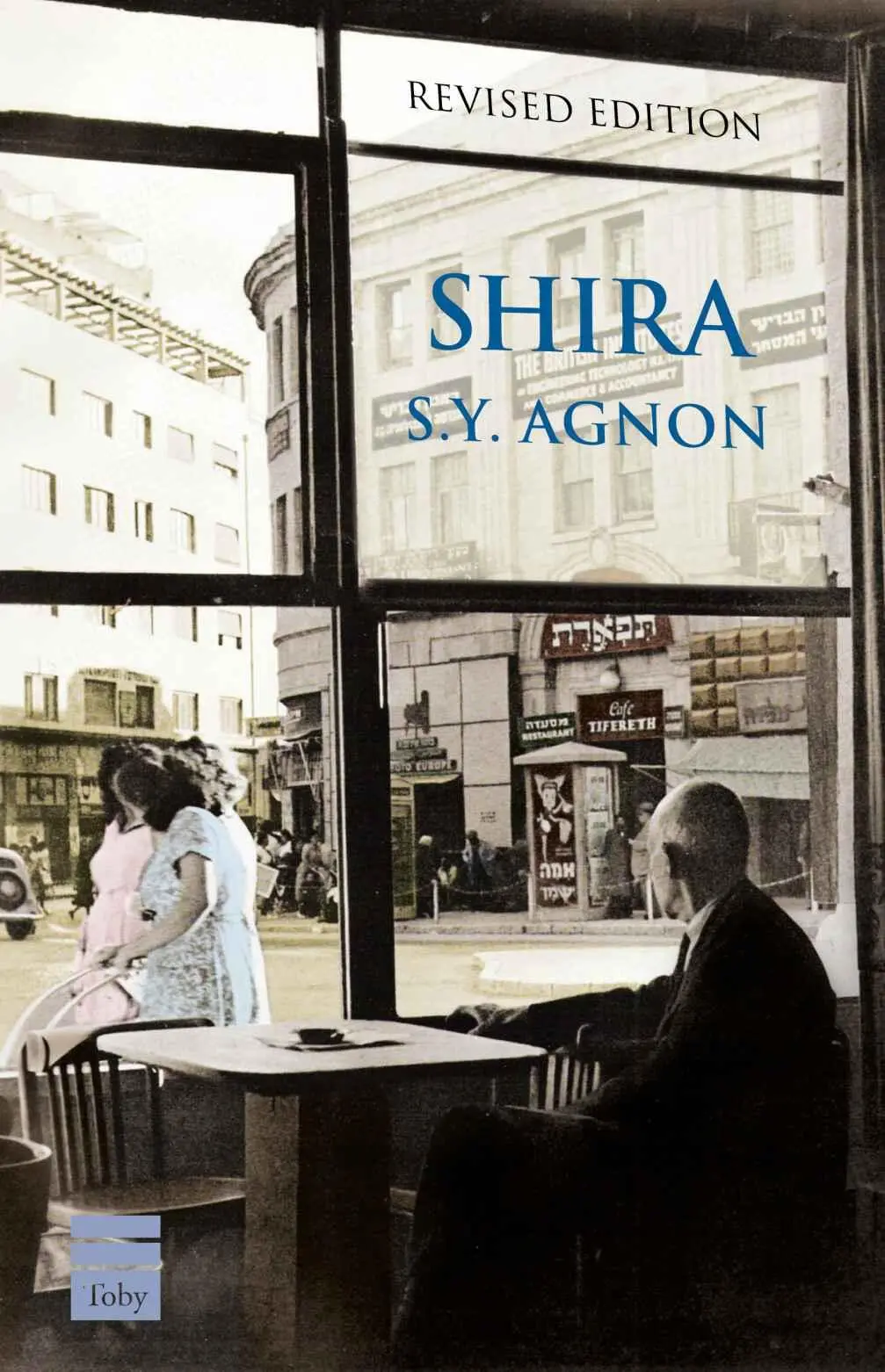
- Название:Shira
- Автор:
- Издательство:Toby Press
- Жанр:
- Год:2014
- ISBN:нет данных
- Рейтинг книги:5 / 5. Голосов: 1
-
Избранное:Добавить в избранное
- Отзывы:
-
Ваша оценка:
Shira: краткое содержание, описание и аннотация
Предлагаем к чтению аннотацию, описание, краткое содержание или предисловие (зависит от того, что написал сам автор книги «Shira»). Если вы не нашли необходимую информацию о книге — напишите в комментариях, мы постараемся отыскать её.
Shira — читать онлайн бесплатно полную книгу (весь текст) целиком
Ниже представлен текст книги, разбитый по страницам. Система сохранения места последней прочитанной страницы, позволяет с удобством читать онлайн бесплатно книгу «Shira», без необходимости каждый раз заново искать на чём Вы остановились. Поставьте закладку, и сможете в любой момент перейти на страницу, на которой закончили чтение.
Интервал:
Закладка:
Chapter seven
Herbst left the hospital and stood near the fence, trying to recall the precise date of his mother’s death. By his calculation, it was not the previous evening, but he wanted to consult the calendar to be certain. He looked in his pocket, but the calendar wasn’t there. He had changed his clothes in the morning, and the calendar was still in yesterday’s jacket.
He had left the calendar in his old jacket. He was haunted by the thought that what had happened to him the night before could have occurred on the eve of the anniversary of his mother’s death. It was good that it did not occur on the actual anniversary. Still, the event was bad in itself. Even if I was after something of that sort, now that it has come to pass, I see it wasn’t what I was after. In seven days, Henrietta will be home again. May the intervening days be straightforward and uncompromised. If a man sins once, only once, the sin is not erased; still, one offense is less than two. What did Henrietta ask of me? Henrietta asked me to inform the girls that they have a sister. And something further. When he remembered what else she had asked, he looked at his watch to see how many hours remained until lunch. He noticed that his watch strap was worn. He took off the watch, put it in his jacket, and straightened his tie.
Julian Weltfremdt, a relative of Ernst Weltfremdt’s, appeared. They were related in family but not in fortune, for one was a full professor and the other was not even a lecturer. He deserved to be a lecturer, even in one of the great European universities, and if Professor Weltfremdt had supported him, he would have secured an appointment. But Ernst Weltfremdt was afraid he might be charged with nepotism, that is to say, with bestowing favors on relatives. Ernst used to say to Julian, “Would you have me behave like that administrator who made his brother secretary, found jobs for his mother and father, and then changed their names, so no one would know they were related?” Since Julian Weltfremdt considered himself a victim, he allied himself with other would-be victims and, like them, engaged in challenging the establishment. Unlike most of them, a thwarted lot that indulged in gossip and slander, Julian Weltfremdt was devoted to truth. Since scholarship has many branches and truth has many violators, he became more and more outspoken against those who mock the truth.
At that time, the entire country was astir with Professor Wechsler’s discovery. He had found a manuscript attributed to Saint Justin the Martyr on the subject of the profane aspects of life and the love of purity. I am not an expert on the writings of the Church Fathers, nor do I know whether he uncovered an ancient source or was misled by one of the counterfeits common in Jerusalem for three generations now. Between eagerness to innovate and the proliferation of counterfeiters, the world has been inundated with parchments, jugs, burial chests, figurines, idols, and gods from Enoch’s time and earlier. Moreover, most of the scholars from Germany came to this country intent on discovering antiquities, and they found what they were after. Actually, Professor Wechsler was legitimate, as was his enterprise. But he was also extremely eager to publicize his discoveries. To this end, he invited a host of journalists, as administrators often do in the interests of their institution, attracting attention to themselves as if they were the institution. Wechsler presented his discoveries to the journalists, glorifying himself at every opportunity. The journalists listened, sent telegrams to their newspapers, and provided Wechsler with a public. Scholars of other nations began to view this country’s scholars and academics with suspicion, which gave Julian Weltfremdt an opportunity to deplore the university’s scholars, especially Wechsler, whose behavior he considered scandalous. However Herbst viewed Wechsler’s activities, he dismissed them with a casual gesture and proceeded to enumerate some of Wechsler’s accomplishments. Weltfremdt was enraged and shrieked, “What I am telling you is deplorable, and that’s how you respond! Go and tell your father you need to be born again. Maybe this time you’ll turn out to be a man. By the way, did your wife give birth yet? Boy or girl?” “What if it was a girl?” Weltfremdt said, “Don’t tease me, Herbstlein. I believe you have two girls already.” Herbst said, “Now I have three.” “Three daughters? So now you have one more daughter. Don’t be disheartened. The world needs girls too. I see you’ve bought a new tie. Come, let’s wet our palates in honor of both these events. There’s a new café nearby. They try to serve real coffee. Let’s go there.” Herbst said, “You sound as if you’re their agent.” Weltfremdt said, “Not yet. If you prefer, we’ll go to another café.”
They tried one place, but it was crowded. Here, there were young men with pipes in their mouths; there, old men with canes in their hands. Here, there were young women waiting for young men; there, young men waited for young women. Here and there, young men and women sat together, engulfing each other in clouds of smoke. “Look,” Weltfremdt said to Herbst. “Look — every face is clean-shaven, every mouth holds a pipe. They all talk out of the corner of their mouth, like native Englishmen. If France had the mandate, our boys would grow beards and start whistling like birds. Get moving, man. Let’s go to the place I mentioned before.”
The café owner recognized Herbst, brought their order, bowed, and then retreated, so as not to give the gentleman who had been there the previous evening the idea that he intended to bother him. The two friends sat. They sat, and Weltfremdt talked about the university, about its professors, about other matters, talking, as the saying goes, about everyone and his wife, while Herbst stared straight ahead, wondering: Where was that space, the space he had seen here the night before? Weltfremdt sensed that Herbst was preoccupied. He assumed that he was worried. He certainly had cause for worry, with another daughter in addition to the first two. Feeling sorry for his friend, he insisted on paying the check.
After they took leave of each other, Herbst went to the jeweler to buy a new strap for his watch. While the worn strap was being removed, he looked at the watches, designed for a single purpose yet made in many forms. Time is constant, yet manifest in varied forms. All things are like time, even rumors, even words. A single lesson can be learned from many texts. Herbst had once said to Lisbet Neu, “I’m old enough to be your father.” She had said, “I don’t know your age, but I see your face and you look young.” At the time, he had thought she was being generous. Now he viewed her words differently.
So much for the parable of the clocks. After fastening the new strap around his wrist, he stuck in his finger to stretch it. All of a sudden he felt bewildered. Where was the pure spirit that used to be invoked by the mere mention of Lisbet? One thought led to another, as thoughts do, and he had another thought: What if I had a son and this son was drawn to Lisbet? One thought led to still another: Henrietta will, undoubtedly, be unable to nurse the baby, so we’ll have to hire a wetnurse, which will mean extra expense and put us even more in debt. Moreover, while the baby is young, wherever we put her to sleep, I will hear her and be distracted from my work, which requires concentration. My paper will remain a mess of notes, and I will remain a lecturer, with a lecturer’s salary, rather than that of a professor or even an associate professor.
I will now convey some of what was implicit in Herbst’s thoughts. The author of a thorough and comprehensive work on Leo iii, the Byzantine ruler, a work that established his academic reputation, so that, when our university was opened in Jerusalem, he was recommended by Professor Neu and appointed lecturer — such a man should have produced another book. But days and years had passed, and he had produced nothing. When he was a student, still single, and the university was full of German women, Russian women, Jewish women — among them, some who sought his company — he turned away, out of devotion to his studies. Now that he was married, all the more reason to avoid distractions. Yet, in the end, it was he who pursued them. Who was to blame? Certainly not Henrietta. I doubt there are many like her. In terms of intelligence, beauty, and competence, Henrietta has no peer. Without regular help, without her husband’s assistance, she did all the household chores. She cooked, baked, sewed, ironed, even made her own clothes. And when the girls were young, she chose to take care of them herself, without a nursemaid. As for their house — when the Herbsts came up to Jerusalem, they couldn’t find a place to live. Talpiot and Beit Hakerem were new neighborhoods, and there were no apartments to be had there. Rehavia was in the planning stages. This left the Bukharan Quarter, which in those days was as important and as lovely as Rehavia is now. And there were areas that were free of flies and mosquitoes, but every space was occupied, taken over by intellectuals from abroad. In Baka, however, Henrietta found a hovel filled with garbage, considered unfit to live in. She rented this hovel, got rid of the garbage, and fixed it up. We were astonished; the hovel was transformed into a delightful, even glorious house. Henrietta made herself a garden, too. She made it with her own hands. Without the help of a gardener, without the help of her daughters. Tamara, as you know, loves flowers that come from the store rather than from trash and dung. Her sister Zahara has many tasks to perform for her teachers — she collects money for the Jewish National Fund’s land-reclamation projects, sells ribbons for charitable causes, et cetera — and, because of all these tasks, she has no time for homework and never eats at mealtimes. Henrietta’s only helper is Manfred, who waters the garden. Not that Henrietta needs him to do this, but it gets him out of his room and gives him a chance to exercise, rather than acquire a belly, like Professor Weltfremdt and Professor Lemner, who are all belly, below their middle and above it — a mound of neck topped by a tiny head.
Читать дальшеИнтервал:
Закладка:
Похожие книги на «Shira»
Представляем Вашему вниманию похожие книги на «Shira» списком для выбора. Мы отобрали схожую по названию и смыслу литературу в надежде предоставить читателям больше вариантов отыскать новые, интересные, ещё непрочитанные произведения.










Обсуждение, отзывы о книге «Shira» и просто собственные мнения читателей. Оставьте ваши комментарии, напишите, что Вы думаете о произведении, его смысле или главных героях. Укажите что конкретно понравилось, а что нет, и почему Вы так считаете.