Philipp Meyer - The Son
Здесь есть возможность читать онлайн «Philipp Meyer - The Son» весь текст электронной книги совершенно бесплатно (целиком полную версию без сокращений). В некоторых случаях можно слушать аудио, скачать через торрент в формате fb2 и присутствует краткое содержание. Год выпуска: 2013, Издательство: Ecco, Жанр: Современная проза, на английском языке. Описание произведения, (предисловие) а так же отзывы посетителей доступны на портале библиотеки ЛибКат.
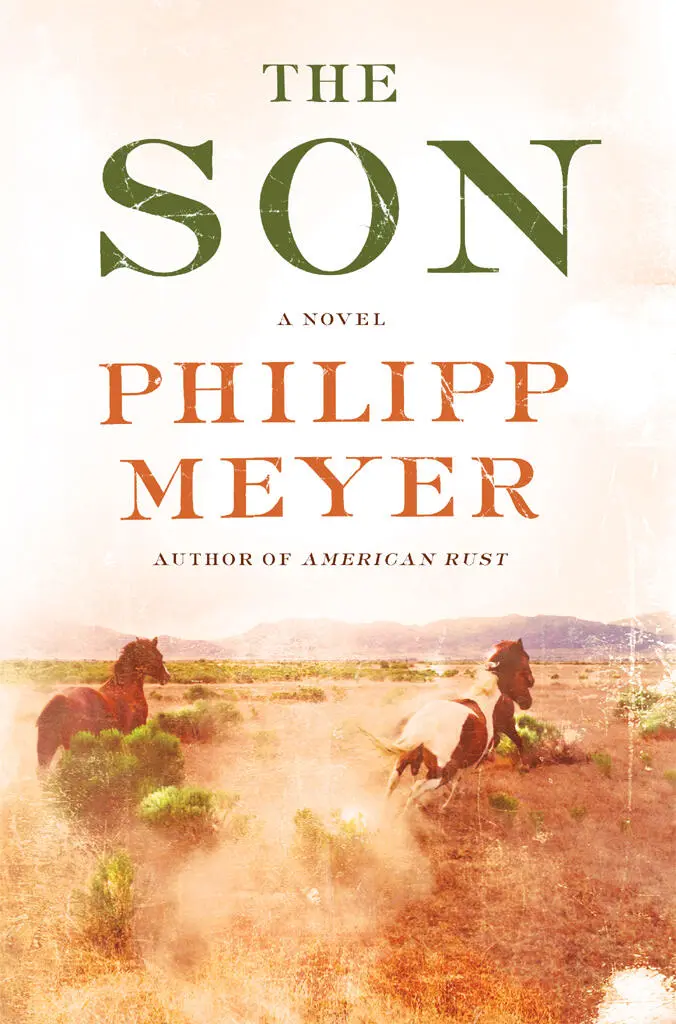
- Название:The Son
- Автор:
- Издательство:Ecco
- Жанр:
- Год:2013
- ISBN:нет данных
- Рейтинг книги:3 / 5. Голосов: 1
-
Избранное:Добавить в избранное
- Отзывы:
-
Ваша оценка:
The Son: краткое содержание, описание и аннотация
Предлагаем к чтению аннотацию, описание, краткое содержание или предисловие (зависит от того, что написал сам автор книги «The Son»). Если вы не нашли необходимую информацию о книге — напишите в комментариях, мы постараемся отыскать её.
Part epic of Texas, part classic coming-of-age story, part unflinching portrait of the bloody price of power, The Son is an utterly transporting novel that maps the legacy of violence in the American West through the lives of the McCulloughs, an ambitious family as resilient and dangerous as the land they claim.
Spring, 1849. The first male child born in the newly established Republic of Texas, Eli McCullough is thirteen years old when a marauding band of Comanche storm his homestead and brutally murder his mother and sister, taking him captive. Brave and clever, Eli quickly adapts to Comanche life, learning their ways and language, answering to a new name, carving a place as the chief's adopted son, and waging war against their enemies, including white men-complicating his sense of loyalty and understanding of who he is. But when disease, starvation, and overwhelming numbers of armed Americans decimate the tribe, Eli finds himself alone. Neither white nor Indian, civilized or fully wild, he must carve a place for himself in a world in which he does not fully belong-a journey of adventure, tragedy, hardship, grit, and luck that reverberates in the lives of his progeny.
Intertwined with Eli's story are those of his son, Peter, a man who bears the emotional cost of his father's drive for power, and JA, Eli's great-granddaughter, a woman who must fight hardened rivals to succeed in a man's world.
Phillipp Meyer deftly explores how Eli's ruthlessness and steely pragmatism transform subsequent generations of McCulloughs. Love, honor, children are sacrificed in the name of ambition, as the family becomes one of the richest powers in Texas, a ranching-and-oil dynasty of unsurpassed wealth and privilege. Yet, like all empires, the McCoulloughs must eventually face the consequences of their choices.
Harrowing, panoramic, and vividly drawn, The Son is a masterful achievement from a sublime young talent.
The Son — читать онлайн бесплатно полную книгу (весь текст) целиком
Ниже представлен текст книги, разбитый по страницам. Система сохранения места последней прочитанной страницы, позволяет с удобством читать онлайн бесплатно книгу «The Son», без необходимости каждый раз заново искать на чём Вы остановились. Поставьте закладку, и сможете в любой момент перейти на страницу, на которой закончили чтение.
Интервал:
Закладка:
WE DUNNED THE state for powder and lead and spent a few weeks training before riding out. All we did was shoot. We set up a fence post and the captain told us we were not leaving until everyone could hit the post five out of five times from horseback, at a lope at least, a gallop being better, with no preference for handedness, those appendages being considered disposable.
After those few weeks it was clear that a gun fit my hand better than a bow. Those who afforded it carried two Colt Navys, as reloading in those days took several minutes. A few of the men carried Walker Colts, which were twice as powerful but also twice as heavy, and had to be carried in saddle holsters, rather than a belt holster, which was not safe if you were separated from your horse. Not to mention the loading lever would sometimes drop and jam the cylinder; despite all that has been written about them, there was a reason not many Walkers were made.
MY FIRST TOUR we did not see a single Comanche. We saw their tracks and leavings, but could not catch them. Being better raiders they were better at avoiding raids, being better trackers they were harder to follow, and so my fears that I would one day see N uukaru or Escuté over the barrel of my Springfield turned out to be laughable.
With the exception of a few tired Lipans and Mescaleros, most of what we caught were Mexicans and vagabond Negroes, or starving Fort Indians whose skills had rusted by close proximity to the whites. Meanwhile, any outlaw group worth its name carried an old bow and arrow and after making their killings they would shoot a few arrows into the victims, so the Indians would get blamed for whatever they’d done. Wherever you looked, the red man was at a discount.
When game was scarce or settlers stingy it was normal for us to go hungry a few days, so whenever we recovered a big lot of property, say horses or cattle, unless we recognized the brands we would take a detour to sell them in Mexico, along with any saddles and guns. To the settlers we sold scalps, lances, bows, and other Indian accoutrements that people wanted to hang as trophies. Ears were especially popular.
Despite this pilferage we usually rode home with empty pockets, our gear was always breaking and our horses dying and it all had to be replaced in the field. The legislators encouraged our thieving ways, plunder the plunderers —which of course was the same as stealing from our own people — but so far as the elected ones cared, anything not recorded in the register did not count as a tax increase, which was all that mattered to their owners, the cotton men.
As for the cotton men, they admired and respected the state’s public servants, who unlike them worked for glory rather than money. They passed this wisdom to the cattlemen, who passed it to the oilmen. It was a smooth-working system, as any foolish servant who suggested he might be paid in dollars, rather than pats on the back, was tarred as a Jayhawker or Free-Soiler, or, worse, an Abolitionist, and run out of the state.
IN THE RANGERS there were a number of former captives, some of whom were glad to get back at their old captors, though mostly they had joined for the same reasons I had, namely that the habits of whites had stopped making sense. They felt crowded in cities or even settlements, they longed for their old lives on the plains, and the closest they could get to their old lives, and their old friends, was to chase and occasionally kill them.
My second year I rode with Warren Lyons, who had spent ten years among the Comanches. After getting into a fight with some chiefs, he’d defected back to the whites, checking in with his birth family only to discover he had nothing left to say to them. Then he signed up with the Rangers. The men were not sure if he was a genius or mass murderer.
Thirteen of us rode out in May, and in June we lost an Ohioan to fever and in August our captain caught a ball along the lower San Antonio — El Paso road. Lyons was elected the new captain and we continued to range in the area between the Davis Mountains and the border. One day in September we were looking for some Mexicans who had stolen horses from Ed Hall, nooning on a nice ridge a day or so east of Presidio. A spring came out of the rock, as they did in those days before all the water was used up, and the country dropped below us to the green flats of the river, with the Sierra del Carmen showing blue in the distance. It was a peaceful scene. The last time I’d been there, with Toshaway and Pizon and the others, I had not had time to notice it.
We lunched on fresh venison, ate some fruit we’d gotten off the settlers, and were generally enjoy our jobs when Lyons spotted eight riders making their way toward us on the Mexican side, heading for one of the fords on the old Comanche war trail. He passed me the spyglass. I could barely make out their colors, but there was something about them and I was sure they were Comanches. They were driving a small caballada, maybe two dozen horses.
“What do you think?” I said to Lyons.
“I’d say they are N um un uu for damned sure,” he told me.
“The numbers aren’t exactly on our side.” There were only eleven of us. Unless you were fighting two or three to one, someone was going to get shot.
“They’re probably tired. They don’t have many horses.”
“That doesn’t mean they’re tired.”
“It means things went bad.”
I went back to tell the others. There was whooping and excitement; Comanches were as rare as elephants and everyone wanted to bag one.
Lyons was collecting himself in an orderly fashion. Meanwhile I was jumpy as I’d ever been, which was odd because we’d been getting in a fight once a week. We dropped from the bench down a cottonwood-lined drainage, sticking to the damp sand so as not to kick up any dust.
The Comanches had only two muskets between them and we decided to sneak just within gunshot of the ford and get as many as we could with rifles before they could close the distance. I wondered if Lyons was as rattled as I was. The others had their sap up, having never fought anything but Fort Indians.
When we got near the river I checked my guns a third time and put a fresh cap on my rifle. The Comanches were still on the other side of the water. We were ghosting through the rocks and willows and they hadn’t seen us and I knew if we could catch them in the river it would be a slaughter. I thought about Toshaway again.
When I turned to look for Lyons, he had thrown off his boots and was donning a pair of moccasins he’d pulled out of his saddlebag. He’d been with the Comanches almost a decade, he still talked to himself in Comanche, he didn’t even think of them as Comanches but as N um un uu, and I realized why he wasn’t nervous about taking them on when we were nearly evenly matched in numbers: he was heading back to fight alongside his old friends.
I unshucked my pistol; he stood up and walked straight into the muzzle.
“What the fuck are you doing, McCullough?”
“What the fuck are you doing?” I kept the gun pointed.
“I like my moccasins to fight in,” he said. He pushed the barrel away. “You got real troubles, McCullough. You got ’em all down but the nine.”
I COULD HEAR them laughing and talking, we were waiting for them to all get clear of the brush so we could lay a clean volley into them, but then Hinse Moody and the other half-wits fired their rifle shots and called out their war whoops and hubbed themselves in, kicking their ponies and charging down the hill. The Comanche was the wall-hanger; no one wanted to miss his chance.
The Indians took to the rocks and when Moody and the others got to pistol range the arrows started coming in.
After ten minutes, two of the Comanches made a break for the river. Moody and the others had gone down in the first volley and most everyone else had gotten a dogwood switch in the meantime. Except Lyons. He fought like a purebred N um u, rolled off to one side of his grullo, shooting under the animal’s neck. His horse looked like a pincushion when it finally gave up; the Indians must have picked him as a turncoat because they were all shooting for him. When his horse went down I expected him to cover behind it, but he dodged through the arrows and was not even touched; they were clattering off the rocks all around him and he was closing on the Indians by himself.
Читать дальшеИнтервал:
Закладка:
Похожие книги на «The Son»
Представляем Вашему вниманию похожие книги на «The Son» списком для выбора. Мы отобрали схожую по названию и смыслу литературу в надежде предоставить читателям больше вариантов отыскать новые, интересные, ещё непрочитанные произведения.




Обсуждение, отзывы о книге «The Son» и просто собственные мнения читателей. Оставьте ваши комментарии, напишите, что Вы думаете о произведении, его смысле или главных героях. Укажите что конкретно понравилось, а что нет, и почему Вы так считаете.