Jacob Rubin - The Poser
Здесь есть возможность читать онлайн «Jacob Rubin - The Poser» весь текст электронной книги совершенно бесплатно (целиком полную версию без сокращений). В некоторых случаях можно слушать аудио, скачать через торрент в формате fb2 и присутствует краткое содержание. Год выпуска: 2015, Издательство: Viking, Жанр: Современная проза, на английском языке. Описание произведения, (предисловие) а так же отзывы посетителей доступны на портале библиотеки ЛибКат.
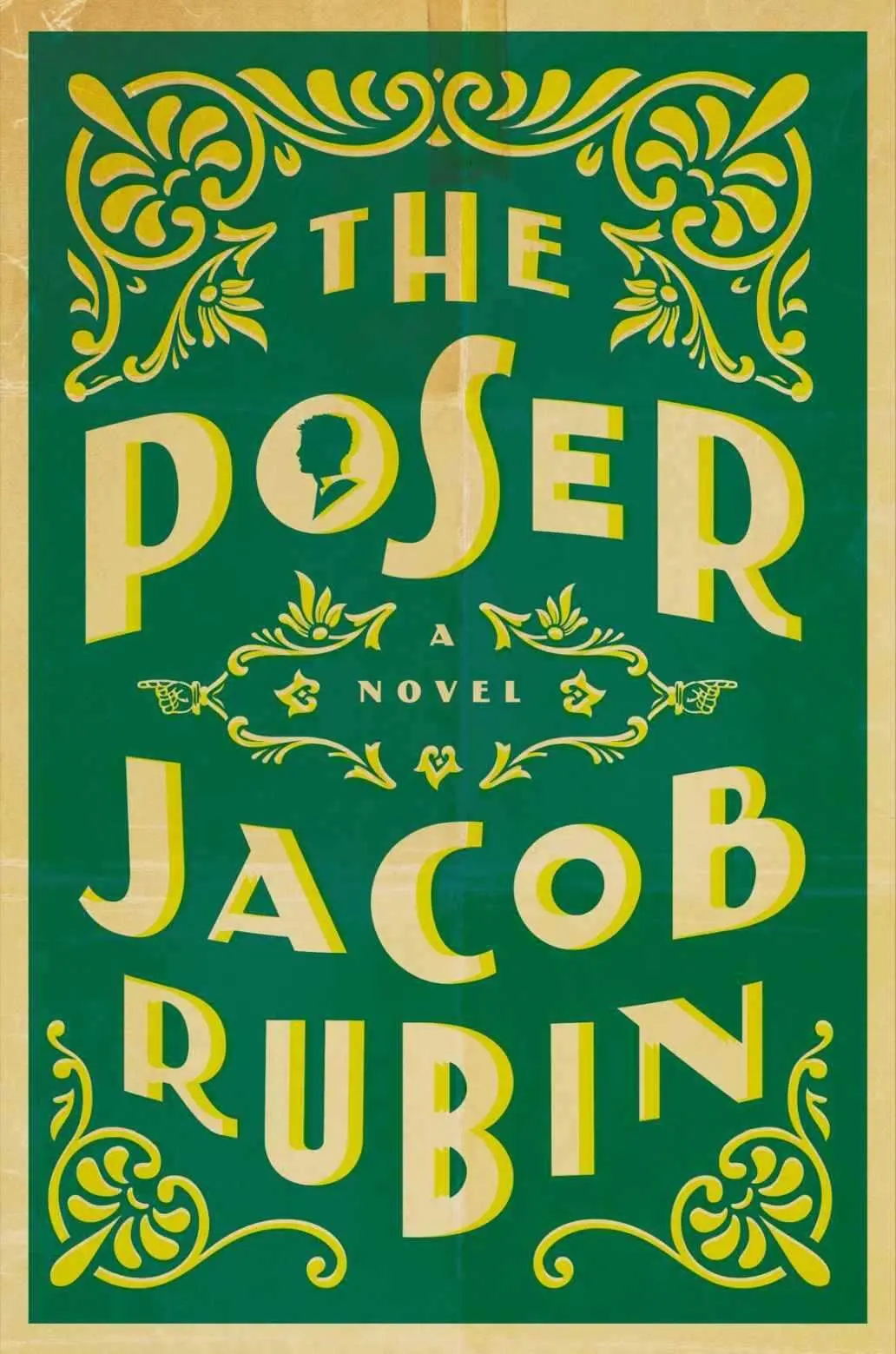
- Название:The Poser
- Автор:
- Издательство:Viking
- Жанр:
- Год:2015
- ISBN:нет данных
- Рейтинг книги:4 / 5. Голосов: 1
-
Избранное:Добавить в избранное
- Отзывы:
-
Ваша оценка:
The Poser: краткое содержание, описание и аннотация
Предлагаем к чтению аннотацию, описание, краткое содержание или предисловие (зависит от того, что написал сам автор книги «The Poser»). Если вы не нашли необходимую информацию о книге — напишите в комментариях, мы постараемся отыскать её.
In the vein of Jonathan Lethem’s and Kevin Wilson’s playful surrealism, Jacob Rubin’s
is the debut of a major literary voice, a masterfully written, deeply original comic novel, and the moving story of a man who must risk everything for the chance to save his life and know true love.
The Poser — читать онлайн бесплатно полную книгу (весь текст) целиком
Ниже представлен текст книги, разбитый по страницам. Система сохранения места последней прочитанной страницы, позволяет с удобством читать онлайн бесплатно книгу «The Poser», без необходимости каждый раз заново искать на чём Вы остановились. Поставьте закладку, и сможете в любой момент перейти на страницу, на которой закончили чтение.
Интервал:
Закладка:
It may seem ridiculous to claim that I was doing that — becoming my own man — when I was in every way aping another, and yet it did feel that way, as if finally, as Bernard, I might tunnel my way to freedom. As I’d hoped, the impression sustained that dreamy sensation, that fog that descended whenever I’d imitated him previously. It was so potent, the feeling, I often woke up at three a.m. at the Ambassador Hotel not knowing where I was, or knowing where my body was, but feeling that I was distinctly elsewhere — in the hallway, perhaps, collecting ice or strolling down a path in the park. When, at the Communiqué, people gawked at our identical outfits, I didn’t care, because I knew they weren’t seeing me, really. That I wasn’t there to be seen. In this sense, no, it didn’t feel like becoming Bernard. It felt like entering a monastery. We wore the same uniform in the way monks don saffron robes, symbols of the ego’s retreat.
In fact, there was something Eastern in Bernard’s view of the world. He often described life as a theater or illusion in whose grip most people lived. “Look at this guy,” he’d say sometimes as Clem, one of his associates, left the table. (The eccentricity of our shared appearance went over fine among the poker players, largely because Bernard was the boss and I the star.) “Can you believe this guy?” he’d say, though the man had done nothing more than cough into his fist. And yet I knew what he meant, and it took his doing it several times, with other people, to realize it reminded me above all of Mama, the way she and I used to hunt for threads in Sea View.
It was Bernard who started bringing up the move out west, the idea of getting into the movies. Each day it waited for us, like a fat chauffeur in a town car. “A star of the screen’s the perfect Trojan horse,” he said. “You can put anything in it.” I cherished that phrase: a star of the screen. For a man onscreen can be gawked at and scrutinized, but he cannot be touched.
• • •
As the founder and president of Monument Pictures, Nathan J. Sharp possessed a likeness seen widely about town. There was one shot in particular that papered industry rags of the Tinsel Titan, as he was known, striding out of a shiny black limo in coat and tails, like a general taking his first step on conquered ground. It was an image, I discovered, that had little to do with the man bending cautiously over his desk to extract a sip of chicken soup. Every two minutes the phone on his desk would ring, and Sharp would scoop it up and yelp, “Never again,” or “Did he mention the carpet?” before hanging it up and gesturing with his arm for Bernard to continue.
Nathan was an old friend of Bernard’s. “Old friends,” as I soon learned, encompassed a variety of acquaintances, rivals, businessmen, and madams. The phrase functioned, really, as a euphemism for debt, the directionality of which became obvious soon enough. In this case, Nathan seemed to owe Bernard a half hour, no more. In the short breaks between the tending to the phone and his soup, he prodded Bernard with questions about my act back east.
Bernard answered, I smoked. It was the old wind-up toy routine from the Communiqué. Be still. Spring to life. I was not listening is the truth when Bernard tapped me on the shoulder.
“Said I read somewhere you’re from Italy,” Nathan was saying. He didn’t seem much fazed by our getups.
“That’s right,” I said.
“You tried to scrub it all off. But it’s still there.” He grinned. “Let me tell you, I came over here with nothing. Nada. Now look at me! They call that self-made .” He’d started out as a furrier in Poland, he told us, making three cents a day. “My real name? Nathan Sharpovitch. Now I am the famous Nathan Sharp!”
He grew so animated I was moved to share an anecdote about the time I got thrown off a passenger train for imitating a steward with a whistling S . Lying in this way felt like the opposite of effort. Nathan slapped the table viciously and at the end of the meeting pulled me aside to mutter that we foreigners were the ones who invented this country. “You did all right, Bernie,” he shouted, mentioning the screen test as we left, like an afterthought.
• • •
“Play it low,” the director instructed me in the drafty room. “The surface is calm but underneath’s where we feel it.” When he left, I tried a cig. My face, in the bulb-lined mirror, looked thin and colorless. My hands were cold. “Play it low,” I thought, walking out.
The lot was vast and dark, the size of a hangar and loud with banging doors. The day of the screen test I got lost inside it, finding myself on a gangplank high above a film shoot in which a blonde stabbed a man to death with a letter opener. Later, I ended up in a hall lined with red doors. When I tried one, a ring of tuba players glared back at me, each wearing a bib. Behind a second, a gray, speckled wolf snored fatly. Another revealed a row of actors in feathered headdresses raising their arms before a firing squad. Several more of these doors I tried, witnessing a kaleidoscope of increasingly bizarre scenes, before tumbling out into the afternoon.
The lot recalled the backstage of the Communiqué—labyrinthine and black, but blown up to a grotesque size, a backstage swollen to monstrous dimensions so that the actual site of filming, the purported reason for our being there, shrank to a contested detail. Encircled by craning lights, the set provided the sole zone of illumination, like an unexpected fire deep inside a cave. I hurried toward it.
Normally, I would have taken my time. From Bernard I had learned the art of arrival, but the suit, a heavy wool number, broad in the shoulders, ruined it all.
I thought it would be like the screen test. That day, a thin, long-striding man had handed me a sheet of paper with typed lines of dialogue. One line said, “Now you’re gonna listen to me.” Another: “I’m afraid it’s a little more complicated than that.” I did it all like Bernard, that is to say, as if pushed by the presence of others into an even greater interiority. Soon the picture was under way: Everyman , a spy film about Harry Knott, a master of disguise who through the course of the picture impersonates a slew of characters, among them a Russian diplomat and a British tycoon, to root out a Communist mole inside the government.
But on this, the first day of shooting, I was made to wear this new, double-breasted suit. Then the director ambushed me in the dressing room to discuss my character, Harry, and how he would act “when he’s himself.” I had thought it was agreed that I would just do Bernard, but the director, an excitable and lanky man with a feral rim of red hair around his otherwise bald head, seemed to have other plans. “Don’t use too much wind,” he said. “Not too much wind. He feels something underneath .”
At the set itself I was besieged by attention. The actor Sterling Smith roughhoused my hand, while a chatty makeup artist dabbed my nose. In no time, a long, black microphone materialized inches from my face while someone unseen ordered me to say the words “pepper” and “baby bubble bath,” a pair of disembodied hands straightening the shoulders of the suit. “Pepper,” I said. “Baby bubble bath.” Bernard paced by the police commissioner’s desk. “Looking a bit pale,” Max said, though I couldn’t see his face in the harsh white light.
He sounded worried, as he often did out west. At every opportunity, he encouraged a return to the City, to the stage. Yet it was hard to take these suggestions seriously, as he was so out of place in Fantasma Falls. Months before, we had attended a party at a producer’s house above the canyons. Guests (the men in bathing trunks, the women bikinis) draped themselves on deck chairs in postures submissive to the sun. In these loungers’ hands every task, whether easing onto a bar stool or waist-deep into the pool, was studiously bleached of pace, a slowness like that of bank tellers in cinematic robberies, who, warned against sudden movements, open the cash register with grinding care.
Читать дальшеИнтервал:
Закладка:
Похожие книги на «The Poser»
Представляем Вашему вниманию похожие книги на «The Poser» списком для выбора. Мы отобрали схожую по названию и смыслу литературу в надежде предоставить читателям больше вариантов отыскать новые, интересные, ещё непрочитанные произведения.











Обсуждение, отзывы о книге «The Poser» и просто собственные мнения читателей. Оставьте ваши комментарии, напишите, что Вы думаете о произведении, его смысле или главных героях. Укажите что конкретно понравилось, а что нет, и почему Вы так считаете.