Tash Aw - Five Star Billionaire
Здесь есть возможность читать онлайн «Tash Aw - Five Star Billionaire» — ознакомительный отрывок электронной книги совершенно бесплатно, а после прочтения отрывка купить полную версию. В некоторых случаях можно слушать аудио, скачать через торрент в формате fb2 и присутствует краткое содержание. Год выпуска: 2013, Издательство: Spiegel & Grau, Жанр: Современная проза, на английском языке. Описание произведения, (предисловие) а так же отзывы посетителей доступны на портале библиотеки ЛибКат.
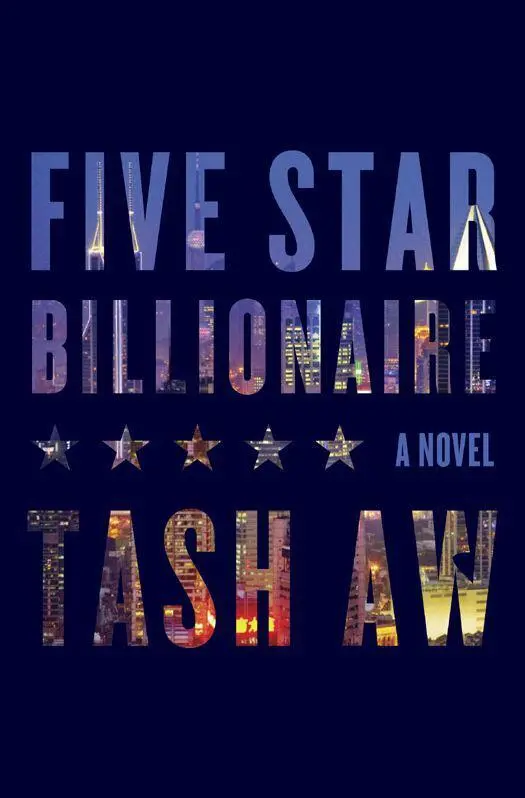
- Название:Five Star Billionaire
- Автор:
- Издательство:Spiegel & Grau
- Жанр:
- Год:2013
- ISBN:нет данных
- Рейтинг книги:3 / 5. Голосов: 1
-
Избранное:Добавить в избранное
- Отзывы:
-
Ваша оценка:
Five Star Billionaire: краткое содержание, описание и аннотация
Предлагаем к чтению аннотацию, описание, краткое содержание или предисловие (зависит от того, что написал сам автор книги «Five Star Billionaire»). Если вы не нашли необходимую информацию о книге — напишите в комментариях, мы постараемся отыскать её.
the dazzling kaleidoscopic new novel by the award-winning writer Tash Aw, offers rare insight into China today, with its constant transformations and its promise of possibility.
Five Star Billionaire — читать онлайн ознакомительный отрывок
Ниже представлен текст книги, разбитый по страницам. Система сохранения места последней прочитанной страницы, позволяет с удобством читать онлайн бесплатно книгу «Five Star Billionaire», без необходимости каждый раз заново искать на чём Вы остановились. Поставьте закладку, и сможете в любой момент перейти на страницу, на которой закончили чтение.
Интервал:
Закладка:
The lightness and ease that she had felt in the swimming pool earlier that day had stayed with her, and she found conversation with Walter similarly smooth and energizing, the sentences slipping out of her mouth with a litheness that she had forgotten she was capable of. He, too, seemed lifted by her vivacity, and there were times when it felt as though they were stumbling over each other to ask questions, to venture an opinion on what the other had just said, to come up with a wisecrack that would make the other laugh. He had ordered a bottle of vintage Ruinart, which made Yinghui’s cheeks feel warm and rosy; at one point she got the impression that she was drinking much more than he. They were talking and laughing more than they were eating, and by the time they had finished their main courses, the restaurant was nearly empty.
“You see, we managed to get through an entire dinner without even once talking about our project,” Walter said.
“Yes.” Yinghui laughed. Our project. That’s what he had said; she liked the sound of it.
“You didn’t always want to be a businesswoman, did you?” Walter asked, pouring himself some water. “I mean, when you were a child.”
“Is it that obvious?” Yinghui smiled. “I wanted to be a doctor working in Africa, or an anthropologist. I really really wanted to be a vet at one point. And then when I was a bit older, in my late teens, I thought I would be a charity worker in India.” It was the truth, but it seemed comical to admit this now — which was why she was confessing it. “What about you? Let me guess — carpenter?”
“Wrong” he said, smiling. “Actually, it was pretty obvious to me from quite a young age what my life would involve.”
“Oooo, that sounds soooo deep.” Yinghui’s laughter rang out more loudly than she had expected; the restaurant was empty now, the waiters hanging around by the bar, pretending to wipe down the wineglasses. Through the window, the roofs of the pavilions in the Forbidden City were lit against the powder-black sky, the eaves curling gently toward the heavens.
“And your parents,” he continued, “were they encouraging in your quest to become Mother Teresa?”
Yinghui looked into her empty glass. “I guess.” She sensed a sudden change in the tone of his voice, a sharp, probing edge that caught her off-guard.
“Meaning?” he asked.
“Meaning, sort of.”
She should have expected that the conversation would take a turn this way — after all, they were talking about themselves, so it was entirely natural for him to ask about her family. If she felt a sudden deflating of her energies, it was because she was disappointed in herself — annoyed that she should still feel closed to the subject and defensive about the past.
“What about your parents?” she said as brightly as she could manage. “Were they encouraging of your business ventures?”
“They died before I accomplished anything,” Walter replied matter-of-factly. “I lost my mother when I was an infant. My father died when I was quite young — about nineteen.”
“I’m sorry,” she said.
He looked at her for a while, holding her gaze until she felt uncomfortable and looked away. “Don’t be,” he said. “Life doesn’t treat all of us equally, does it?”
At Yinghui’s suggestion, they decided to have another glass of champagne instead of dessert — she needed a way to cheer up for the remainder of the night — and when they finished, they decided to go for a stroll, skirting across the vast perimeter of Tiananmen Square and aiming vaguely for the outer waterways of the Forbidden City. The air was much drier here than in Shanghai, and Yinghui’s skin began to feel cracked and brittle. The pavement was crunchy underfoot with a layer of gritty dust, and when a breath of wind occasionally swept along the avenues, it carried an imprint of warmth, even though it was late at night. The cheery banter they had fabricated over dinner had crumbled away now, and it felt once more as if they were trying to bridge a void between them.
As they walked along the silent stretch of water under the feathery reaches of the overhanging willow trees, Yinghui moved close to Walter, hoping that their physical proximity would make it easier for him to reach out and and take her hand. It was a gesture of desperation, she knew, trying to establish physical closeness in order to replace a widening emotional gap, but it would reassure them nonetheless, she thought. The water appeared black and utterly still in the dark, but on the surface there were flecks of dust and froth that glimmered in the night light. There were old men sitting passively with their fishing rods poised over the water, motionless as statues. Even though it was nearly midnight, there were small groups of people playing xiangqi , sliding the chess pieces across grid-patterned paper laid out on the paving stones. Young lovers wandered slowly in the dusky moonlight, pausing now and then to peer into the water — just as Yinghui and Walter were now doing.
Yinghui felt Walter’s hand brush hers as they walked; his pace had slowed to a stroll, as if he wanted to speak and did not wish to be hurried. They came across a small stone bench and paused to sit down. He looked her in the eye. She thought maybe he was going to kiss her now. But instead he said, “Is it true that your father was murdered?” His voice was clear and insistent; the question seemed to hang in the air, refusing to budge until it was met with an answer.
“I guess it’s not the sort of thing one can keep secret forever.”
“Yes, someone told me,” he said calmly — too calmly, she thought, as if he had been waiting for an opportunity to bring up the topic. “There was a scandal. I remembered the incident — it was all over the papers at the time. There were photos of you and your mother too.”
“Yup, that was my dad. That was us.” She felt a numbness settling over her, the urge to answer in grunting monosyllables until he changed the subject. It had been so many years since she had thought about it; she didn’t even know what to say now. “I hate the way people say it was a scandal, as if he had anything to do with it.”
“Mmm,” Walter said, waiting for her to go on.
She felt the weight of his expectation for answers growing with each second, a sense of shame replacing the numbness. But what was she ashamed of? She had done nothing wrong. And yet she could not shake the rising humiliation she was experiencing.
“I suppose you don’t want to do business with me now — and I guess that’s why you were hesitant about taking the plunge. You thought there might be something wrong with me. Don’t worry, you won’t be the first to do so. Funny how people don’t like trouble even when it’s long gone. You get into trouble and everyone avoids you forever, even though you’ve done nothing wrong. It must be an Asian thing. Shame, loss of face, that sort of shit. Someone fucks your life up and somehow the shame becomes yours.”
Walter put his arm briefly around her shoulders before withdrawing again. “The business side of things is fine, don’t worry. I’m just interested to hear about your past, that’s all.”
The closeness of his body — the unexpected weight of his arm, the slight sour notes in his breath — made her breath quicken; the warm, witty responses she might have come up with in a similar situation suddenly felt choked in her throat. She closed her eyes, and the first image that came into her mind was of Shanghai, of driving home at night along the Bund section of Zhongshan Lu after a long day’s work, tired but glowing with satisfaction. The lights of the skyscrapers in Pudong would be off now, but there would still be light coming off the river, and a breeze too, which would ruffle the surface of the water and make it choppy; in the summer months, when she drove along with the windows down, alone, the wind that eddied and swirled in the car would be soft and reassuring, with whispers of the tropics. She wished she were back in Shanghai, back in her comforting routine; she did not want to be in this arid northern city anymore.
Читать дальшеИнтервал:
Закладка:
Похожие книги на «Five Star Billionaire»
Представляем Вашему вниманию похожие книги на «Five Star Billionaire» списком для выбора. Мы отобрали схожую по названию и смыслу литературу в надежде предоставить читателям больше вариантов отыскать новые, интересные, ещё непрочитанные произведения.
![Scott O’Hara - Five-Star Fugitive [= Border Town Girl]](/books/432138/scott-o-hara-five-thumb.webp)



Обсуждение, отзывы о книге «Five Star Billionaire» и просто собственные мнения читателей. Оставьте ваши комментарии, напишите, что Вы думаете о произведении, его смысле или главных героях. Укажите что конкретно понравилось, а что нет, и почему Вы так считаете.