Jan Slauerhoff - The Forbidden Kingdom
Здесь есть возможность читать онлайн «Jan Slauerhoff - The Forbidden Kingdom» весь текст электронной книги совершенно бесплатно (целиком полную версию без сокращений). В некоторых случаях можно слушать аудио, скачать через торрент в формате fb2 и присутствует краткое содержание. Год выпуска: 2013, Издательство: Pushkin Press, Жанр: Классическая проза, на английском языке. Описание произведения, (предисловие) а так же отзывы посетителей доступны на портале библиотеки ЛибКат.
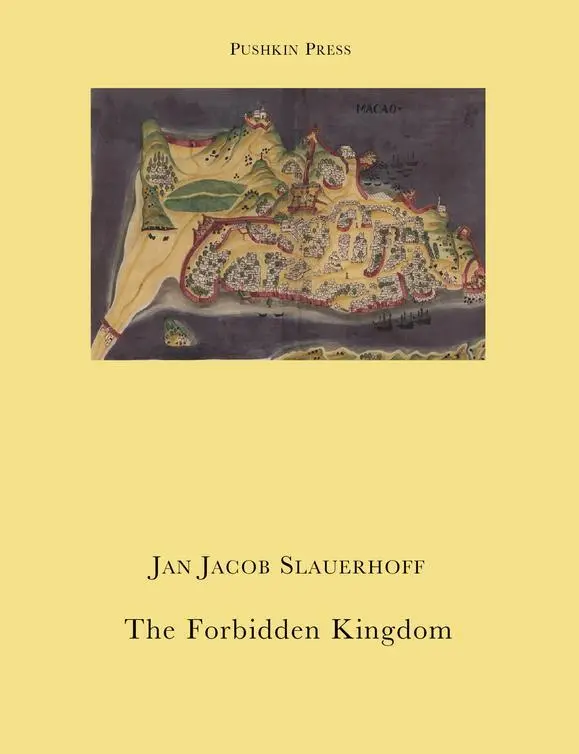
- Название:The Forbidden Kingdom
- Автор:
- Издательство:Pushkin Press
- Жанр:
- Год:2013
- ISBN:нет данных
- Рейтинг книги:5 / 5. Голосов: 1
-
Избранное:Добавить в избранное
- Отзывы:
-
Ваша оценка:
The Forbidden Kingdom: краткое содержание, описание и аннотация
Предлагаем к чтению аннотацию, описание, краткое содержание или предисловие (зависит от того, что написал сам автор книги «The Forbidden Kingdom»). Если вы не нашли необходимую информацию о книге — напишите в комментариях, мы постараемся отыскать её.
brings together the seemingly unrelated lives of a twentieth-century ship's radio operator and the sixteenth-century Portuguese poet-in-exile Luis Camoes.
Jacob Slauerhoff draws his reader into a dazzling world of exoticism, betrayal, and exile, where past and present merge and the possibility of death is never far away.
Born in The Netherlands in 1898, upon graduating from university
signed up as a ship's surgeon with the Dutch East India Company. He was at sea throughout his life, voyaging to the Far East, Latin America, and Africa.
The Forbidden Kingdom — читать онлайн бесплатно полную книгу (весь текст) целиком
Ниже представлен текст книги, разбитый по страницам. Система сохранения места последней прочитанной страницы, позволяет с удобством читать онлайн бесплатно книгу «The Forbidden Kingdom», без необходимости каждый раз заново искать на чём Вы остановились. Поставьте закладку, и сможете в любой момент перейти на страницу, на которой закончили чтение.
Интервал:
Закладка:
CHAPTER 3
I
PEDRO VELHO WAS bigger and calmer than his fellow-countrymen. He had been born north of the River Minho and was one of the few to set sail from Porto. His appearance seemed to have served as a model for the warning posted above one of the gates of Canton: None may enter here who has a red face, blue eyes, blond hair and a beard . Velho, the great merchant, had these characteristics in a very pronounced form. Yet he of all people was one of the few to have passed through this gate, the only one to have seen the great Guangxi, the first to have recognized Marco Polo in the temple of six hundred great spirits, in one of the huge bronze statues. The other Portuguese wanted to make up in courage and cruelty for what they lacked in number, but if they were perhaps superior in bravery, they were far inferior to their adversaries in cruelty. Velho was the only one who really understood that force of arms and heroics did not impress the Heavenly Ones, but rather filled them with contempt. He knew the only weapon: gifts, given in such a way that accepting them seemed like a favour. He used this weapon in masterly fashion; he never gave too much, never too little, sensing how much honour was due to the governor, how much to a mandarin, a priest, a spy. As a result Velho controlled a large part of the silk and tea imports and the whole of the food supply and had become the richest and most powerful man in Macao. But his power and wealth were based solely on his relations with the Chinese. His compatriots hated him: his fellow guild members out of envy, the officers because he wanted to sideline them, and the clergy because he scoffed at the rivalry between the orders and with his lavish gifts to charity put the lustre of church charity in the shade and made its paltriness look ridiculous. He had long been barred from all offices, before being reluctantly admitted. Finally he had to become a senator. They could no longer do without him now that food supplies to the colony were becoming more problematic, the Chinese again and again closed the warehouses and only Velho’s influence could make them open.
Now he was sitting at the corner window of his study, a roomy chamber with six windows facing the sea. This enabled him to see both the harbour and the Ilha Verde on the far side, the highest cathedral, São Paulo from one corner window, and the Monte citadel from the other. This gave him a constantly changing view as he moved easily about the large room in his flowered silk robe, a gift from the same governor of Guangdong who had once threatened to lay waste to Macao. He was sneered at for this housecoat. All the Portuguese kept their uncomfortable and heavy clothes; Velho shrouded his heavy bulk in the loose silk material, worked harder and paid no attention to the mockery. In this garb he received everyone who came to his consultation meeting, from the most lowly Chinese merchant to the Ouvidor , to ask his advice on how to appease some enraged mandarin. Then Velho would sit back at his table, throw his arms in the air, so that the wide sleeves fell back and revealed his fleshiness. Then he waxed eloquent and indicated in what way the favour of the angry one could be regained. The Procurador was irritated beyond measure by his practices, which were considered humiliating for royal power.
Once, when Velho had given a princely dowry to a poor coloured girl, the Procurador came to criticize his liberality to yellow-skinned Chinese and lack of commitment to the homeland.
“If you had put your wealth at the army’s disposal, Macao would long since have been independent, free of these humiliating measures, your trade would be free, since we might have occupied Guangdong, and more.” The eyes of the old soldier sparkled. “Didn’t Alexander conquer a worldwide empire with a small army?”
Velho laughed and placed his hand on a map. He pointed to a dot in the Heavenly Kingdom and somewhere far away a small patch.
“That is us.”
Then, passing his hand over almost the whole of Asia, he said:
“And this is them. Three centuries ago Genghis Khan came to conquer the whole of Europe. It was defenceless, but he disdained to take it. He was right. A few castles of renegade knights and a few squabbling towns, are those the spoils of war? And now you want to take the greatest empire on earth with a few banners? And I’m supposed to give you my hard-earned money for the purpose? No.”
Campos had departed in fury and wanted to indict him. But he could not formulate an indictment without making himself look ridiculous, so none was issued.
Now, tonight, Velho was to be installed as a member of the Senate. No one came to congratulate him. Respected in public life, but shunned socially, he remained indoors in solitude. A pair of freed Malay slaves and a girl presented to him by the mandarin made up his silent family. He surrounded himself with bronze statues, porcelain and lacquered screens, which were considered ugly by whites at that time. He dealt with his memories like a father with his large family: they came to keep him company in the evenings and made him laugh or stare gloomily ahead. This one often returned:
Long ago an aged apostle had spent his last days with him. The man had worked for twelve years in Shansi and brought about countless conversions, including among the higher class, and even among writers. Finally he had tried to attack the last bulwark of paganism: ancestor worship. He soon realized their growing resentment of him, even among his best friends. At the same time an order had arrived from Beijing that no other order besides the Jesuits would in future be allowed within the borders of the country. One evening, as he was passing a temple, he was seized, tied up, thrown into a junk, transferred to a Spanish vessel at sea and deposited half-dead in Macao. There were not yet any Dominicans in the town at that time, as the Jesuits believed that their zealotry would be the undoing of their mission. He had had a letter of recommendation from Schaal to Velho, but had lost it. Velho did, it is true, take pity on him, but had endless conversations with him, in late evening and early morning. Still, he was always able to conceal his exhaustion. Once they spoke about death, and Velho announced that he would like to know his death in advance.
“I’d prepare myself, settle my affairs, divide my fortune and apart from that base my thoughts on the best safe conducts for the other country, the Bhagavad Gita and the Analects of Confucius.”
The old missionary, looking at him sadly, punished him for straying from the true path.
“You shall know your death in advance. When the wine you drink tastes as bitter as gall and as sour as vinegar your end will be nigh. And then there will be only one consolation for you: the Gospel. All the rest is vain, heathen speculation.”
Velho was about to demonstrate the splendour of the Indian doctrine of salvation, when he heard coughing. He looked round: the commander of the fort was standing at the door to the chamber. Velho had heard nothing, but the man said he had been announced and started talking about a delivery of food to the garrison. Velho dealt with the matter and the monk withdrew. That night he reflected fearfully on the fulfilment of his wish; he determined to ask for a revocation the following morning, but the monk had died that same night, long since worn out by the torture and deprivation, and perhaps also by the nocturnal conversations, in which he had to take a firm stand and defend his faith against the wide-ranging attacks of Velho, whose weapons were quotations from the whole of Oriental philosophy.
For a while Velho renounced the pleasures of wine, but then had it tasted before he drank and was soon drinking again as he always had, sometimes with a vague uneasiness at the first draught, but finally convinced that just as water could not really be turned into wine, the wine on his lips could not turn to vinegar.
Читать дальшеИнтервал:
Закладка:
Похожие книги на «The Forbidden Kingdom»
Представляем Вашему вниманию похожие книги на «The Forbidden Kingdom» списком для выбора. Мы отобрали схожую по названию и смыслу литературу в надежде предоставить читателям больше вариантов отыскать новые, интересные, ещё непрочитанные произведения.










Обсуждение, отзывы о книге «The Forbidden Kingdom» и просто собственные мнения читателей. Оставьте ваши комментарии, напишите, что Вы думаете о произведении, его смысле или главных героях. Укажите что конкретно понравилось, а что нет, и почему Вы так считаете.