F. Harte - Cressy
Здесь есть возможность читать онлайн «F. Harte - Cressy» весь текст электронной книги совершенно бесплатно (целиком полную версию без сокращений). В некоторых случаях можно слушать аудио, скачать через торрент в формате fb2 и присутствует краткое содержание. Жанр: Классическая проза, на английском языке. Описание произведения, (предисловие) а так же отзывы посетителей доступны на портале библиотеки ЛибКат.
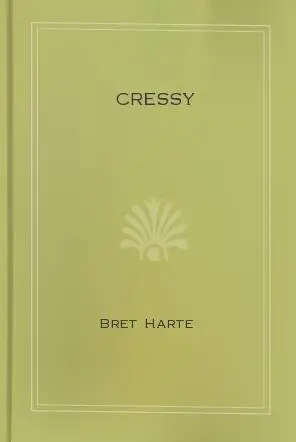
- Название:Cressy
- Автор:
- Жанр:
- Год:неизвестен
- ISBN:нет данных
- Рейтинг книги:3 / 5. Голосов: 1
-
Избранное:Добавить в избранное
- Отзывы:
-
Ваша оценка:
Cressy: краткое содержание, описание и аннотация
Предлагаем к чтению аннотацию, описание, краткое содержание или предисловие (зависит от того, что написал сам автор книги «Cressy»). Если вы не нашли необходимую информацию о книге — напишите в комментариях, мы постараемся отыскать её.
Cressy — читать онлайн бесплатно полную книгу (весь текст) целиком
Ниже представлен текст книги, разбитый по страницам. Система сохранения места последней прочитанной страницы, позволяет с удобством читать онлайн бесплатно книгу «Cressy», без необходимости каждый раз заново искать на чём Вы остановились. Поставьте закладку, и сможете в любой момент перейти на страницу, на которой закончили чтение.
Интервал:
Закладка:
"When I see'd you sail in, Mr. Ford," said Uncle Ben, with abstract reflectiveness, "I sez to the fellers, 'lie low, boys, and you'll see style.' And when you put on them first steps, I sez, 'that's French-the latest high-toned French style-outer the best masters, and-and outer the best books. For why?' sez I. 'It's the same long, sliding stroke you see in his copies. There's that long up sweep, and that easy curve to the right with no hitch. That's the sorter swing he hez in readin' po'try too. That's why it's called the po'try of motion,' sez I. 'And you ken bet your boots, boys, it's all in the trainin' o' education.'"
"Mr. Ford," said Mr. McKinstry gravely, slightly waving a lavender— colored kid glove, with which he had elected to conceal his maimed hand, and at the same moment indicate a festal occasion: "I hev to thank ye for the way you took out that child o' mine, like ez she woz an ontried filly, and put her through her paces. I don't dance myself, partikly in that gait-which I take to be suthin' betwixt a lope and a canter and I don't get to see much dancin' nowadays on account o' bein' worrited by stock, but seein' you two together just now, suthin' came over me, and I don't think I ever felt so kam in my life."
The blood rushed to the master's cheek with an unexpected consciousness of guilt and shame. "But," he stammered awkwardly, "your daughter dances beautifully herself; she has certainly had practice."
"That," said McKinstry, laying his gloved hand impressively on the master's shoulder, with the empty little finger still more emphasized by being turned backward in the net; "that may be ez it ez, but I wanted to say that it was the simple, easy, fammily touch that you gev it, that took me. Toward the end, when you kinder gathered her up and she sorter dropped her head into your breast— pocket, and seemed to go to sleep, like ez ef she was still a little girl, it so reminded me of the times when I used to tote her myself walkin' by the waggin at Platt River, that it made me wish the old woman was here to see it."
Still coloring, the master cast a rapid, sidelong glance at McKinstry's dark red face and beard, but in the slow satisfaction of his features there was no trace of that irony which the master's self-consciousness knew.
"Then your wife is not here?" said Mr. Ford abstractedly.
"She war at church. She reckoned that I'd do to look arter Cressy— she bein', so to speak, under conviction. D'ye mind walkin' this way a bit; I want to speak a word with ye?" He put his maimed hand through the master's arm, after his former fashion, and led him to a corner.
"Did ye happen to see Seth Davis about yer?"
"I believe I saw him a moment ago," returned Mr. Ford half contemptuously.
"Did he get off anythin' rough on ye?"
"Certainly not," said the master haughtily. "Why should he dare?"
"That's so," said McKinstry meditatively. "You had better keep right on in that line. That's your gait, remember. Leave him-or his father-it's the same thing-to ME. Don't YOU let yourself be roped in to this yer row betwixt me and the Davises. You ain't got no call to do it. It's already been on my mind your bringin' that gun to me in the Harrison row. The old woman hadn't oughter let you-nor Cress either. Hark to me, Mr. Ford! I reckon to stand between you and both the Davises till the cows come home-only— mind YOU give him the go-by when he happens to meander along towards you."
"I'm very much obliged to you," said Ford with disproportionately sudden choler; "but I don't propose to alter my habits for a ridiculous school-boy whom I have dismissed." The unjust and boyish petulance of his speech instantly flashed upon him, and he felt his cheek burn again.
McKinstry regarded him with dull, red, slumbrous eyes. "Don't you go to lose your best holt, Mr. Ford-and that's kam. Keep your kam-and you've allus got the dead wood on Injin Springs. I ain't got it," he continued, in his slowest, most passionless manner, "and a row more or less ain't much account to me-but YOU, you keep your kam." He paused, stepped back, and regarding the master, with a slight wave of his crippled hand over his whole person, as if indicating some personal adornment, said, "It sets you off!"
He nodded, turned, and re-entered the ball-room. Mr. Ford, without trusting himself to further speech, elbowed his way through the crowded staircase to the street. But even there his strange anger, as well as the equally strange remorse, which had seized him in McKinstry's presence, seemed to evaporate in the clear moonlight and soft summer air. There was the river-bank, with the tremulous river glancing through the dreamy mist, as they had seen it from the window together. He even turned to look back on the lighted ball-room, as if SHE might have been looking out, too. But he knew he should see her again to-morrow, and he hurriedly put aside all reserve, all thought of the future, all examination of his conduct, to walk home enwrapped in the vaguer pleasure of the past. Rupert Filgee, to whom he had never given a second thought, now peacefully slumbering beside his baby brother, had not gone home in more foolish or more dangerous company.
When he reached the hotel, he was surprised to find it only eleven o'clock. No one had returned, the building was deserted by all but the bar-keeper and a flirting chambermaid, who regarded him with aggrieved astonishment. He began to feel very foolish, and half regretted that he had not stayed to dance with Mrs. Tripp; or, at least, remained as a quiet onlooker apart from the others. With a hasty excuse about returning to write letters for the morning's post, he took a candle and slowly remounted the stairs to his room. But on entering he found himself unprepared for that singular lack of sympathy with which familiar haunts always greet our new experiences; he could hardly believe that he had left that room only two hours before; it seemed so uncongenial and strange to the sensation that was still possessing him. Yet there were his table, his books, his arm-chair, his bed as he had left them; even a sticky fragment of gingerbread that had fallen from Johnny's pocket. He had not yet reached that stage of absorbing passion where he was able to put the loved one in his own surroundings; she as yet had no place in this quiet room; he could scarcely think of her here, and he MUST think of her, if he had to go elsewhere. An extravagant idea of walking the street until his restless dream was over seized him, but even in his folly the lackadaisical, moonstruck quality of such a performance was too obvious. The school-house! He would go there; it was only a pleasant walk, the night was lovely, and he could bring the myrtle-spray from his desk. It was too significant now-if not too precious-to be kept there. Perhaps he had not examined it closely, nor the place where it had lain; there might be an additional sign, word, or token he had overlooked. The thought thrilled him, even while he was calmly arguing to himself that it was an instinct of caution.
The air was quieter and warmer than usual, though still characteristic of the locality in its dry, dewless clarity. The grass was yet warm from the day-long sun, and when he entered the pines that surrounded the schoolhouse, they had scarcely yet lost their spicy heat. The moon, riding high, filled the dark aisles with a delicious twilight that lent itself to his waking dreams. It was not long before to-morrow; he could easily manage to bring her here in the grove at recess, and would speak with her there. It did not occur to him what he should say, or why he should say it; it did not occur to him that he had no other provocation than her eyes, her conscious manner, her eloquent silence, and her admission that she had expected him. It did not occur to him that all this was inconsistent with what he knew of her antecedents, her character, and her habits. It was this very inconsistency that charmed and convinced him. We are always on the lookout for these miracles of passion. We may doubt the genuineness of an affection that is first-hand, but never of one that is transferred.
Читать дальшеИнтервал:
Закладка:
Похожие книги на «Cressy»
Представляем Вашему вниманию похожие книги на «Cressy» списком для выбора. Мы отобрали схожую по названию и смыслу литературу в надежде предоставить читателям больше вариантов отыскать новые, интересные, ещё непрочитанные произведения.






Обсуждение, отзывы о книге «Cressy» и просто собственные мнения читателей. Оставьте ваши комментарии, напишите, что Вы думаете о произведении, его смысле или главных героях. Укажите что конкретно понравилось, а что нет, и почему Вы так считаете.