Charles Dickens - The Pickwick Papers
Здесь есть возможность читать онлайн «Charles Dickens - The Pickwick Papers» весь текст электронной книги совершенно бесплатно (целиком полную версию без сокращений). В некоторых случаях можно слушать аудио, скачать через торрент в формате fb2 и присутствует краткое содержание. Жанр: Классическая проза, Юмористическая проза, на английском языке. Описание произведения, (предисловие) а так же отзывы посетителей доступны на портале библиотеки ЛибКат.
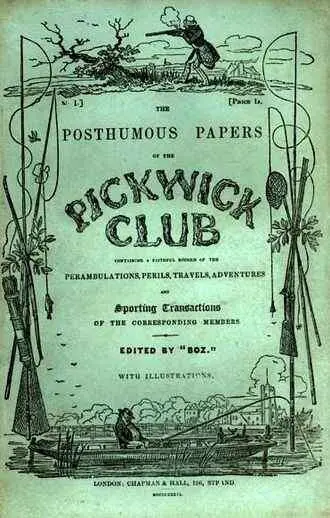
- Название:The Pickwick Papers
- Автор:
- Жанр:
- Год:неизвестен
- ISBN:нет данных
- Рейтинг книги:4 / 5. Голосов: 1
-
Избранное:Добавить в избранное
- Отзывы:
-
Ваша оценка:
The Pickwick Papers: краткое содержание, описание и аннотация
Предлагаем к чтению аннотацию, описание, краткое содержание или предисловие (зависит от того, что написал сам автор книги «The Pickwick Papers»). Если вы не нашли необходимую информацию о книге — напишите в комментариях, мы постараемся отыскать её.
Mr Samuel Pickwick is the founder and chairman of the absurd Pickwick Club which consists of Tupman, Snodgrass and Winkle who go through various amusing and often quite ridiculous adventures that are scantily interconnected and never amount to a complex sequence of events until perhaps Pickwick’s disastrous misunderstanding with Mrs Bardell.
The Pickwick Papers — читать онлайн бесплатно полную книгу (весь текст) целиком
Ниже представлен текст книги, разбитый по страницам. Система сохранения места последней прочитанной страницы, позволяет с удобством читать онлайн бесплатно книгу «The Pickwick Papers», без необходимости каждый раз заново искать на чём Вы остановились. Поставьте закладку, и сможете в любой момент перейти на страницу, на которой закончили чтение.
Интервал:
Закладка:
Now, the cook no sooner heard the concluding words of this desperate challenge, and saw Mr. Muzzle about to put it into execution, than she uttered a loud and piercing shriek; and rushing on Mr. Job Trotter, who rose from his chair on the instant, tore and buffeted his large flat face, with an energy peculiar to excited females, and twining her hands in his long black hair, tore therefrom about enough to make five or six dozen of the very largest–sized mourning–rings. Having accomplished this feat with all the ardour which her devoted love for Mr. Muzzle inspired, she staggered back; and being a lady of very excitable and delicate feelings, she instantly fell under the dresser, and fainted away.
At this moment, the bell rang.
‘That’s for you, Job Trotter,’ said Sam; and before Mr. Trotter could offer remonstrance or reply — even before he had time to stanch the wounds inflicted by the insensible lady — Sam seized one arm and Mr. Muzzle the other, and one pulling before, and the other pushing behind, they conveyed him upstairs, and into the parlour.
It was an impressive tableau. Alfred Jingle, Esquire, alias Captain Fitz–Marshall, was standing near the door with his hat in his hand, and a smile on his face, wholly unmoved by his very unpleasant situation. Confronting him, stood Mr. Pickwick, who had evidently been inculcating some high moral lesson; for his left hand was beneath his coat tail, and his right extended in air, as was his wont when delivering himself of an impressive address. At a little distance, stood Mr. Tupman with indignant countenance, carefully held back by his two younger friends; at the farther end of the room were Mr. Nupkins, Mrs. Nupkins, and Miss Nupkins, gloomily grand and savagely vexed. ‘What prevents me,’ said Mr. Nupkins, with magisterial dignity, as Job was brought in — ‘what prevents me from detaining these men as rogues and impostors? It is a foolish mercy. What prevents me?’
‘Pride, old fellow, pride,’ replied Jingle, quite at his ease. ‘Wouldn’t do — no go — caught a captain, eh? — ha! ha! very good — husband for daughter — biter bit — make it public — not for worlds — look stupid — very!’
‘Wretch,’ said Mr. Nupkins, ‘we scorn your base insinuations.’
‘I always hated him,’ added Henrietta.
‘Oh, of course,’ said Jingle. ‘Tall young man — old lover — Sidney Porkenham — rich — fine fellow — not so rich as captain, though, eh? — turn him away — off with him — anything for captain — nothing like captain anywhere — all the girls — raving mad — eh, Job, eh?’
Here Mr. Jingle laughed very heartily; and Job, rubbing his hands with delight, uttered the first sound he had given vent to since he entered the house — a low, noiseless chuckle, which seemed to intimate that he enjoyed his laugh too much, to let any of it escape in sound. ‘Mr. Nupkins,’ said the elder lady, ‘this is not a fit conversation for the servants to overhear. Let these wretches be removed.’
‘Certainly, my dear,’ Said Mr, Nupkins. ‘Muzzle!’
‘Your Worship.’
‘Open the front door.’
‘Yes, your Worship.’
‘Leave the house!’ said Mr. Nupkins, waving his hand emphatically.
Jingle smiled, and moved towards the door.
‘Stay!’ said Mr. Pickwick. Jingle stopped.
‘I might,’ said Mr. Pickwick, ‘have taken a much greater revenge for the treatment I have experienced at your hands, and that of your hypocritical friend there.’
Job Trotter bowed with great politeness, and laid his hand upon his heart.
‘I say,’ said Mr. Pickwick, growing gradually angry, ‘that I might have taken a greater revenge, but I content myself with exposing you, which I consider a duty I owe to society. This is a leniency, Sir, which I hope you will remember.’
When Mr. Pickwick arrived at this point, Job Trotter, with facetious gravity, applied his hand to his ear, as if desirous not to lose a syllable he uttered.
‘And I have only to add, sir,’ said Mr. Pickwick, now thoroughly angry, ‘that I consider you a rascal, and a — a — ruffian — and — and worse than any man I ever saw, or heard of, except that pious and sanctified vagabond in the mulberry livery.’
‘Ha! ha!’ said Jingle, ‘good fellow, Pickwick — fine heart — stout old boy — but must not be passionate — bad thing, very — bye, bye — see you again some day — keep up your spirits — now, Job — trot!’
With these words, Mr. Jingle stuck on his hat in his old fashion, and strode out of the room. Job Trotter paused, looked round, smiled and then with a bow of mock solemnity to Mr. Pickwick, and a wink to Mr. Weller, the audacious slyness of which baffles all description, followed the footsteps of his hopeful master.
‘Sam,’ said Mr. Pickwick, as Mr. Weller was following.
‘Sir.’
‘Stay here.’
Mr. Weller seemed uncertain.
‘Stay here,’ repeated Mr. Pickwick.
‘Mayn’t I polish that ‘ere Job off, in the front garden?’ said Mr. Weller.
‘Certainly not,’ replied Mr. Pickwick.
‘Mayn’t I kick him out o’ the gate, Sir?’ said Mr. Weller.
‘Not on any account,’ replied his master.
For the first time since his engagement, Mr. Weller looked, for a moment, discontented and unhappy. But his countenance immediately cleared up; for the wily Mr. Muzzle, by concealing himself behind the street door, and rushing violently out, at the right instant, contrived with great dexterity to overturn both Mr. Jingle and his attendant, down the flight of steps, into the American aloe tubs that stood beneath.
‘Having discharged my duty, Sir,’ said Mr. Pickwick to Mr. Nupkins, ‘I will, with my friends, bid you farewell. While we thank you for such hospitality as we have received, permit me to assure you, in our joint names, that we should not have accepted it, or have consented to extricate ourselves in this way, from our previous dilemma, had we not been impelled by a strong sense of duty. We return to London to–morrow. Your secret is safe with us.’
Having thus entered his protest against their treatment of the morning, Mr. Pickwick bowed low to the ladies, and notwithstanding the solicitations of the family, left the room with his friends.
‘Get your hat, Sam,’ said Mr. Pickwick.
‘It’s below stairs, Sir,’ said Sam, and he ran down after it.
Now, there was nobody in the kitchen, but the pretty housemaid; and as Sam’s hat was mislaid, he had to look for it, and the pretty housemaid lighted him. They had to look all over the place for the hat. The pretty housemaid, in her anxiety to find it, went down on her knees, and turned over all the things that were heaped together in a little corner by the door. It was an awkward corner. You couldn’t get at it without shutting the door first.
‘Here it is,’ said the pretty housemaid. ‘This is it, ain’t it?’
‘Let me look,’ said Sam.
The pretty housemaid had stood the candle on the floor; and, as it gave a very dim light, Sam was obliged to go down on his knees before he could see whether it really was his own hat or not. it was a remarkably small corner, and so — it was nobody’s fault but the man’s who built the house — Sam and the pretty housemaid were necessarily very close together.
‘Yes, this is it,’ said Sam. ‘Good–bye!’
‘Good–bye!’ said the pretty housemaid.
‘Good–bye!’ said Sam; and as he said it, he dropped the hat that had cost so much trouble in looking for.
‘How awkward you are,’ said the pretty housemaid. ‘You’ll lose it again, if you don’t take care.’
So just to prevent his losing it again, she put it on for him.
Whether it was that the pretty housemaid’s face looked prettier still, when it was raised towards Sam’s, or whether it was the accidental consequence of their being so near to each other, is matter of uncertainty to this day; but Sam kissed her.
Читать дальшеИнтервал:
Закладка:
Похожие книги на «The Pickwick Papers»
Представляем Вашему вниманию похожие книги на «The Pickwick Papers» списком для выбора. Мы отобрали схожую по названию и смыслу литературу в надежде предоставить читателям больше вариантов отыскать новые, интересные, ещё непрочитанные произведения.




Обсуждение, отзывы о книге «The Pickwick Papers» и просто собственные мнения читателей. Оставьте ваши комментарии, напишите, что Вы думаете о произведении, его смысле или главных героях. Укажите что конкретно понравилось, а что нет, и почему Вы так считаете.