Charles Dickens - The Pickwick Papers
Здесь есть возможность читать онлайн «Charles Dickens - The Pickwick Papers» весь текст электронной книги совершенно бесплатно (целиком полную версию без сокращений). В некоторых случаях можно слушать аудио, скачать через торрент в формате fb2 и присутствует краткое содержание. Жанр: Классическая проза, Юмористическая проза, на английском языке. Описание произведения, (предисловие) а так же отзывы посетителей доступны на портале библиотеки ЛибКат.
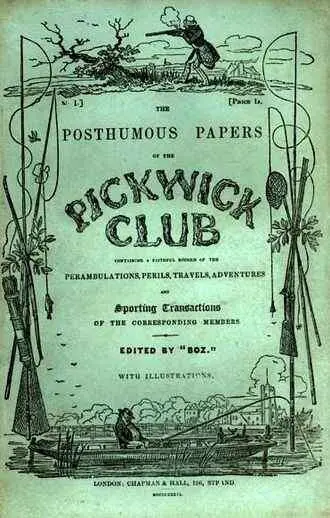
- Название:The Pickwick Papers
- Автор:
- Жанр:
- Год:неизвестен
- ISBN:нет данных
- Рейтинг книги:4 / 5. Голосов: 1
-
Избранное:Добавить в избранное
- Отзывы:
-
Ваша оценка:
The Pickwick Papers: краткое содержание, описание и аннотация
Предлагаем к чтению аннотацию, описание, краткое содержание или предисловие (зависит от того, что написал сам автор книги «The Pickwick Papers»). Если вы не нашли необходимую информацию о книге — напишите в комментариях, мы постараемся отыскать её.
Mr Samuel Pickwick is the founder and chairman of the absurd Pickwick Club which consists of Tupman, Snodgrass and Winkle who go through various amusing and often quite ridiculous adventures that are scantily interconnected and never amount to a complex sequence of events until perhaps Pickwick’s disastrous misunderstanding with Mrs Bardell.
The Pickwick Papers — читать онлайн бесплатно полную книгу (весь текст) целиком
Ниже представлен текст книги, разбитый по страницам. Система сохранения места последней прочитанной страницы, позволяет с удобством читать онлайн бесплатно книгу «The Pickwick Papers», без необходимости каждый раз заново искать на чём Вы остановились. Поставьте закладку, и сможете в любой момент перейти на страницу, на которой закончили чтение.
Интервал:
Закладка:
Mr. Pickwick admitted the sharp practice of Dodson and Fogg, and Lowten resumed. ‘Perker ain’t in town, and he won’t be, neither, before the end of next week; but if you want the action defended, and will leave the copy with me, I can do all that’s needful till he comes back.’
‘That’s exactly what I came here for,’ said Mr. Pickwick, handing over the document. ‘If anything particular occurs, you can write to me at the post–office, Ipswich.’
‘That’s all right,’ replied Mr. Perker’s clerk; and then seeing Mr. Pickwick’s eye wandering curiously towards the table, he added, ‘will you join us, for half an hour or so? We are capital company here to–night. There’s Samkin and Green’s managing–clerk, and Smithers and Price’s chancery, and Pimkin and Thomas’s out o’ doors — sings a capital song, he does — and Jack Bamber, and ever so many more. You’re come out of the country, I suppose. Would you like to join us?’
Mr. Pickwick could not resist so tempting an opportunity of studying human nature. He suffered himself to be led to the table, where, after having been introduced to the company in due form, he was accommodated with a seat near the chairman and called for a glass of his favourite beverage.
A profound silence, quite contrary to Mr. Pickwick’s expectation, succeeded. ‘You don’t find this sort of thing disagreeable, I hope, sir?’ said his right hand neighbour, a gentleman in a checked shirt and Mosaic studs, with a cigar in his mouth.
‘Not in the least,’ replied Mr. Pickwick; ‘I like it very much, although I am no smoker myself.’
‘I should be very sorry to say I wasn’t,’ interposed another gentleman on the opposite side of the table. ‘It’s board and lodgings to me, is smoke.’
Mr. Pickwick glanced at the speaker, and thought that if it were washing too, it would be all the better.
Here there was another pause. Mr. Pickwick was a stranger, and his coming had evidently cast a damp upon the party.
‘Mr. Grundy’s going to oblige the company with a song,’ said the chairman.
‘No, he ain’t,’ said Mr. Grundy.
‘Why not?’ said the chairman.
‘Because he can’t,’ said Mr. Grundy. ‘You had better say he won’t,’ replied the chairman.
‘Well, then, he won’t,’ retorted Mr. Grundy. Mr. Grundy’s positive refusal to gratify the company occasioned another silence. ‘Won’t anybody enliven us?’ said the chairman, despondingly.
‘Why don’t you enliven us yourself, Mr. Chairman?’ said a young man with a whisker, a squint, and an open shirt collar (dirty), from the bottom of the table.
‘Hear! hear!’ said the smoking gentleman, in the Mosaic jewellery.
‘Because I only know one song, and I have sung it already, and it’s a fine of “glasses round” to sing the same song twice in a night,’ replied the chairman.
This was an unanswerable reply, and silence prevailed again.
‘I have been to–night, gentlemen,’ said Mr. Pickwick, hoping to start a subject which all the company could take a part in discussing, ‘I have been to–night, in a place which you all know very well, doubtless, but which I have not been in for some years, and know very little of; I mean Gray’s Inn, gentlemen. Curious little nooks in a great place, like London, these old inns are.’
‘By Jove!’ said the chairman, whispering across the table to Mr. Pickwick, ‘you have hit upon something that one of us, at least, would talk upon for ever. You’ll draw old Jack Bamber out; he was never heard to talk about anything else but the inns, and he has lived alone in them till he’s half crazy.’
The individual to whom Lowten alluded, was a little, yellow, high–shouldered man, whose countenance, from his habit of stooping forward when silent, Mr. Pickwick had not observed before. He wondered, though, when the old man raised his shrivelled face, and bent his gray eye upon him, with a keen inquiring look, that such remarkable features could have escaped his attention for a moment. There was a fixed grim smile perpetually on his countenance; he leaned his chin on a long, skinny hand, with nails of extraordinary length; and as he inclined his head to one side, and looked keenly out from beneath his ragged gray eyebrows, there was a strange, wild slyness in his leer, quite repulsive to behold.
This was the figure that now started forward, and burst into an animated torrent of words. As this chapter has been a long one, however, and as the old man was a remarkable personage, it will be more respectful to him, and more convenient to us, to let him speak for himself in a fresh one.
Chapter 21
In which the old Man launches forth into his favourite Theme, and relates a Story about a queer Client
Aha!’ said the old man, a brief description of whose manner and appearance concluded the last chapter, ‘aha! who was talking about the inns?’
‘I was, Sir,’ replied Mr. Pickwick — ‘I was observing what singular old places they are.’
‘ You! ’ said the old man contemptuously. ‘What do you know of the time when young men shut themselves up in those lonely rooms, and read and read, hour after hour, and night after night, till their reason wandered beneath their midnight studies; till their mental powers were exhausted; till morning’s light brought no freshness or health to them; and they sank beneath the unnatural devotion of their youthful energies to their dry old books? Coming down to a later time, and a very different day, what do you know of the gradual sinking beneath consumption, or the quick wasting of fever — the grand results of “life” and dissipation — which men have undergone in these same rooms? How many vain pleaders for mercy, do you think, have turned away heart–sick from the lawyer’s office, to find a resting–place in the Thames, or a refuge in the jail? They are no ordinary houses, those. There is not a panel in the old wainscotting, but what, if it were endowed with the powers of speech and memory, could start from the wall, and tell its tale of horror — the romance of life, Sir, the romance of life! Common–place as they may seem now, I tell you they are strange old places, and I would rather hear many a legend with a terrific–sounding name, than the true history of one old set of chambers.’
There was something so odd in the old man’s sudden energy, and the subject which had called it forth, that Mr. Pickwick was prepared with no observation in reply; and the old man checking his impetuosity, and resuming the leer, which had disappeared during his previous excitement, said—
‘Look at them in another light — their most common–place and least romantic. What fine places of slow torture they are! Think of the needy man who has spent his all, beggared himself, and pinched his friends, to enter the profession, which is destined never to yield him a morsel of bread. The waiting — the hope — the disappointment — the fear — the misery — the poverty — the blight on his hopes, and end to his career — the suicide perhaps, or the shabby, slipshod drunkard. Am I not right about them?’ And the old man rubbed his hands, and leered as if in delight at having found another point of view in which to place his favourite subject.
Mr. Pickwick eyed the old man with great curiosity, and the remainder of the company smiled, and looked on in silence.
‘Talk of your German universities,’ said the little old man. ‘Pooh, pooh! there’s romance enough at home without going half a mile for it; only people never think of it.’
‘I never thought of the romance of this particular subject before, certainly,’ said Mr. Pickwick, laughing. ‘To be sure you didn’t,’ said the little old man; ‘of course not. As a friend of mine used to say to me, “What is there in chambers in particular?” “Queer old places,” said I. “Not at all,” said he. “Lonely,” said I. “Not a bit of it,” said he. He died one morning of apoplexy, as he was going to open his outer door. Fell with his head in his own letter–box, and there he lay for eighteen months. Everybody thought he’d gone out of town.’
Читать дальшеИнтервал:
Закладка:
Похожие книги на «The Pickwick Papers»
Представляем Вашему вниманию похожие книги на «The Pickwick Papers» списком для выбора. Мы отобрали схожую по названию и смыслу литературу в надежде предоставить читателям больше вариантов отыскать новые, интересные, ещё непрочитанные произведения.







Обсуждение, отзывы о книге «The Pickwick Papers» и просто собственные мнения читателей. Оставьте ваши комментарии, напишите, что Вы думаете о произведении, его смысле или главных героях. Укажите что конкретно понравилось, а что нет, и почему Вы так считаете.