Charles Dickens - The Pickwick Papers
Здесь есть возможность читать онлайн «Charles Dickens - The Pickwick Papers» весь текст электронной книги совершенно бесплатно (целиком полную версию без сокращений). В некоторых случаях можно слушать аудио, скачать через торрент в формате fb2 и присутствует краткое содержание. Жанр: Классическая проза, Юмористическая проза, на английском языке. Описание произведения, (предисловие) а так же отзывы посетителей доступны на портале библиотеки ЛибКат.
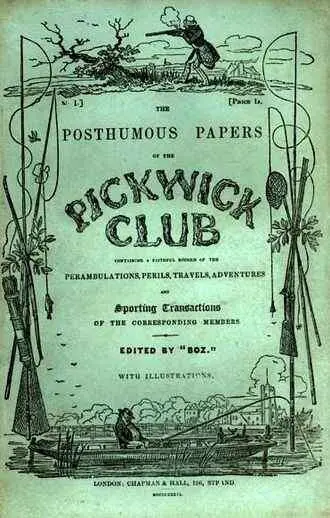
- Название:The Pickwick Papers
- Автор:
- Жанр:
- Год:неизвестен
- ISBN:нет данных
- Рейтинг книги:4 / 5. Голосов: 1
-
Избранное:Добавить в избранное
- Отзывы:
-
Ваша оценка:
The Pickwick Papers: краткое содержание, описание и аннотация
Предлагаем к чтению аннотацию, описание, краткое содержание или предисловие (зависит от того, что написал сам автор книги «The Pickwick Papers»). Если вы не нашли необходимую информацию о книге — напишите в комментариях, мы постараемся отыскать её.
Mr Samuel Pickwick is the founder and chairman of the absurd Pickwick Club which consists of Tupman, Snodgrass and Winkle who go through various amusing and often quite ridiculous adventures that are scantily interconnected and never amount to a complex sequence of events until perhaps Pickwick’s disastrous misunderstanding with Mrs Bardell.
The Pickwick Papers — читать онлайн бесплатно полную книгу (весь текст) целиком
Ниже представлен текст книги, разбитый по страницам. Система сохранения места последней прочитанной страницы, позволяет с удобством читать онлайн бесплатно книгу «The Pickwick Papers», без необходимости каждый раз заново искать на чём Вы остановились. Поставьте закладку, и сможете в любой момент перейти на страницу, на которой закончили чтение.
Интервал:
Закладка:
All this time, Bob Sawyer had been nudging Mr. Ben Allen to say something on the right side; Ben accordingly now burst, without the slightest preliminary notice, into a brief but impassioned piece of eloquence.
‘Sir,’ said Mr. Ben Allen, staring at the old gentleman, out of a pair of very dim and languid eyes, and working his right arm vehemently up and down, ‘you — you ought to be ashamed of yourself.’
‘As the lady’s brother, of course you are an excellent judge of the question,’ retorted Mr. Winkle, senior. ‘There; that’s enough. Pray say no more, Mr. Pickwick. Good–night, gentlemen!’
With these words the old gentleman took up the candle–stick and opening the room door, politely motioned towards the passage.
‘You will regret this, Sir,’ said Mr. Pickwick, setting his teeth close together to keep down his choler; for he felt how important the effect might prove to his young friend.
‘I am at present of a different opinion,’ calmly replied Mr. Winkle, senior. ‘Once again, gentlemen, I wish you a good–night.’
Mr. Pickwick walked with angry strides into the street. Mr. Bob Sawyer, completely quelled by the decision of the old gentleman’s manner, took the same course. Mr. Ben Allen’s hat rolled down the steps immediately afterwards, and Mr. Ben Allen’s body followed it directly. The whole party went silent and supperless to bed; and Mr. Pickwick thought, just before he fell asleep, that if he had known Mr. Winkle, senior, had been quite so much of a man of business, it was extremely probable he might never have waited upon him, on such an errand.
Chapter 51
In which Mr. Pickwick encounters an old Acquaintance — To which fortunate Circumstance the Reader is mainly indebted for Matter of thrilling Interest herein set down, concerning two great Public Men of Might and Power
The morning which broke upon Mr. Pickwick’s sight at eight o’clock, was not at all calculated to elevate his spirits, or to lessen the depression which the unlooked–for result of his embassy inspired. The sky was dark and gloomy, the air was damp and raw, the streets were wet and sloppy. The smoke hung sluggishly above the chimney–tops as if it lacked the courage to rise, and the rain came slowly and doggedly down, as if it had not even the spirit to pour. A game–cock in the stableyard, deprived of every spark of his accustomed animation, balanced himself dismally on one leg in a corner; a donkey, moping with drooping head under the narrow roof of an outhouse, appeared from his meditative and miserable countenance to be contemplating suicide. In the street, umbrellas were the only things to be seen, and the clicking of pattens and splashing of rain–drops were the only sounds to be heard.
The breakfast was interrupted by very little conversation; even Mr. Bob Sawyer felt the influence of the weather, and the previous day’s excitement. In his own expressive language he was ‘floored.’ So was Mr. Ben Allen. So was Mr. Pickwick.
In protracted expectation of the weather clearing up, the last evening paper from London was read and re–read with an intensity of interest only known in cases of extreme destitution; every inch of the carpet was walked over with similar perseverance; the windows were looked out of, often enough to justify the imposition of an additional duty upon them; all kinds of topics of conversation were started, and failed; and at length Mr. Pickwick, when noon had arrived, without a change for the better, rang the bell resolutely, and ordered out the chaise.
Although the roads were miry, and the drizzling rain came down harder than it had done yet, and although the mud and wet splashed in at the open windows of the carriage to such an extent that the discomfort was almost as great to the pair of insides as to the pair of outsides, still there was something in the motion, and the sense of being up and doing, which was so infinitely superior to being pent in a dull room, looking at the dull rain dripping into a dull street, that they all agreed, on starting, that the change was a great improvement, and wondered how they could possibly have delayed making it as long as they had done.
When they stopped to change at Coventry, the steam ascended from the horses in such clouds as wholly to obscure the hostler, whose voice was however heard to declare from the mist, that he expected the first gold medal from the Humane Society on their next distribution of rewards, for taking the postboy’s hat off; the water descending from the brim of which, the invisible gentleman declared, must have drowned him (the postboy), but for his great presence of mind in tearing it promptly from his head, and drying the gasping man’s countenance with a wisp of straw.
‘This is pleasant,’ said Bob Sawyer, turning up his coat collar, and pulling the shawl over his mouth to concentrate the fumes of a glass of brandy just swallowed.
‘Wery,’ replied Sam composedly.
‘You don’t seem to mind it,’ observed Bob.
‘Vy, I don’t exactly see no good my mindin’ on it ’ud do, sir,’ replied Sam.
‘That’s an unanswerable reason, anyhow,’ said Bob.
‘Yes, sir,’ rejoined Mr. Weller. ‘Wotever is, is right, as the young nobleman sweetly remarked wen they put him down in the pension list ‘cos his mother’s uncle’s vife’s grandfather vunce lit the king’s pipe vith a portable tinder–box.’
‘Not a bad notion that, Sam,’ said Mr. Bob Sawyer approvingly.
, Just wot the young nobleman said ev’ry quarter–day arterwards for the rest of his life,’ replied Mr. Weller.
‘Wos you ever called in,’ inquired Sam, glancing at the driver, after a short silence, and lowering his voice to a mysterious whisper — ‘wos you ever called in, when you wos ‘prentice to a sawbones, to wisit a postboy.’
‘I don’t remember that I ever was,’ replied Bob Sawyer.
‘You never see a postboy in that ‘ere hospital as you walked (as they says o’ the ghosts), did you?’ demanded Sam.
‘No,’ replied Bob Sawyer. ‘I don’t think I ever did.’
‘Never know’d a churchyard were there wos a postboy’s tombstone, or see a dead postboy, did you?’ inquired Sam, pursuing his catechism.
‘No,’ rejoined Bob, ‘I never did.’
‘No!’ rejoined Sam triumphantly. ‘Nor never vill; and there’s another thing that no man never see, and that’s a dead donkey. No man never see a dead donkey ‘cept the gen’l’m’n in the black silk smalls as know’d the young ‘ooman as kep’ a goat; and that wos a French donkey, so wery likely he warn’t wun o’ the reg’lar breed.’
‘Well, what has that got to do with the postboys?’ asked Bob Sawyer.
‘This here,’ replied Sam. ‘Without goin’ so far as to as–sert, as some wery sensible people do, that postboys and donkeys is both immortal, wot I say is this: that wenever they feels theirselves gettin’ stiff and past their work, they just rides off together, wun postboy to a pair in the usual way; wot becomes on ’em nobody knows, but it’s wery probable as they starts avay to take their pleasure in some other vorld, for there ain’t a man alive as ever see either a donkey or a postboy a–takin’ his pleasure in this!’
Expatiating upon this learned and remarkable theory, and citing many curious statistical and other facts in its support, Sam Weller beguiled the time until they reached Dunchurch, where a dry postboy and fresh horses were procured; the next stage was Daventry, and the next Towcester; and at the end of each stage it rained harder than it had done at the beginning.
‘I say,’ remonstrated Bob Sawyer, looking in at the coach window, as they pulled up before the door of the Saracen’s Head, Towcester, ‘this won’t do, you know.’
Читать дальшеИнтервал:
Закладка:
Похожие книги на «The Pickwick Papers»
Представляем Вашему вниманию похожие книги на «The Pickwick Papers» списком для выбора. Мы отобрали схожую по названию и смыслу литературу в надежде предоставить читателям больше вариантов отыскать новые, интересные, ещё непрочитанные произведения.



Обсуждение, отзывы о книге «The Pickwick Papers» и просто собственные мнения читателей. Оставьте ваши комментарии, напишите, что Вы думаете о произведении, его смысле или главных героях. Укажите что конкретно понравилось, а что нет, и почему Вы так считаете.